The I Ching
 80
80

The I Ching
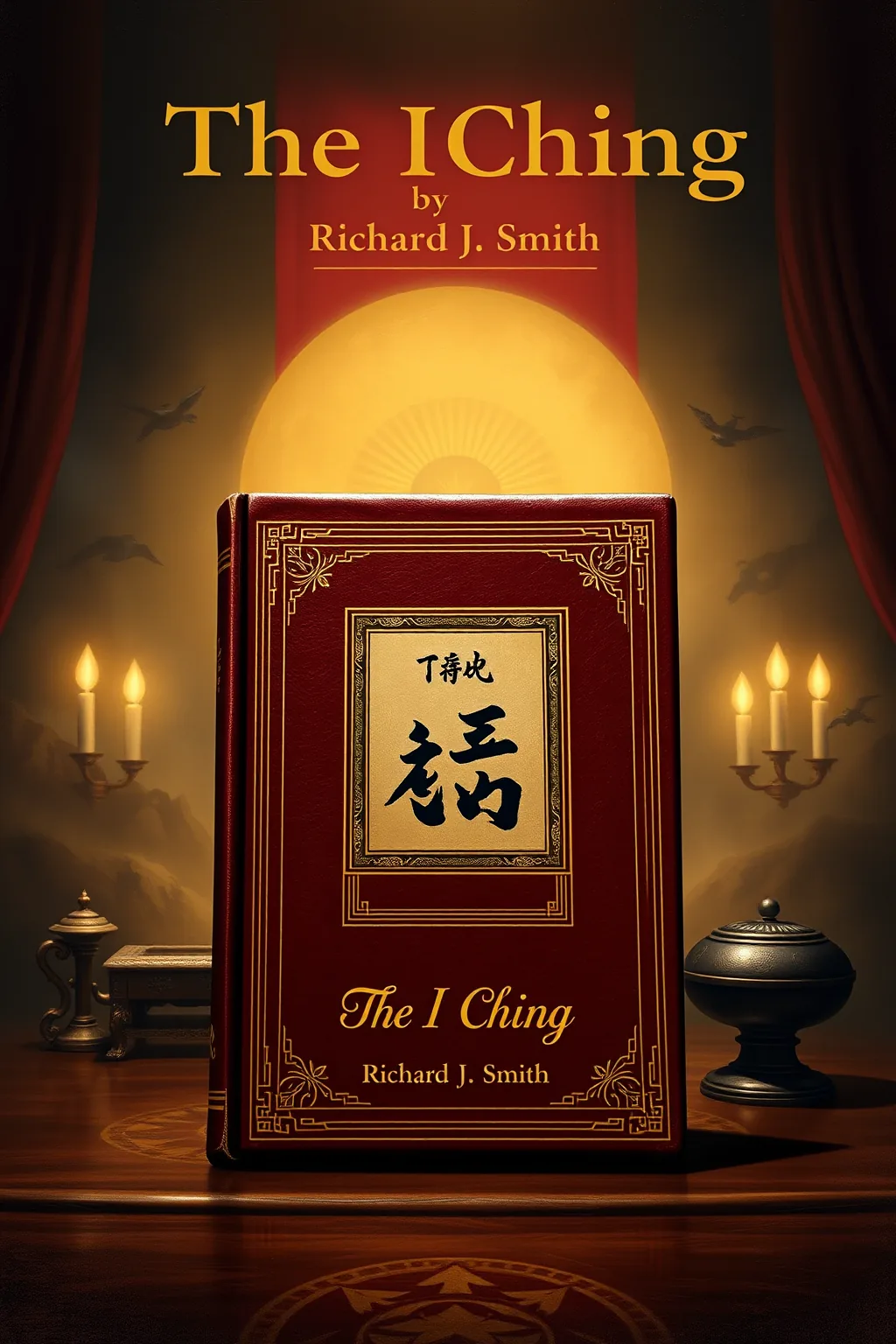
Smith's "The I Ching" is a welcome scholarly synthesis, moving beyond mere translation to contextualize this seminal work. The author's strength lies in tracing the text's evolution and its surprising reach into Western thought. A particularly illuminating section details the I Ching's use by figures like Carl Jung, who saw in its structure a reflection of synchronicity. However, the sheer breadth of the subject occasionally leads to a somewhat rapid pace; readers seeking a deep dive into the divinatory mechanics might wish for more granular detail. The work effectively argues for the I Ching's pervasive influence on philosophy, art, and even political theory. Ultimately, Smith provides a robust, accessible overview of a text that continues to challenge and inform.
📝 Description
80
Richard J. Smith's 2012 book examines the I Ching's development and its impact on Chinese thought.
Richard J. Smith's study traces the evolution of China's ancient divination manual, the I Ching. The book details its structural changes from early origins to later philosophical readings. Smith investigates how the I Ching's wisdom has been used in various cultures, showing its adaptability and broad appeal.
This work is suitable for students of East Asian philosophy, comparative religion, and historical divination. It also interests those curious about how ancient texts influence art, medicine, and politics. Readers looking for a scholarly yet approachable introduction to a key Chinese text will find it valuable. Smith places the I Ching within Chinese history, following its progress from the Shang and Zhou Dynasties onward. He discusses its roles as a classical text, a philosophical guide, and a divinatory tool, noting its connections to Confucianism and Taoism.
The I Ching is a central text in Chinese cosmology and philosophy, predating many other known esoteric traditions. Its system of divination and symbolic interpretation, based on hexagrams derived from Yin and Yang principles, has been a cornerstone of East Asian thought for millennia. This book examines how that system developed and was applied, connecting it to philosophical movements like Taoism and Confucianism, which in turn shaped broader esoteric understandings in the region.
💡 Why Read This Book?
• Understand the I Ching's structural components and philosophical underpinnings, learning how its system of hexagrams and trigrams functions as a symbolic language, a concept elaborated in Chapter 3. • Discover the I Ching's historical journey, including its foundational period during the Zhou Dynasty, and how it permeated Chinese intellectual history. • Explore the I Ching's cross-cultural reception, noting its impact on Western thinkers like Carl Jung in the early 20th century, as discussed in Smith's analysis.
⭐ Reader Reviews
Honest opinions from readers who have explored this book.
❓ Frequently Asked Questions
When was Richard J. Smith's "The I Ching" first published?
Richard J. Smith's "The I Ching" was first published on March 25, 2012, offering a modern scholarly perspective on this ancient Chinese text.
What is the primary focus of "The I Ching" by Richard J. Smith?
The book focuses on the history, structure, and widespread cultural influence of China's ancient divination manual, the I Ching, examining its impact on philosophy, art, and politics.
Does the book explain how to use the I Ching for divination?
While it discusses the principles and historical applications of divination, Smith's work primarily contextualizes the I Ching's philosophical and cultural significance rather than serving as a direct 'how-to' guide.
What historical periods does "The I Ching" by Smith cover?
The work traces the I Ching's development from its early roots, likely in the Shang or Zhou Dynasties, through its later interpretations and influence across Chinese history.
Is this book suitable for beginners unfamiliar with Chinese philosophy?
Yes, Smith's approach is scholarly yet accessible, making it suitable for beginners interested in understanding the I Ching's historical and philosophical importance without requiring prior deep knowledge.
How does Smith's book discuss the I Ching's global appeal?
It examines how the I Ching's structure and philosophical concepts have been adopted and interpreted by various cultures, influencing fields from psychology to art worldwide.
🔮 Key Themes & Symbolism
Structural Foundations
The work meticulously details the foundational architecture of the I Ching, focusing on its core components: the sixty-four hexagrams, each formed by combining two trigrams. Smith elucidates how these binary symbols, representing fundamental forces and situations, function as a complex symbolic language. The book explores the systematic relationships between these elements, demonstrating how their permutation and combination provide a framework for understanding change and generating prognostication, a key aspect of its enduring appeal.
Philosophical Integration
A significant theme is the I Ching's deep integration with Chinese philosophical traditions, particularly Taoism and Confucianism. Smith illustrates how concepts like Yin and Yang, and the principles of cyclical change, are not merely adjuncts but intrinsic to the text's interpretation. The book shows how these philosophical currents shaped the I Ching's meaning and application, moving it beyond a simple divination tool to a guide for ethical conduct and understanding the cosmic order.
Cross-Cultural Diffusion
Smith charts the remarkable journey of the I Ching beyond its East Asian origins, highlighting its appeal to diverse global audiences. The work discusses how Western thinkers, artists, and scientists encountered and adapted its principles, often finding resonance with their own intellectual pursuits. This section underscores the text's capacity to transcend cultural boundaries, offering insights into universal patterns of existence and transformation appreciated across different societies.
Historical Evolution
The book traces the I Ching's long historical trajectory, from its probable origins in ancient China, possibly during the Zhou Dynasty, to its status as a canonical text. Smith examines the layers of commentary and interpretation that have accrued over millennia, showing how the text's meaning and function have evolved. This historical perspective reveals the I Ching not as a static artifact but as a dynamic source of wisdom continually reinterpreted.
💬 Memorable Quotes
Direct passages from the work, attributed to the author.
“The I Ching's structure is built upon the interplay of Yin and Yang, represented by broken and solid lines.”
— This statement highlights the fundamental binary logic underlying the I Ching's sixty-four hexagrams. It points to the text's core symbolic system, where opposing yet complementary forces are combined to represent a vast array of situations and transformations.
“Its appeal extended to fields as diverse as art, medicine, and Western psychology.”
— This observation emphasizes the I Ching's broad influence beyond its traditional divinatory and philosophical contexts. It suggests the text's universal principles found application and resonance in various disciplines and cultures, including its engagement with thinkers like Carl Jung.
“The text functions as both a guide to understanding change and a method for predicting future developments.”
— This captures the dual nature of the I Ching: its philosophical exploration of the dynamics of change and its practical application as a tool for prognostication, offering insights into potential outcomes.
“Understanding the hexagrams requires grasping their symbolic meanings and interrelationships.”
— This points to the interpretive depth of the I Ching. It is not merely a random collection of symbols, but a coherent system where the meaning of each hexagram is derived from its constituent trigrams and its position within the larger sequence.
“The book's influence can be traced through centuries of Chinese intellectual history.”
— This underscores the I Ching's enduring significance within Chinese culture. It has been a constant presence, shaping philosophical discourse, ethical considerations, and even statecraft across various dynasties and intellectual movements.
🌙 Esoteric Significance
Tradition
While not strictly adhering to a single Western esoteric lineage, "The I Ching" by Smith situates the I Ching within a broad tradition of oracular and philosophical texts that inform various esoteric paths. Its symbolic language and focus on cyclical change and interconnectedness echo principles found in Hermeticism and Taoism, making it a foundational text for those exploring comparative esotericism or seeking a non-Western framework for understanding cosmic order.
Symbolism
The core symbolism revolves around the trigrams (three-line figures) and hexagrams (six-line figures). Trigrams like Heaven (☰), Earth (☷), Water (☵), and Fire (☲) represent fundamental natural forces and concepts. The hexagrams, formed by combining two trigrams, create 64 archetypal situations or processes, offering a nuanced symbolic map of existence and change, central to its divinatory and philosophical applications.
Modern Relevance
Contemporary thinkers and practitioners in fields ranging from systems theory to Jungian psychology continue to draw on the I Ching's principles. Its emphasis on pattern recognition, adaptability, and the interconnectedness of phenomena speaks to modern ecological thought and complexity science. Esoteric practitioners often utilize its symbolic framework for self-reflection, understanding life transitions, and exploring archetypal patterns.
👥 Who Should Read This Book
• Students of comparative philosophy and religion seeking to understand a foundational text of East Asian thought and its global impact. • Practitioners of divination and esoteric arts interested in the historical and philosophical context of one of the world's oldest oracular systems. • Readers engaged with cross-cultural studies, art history, or the history of science who wish to explore the I Ching's influence on diverse intellectual and creative traditions.
📜 Historical Context
Richard J. Smith's "The I Ching" arrives at a moment when global interest in Eastern philosophies continues to expand. The book positions the I Ching within the collection of Chinese intellectual history, originating possibly in the Zhou Dynasty (c. 1046–256 BCE). Smith meticulously details how the text evolved, absorbing and influencing major philosophical currents like Confucianism and Taoism. Its reception has been varied; while deeply revered in China, its introduction to the West, particularly through scholars like James Legge in the 19th century and later Carl Jung in the 20th century, sparked diverse interpretations. Smith's work engages with this legacy, showing how the I Ching's symbolic system and philosophical depth offered a unique counterpoint to Western rationalism, impacting fields from psychology to art.
📔 Journal Prompts
The concept of hexagram formation: Reflect on how combining simple elements creates complex meanings.
The I Ching's influence on Western psychology: Consider parallels between its symbolic language and archetypal theories.
The historical evolution of the I Ching: Trace how its interpretation has shifted across dynasties.
Yin and Yang symbolism: Explore the dynamic interplay of these forces in your own life.
The I Ching as a guide to change: How might its principles inform responses to personal transitions?
🗂️ Glossary
Hexagram
A symbol composed of six horizontal lines, each either solid (Yang) or broken (Yin). There are 64 hexagrams in the I Ching, representing archetypal situations and transformations.
Trigram
A symbol composed of three horizontal lines, either solid (Yang) or broken (Yin). The eight trigrams form the building blocks of the 64 hexagrams.
Yin
In I Ching philosophy, the passive, receptive, dark, feminine principle, often represented by a broken line (--) in hexagrams.
Yang
In I Ching philosophy, the active, creative, light, masculine principle, often represented by a solid line (—) in hexagrams.
Zhou Dynasty
A long-lasting Chinese dynasty (c. 1046–256 BCE) during which many foundational texts of Chinese philosophy, including early forms of the I Ching, are believed to have developed or been compiled.
Confucianism
An ethical and philosophical system developed from the teachings of Confucius, emphasizing morality, social harmony, and good governance, which deeply influenced the interpretation and use of the I Ching.
Taoism
A philosophy and religion originating in ancient China, emphasizing living in harmony with the Tao (the Way), often associated with concepts of naturalness, simplicity, and cyclical change, which are reflected in the I Ching.