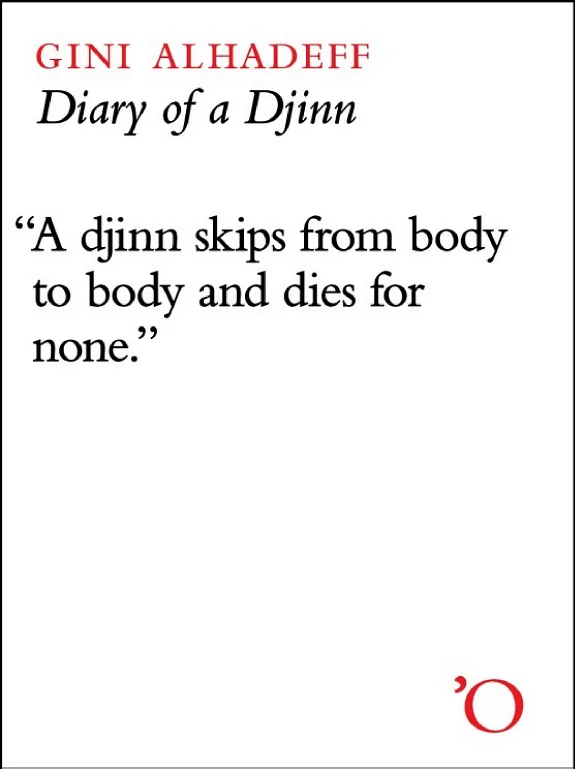
Diary of a Djinn
 72
72

Diary of a Djinn
Gini Alhadeff's *Diary of a Djinn* presents a beguiling premise: an immortal spirit tethered to a human life, observing and subtly directing its course. The strength of the novel lies in its sophisticated portrayal of the djinn's detached yet deeply invested perspective. Alhadeff avoids simplistic wish-fulfillment tropes, instead offering a nuanced exploration of desire and disillusionment as the protagonist navigates a life spanning Florentine academies, Milanese runways, and Manhattan's aspirational milieu. The prose is often elegant, particularly when describing the sensory details of these disparate worlds. However, the narrative occasionally falters in pacing, with certain transitions feeling abrupt, leaving the reader wishing for more exploration of the djinn's internal shifts. The passage detailing the protagonist's time in the 1990s Manhattan offers a particularly sharp commentary on materialism. Ultimately, *Diary of a Djinn* succeeds as an imaginative character study and a meditation on existence.
📝 Description
72
Gini Alhadeff's 2016 novel, Diary of a Djinn, features an ancient, all-knowing djinn inhabiting human form.
This story follows a djinn that chooses to live as a human, observing and guiding a woman through her life. Through the djinn's unique perspective, the novel examines human desires, societal expectations, and the search for personal fulfillment. The narrative unfolds across diverse settings, from a Florentine boarding school to the Milanese fashion world and 1990s Manhattan, with the djinn offering sharp, sometimes poignant, insights into these environments.
The book appeals to readers interested in spiritual stories that contemplate identity and consciousness. It is for those who enjoy narratives that weave mystical elements into everyday life, exploring the nature of desire and the quest for meaning across different social contexts. Readers drawn to character studies with a philosophical bent, particularly those interested in self discovery and the impact of unseen forces, will find this work engaging.
The djinn, a spirit from Arabian mythology, is reimagined here not as a wish granter but as an intimate observer of human destiny. The novel considers the djinn's capacity to adopt human limitations while retaining its vast knowledge. It also reflects on the human condition, touching on themes of self awareness and the pursuit of purpose.
Diary of a Djinn enters a literary tradition that blends Eastern mythology with Western speculative fiction. The concept of the djinn, a being from pre Islamic Arabian folklore, is reinterpreted here to explore themes of eternal consciousness observing transient human existence. This approach echoes motifs found in earlier philosophical novels and occult fiction that consider the intersection of the mundane and the supernatural, and the nature of the soul's journey through various lives or forms.
💡 Why Read This Book?
• Gain insight into the nature of desire and fulfillment as experienced by an immortal entity inhabiting a human life, specifically through the djinn's observations across Florentine boarding schools and 1990s Manhattan. • Explore the intersection of esoteric beings and material existence through the djinn's commentary on fashion houses in Milan and the pursuit of wealth. • Understand the subjective experience of consciousness and identity by contrasting the djinn's vast knowledge with the limitations of a single human lifespan.
⭐ Reader Reviews
Honest opinions from readers who have explored this book.
❓ Frequently Asked Questions
What is the origin of the djinn in Arabian folklore, and how does the book adapt this tradition?
Djinn, or genies, are supernatural creatures from pre-Islamic Arabian mythology, often depicted as beings of smokeless fire capable of shapeshifting and influencing human affairs. Alhadeff's novel reinterprets the djinn not as a servant but as a sentient observer bound to a human existence, focusing on its internal consciousness and guidance.
What historical periods and locations are featured in Diary of a Djinn?
The novel spans several decades, moving from a Florentine boarding school setting, likely in the mid-20th century, through the glamour of Milanese fashion in its prime, and culminating in 1990s Manhattan, depicting distinct cultural and historical milieus.
Does the book offer practical advice for spiritual growth?
While not a how-to guide, Diary of a Djinn offers contemplative insights into the pursuit of satisfaction and the nature of self. Readers may find its exploration of consciousness and desire prompts personal reflection on their own life choices and aspirations.
Who is Gini Alhadeff, the author?
Gini Alhadeff is an author known for her work exploring culture, identity, and spirituality. Her writing often draws on her extensive travel and deep engagement with diverse traditions, as seen in her previous works and this novel.
Is Diary of a Djinn considered a fantasy novel or something else?
The novel blends elements of literary fiction with supernatural themes. While it features a djinn, its focus on character development, social observation, and philosophical inquiry places it beyond typical genre fantasy, leaning towards magical realism or literary speculative fiction.
What is the significance of the djinn choosing a human body?
The djinn's choice to inhabit a single human body signifies a deliberate engagement with the limitations and experiences of mortality. It allows for a focused exploration of human emotions, societal pressures, and the pursuit of ephemeral satisfactions from an eternal perspective.
🔮 Key Themes & Symbolism
The Djinn's Perspective
The novel uniquely centers on the consciousness of a djinn, an entity from pre-Islamic Arabian folklore, as it experiences human existence. This perspective allows for a detached yet intimate observation of human folly, ambition, and the ephemeral nature of satisfaction. The djinn's vast knowledge contrasts sharply with the limitations of its chosen human form, creating a rich commentary on perception, desire, and the search for meaning across different epochs and social settings.
Pursuit of Satisfaction
A central theme is the protagonist's, guided by the djinn, ceaseless chase for fulfillment. This journey takes her through various environments – from the structured confines of a Florentine boarding school to the superficial glamour of a Milan fashion house and the aspirational lifestyle of 1990s Manhattan. The narrative questions whether true satisfaction can ever be attained through external achievements or material pursuits, especially when viewed through the lens of an eternal being.
Identity and Embodiment
The book explores the complex interplay between an eternal consciousness and a finite human body. The djinn's choice to inhabit one life raises questions about identity: is it the djinn's consciousness that defines the person, or does the human experience fundamentally alter the djinn? This theme looks at how embodiment shapes perception and the very nature of self, contrasting the djinn's ancient wisdom with the immediate, often overwhelming, sensations of human life.
Cultural Milieus
Alhadeff uses distinct settings – a European boarding school, Milan's fashion industry, and late 20th-century New York – to highlight diverse societal values and aspirations. The djinn's observations across these varied cultural landscapes provide commentary on class, ambition, artistry, and the performance of identity. Each location serves as a microcosm for exploring different facets of the human condition and the pursuit of a life 'beyond her means'.
💬 Memorable Quotes
Direct passages from the work, attributed to the author.
“The djinn chose the limits of one body, one life.”
— This expresses the novel's core conceit: an immortal spirit deliberately embracing human finitude. It highlights the intentionality of the djinn's choice, suggesting a purpose beyond mere observation, perhaps a desire to understand existence from within its most constrained form.
“She was as skilled at observing the worlds she moved through as...”
— This suggests the protagonist, influenced by the djinn, possesses a keen analytical ability. Her observational prowess becomes a key tool for understanding the societal structures and personal dynamics she encounters, allowing for sharp commentary on the environments she inhabits.
“Restlessly brilliant woman”
— This phrase describes the human vessel chosen by the djinn. It implies an innate intelligence and a persistent dissatisfaction or yearning for more, setting the stage for the djinn's guiding influence and the protagonist's lifelong quest for elusive satisfaction.
“Chasing the satisfaction that eludes her”
— This captures the driving force of the protagonist's journey. The elusiveness of satisfaction underscores the theme of perpetual seeking, suggesting that fulfillment might be found not in attainment but in the process of searching, or perhaps in a redefinition of what satisfaction means.
“A life beyond her means”
— This points to the protagonist's aspirational nature, often fueled by the djinn's influence. It speaks to a desire for a life that transcends conventional boundaries, whether financial, social, or existential, and the potential consequences of such ambition.
🌙 Esoteric Significance
Tradition
The novel draws primarily from the collection of Arabian folklore concerning djinn, spirits believed to inhabit a parallel world and interact with humanity. While not strictly adhering to a specific Western esoteric lineage like Hermeticism or Theosophy, it engages with universal themes of consciousness, spirituality, and the nature of existence that resonate across many mystical traditions. It departs by focusing on the djinn's internal experience within a human guise rather than external magical practices.
Symbolism
The djinn itself symbolizes ancient wisdom and a perspective unburdened by human mortality, acting as a guide or alter ego. The various settings—a cloistered school, a fashion house, 1990s Manhattan—represent different facets of the human pursuit of knowledge, status, and material satisfaction. The 'life beyond her means' symbolizes the boundary between the attainable and the aspirational, a constant source of tension for the protagonist.
Modern Relevance
In contemporary discourse, where discussions around consciousness, artificial intelligence, and the nature of reality are prevalent, *Diary of a Djinn* offers a unique literary perspective. Thinkers and practitioners interested in comparative mythology, the psychology of desire, and existentialism might find its exploration of an eternal being grappling with human limitations particularly relevant to current philosophical debates about identity and experience.
👥 Who Should Read This Book
• Readers fascinated by folklore and mythology, particularly those interested in the djinn of Arabian traditions, seeking a novel interpretation beyond simple wish-granting genies. • Individuals drawn to literary fiction that explores philosophical themes, such as consciousness, identity, and the elusive nature of happiness, using a unique narrative voice. • Students of comparative religion and cultural studies interested in how ancient myths can be recontextualized within modern settings to examine perennial human questions.
📜 Historical Context
Gini Alhadeff's *Diary of a Djinn*, first published in 2016, arrived in a literary era marked by a resurgence of interest in spiritual and metaphysical narratives. The novel taps into a long tradition of exploring non-human consciousness, reminiscent of works like H.G. Wells's *The Invisible Man* (1897) or even earlier philosophical explorations of consciousness, but adapts it to a contemporary, globally-influenced setting. The mid-20th century Florentine boarding school and late 20th-century Manhattan settings anchor the supernatural elements in specific, recognizable historical periods. While contemporary critics like those writing for literary journals might have engaged with its themes of identity and existence, the novel's blend of the esoteric and the literary likely found its audience among readers interested in comparative religion and speculative fiction, a sphere increasingly explored by authors like Marlon James in his later works, who also engage with myth and supernatural elements.
📔 Journal Prompts
The djinn's choice of a human vessel.
Reflections on the pursuit of satisfaction across Florentine, Milanese, and Manhattan settings.
The contrast between eternal consciousness and a finite human life.
Observational skills as a tool for understanding the world.
Interpreting 'a life beyond her means' in personal context.
🗂️ Glossary
Djinn
In Arabian and Islamic mythology, supernatural beings created from smokeless fire. They possess free will and can be either benevolent or malevolent, often interacting with humans in various capacities, from granting wishes to causing mischief.
Florentine Boarding School
An educational institution located in Florence, Italy, typically characterized by a structured, often traditional, curriculum and a focus on discipline and decorum, serving as a setting for the early life stages explored in the novel.
Milan Fashion House
A design studio or company based in Milan, Italy, renowned for its influence on the global fashion industry. These establishments are often associated with haute couture, trendsetting, and a high-stakes business environment.
1990s Manhattan
Refers to the borough of Manhattan in New York City during the 1990s, a period known for its distinct cultural milieu, economic shifts, and aspirational social dynamics, particularly relevant to the protagonist's later life.
Satisfaction
The state of being contented or having one's desires fulfilled. In the context of the book, it represents an elusive goal that the protagonist continually pursues across different life stages and environments.
Embodiment
The state of having or giving a body to a spirit or abstract concept. In this novel, it refers to the djinn inhabiting a human form and experiencing life through physical and emotional human senses.
Esoteric
Intended for or likely to be understood by only a small number of people with a specialized knowledge or interest. Often refers to hidden or mystical teachings.
This book appears in 1 collection
🔮 Readers Also Liked
Browse all →









From the “Djinn” Collection
View all →








More Free Occult Philosophy Books
View all →