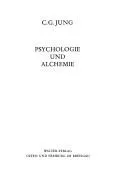
Psychologie und Alchemie

 80
80

Psychologie und Alchemie
Jung's "Psychologie und Alchemie" is an unparalleled study, arguing persuasively that alchemical symbolism constitutes a rich repository of unconscious psychic processes. The sheer volume of visual material and Jung's meticulous deconstruction of it is its greatest strength, offering a unique window into the collective unconscious. However, the dense prose and the sheer breadth of alchemical lore presented can, at times, become overwhelming for the uninitiated reader. The detailed analysis of the "Visio Arislei," for instance, provides a remarkable case study, but the intricate allegorical layers require considerable effort to unpack. It is not a casual read but a profound engagement with the symbolic underpinnings of human transformation. This work remains a cornerstone for understanding the alchemical tradition through a psychological lens.
📝 Description
80
Carl Jung published 'Psychologie und Alchemie' in 1952, arguing alchemy symbolized inner transformation.
Carl Jung's 'Psychologie und Alchemie,' released in 1952, examines the psychological meaning within alchemical texts. Jung moved past seeing alchemy as simple historical curiosity or early chemistry. He proposed that alchemical symbols reflected the unconscious psyche, acting as a visual language for personal change. The book carefully details alchemical images, methods, and stories. It shows how these connect to the human mind's drive toward completeness.
This work is important for those studying Jungian psychology, analytical psychology, and the links between spirituality, symbols, and the human mind. It also speaks to academics in comparative religion, the history of science, and esoteric studies. Anyone interested in the psychological roots of old practices will find value here. Individuals focused on self discovery and the symbolic language of the unconscious will find much to consider.
Published in 1952, 'Psychologie und Alchemie' arrived during a time when interest in depth psychology and forgotten spiritual traditions was growing. Jung's approach countered the era's dominant materialistic scientific views. He used alchemy, an esoteric practice, to connect historical mystical thought with contemporary psychological theory. This work found an audience among those curious about the unconscious and its expressions across different cultures and eras, aligning with broader academic explorations of religious history and symbolic meaning.
💡 Why Read This Book?
• Gain insight into the alchemical 'opus magnum' as a metaphor for personal psychological integration, a concept central to Jung's theory of individuation. • Understand the symbolic meaning of alchemical imagery, such as the 'coniunctio' (sacred marriage), as Jung interprets it, offering a unique lens on psychic union. • Explore the historical context of alchemy as a psychological projection, referencing Jung's analysis of texts from the medieval period and the 16th century.
⭐ Reader Reviews
Honest opinions from readers who have explored this book.
❓ Frequently Asked Questions
What is the primary argument of Carl Jung's "Psychologie und Alchemie"?
The book argues that alchemical symbolism represents unconscious psychological processes and the journey of individuation, rather than just proto-chemical experimentation, providing a symbolic map for psychic transformation.
When was "Psychologie und Alchemie" first published?
Carl Jung's "Psychologie und Alchemie" was first published in 1952, becoming a foundational text in analytical psychology.
What is the significance of the 'opus magnum' in Jung's alchemical psychology?
The 'opus magnum,' or Great Work, symbolizes the alchemist's inner transformation and the process of achieving psychological wholeness, mirroring the individual's journey of individuation.
Does "Psychologie und Alchemie" discuss specific alchemical symbols?
Yes, the work extensively analyzes key alchemical symbols like the 'coniunctio,' the Philosopher's Stone, and the transformation of metals, interpreting them through a psychological lens.
Who would benefit most from reading Jung's "Psychologie und Alchemie"?
Students of Jungian psychology, depth psychology practitioners, scholars of esoteric traditions, and individuals interested in the symbolic language of the unconscious will find this book particularly valuable.
How does Jung relate alchemy to modern psychology?
Jung connects alchemy to modern psychology by viewing its complex symbolism as projections of universal unconscious patterns and archetypes, offering historical precedent for the individuation process he described.
🔮 Key Themes & Symbolism
Alchemy as Psychic Projection
Jung posits that alchemical texts and imagery are not literal accounts of chemical experiments but symbolic representations of unconscious psychological processes. The alchemist's quest for the Philosopher's Stone mirrors the individual's search for psychological wholeness and integration. This perspective reframes alchemy as a historical precursor to depth psychology, revealing the psyche's innate drive towards self-realization through symbolic language. The work meticulously deciphers these projections, linking them to archetypal patterns observed in the unconscious.
The Individuation Process
Central to Jung's thesis is the concept of individuation, the lifelong psychological journey of integrating the conscious and unconscious aspects of the self to achieve wholeness. He identifies the 'opus magnum,' or Great Work of alchemy, as a symbolic parallel to this process. The alchemical stages, such as calcination, dissolution, and conjunction, are interpreted as metaphors for psychological transformation, including confronting the shadow, integrating the anima/animus, and achieving a unified self. The book provides extensive alchemical examples to illustrate these stages.
Archetypal Symbolism
Jung argues that the symbols found in alchemical literature are not arbitrary but are manifestations of universal archetypes that arise from the collective unconscious. He analyzes recurring motifs like the 'coniunctio' (sacred marriage), the dragon, the hermaphrodite, and the transformation of base metals into gold. These symbols, he contends, represent fundamental psychological dynamics and the inherent patterns of psychic development, offering a visual grammar for the unconscious mind's operations and its quest for balance.
The Unconscious and Its Language
This work underscores Jung's belief in the profound importance of the unconscious and its symbolic language. He demonstrates how the unconscious communicates through dreams, myths, and, in this case, the elaborate allegories of alchemy. By studying these symbolic expressions, individuals can gain a deeper understanding of their own inner world and the universal dynamics that shape human experience. The book serves as a guide to interpreting this symbolic language, bridging the gap between the conscious ego and the vast unconscious realm.
💬 Memorable Quotes
Direct passages from the work, attributed to the author.
“Alchemy is the projection of the unconscious.”
— This central tenet suggests that alchemical imagery and processes were not merely physical endeavors but externalized manifestations of internal psychological dynamics and the unconscious mind's inherent patterns.
“The alchemical work is a symbol of the individuation process.”
— Jung equates the alchemist's quest for transformation and purity with the individual's journey toward psychological wholeness and the integration of disparate parts of the self.
“The 'coniunctio' represents the union of opposites.”
— This phrase highlights the alchemical motif of sacred marriage, which Jung interprets as a symbol for the psychological integration of conscious and unconscious, masculine and feminine, or other dualistic aspects of the psyche.
“Gold symbolizes psychic perfection.”
— Jung relates the alchemical goal of producing gold from base metals to the ultimate achievement of psychological maturity and spiritual enlightenment, representing the perfected state of the integrated self.
“The alchemical texts reveal the language of the unconscious.”
— This interpretation emphasizes Jung's view that ancient alchemical writings provide a rich, albeit veiled, vocabulary and grammar for understanding the symbolic communications originating from the collective and personal unconscious.
🌙 Esoteric Significance
Tradition
Jung's work firmly places alchemy within the Hermetic and Gnostic traditions of Western esotericism. He interprets alchemical symbolism not as literal chemical processes but as a sophisticated allegorical language developed over centuries to describe the inner transformation of the soul and the pursuit of spiritual perfection, a core aim in these traditions. He sees alchemy as a 'quodlibet'—a mixture of philosophy, religion, and early science—that uniquely preserved and expressed psychological truths during periods when direct religious expression of certain mystical experiences was suppressed.
Symbolism
Key symbols Jung deciphers include the 'prima materia,' representing the undifferentiated unconscious or the raw material of the psyche; the 'coniunctio oppositorum,' or union of opposites, symbolizing the integration of masculine/feminine or conscious/unconscious aspects; and the transformation of base metals into gold, which represents the attainment of psychological wholeness and spiritual enlightenment, the culmination of the individuation process.
Modern Relevance
Contemporary analytical psychologists and Jungian analysts continue to use "Psychologie und Alchemie" as a foundational text for understanding the symbolic language of the unconscious. Its concepts inform therapeutic approaches to individuation and the integration of archetypal energies. Furthermore, scholars of comparative religion, mythology, and esoteric studies draw upon Jung's interpretations to understand cross-cultural symbolic systems and the historical development of consciousness. The book's influence extends to fields grappling with the intersection of science, spirituality, and the human psyche.
👥 Who Should Read This Book
• Students of analytical psychology and Jungian theory seeking to understand the archetypal roots of psychological transformation as explored through alchemical symbolism. • Scholars of Western esotericism and comparative religion interested in the historical and symbolic dimensions of alchemy as a spiritual discipline. • Individuals engaged in deep self-reflection and personal growth who are drawn to understanding the unconscious mind's symbolic language and the process of individuation.
📜 Historical Context
Carl Jung's "Psychologie und Alchemie," published in 1952, arrived at a central moment in the mid-20th century, a period marked by both the trauma of world war and a burgeoning interest in the human psyche's depths. Jung's work directly challenged the prevailing positivistic and materialistic scientific worldview by demonstrating the profound psychological and symbolic significance of the ancient practice of alchemy. This was a time when scholars like Mircea Eliade were also exploring the history of religions and esoteric traditions, creating an intellectual climate receptive to Jung's unconventional approach. His detailed analysis of alchemical symbolism, drawing heavily on medieval and Renaissance texts, offered a bridge between historical mystical practices and modern analytical psychology, providing a counterpoint to purely rationalistic explanations of human behavior and consciousness. The book's meticulous scholarship and its assertion of alchemy as a symbolic precursor to his own theories significantly impacted the fields of psychology, comparative religion, and the study of Western esotericism.
📔 Journal Prompts
The alchemical 'coniunctio' and its representation of integrating inner opposites.
Reflect on the symbolic meaning of the 'prima materia' in relation to one's own psychic starting point.
Analyze a personal dream or fantasy through the lens of alchemical transformation stages.
Consider the historical persistence of alchemical motifs in modern psychological discourse.
Explore the concept of psychic gold as a metaphor for psychological wholeness.
🗂️ Glossary
Opus Magnum
The Great Work of alchemy, which Jung interprets as a symbolic representation of the entire process of psychological transformation and individuation, from initial psychic fragmentation to wholeness.
Prima Materia
The foundational substance or raw material in alchemy, often seen as chaotic or undifferentiated. Jung relates it to the unconscious or the initial state of the psyche before the process of integration begins.
Coniunctio Oppositorum
Latin for 'union of opposites.' In alchemy, it refers to the sacred marriage of opposing elements (e.g., masculine/feminine, sun/moon). Psychologically, it symbolizes the integration of conscious and unconscious aspects of the self.
Individuation
A central concept in Jungian psychology describing the process of becoming a psychologically integrated and whole individual by differentiating and integrating conscious and unconscious aspects of the personality.
Philosopher's Stone
The legendary alchemical substance believed to transmute base metals into gold and/or grant immortality. Jung interprets it as a symbol of psychic perfection, wholeness, and the ultimate goal of the individuation process.
Anima/Animus
Jung's terms for the unconscious feminine aspect in men (anima) and the unconscious masculine aspect in women (animus). Their integration is crucial for achieving psychic balance and wholeness.
Visio Arislei
A specific alchemical vision described in the text, which Jung analyzes in detail to illustrate the symbolic language and psychological content of alchemical symbolism.
🔮 Readers Also Liked
Browse all →








More by Carl Gustav Jung
All books →

More Free Alchemy & Hermeticism Books
View all →