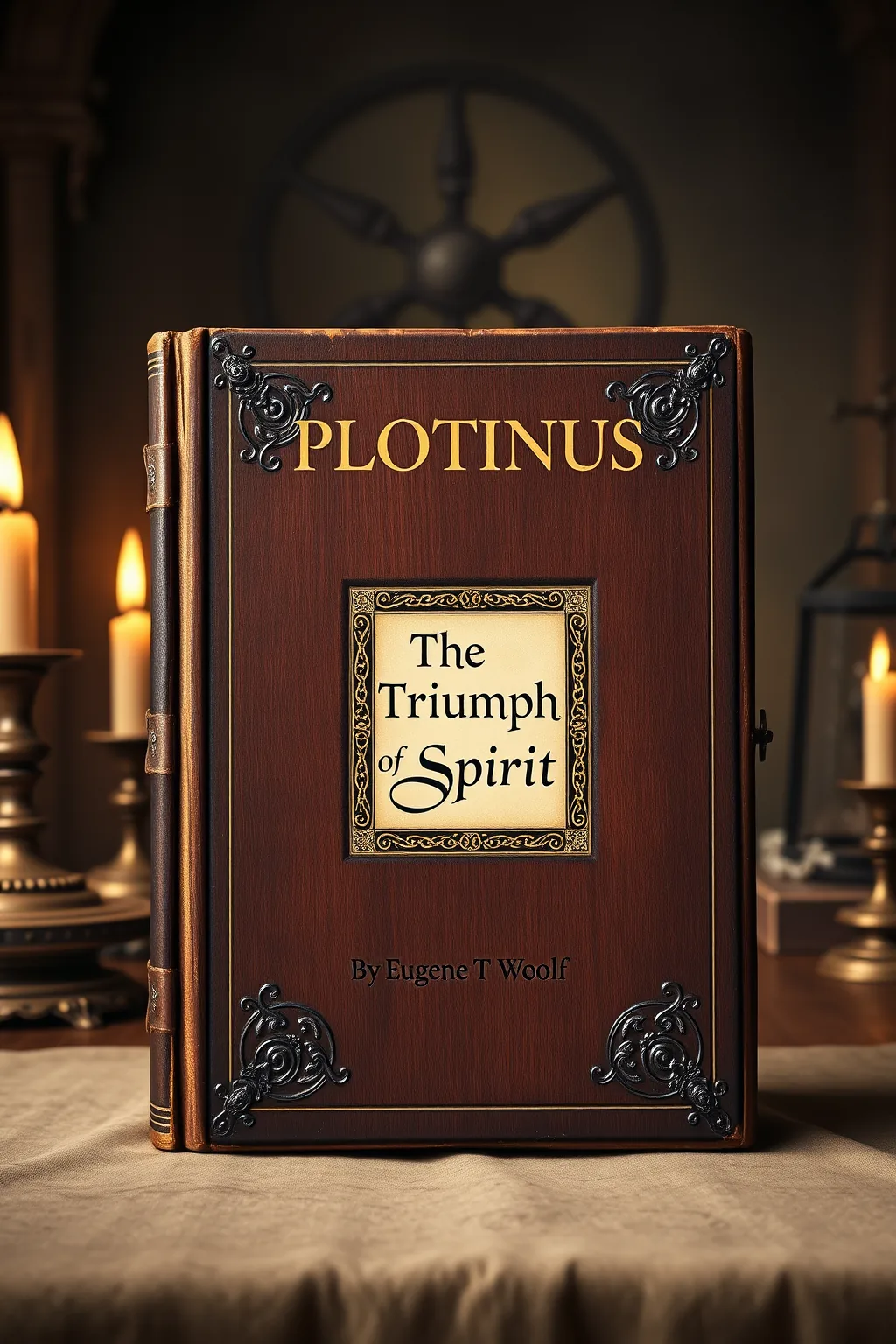
Plotinus (204/5-270 A.D.): The triumph of spirit (The great minds revisited series)
 61
61

Plotinus (204/5-270 A.D.): The triumph of spirit (The great minds revisited series)


Review by Alaric Kestrel (Metaphysical Studies Reviewer) — 'The Triumph of Spirit' by Eugene T. Woolf is a masterful exploration of Plotinus' Neoplatonic philosophy, brimming with esoteric insights and scholarly rigor. Woolf's ability to elucidate complex metaphysical concepts makes this book a treasure trove for both novice and seasoned scholars of the occult. The strengths of this work lie in its rich symbolism and the deep philosophical significance it imparts. This book is particularly suited for those seeking to understand the mystical underpinnings of ancient philosophy and its relevance to contemporary spiritual practices.
📝 Description
61
Eugene T. Woolf's 1994 book examines Plotinus's philosophy on the ascent of the soul.
Eugene T. Woolf's 'The Triumph of Spirit' analyzes the philosophy of Plotinus, a third-century philosopher who developed Neoplatonism. Woolf focuses on Plotinus's teachings concerning the soul's relationship with the divine and its journey away from the material world. The book details Plotinus's metaphysical system, which posits a hierarchical structure of reality emanating from a supreme, ineffable One.
Woolf's analysis illuminates Plotinus's ideas on spiritual practice and the attainment of mystical union. The text covers concepts like the Forms, the intellect, and the soul's innate desire for its source. It explains how Plotinus viewed the human condition as a state of separation from this ultimate reality and outlines the philosophical and ethical steps necessary for reunification. The work aims to make Plotinus's complex thought accessible to those interested in esoteric philosophy and ancient metaphysics.
Plotinus (204/5-270 A.D.) is a central figure in Neoplatonism, an esoteric philosophical system that profoundly influenced later mystical traditions. His philosophy describes a metaphysical hierarchy descending from an ineffable, supreme principle known as 'The One.' The human soul, originating from this divine source, is seen as fallen into the material world. Neoplatonism, as presented by Plotinus, is not merely an intellectual pursuit but a path toward spiritual purification and return to the divine through contemplation and philosophical discipline. Woolf's work situates Plotinus's thought within this lineage, highlighting its mystical dimensions and its impact on later esoteric movements.
💡 Why Read This Book?
Read 'The Triumph of Spirit' to gain a comprehensive understanding of Plotinus' Neoplatonic philosophy and its mystical significance. Ideal for spiritual seekers, scholars, and practitioners interested in the hidden knowledge and symbolism of ancient philosophies. This book offers a unique blend of scholarly research and esoteric insights, making it an invaluable resource for anyone delving into the depths of the human spirit and its connection to the divine.
⭐ Reader Reviews
Honest opinions from readers who have explored this book.
❓ Frequently Asked Questions
What is the primary focus of 'The Triumph of Spirit'?
The primary focus of 'The Triumph of Spirit' is the exploration of Plotinus' Neoplatonic philosophy, emphasizing the spiritual journey and the triumph of the human spirit over material constraints.
Who is the intended audience for this book?
This book is intended for spiritual seekers, scholars, and practitioners interested in ancient philosophy, Neoplatonism, and the mystical aspects of the human spirit.
What makes this book unique in the 'Great Minds Revisited' series?
This book stands out for its rich symbolism and deep philosophical insights, providing a unique perspective on Plotinus' teachings and their relevance to modern spiritual practices.
Are there any memorable quotes in this book?
Yes, the book is filled with memorable quotes that encapsulate the essence of Plotinus' Neoplatonic philosophy and its mystical significance.
How does 'The Triumph of Spirit' contribute to the study of ancient philosophers?
This book contributes by offering a comprehensive and accessible exploration of Plotinus' teachings, making complex philosophical concepts understandable to a broader audience.
🔮 Key Themes & Symbolism
The One and the Many
Plotinus' concept of the One, the ultimate principle of existence, and its relationship to the many manifestations of the world. This theme explores the mystical unity underlying all diversity, inviting readers to contemplate the divine essence that permeates the universe.
The Soul's Journey
The spiritual ascent of the soul towards the divine, a central theme in Neoplatonism. This journey involves purification, contemplation, and union with the One, symbolizing the soul's quest for ultimate truth and enlightenment.
Symbolism and the Imaginal World
The use of symbolism and the imaginal world to convey mystical truths. Plotinus employs strong symbolism to describe the spiritual realities that lie beyond the physical world, inviting readers to engage with these symbols as gateways to deeper understanding.
💡 Key Ideas
Editorial paraphrase of the work's core concepts — not direct quotes.
The soul is the eye of the body, the mind is the eye of the soul, and the intellect is the eye of the mind.
This quote highlights the hierarchical nature of the human being, emphasizing the importance of the intellect in achieving spiritual enlightenment.
The One is not a number, but the source of all numbers.
This quote underscores the mystical concept of the One as the ultimate principle from which all things emanate.
The soul, in its ascent, purifies itself and comes closer to the divine.
This quote emphasizes the soul's journey towards spiritual purification and union with the divine.
The beauty of the world is a reflection of the beauty of the divine.
This quote highlights the mystical connection between the physical world and the divine, inviting readers to see the world through a spiritual lens.
The intellect is the highest faculty of the soul, capable of grasping the eternal truths.
This quote underscores the importance of the intellect in achieving spiritual enlightenment and understanding the eternal truths of the universe.
🌙 Esoteric Significance
Tradition
This book belongs to the Hermetic tradition, which seeks to uncover the hidden knowledge and spiritual truths that lie beneath the surface of the physical world. Plotinus' teachings are deeply rooted in this tradition, emphasizing the mystical unity of all things and the soul's journey towards the divine.
Symbolism
Key symbols in this book include the One, the soul's ascent, and the imaginal world. These symbols represent the mystical truths that Plotinus seeks to convey, inviting readers to engage with them as gateways to deeper understanding and spiritual enlightenment.
Modern Relevance
The teachings of Plotinus continue to be relevant today, inspiring modern practitioners of spiritual and esoteric traditions. His ideas on the soul's journey and the mystical unity of all things resonate with contemporary seekers, offering a timeless guide to spiritual awakening and the triumph of the human spirit.
👥 Who Should Read This Book
Beginners will appreciate the accessible introduction to Neoplatonism and its mystical themes. Scholars will find valuable insights and scholarly rigor in Woolf's exploration of Plotinus' teachings. Spiritual seekers will be drawn to the strong symbolism and philosophical depth, while practitioners of esoteric traditions will find practical applications and spiritual guidance.
📜 Historical Context
Plotinus lived during a tumultuous period in Roman history, marked by political instability and cultural decline. His teachings emerged as a response to the spiritual crisis of his time, offering a path to inner peace and spiritual enlightenment. 'The Triumph of Spirit' was written to revive interest in Neoplatonism, a philosophical tradition that had a profound influence on Western thought, shaping the development of Christian theology and mystical traditions. Plotinus' ideas continue to resonate with modern seekers, providing a timeless guide to spiritual awakening and the triumph of the human spirit.
📔 Journal Prompts
Reflect on the concept of the One and its relationship to the many manifestations of the world.
Consider the soul's journey towards the divine and the steps you can take to start this path.
Explore the use of symbolism in conveying mystical truths and how it can deepen your understanding of spiritual realities.
How does the idea of the intellect as the highest faculty of the soul resonate with your own spiritual journey?
Contemplate the beauty of the world as a reflection of the divine and how this perspective can enhance your appreciation of nature.
🗂️ Glossary
Neoplatonism
A philosophical tradition founded by Plotinus, emphasizing the mystical unity of all things and the soul's ascent towards the divine.
The One
The ultimate principle of existence, the source of all things, and the object of the soul's spiritual journey.
Soul's Ascent
The spiritual journey of the soul towards purification, contemplation, and union with the divine.
Symbolism
The use of symbols to convey mystical truths and spiritual realities that lie beyond the physical world.
Imaginal World
A spiritual realm that exists between the physical and the divine, where symbols and archetypes reside.
This book appears in 2 collections
🔮 Readers Also Liked
Browse all →







From the “Neoplatonism” Collection
View all →





More Free Alchemy & Hermeticism Books
View all →