Spiritual Alchemy
 71
71

Spiritual Alchemy
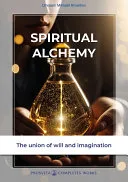
Omraam Mikhaël Aïvanhov’s "Spiritual Alchemy" offers a compelling reframing of alchemical pursuits, shifting the focus from material manipulation to the internal purification of the self. The central argument—that true alchemy is the spiritual transmutation of human consciousness—is powerfully articulated, particularly in passages discussing the refinement of one's own "matter." A significant strength lies in Aïvanhov’s ability to connect ancient symbolism to practical, everyday spiritual living. However, the work occasionally suffers from a certain density, requiring sustained contemplation to fully absorb its layered meanings; some readers might find the absence of concrete alchemical recipes, even metaphorical ones, a point of wanting. The concept of transforming "grains of sand into pearls" serves as a memorable anchor for the book's central thesis. "Spiritual Alchemy" provides a dense, yet rewarding, exploration for dedicated students of inner transformation.
📝 Description
71
Omraam Mikhaël Aïvanhov reinterpreted alchemy in 2013, focusing on inner transformation.
Omraam Mikhaël Aïvanhov's "Spiritual Alchemy" reframes classical alchemical ideas. Instead of the physical transformation of metals, Aïvanhov directs attention to the internal process of spiritual refinement. The book posits that true alchemy is the elevation of human consciousness and matter toward a spiritualized state, comparing this to the transformation of ordinary sand into precious pearls. It is written for serious students of spiritual knowledge, especially those drawn to Western esoteric traditions.
This work appeals to individuals seeking more than superficial spiritual understanding, those ready for introspection and inner development. Readers interested in comparative religion, philosophy, and psychology will find value in its exploration of fundamental human aspirations. Aïvanhov's teachings draw from Hermeticism and Neoplatonism. He applies the concept of the "Great Work" (Magnum Opus) to the inner life. This involves changing negative human traits like ignorance and egoism into virtues such as wisdom and love. The book uses alchemical symbols like the Philosopher's Stone and Elixir of Life as metaphors for spiritual achievement.
Published in 2013, "Spiritual Alchemy" emerged during a period of renewed interest in esoteric philosophy. Aïvanhov's work connects to a long lineage of thought, influenced by traditions from ancient Greece through the Renaissance. His synthesis builds on Hermeticism and Neoplatonism, concepts that gained traction in post-war European intellectual circles and continue to attract global audiences. His focus on internal change aligns with philosophical alchemy explored by figures like Carl Jung.
💡 Why Read This Book?
• Understand the esoteric interpretation of alchemical symbolism, learning how concepts like the Philosopher's Stone relate to inner spiritual development, as explored in the "Key Concepts" section. • Discover practical methods for personal spiritual refinement, moving beyond theoretical knowledge to actionable self-transformation, as advocated by Aïvanhov’s interpretation of "man's own matter." • Gain historical perspective on esoteric traditions by examining how Aïvanhov's teachings connect to Hermeticism and Neoplatonism, situating "Spiritual Alchemy" within a lineage dating back centuries.
⭐ Reader Reviews
Honest opinions from readers who have explored this book.
❓ Frequently Asked Questions
What is the core difference between material and spiritual alchemy according to Omraam Mikhaël Aïvanhov?
Aïvanhov distinguishes spiritual alchemy from its popular perception as the transmutation of base metals into gold. For him, true alchemy is the internal process of transforming one's own consciousness, desires, and lower nature into higher, spiritual qualities, a concept first published in 2013.
What does the book "Spiritual Alchemy" mean by transforming "man's own matter"?
This phrase refers to the spiritual purification and refinement of an individual's psychological and energetic makeup. It involves transmuting negative tendencies like egoism and ignorance into virtues such as wisdom, love, and spiritual understanding, as detailed in the work.
Is "Spiritual Alchemy" a practical guide with step-by-step instructions?
While it offers profound insights and principles for inner work, "Spiritual Alchemy" is more philosophical and inspirational than a literal step-by-step manual. It guides the reader's understanding and intention, rather than providing a prescriptive alchemical process.
Who was Omraam Mikhaël Aïvanhov and when was "Spiritual Alchemy" first published?
Omraam Mikhaël Aïvanhov (1900-1986) was a Bulgarian spiritual teacher who brought his teachings to France. "Spiritual Alchemy" was first published on September 9, 2013, compiling his lectures on the subject.
What alchemical symbols are discussed in the book?
The book interprets key alchemical symbols such as the Philosopher's Stone and the Elixir of Life, recontextualizing them as representations of spiritual attainment and the realization of one's divine potential within the human being.
Does "Spiritual Alchemy" require prior knowledge of alchemy or esoteric traditions?
While prior familiarity can enhance understanding, Aïvanhov's clear exposition makes the core concepts accessible. The work aims to reframe alchemy for a modern audience, making it understandable even for those new to esoteric studies.
🔮 Key Themes & Symbolism
Inner Transmutation
The central theme posits that genuine alchemy lies not in external manipulation of elements but in the internal purification and elevation of human consciousness. This involves transmuting base qualities—like egoism and ignorance—into spiritual virtues such as wisdom and love. The book uses metaphors like transforming common sand into precious pearls to illustrate this profound inner "Great Work," emphasizing that the ultimate goal is the spiritualization of the self.
The Alchemical Metaphor
Aïvanhov reinterprets traditional alchemical symbols, such as the Philosopher's Stone and the Elixir of Life, as representations of spiritual attainment. These are not literal substances but archetypal principles guiding the alchemist toward realizing their divine potential. The work explores how these ancient metaphors offer a framework for understanding and enacting personal spiritual development.
Spiritual Discipline and Practice
The book stresses that spiritual alchemy is an active, ongoing discipline requiring conscious effort and dedication. It outlines the importance of cultivating specific virtues and states of consciousness necessary for this inner transformation. The process involves persistent inner work, self-awareness, and the application of universal spiritual laws to one's daily life.
The Divine Human
A core tenet is the inherent divine potential within every human being. Spiritual alchemy, as presented by Aïvanhov, is the path to awakening and realizing this divine nature. The work encourages readers to see themselves not merely as physical beings but as spiritual entities capable of achieving a higher state of existence through dedicated inner effort.
💬 Memorable Quotes
Direct passages from the work, attributed to the author.
“True Alchemy does not consist in the spectacular transmutation of base metals into gold, but in the spiritual transmutation of man’s own matter.”
— This foundational statement reframes the entire practice of alchemy from external manipulation to internal spiritual refinement, highlighting the personal and psychological nature of the Great Work.
“Grains of sand are transformed into pearls; summer sees twisted, ...”
— This evocative imagery illustrates the process of spiritual alchemy, where seemingly ordinary or unrefined aspects of the self are refined into something precious and beautiful through inner work.
“The Major work is an internal process of purification.”
— This interpretation clarifies that the Great Work, the ultimate aim of alchemy, is understood here as a journey of inner cleansing and refinement rather than an external achievement.
“The Elixir of Life symbolizes spiritual immortality and divine consciousness.”
— This interpretation assigns symbolic meaning to a key alchemical substance, framing it not as a physical potion but as a state of realized spiritual awareness and eternal connection.
💡 Key Ideas
Editorial paraphrase of the work's core concepts — not direct quotes.
The work explores the concept of spiritualizing human matter.
This paraphrased concept emphasizes the goal of elevating one's physical and psychological constitution into a higher, more refined spiritual state, moving beyond the purely material.
🌙 Esoteric Significance
Tradition
Aïvanhov's work firmly sits within the Western Esoteric Tradition, drawing heavily on Hermetic principles and Neoplatonic concepts of emanation and spiritual ascent. It extends the lineage of spiritual alchemy, which views the alchemical process as a metaphor for inner transformation, a path explored by figures from medieval mystics to Renaissance Rosicrucians. His teachings offer a modern synthesis, emphasizing the practical application of these ancient ideas for personal evolution.
Symbolism
The book interprets key alchemical symbols such as the Philosopher's Stone not as a literal substance but as the perfected human consciousness, a state of complete spiritual realization. The "Great Work" (Major work) is understood as the internal process of purifying and elevating one's own being. The transformation of "base metals" into "gold" symbolizes the transmutation of lower human impulses and ignorance into higher virtues like wisdom and love.
Modern Relevance
Contemporary spiritual seekers and practitioners of meditation, yoga, and mindfulness often find resonance in Aïvanhov's emphasis on inner work and conscious transformation. His teachings are relevant to modern psychological approaches that explore the integration of the self and the pursuit of higher consciousness. Thinkers and groups focused on integral spirituality and the evolution of consciousness draw upon his synthesized view of esoteric principles for personal growth.
👥 Who Should Read This Book
• Students of Western Esotericism seeking a modern interpretation of alchemical symbolism and its application to personal development. • Individuals interested in comparative religion and philosophy looking to understand the inner dimensions of spiritual traditions beyond their literal expressions. • Dedicated spiritual practitioners aiming to deepen their understanding of self-transformation and the "Great Work" as a path toward realizing their full potential.
📜 Historical Context
Omraam Mikhaël Aïvanhov's "Spiritual Alchemy," with its first publication in 2013, arrives in an era marked by renewed interest in esoteric traditions, building upon a lineage stretching back to Hermetic philosophy and Neoplatonism. His teachings emerged in post-war Europe, where figures like Carl Jung were also exploring the psychological dimensions of alchemy, albeit from a different academic perspective. Aïvanhov's approach, deeply rooted in Eastern and Western spiritual traditions, synthesized these influences into a unique system focused on inner transformation. While not directly engaging with the Gnostic revival of the late 20th century, his emphasis on spiritual liberation and self-realization echoes Gnostic themes. The 2013 publication date places the work in dialogue with contemporary New Age and self-help movements, yet it retains a classical gravitas distinct from more ephemeral spiritual trends.
📔 Journal Prompts
Reflect on the transformation of "man's own matter" as described by Aïvanhov.
How does the concept of the Philosopher's Stone function as a metaphor for spiritual attainment in your life?
Consider the process of turning "grains of sand into pearls" in your daily experiences.
Analyze the role of "spiritual transmutation" in your personal growth journey.
What does the "Great Work" signify for your current path of self-discovery?
🗂️ Glossary
Spiritual Alchemy
The practice of internal transformation and purification of one's consciousness and being, using alchemical symbolism as a metaphor for spiritual development.
Man's Own Matter
Refers to the individual's psychological, energetic, and spiritual constitution, which is the subject of internal alchemical transformation.
The Great Work (Major work)
The ultimate aim of alchemy, interpreted here as the complete spiritual realization and perfection of the individual human being.
Transmutation
The process of changing or converting one substance or quality into another, specifically referring to the elevation of lower spiritual or psychological states into higher ones.
Philosopher's Stone
An alchemical symbol representing the perfected state of spiritual realization, wisdom, and the capacity for inner transformation.
Elixir of Life
An alchemical concept symbolizing immortality and spiritual vitality, interpreted as the attainment of divine consciousness and eternal connection.
Pearls from Sand
A metaphor for the refinement of ordinary or seemingly insignificant aspects of the self into something precious and spiritually valuable through inner work.