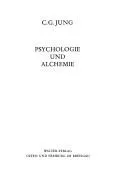
Psychologie der Uebertragung

 72
72

Psychologie der Uebertragung
Jung's "Psychologie der Uebertragung" presents a dense, yet vital, examination of how internal psychic landscapes are mapped onto external relationships. The work’s strength lies in its rigorous integration of alchemical symbolism with clinical observation, offering a framework where the transference is not just a therapeutic hurdle but a profound, archetypal process. Jung’s detailed analysis of the *coniunctio* as a metaphor for psychic integration through relationship is particularly compelling. However, the text’s academic density and reliance on esoteric parallels can pose a significant barrier to readers unfamiliar with Jungian terminology or alchemical traditions. The specific discussion on the transference’s alchemical nature, while illuminating, requires considerable background knowledge. Jung’s exploration of the transference as an arena for the activation of the *imago Dei* provides a unique perspective on its spiritual dimension, distinguishing it from more secular interpretations. The verdict: a foundational text for advanced Jungian study, demanding but rewarding.
📝 Description
72
Carl Gustav Jung published "Psychologie der Uebertragung" in 1969, examining unconscious psychic forces in relationships.
This 1969 work by Carl Gustav Jung investigates transference, focusing on the unconscious psychic dynamics that shape human connections, especially in therapy. Jung details how internal psychic structures are projected onto external individuals, a process he considered vital for psychological growth and healing. The book extends beyond a simple clinical view to address the archetypal aspects of these interpersonal interactions.
Jung's writing on transference is important for psychotherapists, psychoanalysts, and depth psychologists interested in a deeper grasp of this phenomenon. It also attracts scholars of Jungian psychology, comparative religion, and mythology, who recognize the archetypal roots of human behavior. Readers curious about the unconscious mind's symbolic language and how it appears in relationships will find substantial content here.
Jung's "Psychologie der Uebertragung" was published in 1969, a time when analytical psychology was evolving. Building on Freudian ideas, Jung incorporated his concepts of archetypes and the collective unconscious. His work offered an alternative to behaviorist and ego psychology, highlighting the spiritual and symbolic dimensions of the psyche. This perspective connected psychological phenomena to broader symbolic traditions, including alchemy, and positioned transference not just as a clinical issue but as a manifestation of deeper, universal psychic patterns.
💡 Why Read This Book?
• Gain a nuanced understanding of transference beyond clinical projection, recognizing its role in activating archetypal patterns, as detailed in Jung's analysis of the *coniunctio*. • Explore the symbolic language of alchemy as a framework for understanding psychic integration within relationships, a perspective unique to Jung's later work. • Appreciate the spiritual dimension of interpersonal dynamics, viewing transference as a potential pathway to individuation, a core concept in Jung's psychology.
⭐ Reader Reviews
Honest opinions from readers who have explored this book.
❓ Frequently Asked Questions
When was Carl Jung's 'Psychologie der Uebertragung' first published?
Carl Jung's 'Psychologie der Uebertragung' was first published in 1969, appearing in Volume 16 of his Collected Works.
What is the central theme of 'Psychologie der Uebertragung'?
The central theme is the psychological phenomenon of transference, viewed through Jung's lens of archetypes and alchemical symbolism, exploring its role in individuation.
How does Jung's concept of transference differ from Freud's?
Jung expands on Freud's idea of transference by incorporating archetypal patterns and alchemical symbolism, seeing it not just as a repetition of past relationships but as a dynamic process of psychic transformation.
What is the significance of alchemy in 'Psychologie der Uebertragung'?
Alchemy serves as a symbolic language and a parallel process to the psychological work of integration and individuation, particularly relating to the union of opposites, or *coniunctio*.
Is 'Psychologie der Uebertragung' suitable for beginners in psychology?
While foundational for Jungian studies, the book's density and reliance on specialized terminology and alchemical parallels make it more suitable for advanced students and practitioners.
What does Jung mean by the 'imago Dei' in relation to transference?
Jung suggests that the transference phenomenon can involve the projection of the divine image, the *imago Dei*, onto the partner in the relationship, indicating a spiritual dimension to the process.
🔮 Key Themes & Symbolism
Archetypal Dynamics of Transference
This work posits that transference is not merely a personal repetition of past relational patterns but a potent manifestation of universal archetypes. Jung illustrates how figures like the anima and animus, and the broader collective unconscious, project their inherent structures onto the therapeutic relationship. This archetypal layer imbues the transference with a numinous quality, suggesting it is a site where the individual psyche encounters the profound, symbolic forces that shape human experience across cultures and epochs.
Alchemy as a Metaphor for Psychic Integration
Jung draws extensive parallels between the alchemical process and the work of individuation, particularly as enacted through transference. The *coniunctio*, or alchemical marriage, becomes a central metaphor for the union of opposites within the psyche, facilitated by the projection and subsequent integration of unconscious contents onto another person. This perspective elevates the analytical relationship from a purely clinical interaction to a sacred space for transformation.
The Spiritual Dimension of Relationships
Beyond its clinical implications, Jung explores the spiritual significance of transference. He suggests that the intensity and often irrational nature of transference reactions can be understood as the activation of the *imago Dei*, or divine image, within the psyche. This framing highlights how relationships, particularly the transference dynamic, can serve as a conduit for encountering the transcendent and participating in the process of becoming whole.
Projection and the Shadow
The book examines how the unconscious aspects of the personality, particularly the shadow, are projected onto others during transference. This projection often involves disowned parts of the self, leading to intense emotional reactions and the idealization or demonization of the other. Jung's analysis underscores the necessity of withdrawing these projections to achieve self-awareness and integrate the shadow, a crucial step in individuation.
💬 Memorable Quotes
Direct passages from the work, attributed to the author.
“The transference is an inevitable phenomenon in every relationship.”
— This statement highlights Jung's view that projection and the unconscious mapping of internal psychic states onto others are fundamental aspects of human interaction, not limited to the clinical setting.
“The anima/animus projection colours our perception of the opposite sex.”
— This interpretation points to how unconscious feminine (anima) or masculine (animus) archetypes are projected onto individuals of the opposite sex, shaping relational expectations and dynamics.
“The analysis of transference reveals the archetypal patterns at play.”
— This interpretation underscores Jung's core thesis that examining transference allows for the identification of universal, archetypal motifs that influence individual psychology and relationships.
💡 Key Ideas
Editorial paraphrase of the work's core concepts — not direct quotes.
The alchemist sought the *coniunctio*, the union of opposites, mirroring the goal of psychic integration.
This conceptual paraphrase emphasizes Jung's use of alchemical symbolism to represent the therapeutic aim of integrating conflicting psychic elements, a process he saw reflected in the dynamics of transference.
The transference is a bridge between the conscious and unconscious.
This paraphrased concept illustrates how the phenomenon of transference acts as a vital link, bringing unconscious material into conscious awareness through the interpersonal dynamic.
🌙 Esoteric Significance
Tradition
Jung's work on transference deeply engages with Western esoteric traditions, particularly alchemy and Gnosticism. While departing from literal interpretations, he uses alchemical processes (*solve et coagula*, *coniunctio*) as symbolic frameworks to describe psychological transformation. This approach situates analytical psychology within a lineage that seeks spiritual integration and wholeness, moving beyond purely materialist explanations of the psyche.
Symbolism
Key symbols include the *coniunctio* (alchemical marriage), representing the union of opposites (conscious/unconscious, masculine/feminine) within the psyche, often enacted through transference. The philosopher's stone symbolizes the perfected, integrated self. The dragon or serpent can represent the primal, chthonic energies that must be confronted and integrated during the individuation process facilitated by transference.
Modern Relevance
Contemporary depth psychology, particularly Jungian and post-Jungian schools, continues to draw heavily on Jung's understanding of transference as an archetypal and symbolic process. Practices in somatic psychology and trauma therapy also implicitly or explicitly engage with these concepts of projection and psychic integration. Thinkers exploring the intersection of spirituality and psychology find Jung's alchemical metaphors important for understanding the transformative potential of relationships.
👥 Who Should Read This Book
• Psychotherapists and counselors seeking to deepen their theoretical understanding of the transference dynamic beyond classical Freudian interpretations. • Students and scholars of Carl Jung's work interested in his later writings on alchemy and the symbolic dimensions of the psyche. • Individuals exploring the intersection of psychology, mythology, and spirituality, looking for frameworks to understand the profound nature of human connection.
📜 Historical Context
Published in 1969, "Psychologie der Uebertragung" by Carl Gustav Jung emerged in a fertile period for depth psychology, yet positioned itself distinctly from prevailing trends. While Sigmund Freud had laid the groundwork for understanding transference as a repetition of infantile neuroses, Jung, in this 1969 work, expanded it to encompass archetypal dimensions and alchemical symbolism. This era saw analytical psychology solidifying its place, often in dialogue or contention with behaviorism and humanistic psychology. Jung's contemporary, Erich Neumann, also explored archetypal themes extensively. The reception of Jung’s later works, including those focusing on alchemy and symbolism, was marked by both profound admiration within his followers and skepticism from more empirically-minded psychological circles. Jung’s deliberate engagement with esoteric traditions like alchemy offered a spiritual and symbolic perspective that diverged sharply from the increasingly secularized scientific psychology of the mid-20th century.
📔 Journal Prompts
The *coniunctio* as a symbol of integration within relationships.
Archetypal projections encountered in interpersonal dynamics.
The alchemical parallels to psychological transformation.
Withdrawal of projections and the integration of the shadow.
The *imago Dei* and its manifestation in transference.
🗂️ Glossary
Transference
The unconscious redirection of feelings from one person (e.g., a parent) to another (e.g., a therapist), viewed by Jung as also involving archetypal projections.
Archetype
Universal, archaic patterns and images that derive from the collective unconscious and are the psychic counterpart of instinct.
Collective Unconscious
A layer of the unconscious psyche containing the inherited archetypes common to all humanity.
Coniunctio
Latin for 'union' or 'conjunction', referring in alchemy to the marriage of opposites, symbolizing psychic integration in Jungian psychology.
Anima/Animus
The unconscious feminine aspect in a man (anima) and the unconscious masculine aspect in a woman (animus), often projected in relationships.
Shadow
The unconscious, repressed, or disowned aspects of the personality, often projected onto others.
Imago Dei
Latin for 'image of God', referring to the innate divine likeness within the human psyche, which Jung linked to archetypal activation.
🔮 Readers Also Liked
Browse all →









More by Carl Gustav Jung
All books →

More Free Alchemy & Hermeticism Books
View all →