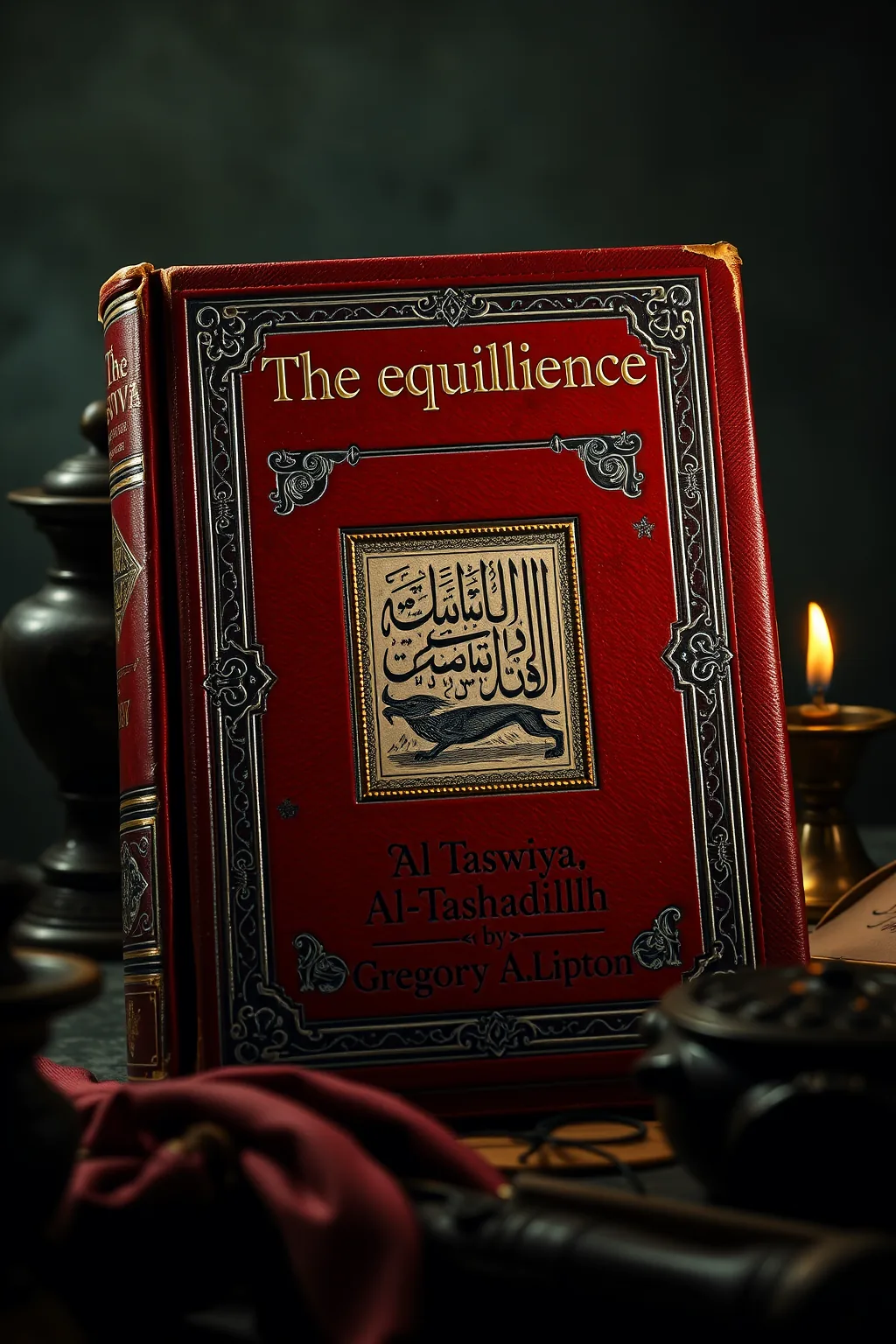
"The equivalence" (Al-Taswiya) of Muhibb Allah Ilahabadi
 61
61

"The equivalence" (Al-Taswiya) of Muhibb Allah Ilahabadi


Review by Ophelia Vance (Mystical Literature Reviewer) — Gregory A. Lipton's translation of Muhibb Allah Ilahabadi's The Equivalence is a significant contribution to the field of Sufi studies. The book's esoteric insights are both profound and accessible, making it a valuable resource for scholars and spiritual seekers alike. Lipton's annotations provide essential context, illuminating the Avicennan neoplatonic idiom that underpins Ilahabadi's work. The strength of this book lies in its ability to bridge the gap between historical scholarship and contemporary spiritual practice, making it an indispensable addition to any esoteric library.
📝 Description
61
Gregory A. Lipton translates Muhibb Allah Ilahabadi's 17th-century treatise, 'Al-Taswiya', exploring mystical equivalence.
This translation of Muhibb Allah Ilahabadi's 'Al-Taswiya' offers a look into 17th-century Islamic thought. Ilahabadi, sometimes called 'the second Ibn Arabi', presents a perspective influenced by Avicenna and Neoplatonism. The work addresses the concept of mystical equivalence, particularly between divine giving and human receiving.
Readers will find discussions on the hidden aspects of reality and the symbolic language used to describe the soul's experience. The text encourages deep thought and spiritual questioning. It aims to reveal layers of knowledge and symbolism within its teachings. This book is suited for those interested in Islamic mysticism, spiritual exploration, and esoteric studies.
Muhibb Allah Ilahabadi's 'Al-Taswiya' belongs to the intellectual tradition of post-Ibn Arabi Sufism, a period marked by philosophical engagement with Neoplatonism and Aristotelian thought, particularly through the lens of thinkers like Avicenna. This era saw Sufi masters not only articulating mystical experiences but also constructing complex philosophical systems to explain them. Ilahabadi's work fits within this current, aiming to reconcile divine action and human reception through a concept of spiritual balance, using a sophisticated vocabulary and conceptual framework common in advanced Sufi philosophical texts.
💡 Why Read This Book?
Read The Equivalence to explore the depths of Islamic mysticism and Sufi philosophy. This book is ideal for seekers of hidden knowledge, scholars of esoteric traditions, and practitioners of alchemy and Hermeticism. It offers a unique perspective on the metaphysical dimensions of giving and receiving, providing insights that can enrich both spiritual practice and intellectual inquiry.
⭐ Reader Reviews
Honest opinions from readers who have explored this book.
❓ Frequently Asked Questions
What is the significance of The Equivalence in Sufi literature?
The Equivalence offers a controversial interpretation of Ibn Arabi's metaphysics, providing a deeply Avicennan neoplatonic perspective that is rarely discussed in contemporary scholarship.
Who was Muhibb Allah Ilahabadi?
Muhibb Allah Ilahabadi was a renowned Sufi scholar in India, known as 'the second Ibn Arabi' for his profound metaphysical insights.
What themes does the book explore?
The book explores the mystical equivalence between giving and receiving, delving into the symbolic language of the soul and the hidden dimensions of reality.
Is this book suitable for beginners in Sufism?
While it is accessible to beginners, it is particularly valuable for those with some background in Islamic philosophy and Sufi studies.
How does this book contribute to contemporary spiritual practice?
The Equivalence provides insights into the metaphysical dimensions of spiritual practices, offering a rich tapestry of philosophical ideas that can enrich contemporary spiritual inquiry.
🔮 Key Themes & Symbolism
The Mystical Equivalence
The book explores the profound metaphysical concept of the equivalence between giving and receiving, a central theme in Sufi mysticism. This theme examines the hidden dimensions of reality, where the boundaries between the giver and the receiver dissolve, revealing the interconnectedness of all existence.
Avicennan Neoplatonism
Muhibb Allah Ilahabadi's work is deeply rooted in the Avicennan neoplatonic tradition, which emphasizes the unity of being and the hierarchy of existence. This philosophical framework provides a rich context for understanding the mystical insights presented in the book.
Symbolism and Hidden Knowledge
The Equivalence is rich in symbolism, inviting readers to unravel the layers of hidden knowledge embedded within its pages. The book's use of symbolic language challenges readers to look beyond the surface level of reality, seeking the deeper truths that lie beneath.
💡 Key Ideas
Editorial paraphrase of the work's core concepts — not direct quotes.
The essence of giving is the essence of receiving.
This quote underscores the mystical equivalence between giving and receiving, highlighting the interconnectedness of all existence.
The soul's journey is a journey of symbols.
This line emphasizes the importance of symbolic language in understanding the deeper truths of reality.
In the unity of being, all distinctions dissolve.
This quote reflects the Avicennan neoplatonic perspective, emphasizing the unity of existence and the dissolution of boundaries.
The heart is the seat of divine knowledge.
This line highlights the spiritual heart's role in accessing hidden knowledge and mystical insights.
The true giver is the true receiver.
This quote expresses the mystical equivalence between giving and receiving, revealing the profound interdependence of all existence.
🌙 Esoteric Significance
Tradition
The Equivalence belongs to the Hermetic and Sufi traditions, emphasizing the mystical unity of being and the interconnectedness of all existence. It draws heavily on Avicennan neoplatonic philosophy, which emphasizes the hierarchy of existence and the unity of the divine.
Symbolism
Key symbols in the book include the heart, the soul's journey, and the mystical equivalence between giving and receiving. These symbols represent the deeper truths of reality, challenging readers to look beyond the surface level of existence.
Modern Relevance
The Equivalence remains relevant today, offering insights into the metaphysical dimensions of spiritual practices. Modern practitioners of alchemy, Hermeticism, and Sufism continue to draw on its teachings, finding inspiration in its profound mystical insights.
👥 Who Should Read This Book
Beginners in Sufism will find The Equivalence challenging but rewarding, as it offers a deep dive into the mystical and esoteric dimensions of Islamic philosophy. Scholars of Sufi studies will appreciate the book's controversial interpretation of Ibn Arabi's metaphysics and its Avicennan neoplatonic perspective. Spiritual seekers and practitioners of alchemy and Hermeticism will find rich insights into the metaphysical dimensions of giving and receiving, enriching their spiritual practices.
📜 Historical Context
Muhibb Allah Ilahabadi's The Equivalence was written in the 17th century, a time of significant cultural and intellectual exchange in India. This era saw the flourishing of Sufi mysticism and the synthesis of Islamic philosophy with local traditions. The Equivalence is a proof of this rich intellectual heritage, offering a controversial interpretation of Ibn Arabi's metaphysics that challenges contemporary scholarship. The book's influence can be seen in the ongoing debates within Sufi studies, where its insights continue to inspire and provoke thought.
📔 Journal Prompts
Reflect on the concept of the mystical equivalence between giving and receiving. How does this idea resonate with your own experiences?
Explore the symbolic language of the soul as presented in The Equivalence. What symbols speak to you personally?
Consider the Avicennan neoplatonic perspective on the unity of being. How does this philosophical framework influence your understanding of reality?
How does The Equivalence challenge or affirm your current spiritual beliefs and practices?
Imagine the journey of the soul as described in the book. What insights or revelations does this journey bring to your own spiritual path?
🗂️ Glossary
Avicennan Neoplatonism
A philosophical tradition that emphasizes the unity of being and the hierarchy of existence, drawing on the teachings of the Islamic philosopher Avicenna.
Hermeticism
An esoteric tradition that seeks to uncover hidden knowledge and the mystical unity of being, often associated with alchemy and spiritual practices.
Mystical Equivalence
The concept that giving and receiving are fundamentally interconnected, reflecting the unity of existence and the dissolution of boundaries.
Sufi Philosophy
The mystical and esoteric dimensions of Islam, emphasizing the spiritual journey of the soul and the search for divine knowledge.
Symbolic Language
The use of symbols to convey deeper truths and hidden knowledge, challenging readers to look beyond the surface level of reality.
This book appears in 7 collections
🔮 Readers Also Liked
Browse all →








From the “Islamic Mysticism” Collection
View all →



More Free Alchemy & Hermeticism Books
View all →