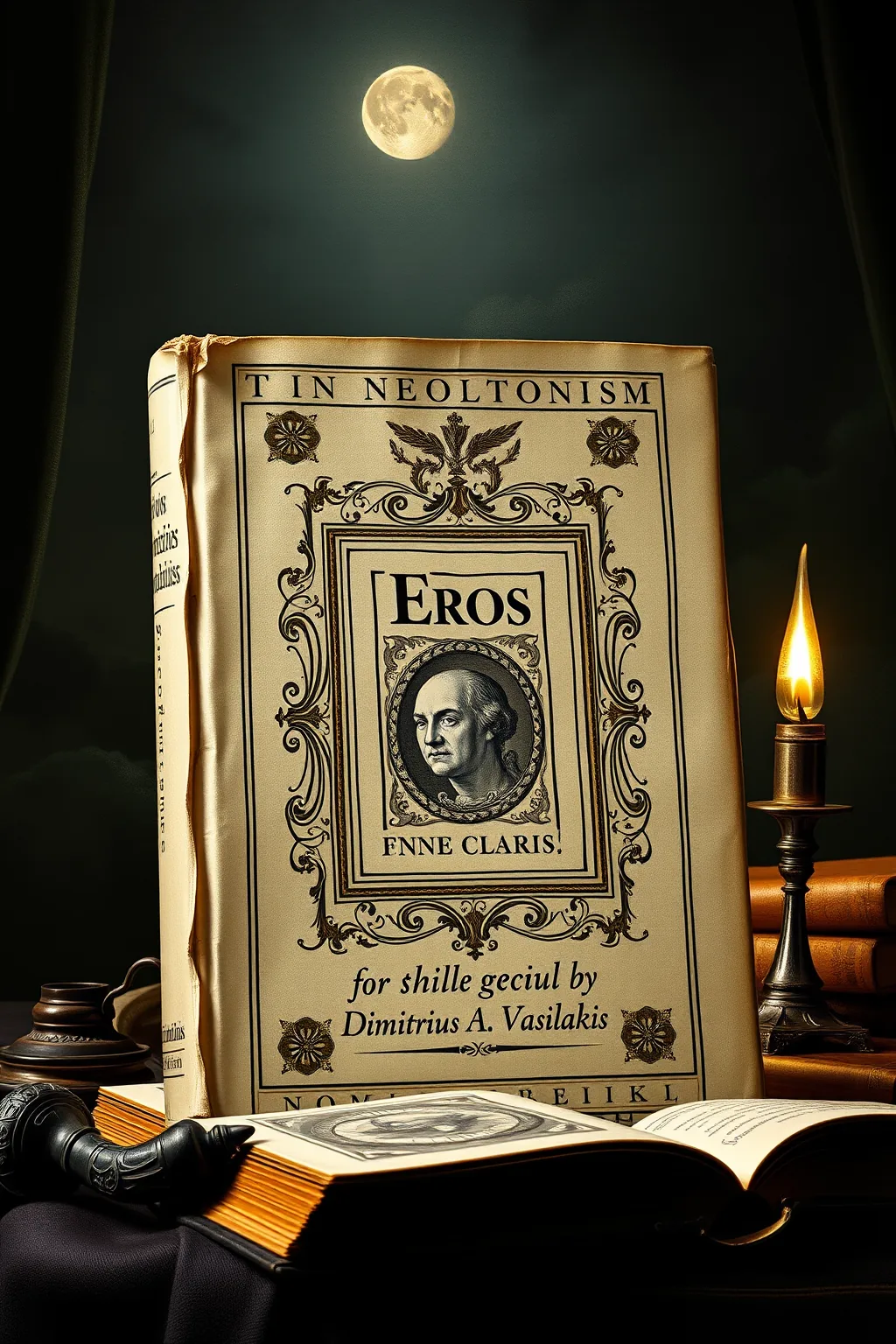
Eros in Neoplatonism and Its Reception in Christian Philosophy
 61
61

Eros in Neoplatonism and Its Reception in Christian Philosophy


In 'Eros in Neoplatonism and Its Reception in Christian Philosophy,' Dimitrios A. Vasilakis masterfully navigates the intricate landscape of Neoplatonic thought and its influence on Christian philosophy. The book's strength lies in its deep dive into the concept of eros, revealing its esoteric significance and transformation across different philosophical systems. Vasilakis' work is a must-read for those interested in the mystical dimensions of love and its role in spiritual enlightenment. The text is particularly valuable for scholars and practitioners of alchemy and hermeticism, offering a unique perspective on the ontological importance of eros.
📝 Description
61
Dimitrios A. Vasilakis examines the complex role of eros in Neoplatonism and its Christian philosophical reception.
Dimitrios A. Vasilakis's work analyzes the concept of eros as it appears in Neoplatonic thought and its subsequent integration into Christian philosophy. The book focuses on key figures like Plotinus, Proclus, and Dionysius the Areopagite, tracing how their ideas on love shaped spiritual and ontological understanding.
Vasilakis details eros not merely as desire, but as a fundamental force connecting the human and the divine. The analysis reveals symbolic meanings and philosophical structures that underscore this connection. Readers will find a detailed account of how these ancient philosophical ideas were adapted and reinterpreted within a Christian framework, impacting theological discourse.
The book invites careful consideration of love's mystical dimensions and its function in spiritual development. It is suited for those interested in the philosophical underpinnings of spirituality and the historical dialogue between classical philosophy and Christian theology.
This study situates itself within the tradition of Neoplatonic philosophy, a system that influenced many esoteric and mystical movements. Neoplatonism views the material world as an emanation from a transcendent One, with love (eros) often described as the driving force of ascent back towards the divine. Vasilakis traces how this concept was adopted and transformed by early Christian thinkers, particularly those like Dionysius who sought to reconcile Platonic metaphysics with Christian doctrine. The book examines how eros functioned as a bridge, enabling a spiritual union between humanity and God, a common theme in mystical traditions.
💡 Why Read This Book?
Read this book to uncover the hidden depths of love as an esoteric force in Neoplatonic and Christian thought. Ideal for spiritual seekers, philosophers, and practitioners of occult studies, it provides a rich understanding of eros' transformative power and its role in bridging the divine and the human. This book is a treasure trove of mystical insights and philosophical revelations.
⭐ Reader Reviews
Honest opinions from readers who have explored this book.
❓ Frequently Asked Questions
What is the main focus of the book?
The book explores the concept of eros in Neoplatonic philosophy and its reception in Christian thought, highlighting its ontological significance.
Who are the key philosophers discussed?
The book focuses on Plotinus, Proclus, and Dionysius the Areopagite.
Is this book suitable for beginners?
While accessible, it is best suited for those with some background in philosophy or esoteric studies.
What makes this book unique?
Its deep dive into the esoteric dimensions of eros and its transformative journey across different philosophical systems.
How does this book contribute to occult studies?
It offers a unique perspective on the mystical dimensions of love and its role in spiritual ascension.
🔮 Key Themes & Symbolism
The Ontological Significance of Eros
Vasilakis explores the hidden symbolism and ontological importance of eros within Neoplatonic philosophy, revealing its transformative power and role in spiritual ascension.
Neoplatonic Philosophy and Its Influence
The book examines the works of Plotinus and Proclus, uncovering the esoteric underpinnings of their thought and its influence on Christian philosophy.
The Transformation of Eros in Christian Thought
Vasilakis explores how the concept of eros is transformed from a state of deficiency in Plotinus to one of plenitude in Dionysius the Areopagite, bridging the divine and the human.
💬 Memorable Quotes
Direct passages from the work, attributed to the author.
“The soul's journey towards the divine is illuminated by the light of eros.”
— Eros serves as a guiding force in the soul's quest for spiritual enlightenment.
💡 Key Ideas
Editorial paraphrase of the work's core concepts — not direct quotes.
Love is the bridge that connects the divine and the human.
This quote underscores the transformative power of eros in spiritual ascension.
In the depths of love, the mysteries of the universe are revealed.
This passage highlights the esoteric significance of eros in uncovering hidden knowledge.
The transformation of eros from deficiency to plenitude is a proof of its mystical dimensions.
This quote illustrates the journey of eros across different philosophical systems.
Love is the essence of all being, the source of all creation.
This passage emphasizes the ontological importance of eros in Neoplatonic thought.
🌙 Esoteric Significance
Tradition
This book belongs to the Hermetic tradition, focusing on the esoteric dimensions of love and its transformative power in spiritual ascension.
Symbolism
Key symbols include the soul's journey towards the divine, the bridge between the divine and the human, and the light of eros clear the mysteries of the universe.
Modern Relevance
This book remains relevant today for modern practitioners of occult studies and spiritual seekers who are interested in the mystical dimensions of love and its role in spiritual enlightenment.
👥 Who Should Read This Book
This book is ideal for beginners and scholars of esoteric studies, philosophers, and spiritual seekers. Beginners will find it accessible with some background in philosophy, while scholars will appreciate its deep dive into Neoplatonic thought. Spiritual seekers will be drawn to its exploration of the mystical dimensions of love, and practitioners of occult studies will find it a valuable resource for understanding the esoteric significance of eros.
📜 Historical Context
Written during a time of intellectual ferment, 'Eros in Neoplatonism and Its Reception in Christian Philosophy' explores the intersection of ancient wisdom and early Christian thought. The book was important for its time as it bridged the gap between pagan philosophy and Christian theology, offering a unique perspective on the mystical dimensions of love. Its influence can be seen in the works of later philosophers and theologians who sought to reconcile pagan and Christian ideas.
📔 Journal Prompts
How does the concept of eros in Neoplatonic philosophy resonate with your own spiritual journey?
In what ways does the transformation of eros from deficiency to plenitude influence your understanding of love?
Reflect on the symbolism of the soul's journey towards the divine in your own life.
How does the esoteric significance of eros in this book compare to your previous understanding of love?
What insights from this book can you apply to your own spiritual practices?
🗂️ Glossary
Eros
The Greek word for love, often used to describe a powerful, transformative force in spiritual ascension.
Neoplatonism
A philosophical system inspired by Plato, emphasizing the mystical dimensions of reality and the soul's journey towards the divine.
Plotinus
A key Neoplatonic philosopher whose works explore the ontological significance of eros and the soul's journey towards the divine.
Proclus
A Neoplatonic philosopher who further developed the concept of eros, transforming it into a state of plenitude.
Dionysius the Areopagite
A Christian philosopher who integrated Neoplatonic ideas into Christian thought, emphasizing the transformative power of eros in spiritual ascension.
This book appears in 2 collections
🔮 Readers Also Liked
Browse all →








From the “Neoplatonism” Collection
View all →







More Free Alchemy & Hermeticism Books
View all →