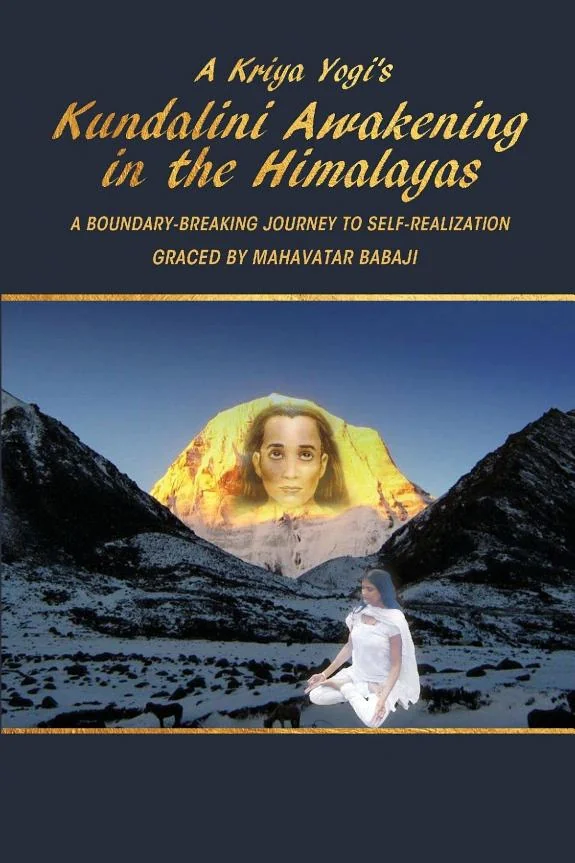
A Kriya Yogi's Kundalini Awakening in the Himalayas: A Boundary-Breaking Journey to Self-Realization Graced by Mahavatar Babaji
 75
75

A Kriya Yogi's Kundalini Awakening in the Himalayas: A Boundary-Breaking Journey to Self-Realization Graced by Mahavatar Babaji
Madhuri Mandava's "A Kriya Yogi's Kundalini Awakening in the Himalayas" presents an earnest account of a spiritual quest initiated by a desire for mountaineering. The pivot from physical exploration to inner awakening, spurred by Yogananda's seminal work, forms the narrative's core. Mandava’s candidness in detailing her initial intellectual pursuits in quantum physics and metaphysics before finding solace in Kriya Yoga offers a relatable entry point for many modern seekers. A notable strength is the grounded description of the spiritual process, avoiding overly esoteric jargon. However, the narrative occasionally feels less like a critical analysis and more like a personal diary, which might leave readers seeking deeper philosophical exegesis wanting. The passage describing the initial encounter with "Autobiography of a Yogi" is particularly well-rendered, capturing the pivotal moment of spiritual redirection. This book serves as a sincere testament to the unpredictable nature of spiritual calling.
📝 Description
75
Madhuri Mandava's 2023 book details her spiritual path in the Himalayas, moving from mountaineering to Kriya Yoga.
A Kriya Yogi's Kundalini Awakening in the Himalayas recounts Madhuri Mandava's personal transformation. Initially drawn to the mountains, her path shifted after reading Paramahansa Yogananda's "Autobiography of a Yogi." This encounter redirected her focus from physical challenges to the internal practices of Kriya Yoga, a method aimed at spiritual realization.
The narrative follows Mandava from an intellectual interest, which included exploring quantum physics and metaphysics, to a direct experience of spiritual awakening. The book is intended for those interested in firsthand accounts of Kundalini awakening, especially those drawn to Kriya Yoga within the Yogananda lineage. Readers who appreciate autobiographical spiritual journeys, particularly those set in the Himalayas, will find value here. It also speaks to those who examine the connections between contemporary science and older yogic philosophies.
This work is situated within the modern resurgence of interest in Indian spiritual traditions, particularly Kriya Yoga, which gained prominence in the West following Paramahansa Yogananda's teachings. Yogananda's "Autobiography of a Yogi," published in 1946, significantly influenced many seekers. Mandava's exploration connects to this lineage, placing her personal quest for Kundalini awakening within a broader historical movement that sought to integrate yogic philosophy with contemporary thought, including scientific paradigms.
💡 Why Read This Book?
• Gain practical insights into the Kriya Yoga path as described by Madhuri Mandava, moving beyond theoretical study to understand the personal experience of its techniques, as detailed in her journey. • Understand the shift from scientific inquiry (like quantum physics) to spiritual seeking, as Mandava illustrates how philosophical exploration can lead to yogic practices for self-realization. • Connect with the spiritual significance of the Himalayas as a sacred landscape for awakening, drawing parallels between the physical journey and the inner ascent described in the book.
⭐ Reader Reviews
Honest opinions from readers who have explored this book.
❓ Frequently Asked Questions
What is Kriya Yoga as presented in Madhuri Mandava's book?
Kriya Yoga, as detailed in the book, is a yogic path focused on spiritual evolution and self-realization. It's presented as a practical technique that, when practiced diligently, can accelerate one's spiritual development, often associated with the lineage influenced by Mahavatar Babaji.
How did Madhuri Mandava's interest in mountaineering lead to spiritual awakening?
Her initial aspiration to learn mountaineering in the Himalayas unexpectedly transformed into a profound spiritual quest. Encounters with spiritual literature, particularly "Autobiography of a Yogi," shifted her focus from external peaks to internal spiritual ascent and Kundalini awakening.
What role does Mahavatar Babaji play in this Kriya Yogi's journey?
Mahavatar Babaji is presented as a guiding spiritual presence and foundational figure within the Kriya Yoga tradition that Mandava follows. His grace and teachings are depicted as instrumental in facilitating her Kundalini awakening and progress on the path.
Does the book discuss the connection between science and spirituality?
Yes, the book touches upon Mandava's initial explorations into quantum physics and metaphysics. It illustrates a personal search for answers that eventually led her to discover the efficacy of ancient yogic practices for understanding existence.
When was 'A Kriya Yogi's Kundalini Awakening in the Himalayas' first published?
The book was first published on November 18, 2019, making it a contemporary account of spiritual practice and awakening within the Kriya Yoga tradition.
What does 'Kundalini Awakening' mean in the context of this book?
Kundalini Awakening refers to the activation of a dormant spiritual energy believed to reside at the base of the spine. Its ascent through the central energy channel (Sushumna Nadi) and chakras is described as a process leading to heightened consciousness and self-realization.
🔮 Key Themes & Symbolism
The Kriya Yoga Path
This theme centers on Kriya Yoga not merely as a philosophy but as a tangible, life-altering practice. Mandava's narrative elucidates how this specific yogic technique, influenced by Mahavatar Babaji, serves as a direct method for spiritual acceleration. It moves beyond theoretical discussions to showcase the personal application and transformative effects experienced by a dedicated practitioner reading through the path toward enlightenment in the Himalayas.
Kundalini Awakening Process
The book offers an intimate look at the phenomenon of Kundalini awakening. It details the stages, challenges, and profound shifts associated with the rising of this primal spiritual energy through the chakra system. Mandava's account aims to clarify this potent aspect of yogic science, presenting it as an attainable realization for sincere seekers who engage with the practices.
Himalayas as a Sacred Space
The Himalayas are depicted not just as a geographical location but as a potent spiritual crucible. Their serene yet formidable environment acts as a catalyst for Mandava's inner transformation, amplifying the quest for self-realization. The book explores how the sacred geography of the mountains intertwines with the internal field of spiritual awakening.
Self-Realization Through Yoga
The ultimate aim of Mandava's journey is self-realization, presented as the pinnacle of human spiritual endeavor. The book frames Kriya Yoga and Kundalini awakening as the principal vehicles for achieving this state of ultimate knowing and oneness. It emphasizes that true fulfillment lies in understanding one's deepest nature through dedicated yogic practice.
💬 Memorable Quotes
Direct passages from the work, attributed to the author.
“My aspiration to scale mountains transformed into a quest to ascend within.”
— This concise statement captures the important shift in the author's focus. It highlights how an external ambition to conquer physical heights in the Himalayas became an internal drive towards spiritual elevation and self-discovery.
“Mahavatar Babaji's grace is the unseen hand guiding the Kriya Yogi.”
— This highlights the reverence and belief in the active, benevolent influence of Mahavatar Babaji within the Kriya Yoga tradition. It portrays him as a living force whose spiritual support is crucial for practitioners on their path.
“The Himalayas themselves seemed to breathe the energy of awakening.”
— This evocative statement imbues the natural landscape with spiritual potency. It suggests that the environment of the Himalayas is not merely a backdrop but an active participant, resonating with and facilitating the spiritual transformation occurring within the practitioner.
“Enlightenment is not found on maps, but within the heart's deepest chambers.”
— This aphorism emphasizes the inward nature of spiritual realization. It contrasts the external pursuit of geographical discovery with the internal journey required to attain profound spiritual understanding and enlightenment.
💡 Key Ideas
Editorial paraphrase of the work's core concepts — not direct quotes.
Quantum physics and metaphysics offered explanations, but Kriya Yoga offered experience.
This quote contrasts intellectual inquiry with embodied spiritual practice. It suggests that while scientific and philosophical frameworks can provide conceptual understanding, the direct experience of yogic techniques offers a more profound path to truth.
🌙 Esoteric Significance
Tradition
This work firmly belongs to the tradition of Kriya Yoga, a lineage popularized in the modern era by Paramahansa Yogananda and his guru, Sri Yukteswar Giri, who received the teachings from Mahavatar Babaji. It represents a practical, systematic approach to spiritual evolution rooted in ancient Indian yogic principles, emphasizing meditation and specific breathing techniques (pranayama) to accelerate consciousness and achieve self-realization.
Symbolism
The Himalayas function as a potent symbol of spiritual ascent and divine proximity, representing the ultimate peak of consciousness. Kundalini, the coiled serpent energy at the base of the spine, symbolizes dormant spiritual potential, its awakening and ascent through the chakras signifying the unfolding of higher awareness and divine union. Mahavatar Babaji himself embodies the ideal of the immortal yogi, a symbol of spiritual mastery and guidance available to dedicated practitioners.
Modern Relevance
Contemporary spiritual seekers interested in practical, meditation-focused paths often turn to the Kriya Yoga lineage. Mandava's book speaks to individuals exploring the intersection of science and spirituality, a common theme in modern metaphysical discourse. Furthermore, the renewed interest in energy systems like chakras and Kundalini, prevalent in various New Age and esoteric circles, finds a grounded, experiential account in her narrative.
👥 Who Should Read This Book
• Practitioners of Kriya Yoga seeking personal accounts that validate and deepen their understanding of the path, particularly those initiated or inspired by Mahavatar Babaji's teachings. • Individuals interested in the confluence of Eastern spirituality and Western scientific inquiry, who are exploring how yogic practices can address existential questions raised by fields like quantum physics. • Readers drawn to autobiographical narratives of spiritual transformation, especially those set in spiritually charged environments like the Himalayas, looking for an authentic depiction of Kundalini awakening.
📜 Historical Context
Madhuri Mandava's "A Kriya Yogi's Kundalini Awakening in the Himalayas" (2019) is situated within a long tradition of yogic literature that gained significant traction in the West following the mid-20th century. Paramahansa Yogananda’s "Autobiography of a Yogi" (first published 1946) serves as a direct precursor and inspiration, popularizing Kriya Yoga and presenting it as an accessible, scientific path to self-realization. Mandava's exploration of quantum physics and metaphysics prior to her yogic immersion reflects a broader intellectual current of the late 20th and early 21st centuries, where individuals often sought to reconcile emerging scientific paradigms with ancient spiritual wisdom. This period saw increased engagement with Eastern philosophies, partly fueled by the diaspora of spiritual teachers and texts. While Yogananda's work was widely embraced, other interpretations of yoga and Indian spirituality also flourished, creating a diverse spiritual landscape. Mandava’s work contributes to this ongoing discourse by offering a personal, contemporary narrative of awakening within this specific lineage.
📔 Journal Prompts
The initial shift from mountaineering to spiritual quest: Reflect on a time an external goal unexpectedly led to profound inner discovery.
Mandava's exploration of quantum physics and metaphysics: How do these concepts relate to your understanding of spiritual reality?
The role of Mahavatar Babaji: Contemplate the concept of spiritual guidance from realized masters in your own practice.
The symbolism of the Himalayas: Consider how your environment influences your spiritual state and aspirations.
The Kriya Yoga path: Detail specific practices or intentions you have for accelerating your spiritual evolution.
🗂️ Glossary
Kriya Yoga
A specific form of yoga focused on spiritual evolution through meditation and controlled breathing techniques, aimed at accelerating consciousness and achieving self-realization. It is often associated with Mahavatar Babaji.
Kundalini Awakening
The process by which dormant spiritual energy (Kundalini Shakti), believed to reside at the base of the spine, is activated and ascends through the central energy channel (Sushumna Nadi), leading to heightened states of consciousness.
Mahavatar Babaji
A revered immortal yogi in the Kriya Yoga tradition, considered a master of spiritual science and a guide for those on the path to enlightenment. He is believed to have initiated Sri Yukteswar Giri.
Self-Realization
The ultimate goal in many yogic and spiritual traditions, referring to the state of fully understanding one's true nature and one's unity with the divine or ultimate reality.
Chakras
Energy centers within the subtle body, typically depicted along the spine, through which Kundalini energy is believed to ascend during spiritual awakening. Each chakra is associated with different psychological and spiritual functions.
Paramahansa Yogananda
An influential yogi and guru who brought Kriya Yoga teachings to the West, most famous for his book 'Autobiography of a Yogi' (1946).
Metaphysics
A branch of philosophy that explores the fundamental nature of reality, existence, and the universe, often addressing concepts beyond the scope of empirical science.
This book appears in 1 collection
🔮 Readers Also Liked
Browse all →









From the “Kundalini Awakening” Collection
View all →









More Free Sacred Texts & Gnosticism Books
View all →