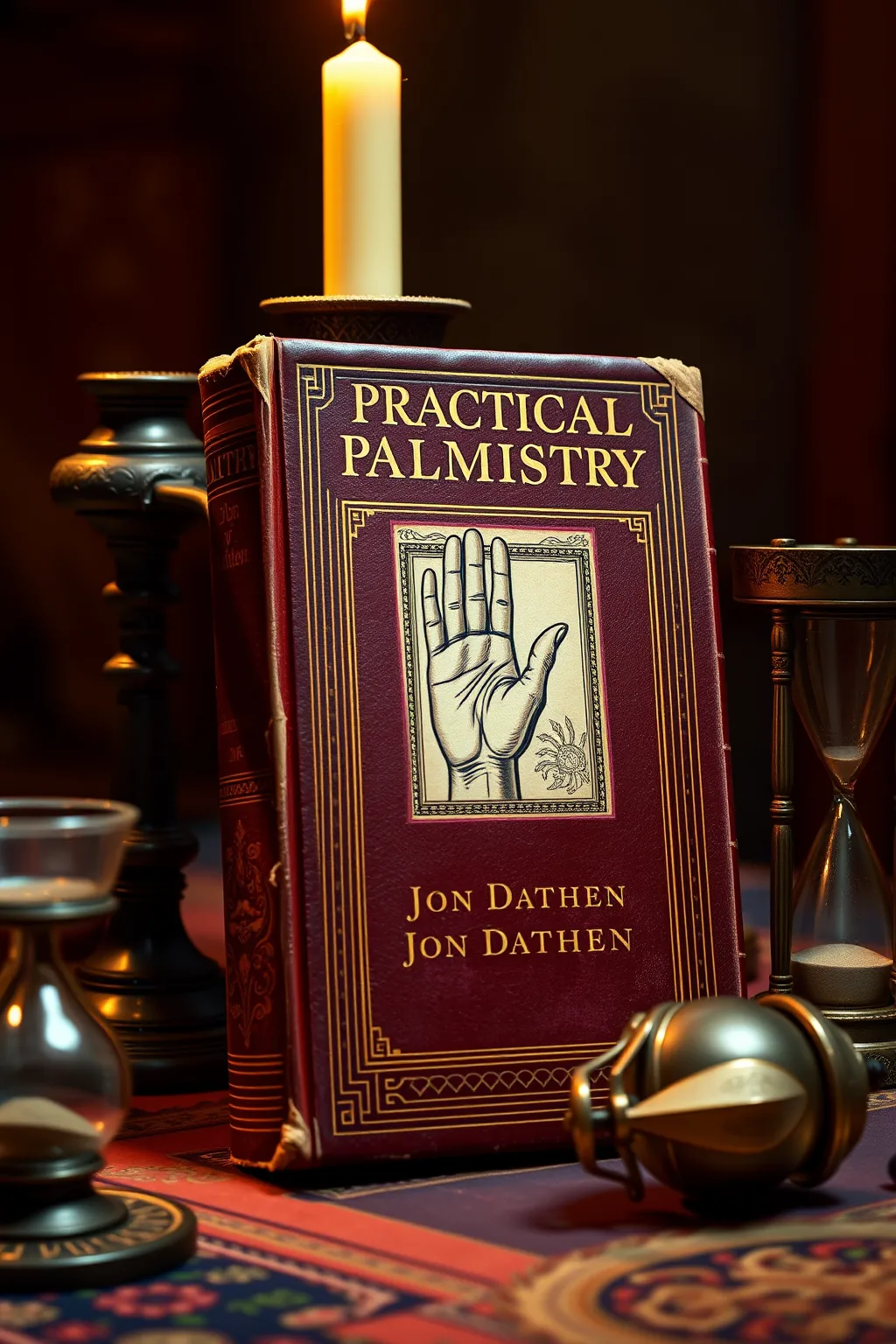
Practical palmistry
 62
62

Practical palmistry



Celeste Moreau (Divination & Symbolism Reviewer) — Jon Dathen's "Practical Palmistry" is a masterful compendium, breathing new life into an ancient art. It transcends rote memorization, inviting readers into a deep, symbolic dialogue with their own hands. Dathen masterfully deciphers the language of the palm, revealing profound esoteric insights into character, destiny, and spiritual evolution. His approach is both scholarly and deeply intuitive, making complex concepts accessible without sacrificing their mystical depth. This is an indispensable resource for anyone seeking to understand the subtle energies and cosmic connections mirrored in the human hand, a true treasure for serious students of divination and esoteric philosophy.
📝 Description
62
Jon Dathen's "Practical Palmistry" was published in 1987, presenting a structured approach to hand reading.
Jon Dathen's "Practical Palmistry" offers a detailed guide to interpreting the lines, mounts, and fingers of the hand. The book moves beyond simply identifying features to explaining their symbolic meaning and connection to an individual's character and life path. Dathen breaks down the hand into specific zones, correlating them with planets and psychological traits. He also discusses the significance of hand shape, finger proportions, and the texture of the skin. The text aims to equip the reader with practical methods for analyzing palms, encouraging a deeper understanding of personal potential and life's unfolding events.
This work emphasizes the hand as a reflection of internal states and external influences. It connects palmistry to broader philosophical ideas about the microcosm and macrocosm. Readers learn to associate specific markings with tendencies, challenges, and opportunities. Dathen's approach is systematic, intended to demystify the practice for those seriously interested in its application.
This book sits within the Western esoteric tradition of chiromancy, which gained prominence in the late 19th and early 20th centuries. Palmistry, in this context, is viewed not just as fortune-telling but as a system for understanding human psychology and potential, drawing parallels to other divinatory arts like astrology. Dathen's work follows a lineage that seeks to codify and systematize these practices, making them accessible through structured study rather than purely intuitive revelation. It connects the physical form of the hand to a perceived cosmic order.
💡 Why Read This Book?
Embark on a journey of profound self-discovery and cosmic connection. "Practical Palmistry" offers a rare glimpse into the ancient art of reading the hands, revealing the hidden blueprints of your life. Ideal for spiritual seekers, contemplative practitioners, and those yearning to understand the symbolic language of the universe reflected in their own palms. Uncover your innate potential and navigate your life's path with newfound clarity and insight.
⭐ Reader Reviews
Honest opinions from readers who have explored this book.
❓ Frequently Asked Questions
Is palmistry a scientific practice?
While palmistry is rooted in ancient traditions and symbolic interpretation, it operates within the realm of esoteric knowledge and metaphysical understanding rather than empirical science. It offers insights into potential, tendencies, and energetic influences.
Can palmistry predict the future with certainty?
Palmistry is not about rigid prediction but rather about understanding potentials, life lessons, and evolutionary paths. The lines can indicate tendencies and opportunities, but free will and conscious choices play a significant role in shaping one's destiny.
How long does it take to become proficient in palmistry?
Proficiency in palmistry, like any intricate art, requires dedicated study and consistent practice. While some foundational understanding can be gained relatively quickly, true mastery often involves years of observation and intuitive development.
Are the lines on the hand permanent?
While the major lines are generally stable, minor lines and the overall appearance of the hand can subtly change over time, reflecting shifts in personality, life experiences, and energetic states. This fluidity is part of its dynamic nature.
What is the significance of the mounts on the palm?
The mounts, areas at the base of the fingers and on the palm, are believed to correspond to different planetary influences and personality traits. Their prominence or subtlety can reveal specific strengths, desires, and challenges.
🔮 Key Themes & Symbolism
The Hand as a Cosmic Blueprint
This theme looks at the profound concept of the hand as a microcosm, mirroring the vastness of the universe and the intricate design of one's life path. It explores how the intricate patterns, lines, and mounts are not random but rather symbolic representations of cosmic energies, astrological influences, and innate potentials. The book suggests that by understanding this divine cartography, individuals can gain a deeper comprehension of their purpose, challenges, and inherent strengths, viewing their palm as a sacred text waiting to be deciphered.
Symbolism and Archetypal Meanings
Fundamentally, , "Practical Palmistry" is a lexicon of esoteric symbols. This theme focuses on the body of meanings attributed to each line, mount, finger, and even the texture and shape of the hand. It examines how these symbols connect to archetypal energies, ancient wisdom traditions, and the collective unconscious. Readers are encouraged to move beyond literal interpretations and engage with the deeper, symbolic language that reveals psychological tendencies, karmic patterns, and spiritual aspirations, fostering a more intuitive and holistic understanding.
Personal Evolution and Self-Mastery
This theme highlights palmistry as a powerful tool for personal growth and self-mastery. Dathen presents the hand as a dynamic map, not of fixed fate, but of potential pathways and evolutionary opportunities. By understanding the insights revealed through palm reading, individuals are empowered to navigate their challenges with greater awareness, cultivate their strengths, and make conscious choices that align with their higher purpose. The book guides readers toward recognizing their innate wisdom and actively shaping their destiny through self-understanding and mindful action.
💬 Memorable Quotes
Direct passages from the work, attributed to the author.
“Each line a whisper from the ether, each mount a resonance of cosmic force.”
— This evocative phrase emphasizes the metaphysical underpinnings of palmistry, suggesting that the physical features of the hand are tangible manifestations of unseen, universal energies and divine guidance.
“To read the palm is to converse with the deepest self.”
— This highlights the introspective and self-discovery aspect of palmistry, positioning it as a dialogue with one's inner wisdom and subconscious knowledge.
“The map within your palm guides you to the field of your potential.”
— This metaphor underscores the empowering nature of palmistry, presenting it as a navigational tool that reveals latent abilities and future possibilities, encouraging proactive engagement with one's destiny.
“In the curves and creases, lies the echo of eternity.”
— This poetic line suggests that the patterns on the hand hold timeless truths and connect the individual to a broader, eternal consciousness, imbuing palmistry with a sense of profound spiritual significance.
💡 Key Ideas
Editorial paraphrase of the work's core concepts — not direct quotes.
The hand is a silent scribe, chronicling the soul's journey.
This quote captures the book's central thesis: the palm is not merely flesh and bone, but a living record of spiritual and personal development, a proof of the soul's unfolding path.
🌙 Esoteric Significance
Tradition
This work is deeply embedded within the hermetic and neo-platonic traditions, emphasizing the interconnectedness of the microcosm (the human being) and the macrocosm (the universe). It draws upon ancient symbolic languages and the belief in divine order, viewing the human form, particularly the hand, as a reflection of celestial patterns and spiritual archetypes. The esoteric significance lies in its ability to act as a bridge between the material and the spiritual realms, offering a practical method for accessing higher consciousness and understanding one's place within the cosmic dance.
Symbolism
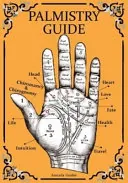
The symbolism in "Practical Palmistry" is vast and complex. Key symbols include the major lines (Life, Head, Heart, Fate) representing core life energies, psychological functions, emotional landscapes, and destiny's influence. The mounts (Venus, Jupiter, Saturn, Apollo, Mercury, Luna, Mars) symbolize inherent strengths, desires, and personality traits linked to corresponding planetary energies. Finger shapes and lengths offer further nuanced interpretations of character and approach to life. The overall mapping of the hand serves as a complex symbolic language, a divine script revealing the intricate interplay of forces within the individual.
Modern Relevance
In an age often characterized by disconnection and superficiality, "Practical Palmistry" offers a profound pathway to self-awareness and a deeper connection to one's inner landscape. Its modern relevance lies in empowering individuals to understand their innate potentials, navigate life's complexities with greater insight, and cultivate a more meaningful existence. The book provides practical tools for self-reflection, personal development, and spiritual growth, enabling readers to align their actions with their true selves and foster a sense of purpose and inner harmony in a rapidly changing world.
👥 Who Should Read This Book
"Practical Palmistry" is a valuable collection for a diverse audience of seekers. For the absolute beginner, it serves as an accessible and informative introduction to the art of chiromancy, clarifying its core principles. Dedicated practitioners will find a wealth of nuanced interpretations and advanced techniques to deepen their understanding and refine their skills. Spiritual scholars and philosophers will appreciate the historical context and the profound connections drawn between the hand and universal esoteric traditions. Ultimately, anyone beginning a journey of self-discovery, seeking to understand their life's purpose, or yearning for a tangible connection to the hidden wisdom of the universe will find immense value within these pages.
📜 Historical Context
"Practical Palmistry" emerges from a rich historical collection of divinatory arts that have captivated humanity for millennia. Its roots can be traced to ancient India, Greece, and Rome, where the study of chiromancy was considered a sophisticated and respected practice, often intertwined with astrology and medicine. During the Renaissance, palmistry experienced a resurgence, becoming a popular subject in scholarly circles and among mystics, as documented in numerous grimoires and esoteric texts. The Victorian era saw a widespread fascination with spiritualism and occult sciences, further cementing palmistry's place in the esoteric landscape. Jon Dathen's work builds upon this venerable tradition, offering a contemporary interpretation that seeks to bridge ancient wisdom with modern understanding, making these clear insights accessible to a new generation of seekers.
📔 Journal Prompts
Reflect on the dominant lines and mounts on your dominant hand. What core energies or personality traits do they seem to represent in your daily life?
Consider a significant event or challenge you have faced. How might the corresponding lines or features on your palm offer insight into your approach or the lessons learned?
Examine the relationship between your finger lengths and shapes. How do these physical characteristics manifest in your decision-making processes and interactions with others?
If your palm is a map of your potential, what areas or paths seem most prominent or intriguing to you at this stage of your life?
How can understanding the symbolism of your palm empower you to make more conscious choices and actively shape your personal evolution?
🗂️ Glossary
Chiromancy
The ancient art and practice of reading fortunes and character from the lines, mounts, and other features of the palm of the hand. It is an older term for palmistry.
Mounts
The fleshy, raised areas at the base of the fingers and on the palm, each believed to correspond to a planetary influence and associated personality traits or energies.
Major Lines
The prominent lines on the palm, typically including the Life Line, Head Line, Heart Line, and Fate Line, which are believed to represent fundamental aspects of an individual's life, health, intellect, emotions, and destiny.
Minor Lines
Less prominent lines on the palm that can offer further detailed insights into specific aspects of life, such as relationships, career, travel, or health, often reflecting more subtle energies and influences.
Archetype
In esoteric and psychological contexts, a universal, archaic pattern or image that derives from the collective unconscious and is believed to influence human behavior and perception.
This book appears in 1 collection
🔮 Readers Also Liked
Browse all →









More by Jon Dathen
All books →
From the “Palmistry” Collection
View all →






More Free Divination & Tarot Books
View all →