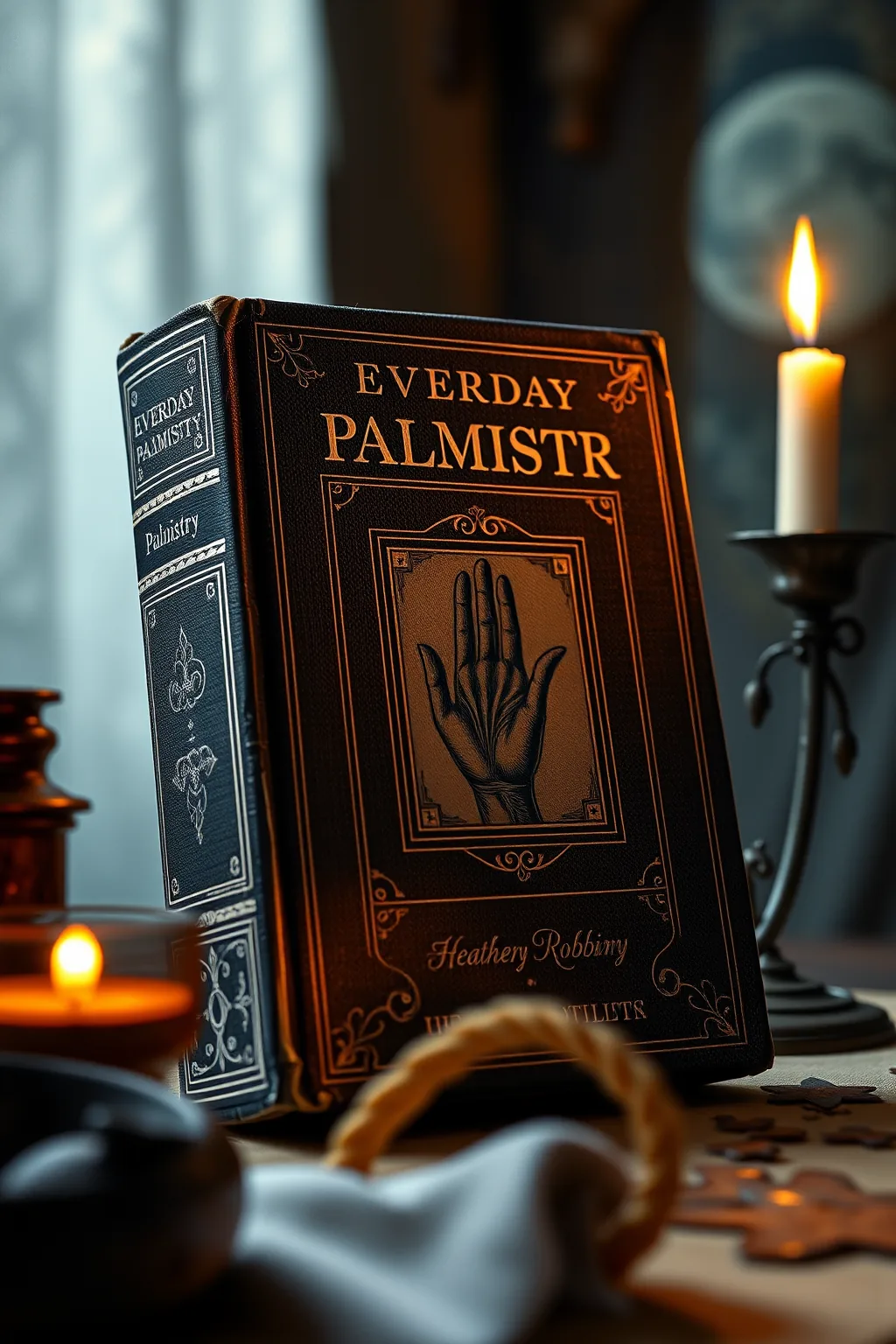
Everday Palmistry
 62
62

Everday Palmistry



Heather Roan Robbins’ 'Everyday Palmistry' is a luminous beacon for anyone seeking to decipher the profound glyphs of their own destiny. Robbins, with her characteristic grace and profound understanding of esoteric traditions, transforms the seemingly complex art of palmistry into an accessible and deeply personal journey. This is not mere parlor trickery; it is an invitation to read the soul’s blueprint, presented with clarity and wisdom. The book elegantly bridges ancient knowledge with contemporary application, making it an indispensable resource for both neophytes eager to explore their hands’ secrets and seasoned practitioners looking to deepen their practice. 'Everyday Palmistry' offers a rare glimpse into the subtle currents of fate and free will, empowering readers to navigate their lives with greater insight and intention.
📝 Description
62
Heather Roan Robbins' 'Everyday Palmistry' began its life in 2017.
This book examines palmistry not as a method for predicting the future, but as a tool for self understanding. Robbins outlines how the lines, mounts, and shapes of the palm offer insights into a person's character, potential, and life patterns. She explains the symbolic language of the hand, making the practice accessible for those new to it. The text covers how to read these physical features to gain awareness of personal strengths and challenges.
'Everyday Palmistry' also touches on the philosophical aspects of the practice. It suggests that understanding these hand markings can lead to greater self awareness and intuition. The book presents palmistry as a way to appreciate the connections between personal life and broader energies. It aims to help readers see their own hands as a map to understanding themselves and the world around them.
Palmistry, or chiromancy, has a long history within Western esotericism, often linked to astrology and other divinatory arts. It views the hand as a microcosm reflecting the macrocosm, with lines and features interpreted as symbolic representations of a person's destiny, character, and spiritual path. This tradition often overlaps with concepts of karma and innate potential, suggesting that the patterns on the palm offer a unique perspective on the individual's journey through life. Robbins' approach places this ancient practice within a contemporary context, focusing on its use for personal growth.
💡 Why Read This Book?
Embark on a transformative journey of self-discovery. 'Everyday Palmistry' offers a profound, accessible guide to understanding your life's map through the ancient art of chiromancy. Ideal for seekers of hidden knowledge, aspiring practitioners, and anyone yearning for deeper self-awareness, this book unlocks the symbolic language of your hands, revealing your inherent strengths, potential, and life's unfolding narrative. Read it to connect with your inner wisdom and the cosmic tapestry of existence.
⭐ Reader Reviews
Honest opinions from readers who have explored this book.
❓ Frequently Asked Questions
Is palmistry a reliable method of prediction?
Palmistry is viewed as a nuanced system of understanding potential, character, and life patterns rather than absolute prediction. It offers insights and guidance, empowering individuals to make conscious choices based on their innate tendencies and the energies surrounding them.
Can anyone learn palmistry from this book?
Absolutely. Heather Roan Robbins has crafted 'Everyday Palmistry' to be exceptionally accessible, guiding beginners step-by-step while offering valuable depth for those with prior experience. The language is clear, and the concepts are explained with practical examples.
What is the difference between palmistry and astrology?
While both are divinatory arts, palmistry focuses on the lines and features of the hand as a reflection of the individual's present and potential future, while astrology analyzes the positions of celestial bodies at birth to understand personality and life influences.
How does palmistry relate to personal growth?
Palmistry serves as a powerful tool for self-awareness, highlighting strengths, challenges, and karmic lessons. By understanding these aspects, individuals can engage in focused personal growth, address blockages, and cultivate their highest potential.
Are the lines on the palm permanent?
While major lines tend to be stable, reflecting core predispositions, minor lines and markings can shift over time, symbolizing changes in our life path, consciousness, and energetic flow as we evolve.
🔮 Key Themes & Symbolism
The Hand as a Cosmic Map
This theme explores the profound concept of the hand as a microcosm of the universe, a living document etched with the celestial influences and karmic imprints of the soul. Each line, mount, and finger becomes a symbol, a glyph that speaks to the reader about their inherent nature, life's journey, and the intricate dance between destiny and free will. It emphasizes how chiromancy serves as a sacred language, allowing us to decipher the divine blueprint woven into our very being, fostering a deeper understanding of our purpose and potential within the grand cosmic design.
Symbolism and Archetypal Meanings
Explore the collection of symbols that constitute the language of palmistry. This theme unpacks the archetypal meanings embedded within the major lines (Life, Head, Heart), the various mounts (Venus, Jupiter, Saturn), and the subtle contours of the palm. Robbins guides readers to recognize these symbols not just as indicators of events, but as representations of universal energies, psychological tendencies, and spiritual lessons. Understanding this symbolic lexicon unlocks a deeper perception of oneself and the world, revealing the interconnectedness of human experience and the archetypal patterns that shape our lives.
Palmistry as a Tool for Self-Awareness and Empowerment
Beyond prediction, 'Everyday Palmistry' champions the art as a potent catalyst for self-discovery and personal empowerment. This theme highlights how by understanding the insights revealed in their palms, individuals can gain profound self-awareness, acknowledging their strengths, confronting their challenges, and making conscious choices to navigate their life paths with greater intention. It fosters a sense of agency, demonstrating that while the hand may show potential, the ultimate power to shape one's destiny lies within the individual's awareness and actions.
💬 Memorable Quotes
Direct passages from the work, attributed to the author.
“Every line tells a story, every mount whispers a secret.”
— This evocative phrase highlights the symbolic and narrative nature of palmistry, suggesting that the physical features of the hand hold profound, often hidden, information about our character and destiny.
“The wisdom of the ancients is etched in your palms.”
— This emphasizes the historical and esoteric roots of palmistry, connecting the reader to a lineage of ancient knowledge and suggesting that the practice taps into timeless truths about the human condition.
“To read your palm is to read yourself.”
— This concise statement underscores the book's focus on self-discovery, positioning palmistry as a direct path to introspection and understanding one's own inner landscape.
💡 Key Ideas
Editorial paraphrase of the work's core concepts — not direct quotes.
Your hands are a living map of your soul's journey.
This quote expresses the core philosophy of palmistry as presented in the book, viewing the hands not as static but as dynamic reflections of our inner essence and life's unfolding narrative.
The future is not set in stone, but shaped by awareness.
This quote speaks to the empowering aspect of palmistry, suggesting that while potential pathways exist, our conscious choices and understanding, informed by palmistry, allow us to actively shape our destiny.
🌙 Esoteric Significance
Tradition
Palmistry is deeply rooted in hermetic and occult traditions, often viewed as a branch of esoteric knowledge that connects the microcosm (the human body) with the macrocosm (the universe). It aligns with principles found in classical divination, numerology, and astrology, seeing the hand as a divine imprint reflecting cosmic influences. The practice emphasizes the interconnectedness of physical form, consciousness, and spiritual destiny, viewing the hand as a sacred text written by the divine.
Symbolism
The symbolism in palmistry is vast and layered. Major lines like the Life Line represent vitality and life force, the Head Line signifies intellect and thought processes, and the Heart Line relates to emotions and relationships. Mounts on the palm correspond to planetary energies (e.g., Mount of Venus for love and passion), while finger lengths and shapes indicate personality traits. Each mark, crease, and contour is interpreted as a symbolic representation of psychological states, karmic patterns, and potential life experiences.
Modern Relevance
In the modern era, palmistry's esoteric significance lies in its ability to provide a tangible, personal framework for self-exploration and empowerment. In a world often characterized by uncertainty, it offers a sense of connection to something ancient and profound. It serves as a powerful tool for mindfulness, encouraging individuals to pause, reflect, and understand their inner landscape. By fostering self-awareness and highlighting potential pathways, palmistry empowers individuals to navigate their lives with greater intention, resilience, and a deeper appreciation for their unique journey.
👥 Who Should Read This Book
This clear guide is crafted for a diverse audience of seekers and scholars. Beginners starting their mystical journey will find 'Everyday Palmistry' an accessible and encouraging introduction to the art. Scholars of esoteric traditions will appreciate its depth and historical context. Those drawn to self-discovery and personal growth will find it an invaluable tool for introspection. Practitioners of divination arts, such as tarot readers or astrologers, will discover how palmistry can complement and enrich their existing practices, offering a holistic approach to understanding the human psyche and destiny.
📜 Historical Context
Palmistry, or chiromancy, boasts a lineage stretching back millennia, with roots found in ancient India, Persia, Greece, and Rome. Its practice flourished during periods of intense spiritual and philosophical inquiry, often intertwined with astrology and other divinatory arts. During the Renaissance, palmistry experienced a surge in popularity, becoming a subject of scholarly study and popular fascination. It was seen as a legitimate means of understanding human nature, health, and character. Throughout history, practitioners have drawn upon a rich body of lore, continually adapting and reinterpreting the symbols and meanings associated with the hand. 'Everyday Palmistry' situates itself within this long and venerable tradition, bridging ancient wisdom with contemporary understanding, making it relevant to modern seekers.
📔 Journal Prompts
Examine the dominant lines on your dominant hand. What do their lengths and formations suggest about your core energies and life path?
Consider the mounts on your palm. Which planetary energies feel most prominent in your life, and how do they manifest?
Reflect on a significant life event. Can you find any corresponding markings or changes in your palm that might correlate with this experience?
How does the information revealed in your palm readings align with or challenge your current self-perception?
Imagine the future you aspire to. What subtle lines or shifts might you look for in your palm as you work towards manifesting this future?
🗂️ Glossary
Chiromancy
The practice of divination by the examination of the palm of the hand. It is synonymous with palmistry and is considered an ancient art of reading character and forecasting the future.
Mounts
The fleshy, raised areas on the palm, named after planets (e.g., Mount of Venus, Mount of Jupiter). Each mount is associated with specific human traits, energies, and potential outcomes.
Lines
The various creases and markings on the palm, most notably the Life Line, Head Line, and Heart Line, which are interpreted to reveal aspects of health, intellect, and emotional life.
Major Lines
The primary lines on the palm (Life, Head, Heart) considered most significant in palmistry for understanding fundamental aspects of a person's character, health, and life trajectory.
Minor Lines
Secondary lines and markings on the palm that offer more detailed insights into specific events, tendencies, or temporary influences on a person's life journey.
This book appears in 1 collection
🔮 Readers Also Liked
Browse all →









More by Heather Roan Robbins
All books →
From the “Palmistry” Collection
View all →








More Free Divination & Tarot Books
View all →