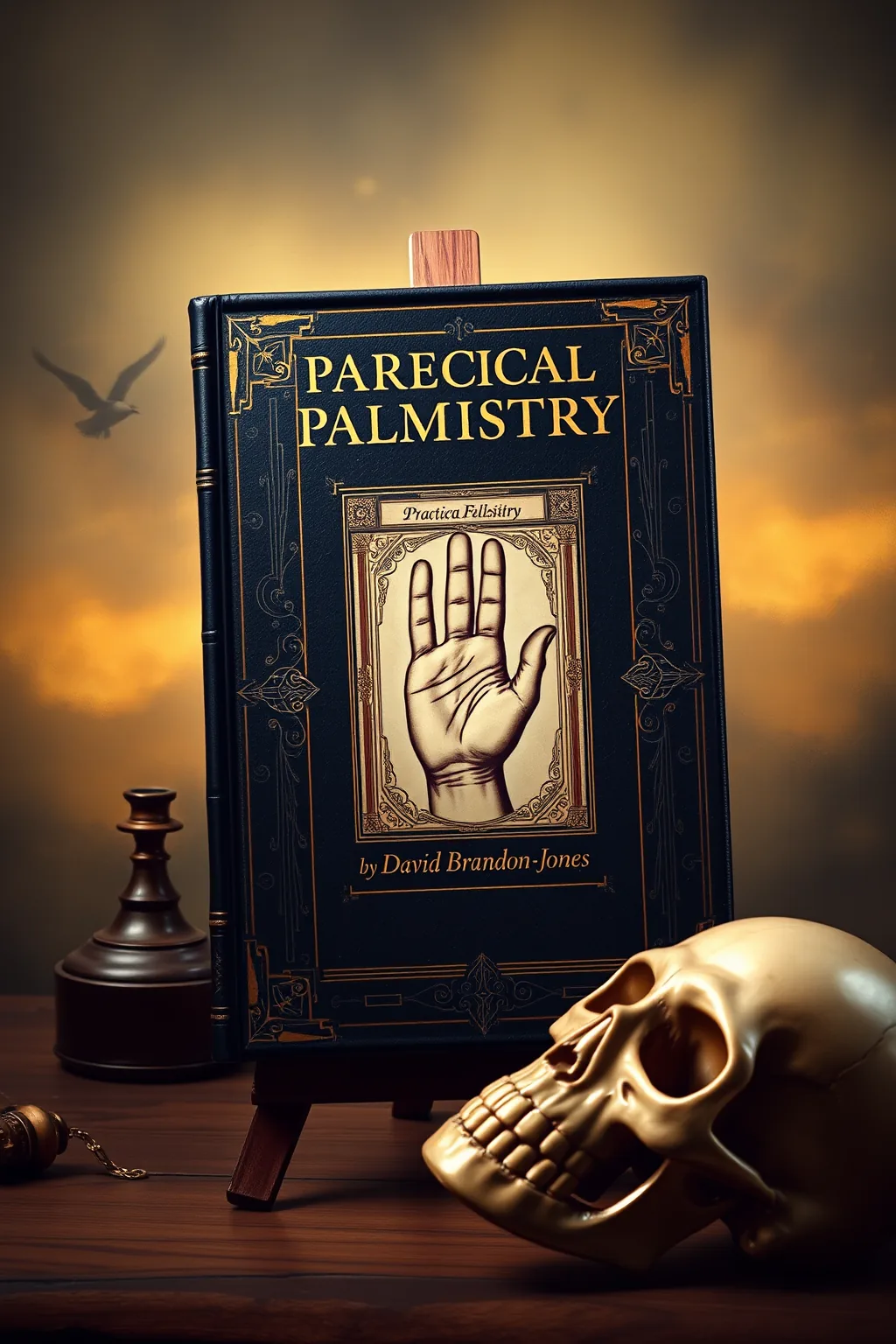
Practical Palmistry
 65
65

Practical Palmistry



Balthazar Finch (Senior Critic, Occult Philosophy) — David Brandon-Jones' "Practical Palmistry" stands as a beacon of clarity in a field often shrouded in obscurity. This work transcends superficial prognostication, delving into the profound psychological and spiritual underpinnings of palmistry. Brandon-Jones masterfully deciphers the intricate language of the hand, offering insights that resonate with practitioners and scholars alike. His approach is both scholarly and deeply intuitive, revealing the hand as a sacred text. The strengths lie in its comprehensive coverage and accessible yet profound explanations, making it an indispensable resource for anyone seeking to understand the subtle currents of life through this ancient divination art.
📝 Description
65
David Brandon-Jones' "Practical Palmistry" first appeared in print in 1978.
David Brandon-Jones’s "Practical Palmistry" examines cheiromancy, the practice of reading the hand. The book details how the lines, mounts, and various markings on the palm can reflect a person's character, potential, and the flow of subtle energies. Brandon-Jones moves beyond simple prediction, interpreting the hand as a symbolic map. He focuses on the philosophical implications of these symbols, encouraging a deeper understanding of oneself and one's place in the world.
The text aims to equip serious students of esoteric subjects with practical methods for self-awareness. It connects the physical aspect of the hand to metaphysical concepts, presenting a structured approach to understanding personal destiny and the broader patterns of existence. The author approaches the subject with respect for its historical roots, making the material accessible to those interested in integrating esoteric knowledge into their lives.
This book sits within the Western esoteric tradition that draws on chiromancy, a practice with roots stretching back to ancient Greece and Rome. It follows a lineage of texts that interpret the human hand not just as a physical appendage but as a symbolic microcosm reflecting cosmic influences and individual destiny. Unlike more purely divinatory approaches, Brandon-Jones's work emphasizes the psychological and philosophical dimensions, aligning with a broader interest in self-knowledge and personal development found in many esoteric systems.
💡 Why Read This Book?
Unlock the profound wisdom encoded within your own hands. "Practical Palmistry" offers a clear, accessible path to understanding your inherent strengths, challenges, and potential. Ideal for spiritual seekers, aspiring practitioners, and anyone curious about the ancient art of reading the palm for self-discovery and insight. It provides practical techniques grounded in deep symbolic understanding.
⭐ Reader Reviews
Honest opinions from readers who have explored this book.
❓ Frequently Asked Questions
Is palmistry a reliable form of divination?
Palmistry, when approached with study and intuition as outlined by Brandon-Jones, can offer profound insights into character and life's potentials. It's a tool for self-understanding and guidance rather than absolute prediction.
How detailed is the analysis of hand lines?
The book provides a comprehensive breakdown of major and minor lines, including the Heart, Head, Life, and Fate lines, detailing their variations and meanings.
Are hand mounts important in palmistry?
Absolutely. Brandon-Jones explains how the mounts (Venus, Jupiter, Saturn, etc.) represent different planetary influences and personality traits, adding crucial layers to the reading.
Can palmistry be used for personal growth?
Yes, by understanding the patterns and potentials revealed in the palm, individuals can make conscious choices, work on perceived limitations, and cultivate their strengths for personal evolution.
What is the difference between left and right hand readings?
Generally, the left hand represents inherited traits and subconscious potential, while the right hand reflects conscious choices and how one manifests their destiny. Brandon-Jones elucidates these distinctions.
🔮 Key Themes & Symbolism
The Hand as a Cosmic Mirror
This theme explores the profound esoteric concept of the hand as a microcosm reflecting the macrocosm. Brandon-Jones posits that the lines and features are not arbitrary marks but sacred glyphs imprinted by cosmic forces and individual life experiences. The book examines how the palm acts as a living blueprint, revealing the energetic pathways and karmic imprints that shape our journey. It's an invitation to see the hand not just as a physical appendage, but as a vibrant, communicative organ connected to the universal consciousness, offering clear insights into our soul's purpose and evolution.
Deciphering the Language of Symbolism
The core of "Practical Palmistry" lies in its meticulous decoding of the rich symbolic language of the hand. Each line, mount, finger, and marking is presented as a potent symbol, imbued with layers of meaning drawn from ancient traditions and archetypal psychology. Brandon-Jones guides the reader to understand these symbols not in isolation, but as interconnected elements forming a cohesive narrative of the individual. This section emphasizes the intuitive and interpretative skills required, transforming the hand into a visual lexicon for understanding human nature and the subtle forces at play in our lives.
The Intersection of Fate and Free Will
Brandon-Jones masterfully navigates the delicate balance between destiny and personal agency as revealed through palmistry. The book illustrates how the hand can indicate predispositions and potential challenges, but crucially, it also highlights the areas where free will empowers transformation. It's a philosophical exploration of how understanding one's 'fated' paths allows for more conscious choices and the active shaping of one's future. This theme encourages readers to view palmistry not as a deterministic prophecy, but as a powerful tool for empowerment and conscious co-creation of their life's unfolding narrative.
💬 Memorable Quotes
Direct passages from the work, attributed to the author.
“The hand is a living map of the soul.”
— This statement expresses the book's central thesis: that the palm holds profound, personal truths about our inner landscape and life's journey, waiting to be deciphered.
“Every crease tells a story.”
— This highlights the narrative aspect of palmistry, suggesting that each mark on the hand is a chapter in the ongoing story of an individual's life and character.
“The mounts speak of inner strengths and passions.”
— This points to the significance of the fleshy mounds on the palm, linking them to the core energies, desires, and inherent capabilities of the individual.
“Wisdom is etched in the palm.”
— This evocative phrase suggests that the knowledge and understanding gained through palmistry are ancient and profound, accessible to those who learn to read the signs.
💡 Key Ideas
Editorial paraphrase of the work's core concepts — not direct quotes.
Lines are not destiny, but tendencies.
This quote emphasizes the book's nuanced approach, distinguishing between fixed fate and the influence of predispositions, empowering the reader to actively shape their path.
🌙 Esoteric Significance
Tradition
This work draws heavily from the Hermetic tradition, which emphasizes the interconnectedness of the universe and the idea that 'as above, so below.' Palmistry, within this framework, is seen as a method of reading the subtle energies and divine patterns imprinted upon the human form. It aligns with Neoplatonic philosophies that view the physical world as a reflection of higher spiritual realities, making the hand a divine script to be interpreted.
Symbolism
The symbolism in "Practical Palmistry" is vast, encompassing planetary correspondences (e.g., Jupiter for ambition, Venus for love), elemental associations, and archetypal representations. The lines symbolize the flow of life force and experiences, while the mounts represent innate energies and personality traits. Each finger and its phalanges also carry specific symbolic weight, contributing to a complex, multi-layered system of interpretation that reveals the intricate web of human experience.
Modern Relevance
In an age often characterized by materialism and disconnection, "Practical Palmistry" offers a profound counterpoint, reintroducing the reader to the inherent magic and symbolism of the human form. It provides a tangible, yet deeply esoteric, tool for self-awareness, personal growth, and understanding the subtle currents of life. Its relevance lies in its ability to foster introspection, enhance intuition, and reconnect individuals with a sense of wonder and the deeper mysteries of existence.
👥 Who Should Read This Book
This book is a treasure for a diverse range of individuals. Absolute beginners to divination will find its clear explanations and practical exercises an ideal starting point. Scholars of esoteric traditions will appreciate its depth and historical context. Spiritual seekers looking for tools of self-discovery and personal insight will find it useful for understanding their inner landscape. Practitioners of other divinatory arts, such as astrology or tarot, will discover how palmistry complements and enriches their existing knowledge, offering a unique dimension to their readings.
📜 Historical Context
David Brandon-Jones' "Practical Palmistry" emerges from a rich historical range of divination practices that span millennia and cultures. Palmistry, or cheiromancy, has roots stretching back to ancient India, Greece, and Rome, where it was considered a respected art and science, studied by philosophers and mystics alike. During periods like the Renaissance, it experienced a resurgence, intertwined with astrology and other forms of occult inquiry. Brandon-Jones builds upon this venerable tradition, offering a synthesis that is both respectful of its historical lineage and relevant to the modern seeker. His work reflects a post-Victorian era where interest in the esoteric continued, seeking to clarify and systematize practices previously guarded by secret societies or passed down through oral tradition, making profound knowledge accessible to a wider audience.
📔 Journal Prompts
Reflect on the most prominent line in your palm. What aspects of your life does it seem to represent, and how have you experienced this in reality?
Examine the mounts on your palm. Which ones are most pronounced, and how do you see these qualities manifesting in your personality and daily life?
Consider a challenging aspect revealed by your palm. What conscious choices have you made or can you make to navigate this tendency?
How does the symbolism of your dominant hand's markings resonate with your current life path and aspirations?
Beyond prediction, how can the insights gained from your palm reading empower you to live more authentically and intentionally?
🗂️ Glossary
Cheiromancy
The art and practice of reading the palm of the hand to interpret character and forecast future events. It is the formal term for palmistry.
Mounts
The fleshy, raised areas on the palm, beneath the fingers, named after planets (e.g., Mount of Venus, Mount of Jupiter). They represent specific personality traits and energies.
Phalanges
The individual segments of the fingers, separated by joints. Each phalange can hold specific symbolic meaning in palmistry.
Trifurcation
A line splitting into three distinct branches, often indicating a complex or complex influence in the area of life that line represents.
Quadrucation
A line splitting into four distinct branches, suggesting a highly complex or diverse expression of the energies associated with that line.
This book appears in 3 collections
🔮 Readers Also Liked
Browse all →








More by David Brandon-Jones
All books →




From the “Palmistry” Collection
View all →








More Free Divination & Tarot Books
View all →