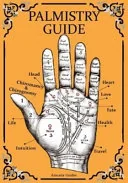
Palmistry Guide
 77
77

Palmistry Guide
Aracaria Guides' "Palmistry Guide" offers a refreshingly direct entry into a field often encumbered by overly complex terminology and arcane lore. Its primary strength lies in its clarity; it systematically breaks down the interpretation of lines, mounts, and markings into digestible components, making the practice feel approachable rather than intimidating. I particularly found the section on the subtle nuances of the Heart Line insightful, demonstrating a keen eye for emotional expression as mapped by this prominent crease. However, the guide occasionally errs on the side of oversimplification. While effective for absolute beginners, it could benefit from more detailed explorations of less common markings, which are sometimes relegated to brief mentions. The historical context provided is accurate but brief, lacking deeper dives into specific historical figures or movements that shaped chiromancy. Despite this, the book successfully demystifies the basics, serving as a solid, no-nonsense primer for anyone looking to understand the foundational elements of palm reading. It provides a practical toolkit without overwhelming the novice.
📝 Description
77
Published in 2019, this guide explains palmistry's art and science for personal insight.
This volume approaches palmistry as both an art and a science, detailing how to interpret hands for insights into character and destiny. It traces the practice's ancient roots, positioning it as a method for self-discovery and prediction that is made accessible to newcomers. The guide focuses on analyzing the physical characteristics of the hand, including its lines, mounts, and various markings, to glean information about an individual.
Individuals interested in self-understanding through hand analysis will find this book useful. It caters to beginners seeking a clear introduction to palmistry, providing practical instructions for reading one's own hand and those of others. Those interested in esoteric studies or divination will appreciate its straightforward format, which avoids overly academic jargon and aims to demystify a practice often seen as complex.
Palmistry, or chiromancy, has a lineage stretching back thousands of years, with evidence of its study found in ancient India, China, Persia, and Greece. This guide acknowledges this deep historical foundation, placing the practice within a long tradition of divinatory arts. The book engages with a practice that saw a revival in the West during the 19th and early 20th centuries, often associated with movements like Theosophy and Spiritualism. Its straightforward presentation aims to demystify a practice that can be perceived as complex.
💡 Why Read This Book?
• You will learn to identify and interpret the three primary palmistry lines—Life, Head, and Heart—gaining a concrete method for self-assessment distinct from other personality typologies. • You will understand the symbolic meaning of hand mounts, such as the Mount of Venus, as detailed in the guide's analysis of palm topography, offering a unique lens on emotional and physical energies. • You will acquire a common-sense overview of interpreting hand shapes and common markings, providing practical skills that can be applied immediately to hands you encounter, fostering observational abilities.
⭐ Reader Reviews
Honest opinions from readers who have explored this book.
❓ Frequently Asked Questions
What is the origin of palmistry?
Palmistry, or chiromancy, has ancient origins, with roots tracing back thousands of years to civilizations in India, China, Persia, and Greece. It has been practiced across various cultures as a method of divination and character analysis.
What are the main lines in palmistry?
The three primary lines in palmistry are the Life Line (indicating vitality and major life events), the Head Line (representing intellect and communication style), and the Heart Line (symbolizing emotional nature and relationships).
Does the shape of the hand matter in palmistry?
Yes, the shape of the hand, along with the length and proportions of the fingers, is considered important in palmistry. Different hand shapes are often associated with elemental types (Earth, Air, Fire, Water) and broad personality characteristics.
What are 'mounts' in palmistry?
Mounts are the fleshy, raised pads found at the base of the fingers and along the edge of the palm. In palmistry, these are named after classical deities (e.g., Mount of Venus, Mount of Jupiter) and are believed to indicate the strength of associated traits.
Is this guide suitable for someone with no prior knowledge of palmistry?
Absolutely. The 'Palmistry Guide' is designed for beginners, laying out concepts in simple terms with an easy-to-follow, common-sense approach to interpreting lines, mounts, and markings.
When was the 'Palmistry Guide' by Aracaria Guides first published?
The 'Palmistry Guide' by Aracaria Guides was first published in July 2019.
🔮 Key Themes & Symbolism
Interpreting Hand Lines
The guide meticulously details the significance of the primary lines—Life, Head, and Heart—as well as numerous secondary lines. It explains how variations in depth, length, and curvature can offer insights into an individual's vitality, intellectual processes, emotional landscape, and relationship patterns. This theme emphasizes the palm as a dynamic map, with each line representing a facet of personal experience and character development.
The Significance of Mounts
Beyond the lines, the book explores the 'mounts'—the fleshy pads on the palm named after Roman deities like Venus, Jupiter, and Apollo. Each mount is associated with specific human attributes, such as love, ambition, or creativity. Understanding these raised areas allows for a more nuanced interpretation, indicating the inherent strengths or potential challenges an individual might possess in these spheres.
Hand Shape and Finger Analysis
This theme focuses on the broader physical characteristics of the hand, including its overall shape (often categorized by elements like Earth, Air, Fire, Water) and the length and characteristics of the fingers. The guide posits that these macro-features provide a foundational understanding of a person's core disposition and fundamental approach to life, complementing the detailed information derived from the palm lines and mounts.
Practical Application of Palmistry
The guide stresses the practical utility of palmistry as an art and science for understanding oneself and others. It provides a common-sense, accessible framework, enabling readers to apply the principles of hand analysis to their own palms and those of friends or acquaintances. This theme underscores the book's aim to clarify the practice and make it readily usable for personal insight.
💬 Memorable Quotes
Direct passages from the work, attributed to the author.
“Palmistry is the art or science of working out personal, character or destiny information by observing the lines upon, and the shape of the hand.”
— This foundational statement defines the scope and purpose of palmistry as presented in the guide. It frames the practice as a structured method, combining artistic interpretation with scientific observation of physical hand characteristics to reveal deeper personal truths.
“Its origins go back to antiquity.”
— This brief assertion highlights the ancient lineage of palmistry, positioning it not as a modern fad but as a practice with deep historical roots across multiple cultures, suggesting a time-tested, enduring relevance.
“This Guide is laid out in simple terms and provides an easy-to-follow, common sense overview.”
— This meta-commentary from the original blurb emphasizes the book's pedagogical approach. It promises accessibility and practicality, aiming to strip away complexity and present palmistry in a way that is understandable and usable for the average reader.
“How to interpret lines, mounts and markings on your own hands and those of others.”
— This phrase outlines the core practical skills the reader is expected to gain. It signifies the guide's focus on actionable knowledge, empowering individuals to perform palm readings for themselves and others with confidence.
“The shape of the hand.”
— This refers to a fundamental element of palmistry interpretation discussed in the book. It encompasses the overall structure and proportions of the hand, often linked to elemental classifications (Earth, Air, Fire, Water) which provide a broad personality profile.
🌙 Esoteric Significance
Tradition
This guide fits within the broad stream of Western esoteric traditions that seek to understand the human condition through symbolic systems. While not explicitly aligned with a single lineage like Hermeticism or Kabbalah, its focus on interpreting physical signs as reflections of inner states aligns with Hermetic principles such as 'As Above, So Below.' It offers a practical, accessible entry point into divinatory practices common in many occult circles, emphasizing self-knowledge and personal development.
Symbolism
Key symbols in palmistry, as explored in this guide, include the primary lines (Life, Head, Heart), each representing fundamental aspects of human existence—vitality, intellect, and emotion. The mounts, named after classical deities (e.g., Mount of Venus), symbolize inherent energies and potentials. Markings like stars, crosses, or squares function as specific indicators, pointing to significant events, challenges, or blessings within the individual's life path.
Modern Relevance
Contemporary practices in self-help, psychological astrology, and intuitive development often draw upon symbolic systems like palmistry. While not always overtly stated, the desire to understand personality and potential through tangible, observable signs appeals to modern therapeutic and spiritual seeking. Practitioners of holistic wellness and alternative therapies may find value in the observational techniques and symbolic language offered by this guide.
👥 Who Should Read This Book
• Beginners interested in divination and self-discovery: This guide offers a clear, step-by-step introduction to palmistry, clarifying its core concepts and providing practical skills for interpreting hands. • Students of esoteric studies: Individuals exploring various occult and metaphysical practices will find this book a useful primer on chiromancy, complementing their understanding of symbolic systems. • Those seeking practical tools for character assessment: Anyone curious about understanding personality traits and potential life paths through a tangible, observable method will benefit from its common-sense approach.
📜 Historical Context
The practice of palmistry, or chiromancy, has a lineage stretching back thousands of years, with evidence of its study found in ancient India, China, Persia, and Greece. This guide acknowledges this deep historical foundation. While the book itself was first published in 2019, it engages with a practice that saw significant revival in the West during the 19th and early 20th centuries, alongside movements like Theosophy and Spiritualism, which often incorporated or explored such divinatory arts. Its straightforward presentation aims to clarify a practice often shrouded in esoteric complexity. Competing schools of thought in divination, such as astrology and tarot, also flourished during these periods, with some esotericists attempting to synthesize these various methods. The reception of palmistry itself has varied wildly, from academic study in antiquity to being dismissed as folk superstition or embraced as a valid esoteric discipline by figures like William Gurney, who wrote extensively on the subject in the late 19th century.
📔 Journal Prompts
The significance of your Heart Line's curvature.
The characteristics associated with your dominant hand's shape.
Interpreting the clarity of your Head Line.
The potential meaning of the Mount of Jupiter on your palm.
Comparing the Life Line on both hands.
🗂️ Glossary
Chiromancy
The art or practice of divining character and future events by the examination of the hand, especially the lines and contours of the palm. It is synonymous with palmistry.
Life Line
A prominent line on the palm extending in an arc from the side of the hand near the thumb, across the base of the thumb mound, towards the wrist. It is traditionally associated with vitality, physical health, and major life events.
Head Line
A line on the palm, usually starting near the Life Line and extending horizontally across the palm. It is interpreted as representing the individual's intellectual capacity, thinking style, and approach to communication.
Heart Line
A horizontal line on the palm, typically running across the upper palm below the fingers. It is primarily associated with a person's emotional nature, romantic life, and relationships.
Mounts
The fleshy, raised pads on the palm, located at the base of the fingers and along the edges of the palm. Named after Roman gods (e.g., Mount of Venus, Mount of Jupiter), they are believed to represent specific character traits and energies.
Markings
Specific signs or symbols (such as stars, crosses, squares, or triangles) that appear on the lines or mounts of the palm. These are considered to modify or emphasize the meaning of the area where they appear.
Antiquity
The ancient past, typically the period of classical Greek and Roman civilization. In the context of palmistry, it refers to the practice's origins in very early human history.
This book appears in 1 collection
🔮 Readers Also Liked
Browse all →









From the “Palmistry” Collection
View all →







More Free Occult Philosophy Books
View all →