Philosophy in Late Antiquity
 81
81

Philosophy in Late Antiquity
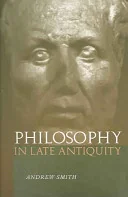
Andrew Smith's "Philosophy in Late Antiquity" provides a much-needed scholarly overview of Neoplatonism's enduring legacy. Smith adeptly situates the Neoplatonists not as mere historical footnotes but as architects of a philosophical system that profoundly shaped Christian doctrine and continued to inform Western metaphysics well into the 19th century. His careful exposition of concepts like the 'One' and emanation offers a clear entry point for those daunted by Plotinus or Porphyry. A particular strength lies in Smith's consistent demonstration of how these abstract ideas were intrinsically linked to the lived mentality and spiritual aspirations of the age. If there's a limitation, it's that the sheer density of the material might require some prior philosophical grounding for absolute newcomers. The discussion on how Neoplatonic ideas influenced early Christian thinkers like Augustine is exceptionally illuminating. This book serves as a crucial guide to a foundational period of Western thought.
📝 Description
81
Andrew Smith's Philosophy in Late Antiquity traces Neoplatonism's influence from the 3rd to the 6th century CE.
Andrew Smith's study focuses on the philosophical currents of Late Antiquity, specifically examining the Neoplatonists. This period, from the 3rd to the 6th century CE, acted as a bridge between classical Greek thought and the emerging medieval intellectual landscape. The book details how Neoplatonic ideas, stemming from Plato, developed into complex metaphysical systems.
Smith introduces key Neoplatonic concepts such as the nature of the ultimate divine principle, often called the One, and the process of emanation through which the cosmos unfolds. The text also addresses the Neoplatonic understanding of the soul, its descent into the material world, and its potential ascent towards mystical union. The book considers how various thinkers interpreted and adapted these core tenets, showing the intellectual dynamism of the era. This work is suitable for students and scholars in philosophy, history, and religious studies seeking to understand the origins of Western thought and early Christian theology.
This book engages with a tradition that sought to understand the divine and the cosmos through philosophical reasoning and mystical experience. Neoplatonism, as examined here, provided a metaphysical framework that resonated with esoteric currents. Its ideas about a transcendent source, hierarchical reality, and the soul's return to its origin informed later mystical and occult traditions, forming a significant thread in the esoteric history of the West.
💡 Why Read This Book?
• Gain a clear understanding of the Neoplatonic concept of emanation, essential for grasping the metaphysical underpinnings of many esoteric traditions. • Appreciate the intellectual framework that influenced early Christian theology, particularly the ideas attributed to figures like Plotinus and Porphyry. • Discover how philosophical concepts from the 3rd century CE continued to be debated and reinterpreted as late as the 19th century, revealing intellectual continuity.
⭐ Reader Reviews
Honest opinions from readers who have explored this book.
❓ Frequently Asked Questions
What is the primary focus of "Philosophy in Late Antiquity"?
The book's primary focus is on the key ideas of the Neoplatonists during Late Antiquity, exploring their influence on subsequent philosophy and Christian thought.
Who was Andrew Smith and when was this book first published?
Andrew Smith is the author of "Philosophy in Late Antiquity," which was first published in 2004. He is a scholar specializing in ancient philosophy.
What period of history does "Philosophy in Late Antiquity" cover?
The book covers the philosophical developments of Late Antiquity, a period generally spanning from the 3rd to the 6th century CE.
How did Neoplatonism influence Christian thought according to the book?
The book demonstrates how Neoplatonic concepts, such as emanation and the nature of the divine, were integrated and reinterpreted by early Christian theologians.
What is the "One" in Neoplatonism as discussed in this book?
The 'One' is the ultimate, transcendent source from which all reality emanates in Neoplatonic philosophy, as explored in Smith's work.
What is the significance of Neoplatonism's influence extending to the 19th century?
This long-lasting influence highlights the profound impact of Neoplatonic thought on Western intellectual history, demonstrating its adaptability and enduring relevance across centuries.
🔮 Key Themes & Symbolism
The Emanation from the One
This work meticulously details the Neoplatonic cosmology of emanation, positing that all existence flows from an ultimate, ineffable source known as the One. Smith explains how this concept provided a framework for understanding creation not as a singular event, but as a continuous outpouring of divine being. This hierarchical descent, from the One through Intellect (Nous) and Soul (Psyche) to the material world, became a starting point for later mystical and philosophical systems, offering a vision of interconnectedness and a path for the soul's return to its divine origin.
The Soul's Journey
A central theme explored is the Neoplatonic understanding of the human soul's predicament: its descent into the material world and its potential for ascent back to the divine. Smith outlines the philosophical disciplines and ascetic practices advocated by thinkers like Plotinus to purify the soul and achieve ecstatic union with the One. This spiritual quest, deeply embedded in the philosophical inquiry, highlights the integration of metaphysical theory with practical spiritual development, a hallmark of esoteric traditions.
Neoplatonism and Early Christianity
The book critically examines the profound influence of Neoplatonic thought on the development of early Christian theology. Smith illustrates how Christian thinkers adopted and adapted Neoplatonic concepts to articulate their own doctrines concerning God, Christ, and salvation. This intellectual cross-pollination, particularly evident in figures influenced by Neoplatonism during the 4th and 5th centuries, demonstrates a significant historical dialogue between pagan philosophy and nascent Christian dogma, shaping the theological landscape.
Late Antique Mentality
Beyond abstract doctrines, Smith illuminates the very 'mentality of the age' that produced Neoplatonism. This involves understanding the intellectual anxieties, spiritual aspirations, and the synthesis of philosophical traditions prevalent in Late Antiquity. The book reveals how these thinkers grappled with questions of meaning, order, and the divine in a period of immense social and religious upheaval, providing context for the enduring appeal of their ideas.
💬 Memorable Quotes
Direct passages from the work, attributed to the author.
“The Neoplatonists' ideas affected approaches to Plato as late as the nineteenth century.”
— This statement underscores the remarkable longevity and pervasive influence of Neoplatonic interpretations, demonstrating how they fundamentally reshaped the understanding of classical philosophy over millennia.
“Their approach gives us significant insights into the mentality of the age which produced them.”
— This highlights the book's value not just as a philosophical treatise, but as a window into the spiritual and intellectual climate of Late Antiquity, revealing the worldview of its inhabitants.
“The work shows how Neoplatonists influenced Christian thought.”
— This points to a key argument of the book: the crucial, often overlooked, role Neoplatonic philosophy played in shaping the theological and metaphysical frameworks of early Christianity.
“Appreciate these philosophical ideas in their own right.”
— This suggests an academic approach focused on understanding Neoplatonism's internal coherence and philosophical merit, separate from its later impacts or appropriations.
“The book provides an essential new introduction to the key ideas of the Neoplatonists.”
— This positions the work as a foundational text for students and scholars seeking a reliable and comprehensive entry point into the complex thought of Neoplatonism.
🌙 Esoteric Significance
Tradition
This work is foundational for understanding the roots of Western Esotericism, particularly its Neoplatonic and Hermetic branches. Neoplatonism, with its emphasis on transcendent realities, emanation, and the soul's ascent, provides a philosophical blueprint for many subsequent mystical traditions. Smith's analysis clarifies how concepts like the One and the spiritual hierarchy became cornerstones for Hermeticism, Gnosticism, and later esoteric orders seeking direct experience of the divine.
Symbolism
Key symbols explored include the 'One' as the ultimate, unknowable source, often represented abstractly or through negation. The concept of 'emanation' itself functions symbolically, depicting reality as a flowing river from the divine source. The soul's journey, often depicted as an ascent through various spiritual spheres, symbolizes the path of initiation and spiritual purification central to many esoteric paths.
Modern Relevance
Contemporary thinkers and practitioners in fields like depth psychology (drawing on archetypal symbolism), New Age spirituality (emphasizing interconnectedness and spiritual evolution), and modern Hermeticism continue to engage with Neoplatonic ideas. The emphasis on inner transformation, the critique of materialism, and the pursuit of mystical experience found in Smith's book remain highly relevant to those seeking alternative spiritual frameworks.
👥 Who Should Read This Book
• Students of Western Esotericism seeking to understand the philosophical underpinnings of traditions like Hermeticism and Gnosticism. • Scholars of ancient philosophy and religious studies interested in the intellectual bridge between classical Greece and early Christianity. • Individuals exploring metaphysical concepts such as divine emanation, the nature of consciousness, and spiritual ascent.
📜 Historical Context
Andrew Smith's "Philosophy in Late Antiquity" emerges from a scholarly landscape deeply engaged with the transition from classical paganism to Christianity, a period spanning roughly from the 3rd to the 6th centuries CE. This era witnessed the intellectual ferment surrounding figures like Plotinus (c. 204/5 – 270 CE), whose Enneads laid the groundwork for Neoplatonism. Smith situates his work within the ongoing debate about the syncretic nature of late antique thought, where philosophical schools like Stoicism and Aristotelianism were either absorbed or transformed by the dominant Neoplatonic current. The book's focus on Neoplatonism's influence on Christian thinkers like Augustine of Hippo (354–430 CE) directly addresses a crucial intellectual lineage. This period was also marked by intense theological disputes within Christianity, such as the Arian controversy, and the philosophical systems developed often served to articulate or counter these theological positions, highlighting the interwoven nature of philosophy and religion.
📔 Journal Prompts
The Neoplatonic concept of emanation: how does it offer a different perspective on creation compared to ex nihilo accounts?
Reflect on the soul's journey as described by Neoplatonists; what parallels can be drawn to modern psychological concepts of self-discovery?
Consider the influence of Plotinus's ideas on early Christian theology; what specific theological doctrines might have been shaped by his philosophy?
How does the concept of the One, as presented in this work, challenge conventional understandings of divinity and ultimate reality?
The mentality of Late Antiquity: what aspects of this historical period's worldview seem to persist or reappear in contemporary society?
🗂️ Glossary
Neoplatonism
A philosophical school that flourished in the late Roman Empire, building upon Plato's ideas with a strong emphasis on mystical and transcendental elements, notably the concept of the One.
The One
In Neoplatonic philosophy, the ultimate, transcendent, and ineffable source of all reality, from which everything emanates.
Emanation
The Neoplatonic doctrine that all existence flows or proceeds from the One in a hierarchical, continuous process, akin to light radiating from a source.
Nous (Intellect)
The second hypostasis in Neoplatonic cosmology, emanating from the One. It is the field of Forms or Ideas and the locus of divine thought.
Psyche (Soul)
The third hypostasis, emanating from Nous. It bridges the spiritual and material realms and is responsible for animating the physical world and for individual consciousness.
Late Antiquity
The historical period roughly from the 3rd to the 6th century CE, characterized by the decline of the Western Roman Empire and the rise of Christianity and new philosophical syntheses.
Mystical Union
The ultimate goal in Neoplatonism: a direct, ecstatic, and ineffable experience of communion with the One, achieved through philosophical contemplation and purification.
This book appears in 1 collection
🔮 Readers Also Liked
Browse all →








From the “Neoplatonism” Collection
View all →






More Free Occult Philosophy Books
View all →


![Ten Great Mysteries [10 stories, 5 poems]](/img/thumb/ten-great-mysteries-10-stories-5-poems-edgar-allan-poe-433440.webp)