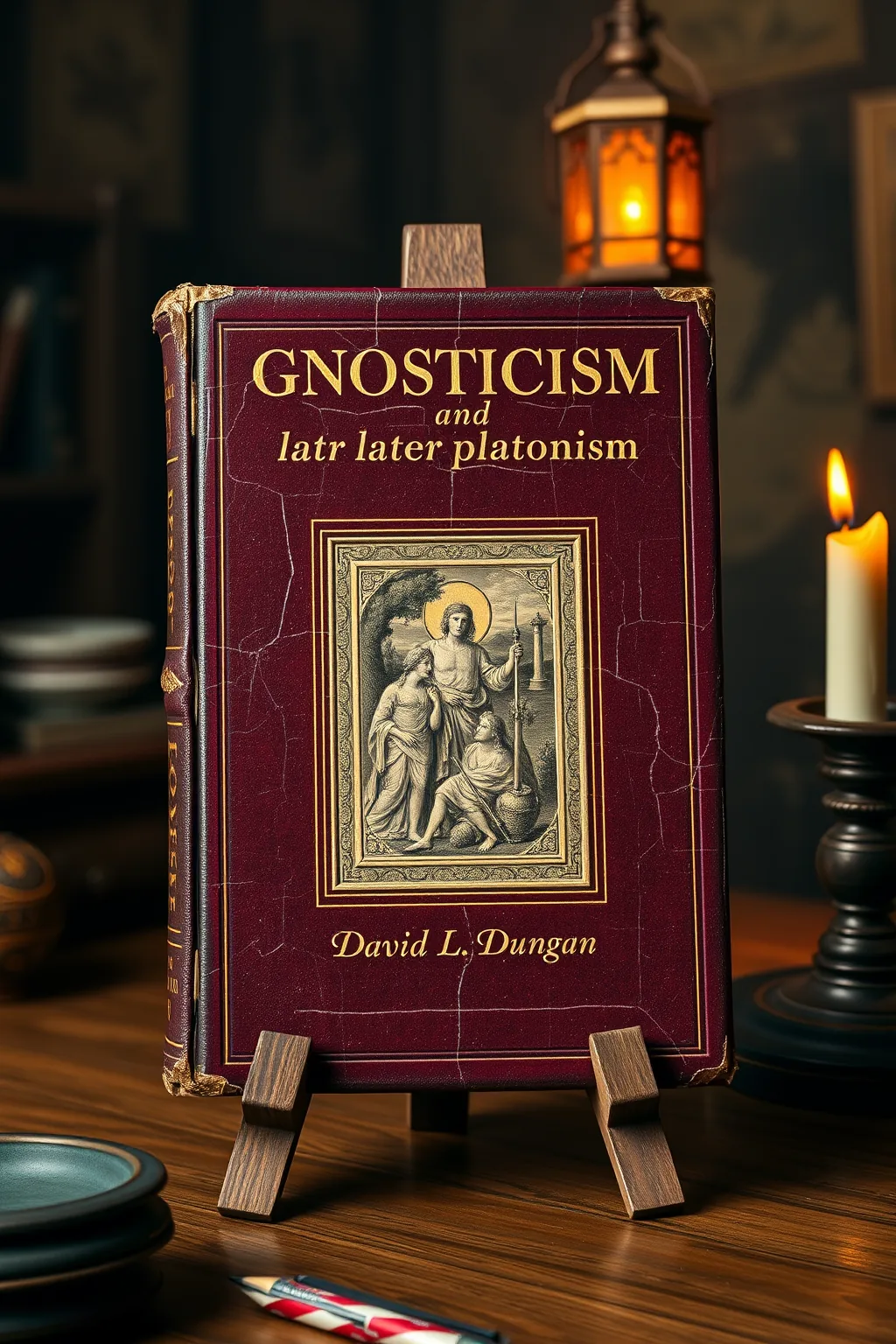
Gnosticism and later platonism
 62
62

Gnosticism and later platonism



Review by Sophia Crane (Associate Editor) — David L. Dungan's 'Gnosticism and Later Platonism' is a masterful exploration of two of the most enigmatic and influential traditions in Western esotericism. The book's strength lies in its ability to bridge the gap between historical scholarship and esoteric insight, making it a valuable resource for both academics and spiritual seekers. Dungan's deep understanding of the symbolism and hidden knowledge within these traditions is evident on every page, providing readers with a rich and thought-provoking journey into the mystical. This work is a must-read for anyone interested in the deeper dimensions of philosophy and spirituality.
📝 Description
62
David L. Dungan's 2017 book examines the intellectual links between Gnosticism and later Platonism.
This book investigates the relationship between Gnostic thought and the philosophical developments in Platonism after the classical period. Dungan details how certain Platonic concepts, particularly those concerning the divine, the material world, and the human soul, found echoes and transformations within Gnostic systems. He scrutinizes the texts and philosophical arguments that shaped both traditions, showing areas of overlap and distinct divergence.
The work is structured around a close reading of primary sources, aiming to clarify the intellectual currents that flowed between these seemingly disparate schools of thought. It addresses the ways Neoplatonists engaged with ideas that would later be associated with Gnosticism, and vice versa. The book is a scholarly treatment, intended for those with a serious interest in the history of philosophy and religion.
Gnosticism and later Platonism both grappled with questions of transcendence, the origin of evil, and the path to salvation or enlightenment. Later Platonism, particularly Neoplatonism, developed complex metaphysical systems that described a hierarchical reality emanating from a supreme, unknowable God. Gnostic systems, while diverse, often posited a flawed creator god responsible for the material world, a realm seen as fundamentally alien to the true divine. Dungan’s work traces the intellectual conversations and potential influences between these traditions in the centuries following the common era.
💡 Why Read This Book?
Read 'Gnosticism and Later Platonism' to gain a deeper understanding of the esoteric traditions that have shaped Western thought. Ideal for seekers of hidden knowledge, scholars of ancient philosophy, and practitioners of mystical arts, this book offers a unique perspective on the interconnectedness of Gnosticism and Platonism. Dungan's work is a beacon for those who wish to explore the symbolism and spiritual significance of these ancient traditions.
⭐ Reader Reviews
Honest opinions from readers who have explored this book.
❓ Frequently Asked Questions
What is the main focus of 'Gnosticism and Later Platonism'?
The book focuses on the esoteric connections between Gnosticism and Later Platonism, exploring their symbolism and hidden knowledge.
Who is the intended audience for this book?
This book is ideal for scholars, spiritual seekers, and practitioners of esoteric arts who are interested in the mystical dimensions of ancient philosophy.
What makes this book unique?
Dungan's work stands out for its deep scholarship and evocative exploration of the esoteric themes within these traditions.
Is this book suitable for beginners?
While it is accessible to beginners, readers with some background in esoteric studies will find it particularly enriching.
What are some key themes in this book?
Key themes include the symbolism of Gnosticism, the philosophical significance of Later Platonism, and the hidden knowledge that connects these traditions.
🔮 Key Themes & Symbolism
Symbolism in Gnosticism
Gnosticism is rich in symbolism, representing the hidden knowledge of the divine. This theme studies the esoteric symbols and their meanings, revealing the mystical path to spiritual enlightenment.
Philosophical Significance of Later Platonism
Later Platonism offers useful insights into the nature of reality and the self. This theme explores the philosophical depths of Later Platonism, highlighting its esoteric teachings and their relevance to modern spiritual practice.
Hidden Knowledge and Esoteric Traditions
The book uncovers the hidden knowledge that connects Gnosticism and Later Platonism, revealing the esoteric traditions that have shaped Western thought. This theme is a journey into the mystical dimensions of ancient philosophy.
💡 Key Ideas
Editorial paraphrase of the work's core concepts — not direct quotes.
The mysteries of Gnosticism reveal the hidden path to divine knowledge.
This quote highlights the esoteric nature of Gnosticism, emphasizing its role in uncovering hidden spiritual truths.
Platonism's depth lies in its ability to illuminate the mysteries of existence.
This passage underscores the philosophical significance of Later Platonism, showing its importance in understanding the nature of reality.
The symbols of Gnosticism are the keys to unlocking the divine mysteries.
This quote emphasizes the importance of symbolism in Gnosticism, revealing its role in spiritual enlightenment.
The esoteric traditions of the ancient world hold the secrets of spiritual transformation.
This passage highlights the relevance of esoteric traditions to modern spiritual seekers, showing their enduring value.
The interconnectedness of Gnosticism and Platonism reveals the hidden wisdom of the ages.
This quote underscores the theme of hidden knowledge, emphasizing the esoteric connections between these traditions.
🌙 Esoteric Significance
Tradition
This book belongs to the Hermetic and Gnostic traditions, which emphasize the pursuit of hidden knowledge and spiritual enlightenment. These traditions have shaped Western esotericism, offering seekers a path to divine wisdom.
Symbolism
Key symbols in this book include the divine emanations of Gnosticism and the Platonic forms, which represent the hidden truths of reality. These symbols serve as keys to unlocking the mysteries of the ancient world.
Modern Relevance
This book is relevant today for those seeking to understand the esoteric dimensions of ancient philosophy. Modern practitioners of mystical arts and spiritual seekers can find valuable insights in Dungan's exploration of these traditions.
👥 Who Should Read This Book
This book is ideal for beginners seeking an introduction to esoteric traditions, as well as scholars and spiritual seekers who wish to deepen their understanding of Gnosticism and Platonism. Practitioners of mystical arts will find valuable insights and symbolism to enrich their spiritual practice. Those interested in the philosophical significance of ancient traditions will also benefit from Dungan's profound exploration.
📜 Historical Context
Written during a time of great intellectual and spiritual ferment, 'Gnosticism and Later Platonism' reflects the era's quest for hidden knowledge and esoteric truths. This period saw a renewed interest in ancient philosophical traditions, as seekers of spiritual enlightenment turned to the mysteries of the past. Dungan's work was important for its ability to bridge the gap between historical scholarship and esoteric insight, providing a unique perspective on the mystical dimensions of ancient philosophy. Its influence can be seen in the ongoing exploration of esoteric traditions and their relevance to modern spiritual practice.
📔 Journal Prompts
How do the symbols of Gnosticism resonate with your own spiritual journey?
What insights from Later Platonism can you apply to your understanding of reality?
How does the hidden knowledge of these traditions influence your view of the divine?
In what ways do the esoteric connections between Gnosticism and Platonism deepen your spiritual practice?
How can you incorporate the wisdom of these ancient traditions into your daily life?
🗂️ Glossary
Gnosticism
An esoteric tradition emphasizing hidden knowledge and spiritual enlightenment through divine mysteries.
Later Platonism
A philosophical school that explores the depths of reality and the self, offering useful insights into existence.
Symbolism
The use of symbols to represent hidden truths and spiritual concepts in esoteric traditions.
Hidden Knowledge
The esoteric truths and mysteries that are revealed through spiritual and intellectual inquiry.
Esoteric Traditions
Ancient spiritual and philosophical paths that emphasize the pursuit of divine wisdom and spiritual enlightenment.
This book appears in 7 collections
🔮 Readers Also Liked
Browse all →









From the “Gnosticism” Collection
View all →







More Free Alchemy & Hermeticism Books
View all →