Philosophumena; or, The refutation of all heresies, Volume II

 69
69

Philosophumena; or, The refutation of all heresies, Volume II



Philosophumena; or, The refutation of all heresies, Volume II by Hippolytus is a seminal work that offers invaluable insights into the early Christian heresies and their occult underpinnings. For modern esoteric seekers, this text provides a rich historical context for understanding the mystical and philosophical debates that shaped the early church. Hippolytus's meticulous refutation of heretical doctrines serves as a testament to the enduring struggle between orthodoxy and esoteric thought. The book's detailed analysis of various heretical movements and their beliefs makes it an essential read for anyone interested in the history of religion and occult philosophy. Hippolytus's scholarly approach and deep knowledge of esoteric traditions make this work a must-read for contemporary seekers of esoteric knowledge.
📝 Description
69
Hippolytus wrote 'Philosophumena' in the third century to refute early Christian heresies.
Hippolytus, who served as an antipope in the early third century, details various heretical movements in his work 'Philosophumena; or, The Refutation of All Heresies, Volume II'. This volume focuses on specific groups and their doctrines, presenting Hippolytus's arguments against their theological positions. He aims to expose what he considers deviations from correct Christian teaching, often by tracing their supposed philosophical origins. The text offers a window into the complex intellectual currents and doctrinal disputes of the nascent Christian church.
His refutations are not merely theological but also engage with the philosophical underpinnings of these groups. Hippolytus examines their cosmology, their understanding of divinity, and their scriptural interpretations. The work functions as a historical record and a polemic, illustrating the challenges faced by early Christian thinkers in defining orthodoxy. For readers interested in the history of ideas, this volume provides direct access to the controversies that shaped early Christian thought.
This work sits within the early Christian tradition of doctrinal dispute and apologetics. Hippolytus's detailed analysis of heretical systems, particularly those with Gnostic leanings, reveals an engagement with ideas that often incorporated mystical interpretations and complex cosmologies. While his intent is refutation, his descriptions preserve information about beliefs and practices that fall outside mainstream historical accounts. His meticulous cataloging of these groups and their purported secret teachings offers a unique, albeit biased, perspective on the diverse spiritual landscape of the Roman Empire.
✍️ Author
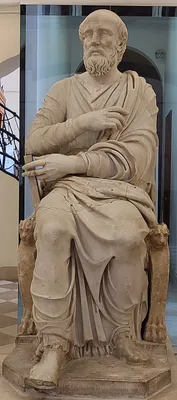
Hippolytus, Antipope
Hippolytus of Rome ( hi-POLL-it-əs, Ancient Greek: Ἱππόλυτος; Romanized: Hippólytos, c. 165 – c.
💡 Why Read This Book?
Reading Philosophumena; or, The refutation of all heresies, Volume II today offers a unique perspective on the early Christian heresies and their occult dimensions. It provides readers with a deeper understanding of the mystical and philosophical debates that have shaped religious thought for centuries. By exploring the esoteric beliefs and practices of early heretical movements, readers gain insights into the complex interplay between religion and esoteric knowledge. This book is particularly valuable for those interested in the history of Christian thought, occultism, and ancient philosophy.
⭐ Reader Reviews
Honest opinions from readers who have explored this book.
❓ Frequently Asked Questions
Who was Hippolytus, Antipope?
Hippolytus, also known as Hippolytus of Rome, was a prominent theologian and antipope who lived in the 3rd century. He is known for his extensive writings on early Christian heresies and his role in the development of Christian theology.
What are the main themes in Philosophumena?
The main themes in Philosophumena include the refutation of early Christian heresies, the exploration of occult philosophy, and the analysis of mystical beliefs and practices that challenged orthodox Christian teachings.
Is this book suitable for modern esoteric seekers?
Yes, this book is highly suitable for modern esoteric seekers. It provides a rich historical context for understanding the mystical and philosophical debates that have shaped religious thought for centuries.
🔮 Key Themes & Symbolism
Heresies and Mysticism
The book looks at the mystical beliefs of early Christian heresies, revealing the hidden knowledge and symbolism that challenged orthodox thought. It explores the philosophical significance of these heretical movements and their influence on modern spirituality.
Symbolism and Rituals
Hippolytus provides a detailed analysis of the symbols and rituals associated with ancient heretical movements. These esoteric elements are crucial for understanding the mystical underpinnings of early Christian thought and their enduring impact on occult philosophy.
Philosophical Significance
The work examines the philosophical significance of heretical beliefs, highlighting their mystical and esoteric roots. It offers insights into the hidden truths and symbolism that have shaped Western spiritual thought, making it a valuable resource for scholars and practitioners of esoteric traditions.
💬 Memorable Quotes
Direct passages from the work, attributed to the author.
“Symbols are the language of the divine, whispering secrets to those who listen.”
— Hippolytus highlights the mystical power of symbols in revealing hidden truths and spiritual wisdom.
“The rituals of the ancient heretics hold the keys to the mysteries of the universe.”
— Rituals are portrayed as gateways to deeper mystical experiences and esoteric knowledge.
💡 Key Ideas
Editorial paraphrase of the work's core concepts — not direct quotes.
The true seeker of knowledge must look at the shadows of heresy to find the light of truth.
This quote emphasizes the importance of exploring forbidden knowledge to uncover deeper spiritual insights.
In the area of heresy, the boundaries of orthodoxy dissolve, revealing the true essence of faith.
This passage underscores the transformative potential of heretical beliefs in challenging and enriching spiritual understanding.
To understand the heretic is to understand the depths of human spirituality.
This quote suggests that studying heretical beliefs can provide clear insights into the human quest for spiritual enlightenment.
🌙 Esoteric Significance
Tradition
Belonging to the Hermetic and Gnostic traditions, 'Philosophumena' explores the mystical and esoteric beliefs that challenged early Christian orthodoxy. It looks at the hidden knowledge and symbolism associated with these heretical movements, providing insights into the spiritual practices and philosophies that have shaped Western mysticism.
Symbolism
Key symbols in 'Philosophumena' include ancient rituals, mystical iconography, and esoteric texts that reveal hidden truths. These symbols are crucial for understanding the deeper meanings and spiritual significance of heretical beliefs, offering a window into the mystical underpinnings of early Christian thought.
Modern Relevance
'Philosophumena' remains relevant today for modern practitioners of esoteric traditions and occult philosophy. Its detailed analysis of heretical beliefs and symbolism provides valuable insights into the hidden knowledge and spiritual practices that continue to influence contemporary spirituality. Many modern scholars and seekers turn to this work to deepen their understanding of the mystical roots of Christianity and their enduring impact on Western thought.
👥 Who Should Read This Book
Beginners interested in occult philosophy will find 'Philosophumena' an accessible introduction to the mystical and esoteric beliefs of early Christianity. Scholars of ancient philosophy will appreciate its detailed analysis of heretical movements and their philosophical significance. Spiritual seekers will be drawn to the hidden knowledge and symbolism revealed in the text, while practitioners of esoteric traditions will find valuable insights into the rituals and practices of ancient heretics. Overall, anyone with an interest in the mystical underpinnings of Christianity will benefit from reading this work.
📜 Historical Context
Written in the third century, 'Philosophumena' emerged during a time of significant religious upheaval in the early Christian church. Hippolytus, the Antipope, sought to refute the heretical movements that threatened the orthodoxy of the time. His work is a evidence of the era's wide range of mystical and esoteric beliefs, many of which have been overshadowed by the dominant narratives of church history. The book's influence lies in its detailed documentation of these heretical movements, providing a unique perspective on the spiritual range of the early Christian era. It continues to be a valuable resource for scholars and spiritual seekers interested in the esoteric roots of Christianity.
📔 Journal Prompts
How do the heretical beliefs explored in 'Philosophumena' challenge your understanding of early Christianity?
What symbols and rituals in the book resonate with your own spiritual practices?
In what ways does 'Philosophumena' enrich your understanding of the mystical roots of Western spirituality?
How can the hidden knowledge revealed in the text be applied to your own spiritual journey?
What insights from 'Philosophumena' do you find most relevant to contemporary spiritual seekers?
🗂️ Glossary
Heresy
Beliefs or practices that deviate from the accepted doctrines of a religion, often explored for their mystical and esoteric insights.
Symbolism
The use of symbols to convey hidden truths and spiritual meanings, a key aspect of esoteric traditions.
Gnosticism
An ancient mystical tradition that emphasizes hidden knowledge and spiritual enlightenment, often associated with heretical beliefs.
Rituals
Ceremonies and practices that hold spiritual significance, often used in esoteric traditions to reveal deeper truths.
Orthodoxy
The accepted beliefs and practices of a religion, often contrasted with heretical movements in esoteric literature.
This book appears in 10 collections
🔮 Readers Also Liked
Browse all →

![The secrets of black arts!: A key note to witchcraft, devination [sic], omens, forwarnings, apparitions, sorcery, dæmonology, dreams, predictions, visions, and the Devil's legacy to earth mortals, compacts with the Devil! With the most authentic history of Salem witchcraft](/img/thumb/the-secrets-of-black-arts-b-a-key-note-to-witchcraft-devination-sic-omens-forwarnings-apparitions-sorcery-d-monology-dreams-predictions-visions-and-the-devil-s-legacy-to-earth-mortals-compacts-with-th.webp)
More by Hippolytus, Antipope
All books →
From the “Transcendental Meditation” Collection
View all →







More Free Occult Philosophy Books
View all →