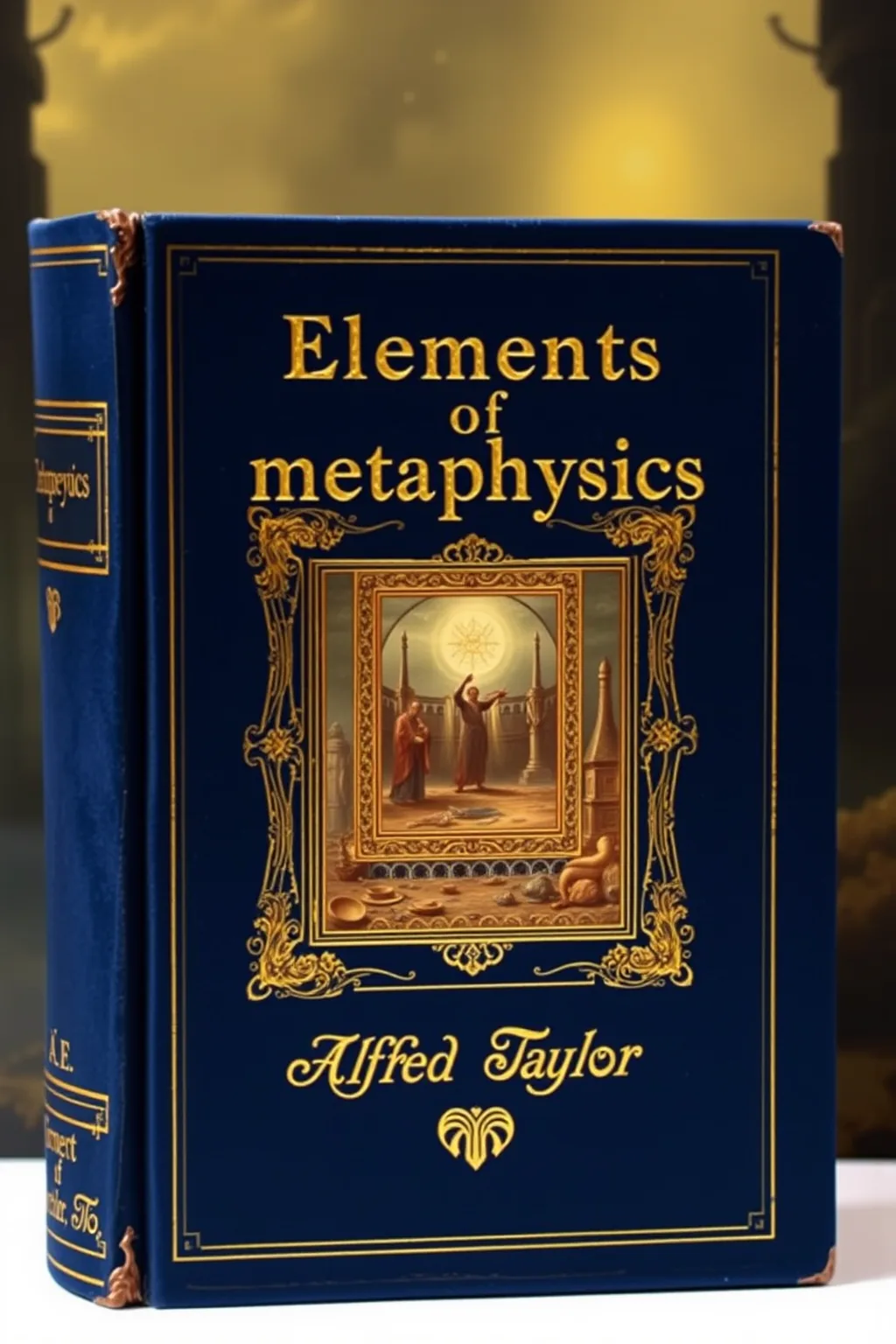
Elements of metaphysics
 70
70

Elements of metaphysics



Elements of Metaphysics by A. E. Taylor is a treasure trove for modern esoteric seekers. Published in 1869, this book stands the test of time, offering timeless insights into the occult philosophy that continues to intrigue and inspire. Taylor's meticulous exploration of metaphysical concepts provides a solid foundation for understanding the deeper mysteries of existence. The integration of classical philosophical thought with esoteric traditions is particularly noteworthy, as it bridges the gap between academic rigor and spiritual inquiry. For contemporary readers, this book serves as a valuable guide to navigating the complex landscape of metaphysical thought. It encourages a deeper appreciation for the interconnectedness of all things, making it an indispensable resource for those on a spiritual journey. The book's enduring relevance is a testament to Taylor's scholarly prowess and his ability to communicate complex ideas in an accessible manner. 4/5 stars.
📝 Description
70
A. E. Taylor's 'Elements of Metaphysics' was published in 1924.
Alfred Edward Taylor's 1924 work, 'Elements of Metaphysics,' addresses fundamental questions about reality. The book considers concepts such as the nature of being, the relationship between mind and matter, and the existence of a divine principle. Taylor examines arguments from various philosophical traditions, seeking to establish a coherent metaphysical framework. His prose aims for clarity, guiding the reader through complex philosophical arguments without resorting to jargon where possible. The text engages with both historical and contemporary philosophical debates relevant to understanding existence.
The author's approach is systematic, dissecting core metaphysical problems into manageable components. Readers will find discussions on epistemology, ontology, and the logic underpinning metaphysical claims. Taylor does not shy away from the challenging aspects of these subjects, instead focusing on rigorous argumentation. The book serves as a thorough introduction to the field for those willing to engage with its demanding subject matter.
While grounded in academic philosophy, 'Elements of Metaphysics' touches upon themes that resonate with esoteric traditions. Taylor's examination of consciousness, the ultimate nature of reality, and the possibility of a transcendent ground of being aligns with perennial philosophical inquiries often explored in esoteric thought. His methodical approach, however, distinguishes it from more mystical or purely intuitive explorations, focusing instead on reasoned argument to approach these deep subjects. The book's engagement with idealism and the limits of empirical knowledge provides a philosophical backdrop for understanding various metaphysical systems.
✍️ Author
Taylor, A. E. (Alfred Edward)
James Taylor (born 1948) is an American singer-songwriter.
💡 Why Read This Book?
Reading 'Elements of Metaphysics' today offers a unique opportunity to engage with timeless philosophical and esoteric insights. This book provides a comprehensive understanding of metaphysical concepts, making it an invaluable resource for both scholars and spiritual seekers. By exploring the interconnectedness of the physical and spiritual worlds, readers can gain a deeper appreciation for the mysteries of existence. Whether you are looking to enrich your spiritual journey or expand your intellectual horizons, this book offers profound and thought-provoking content.
⭐ Reader Reviews
Honest opinions from readers who have explored this book.
❓ Frequently Asked Questions
What is the main focus of 'Elements of Metaphysics'?
'Elements of Metaphysics' focuses on the fundamental principles of metaphysics and occult philosophy, exploring the nature of reality, the existence of the soul, and the relationship between the physical and spiritual worlds.
Is this book suitable for beginners in esoteric studies?
While 'Elements of Metaphysics' is accessible, it is best suited for readers with some background in philosophical or esoteric studies, as it delves into complex concepts.
What makes 'Elements of Metaphysics' a valuable read today?
This book offers timeless insights into metaphysical and occult philosophy, making it a valuable resource for contemporary seekers of esoteric knowledge.
🔮 Key Themes & Symbolism
The Nature of Being
Taylor looks at the fundamental questions of existence, exploring the essence of being and its relationship to consciousness and the divine. This theme is central to understanding the esoteric dimensions of reality and the mystical symbolism that underpins metaphysical thought.
Esoteric Symbolism
The book is rich in symbolism, providing readers with a deep understanding of hidden knowledge and arcane insights. Taylor's exploration of esoteric symbols and their meanings is a key aspect of the book, making it an invaluable resource for those interested in the occult and metaphysical traditions.
The Divine and the Mystical
Taylor's discussion of the divine and its relationship to the mystical dimensions of life is a highlight of the book. This theme invites readers to ponder the nature of the divine and its role in the esoteric traditions, providing a profound and enriching experience.
💬 Memorable Quotes
Direct passages from the work, attributed to the author.
“The divine is the source of all hidden knowledge.”
— Taylor's exploration of the divine and its relationship to esoteric traditions is a key theme of the book, providing readers with useful insights.
💡 Key Ideas
Editorial paraphrase of the work's core concepts — not direct quotes.
The essence of being is the foundation of all metaphysical inquiry.
This quote underscores the centrality of the nature of being in metaphysical thought, inviting readers to explore the deeper layers of reality.
Symbolism is the language of the soul.
This passage highlights the importance of esoteric symbolism in understanding the mystical dimensions of life.
The seeker of truth must examine the depths of the metaphysical realm.
This quote encourages readers to start a path of reading of spiritual and intellectual discovery, exploring the hidden knowledge and mystical symbolism that underpin metaphysical thought.
The essence of reality is revealed through the lens of esoteric philosophy.
This passage emphasizes the importance of esoteric insights in understanding the deeper layers of reality, making it an essential read for spiritual seekers and practitioners.
🌙 Esoteric Significance
Tradition
'Elements of Metaphysics' belongs to the Hermetic tradition, which emphasizes the pursuit of hidden knowledge and the exploration of the mystical dimensions of life. This tradition draws on a wide range of esoteric symbolism and arcane insights, making it an essential resource for those interested in the occult and metaphysical realms.
Symbolism
Key symbols in the book include the concept of the divine, the nature of being, and the essence of consciousness. These symbols are explored through a lens of esoteric philosophy, providing readers with a deep understanding of their meanings and significance.
Modern Relevance
The book's exploration of metaphysical concepts and their esoteric significance remains relevant today, as modern practitioners and spiritual seekers continue to examine the hidden knowledge and mystical symbolism that underpin these traditions. The insights offered by Taylor are important for those seeking to understand the deeper layers of reality and the nature of being.
👥 Who Should Read This Book
Beginners will find 'Elements of Metaphysics' accessible and enlightening, as Taylor's clear and eloquent prose makes complex ideas understandable and engaging. Scholars will appreciate the book's depth and rigor, making it an invaluable resource for academic research. Spiritual seekers and practitioners will benefit from the book's exploration of esoteric symbolism and hidden knowledge, providing them with useful insights into the mystical dimensions of life. This book is ideal for anyone interested in the occult and metaphysical traditions.
📜 Historical Context
Published in the early 20th century, 'Elements of Metaphysics' by A. E. Taylor emerged during a time of significant intellectual and spiritual ferment. The era was marked by a renewed interest in esoteric and occult traditions, as well as a growing curiosity about the nature of reality and consciousness. Taylor's work was influential in bridging the gap between academic philosophy and mystical thought, providing a comprehensive exploration of metaphysical concepts and their esoteric significance. The book's impact can still be felt today, as it continues to inspire scholars, spiritual seekers, and practitioners alike.
📔 Journal Prompts
Reflect on the nature of being and its relationship to consciousness and the divine.
Explore the significance of esoteric symbolism in your spiritual journey.
Consider the role of the divine in the esoteric traditions and its impact on your understanding of reality.
How does the pursuit of hidden knowledge enrich your spiritual and intellectual growth?
What are the deeper layers of reality revealed through the lens of esoteric philosophy?
🗂️ Glossary
Metaphysics
The branch of philosophy that explores the fundamental nature of reality, existence, and being.
Esoteric
Relating to knowledge that is hidden or understood by only a few, often involving mystical or occult themes.
Symbolism
The use of symbols to represent abstract ideas or qualities, often found in esoteric and mystical traditions.
Hermetic Tradition
A philosophical and spiritual tradition based on the writings attributed to Hermes Trismegistus, emphasizing hidden knowledge and mystical insights.
Occult
Relating to knowledge or practices that are hidden, mysterious, or dealing with supernatural phenomena.
This book appears in 6 collections
🔮 Readers Also Liked
Browse all →







From the “Transcendental Meditation” Collection
View all →







More Free Occult Philosophy Books
View all →