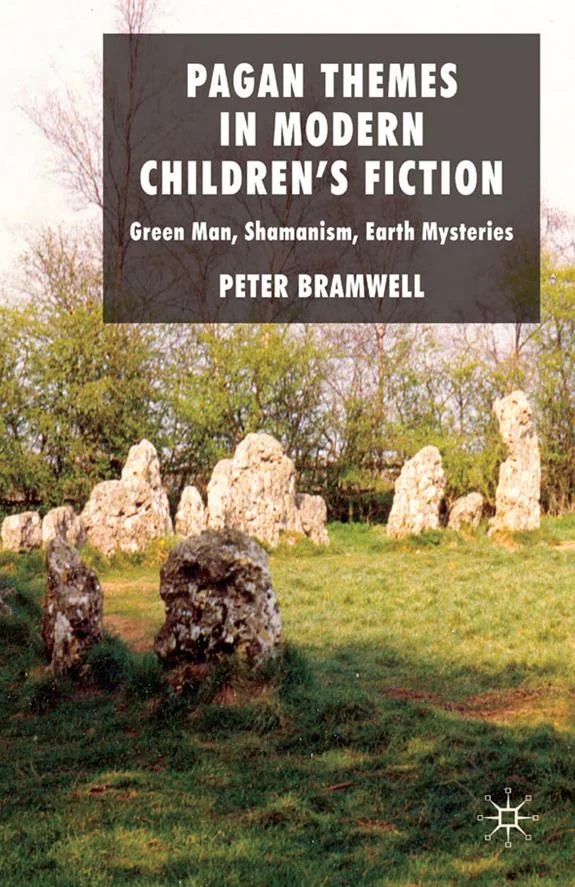
Pagan Themes in Modern Children's Fiction
 73
73

Pagan Themes in Modern Children's Fiction
P. Bramwell's study offers a necessary, if sometimes dry, examination of how modern Paganism infiltrates the narratives of children's books. The strength lies in its detailed textual analysis, particularly the deconstruction of archetypes in Philip Pullman's work, revealing layers of meaning often missed by casual readers. However, the book's academic tone, while precise, can occasionally obscure the vibrant cultural exchange it describes. A particularly insightful section discusses Catherine Fisher's engagement with nature spirits. The critical limitation is a tendency to prioritize theoretical frameworks over the lived experience of Paganism, sometimes presenting it as a monolithic entity. Despite this, the work provides a valuable lens for understanding the evolving spiritual consciousness reflected in children's literature.
📝 Description
73
P. Bramwell's 2009 book examines pagan themes in modern children's fiction.
Published in 2009, 'Pagan Themes in Modern Children's Fiction' by P. Bramwell looks at how contemporary Paganism appears in popular children's books. The author considers authors such as Susan Cooper, Geraldine McCaughrean, and Philip Pullman, investigating how they incorporate elements of modern Pagan beliefs and practices, whether intentionally or not.
This study is useful for literary critics, educators, parents, and academics focusing on religion and literature. It will particularly interest those studying how modern spirituality affects cultural works aimed at young people. The book was released at a time when Neopaganism was gaining more public attention and academic research into religious representation in children's literature was growing. It builds on existing literary analysis of fantasy literature's symbolic elements, focusing on recent Pagan influences.
This book contributes to the academic study of Paganism by examining its presence in children's literature. It connects with scholarship on mythology and folklore in fantasy, such as the work on Tolkien and C.S. Lewis, but specifically addresses contemporary Pagan currents. The analysis focuses on how earth-centered spirituality, nature worship, and archetypal figures like the witch are depicted in stories for young audiences, reflecting a broader trend of interest in alternative spiritualities during the late 20th and early 21st centuries.
💡 Why Read This Book?
• Understand how authors like Anthony Horowitz and Geraldine McCaughrean subtly embed earth-based spiritual concepts into stories, offering young readers alternative perspectives on nature and divinity. • Gain critical tools to analyze the portrayal of figures like witches and nature deities in children's fiction, informed by a 2009 academic perspective on contemporary Paganism. • Discover the specific critical approaches applied to works by Susan Cooper, revealing how literary analysis can illuminate the intersection of spirituality and popular culture.
⭐ Reader Reviews
Honest opinions from readers who have explored this book.
❓ Frequently Asked Questions
What specific Pagan concepts does Bramwell analyze in children's literature?
The book examines concepts such as nature veneration, immanence of the divine, earth-centered spirituality, and the archetype of the witch as they appear in works published from the late 20th century onwards.
Which authors are critically examined in Pagan Themes in Modern Children's Fiction?
Key authors discussed include Susan Cooper, Catherine Fisher, Geraldine McCaughrean, Anthony Horowitz, and Philip Pullman, with detailed analysis of their engagement with Pagan themes.
When was 'Pagan Themes in Modern Children's Fiction' first published?
The original publication date for P. Bramwell's study was March 31, 2009.
What is the primary focus of the book's critical approach?
The book applies various critical lenses to explore the relationship between modern Paganism and recent children's literature, focusing on how Pagan elements are represented and integrated.
Does the book discuss historical Paganism or contemporary Paganism?
The focus is explicitly on 'modern Paganism,' referring to contemporary spiritual movements and beliefs rather than ancient historical practices.
Who would benefit most from reading this book?
Academics, literary critics, students of comparative religion, and parents interested in the subtle spiritual messages within children's fiction will find this book particularly valuable.
🔮 Key Themes & Symbolism
Nature Spirituality in Narrative
The work investigates how contemporary Paganism's emphasis on the sacredness of the natural world is reflected in children's literature. It analyzes how authors depict ecological consciousness, the divine immanence in landscapes, and the interconnectedness of all living things, moving beyond simple nature appreciation to a spiritual framework that sees nature as inherently divine and alive.
Archetypes of the Sacred Feminine
A significant focus is placed on the representation of female figures embodying Pagan archetypes, such as the witch, the goddess, and the wise woman. Bramwell examines how these characters, often central to children's narratives, are portrayed in ways that align with or subvert modern Pagan interpretations of the divine feminine, exploring their power, wisdom, and connection to natural cycles.
Re-enchantment and Modernity
The book explores how children's fiction, particularly fantasy, serves as a vehicle for 're-enchantment' in a secularized modern world. It argues that by incorporating elements of Paganism, these stories offer young readers a sense of wonder, magic, and spiritual depth that counters prevailing materialistic worldviews, fostering a more holistic understanding of existence.
Literary Transmission of Esoteric Ideas
This theme addresses how subtle and often controversial aspects of modern Paganism are transmitted through narrative structures and character arcs. The analysis highlights how literary works can act as conduits for esoteric concepts, shaping readers' perceptions and potentially influencing their understanding of spirituality and the magical underpinnings of reality.
💬 Memorable Quotes
Direct passages from the work, attributed to the author.
“The contemporary child's fantasy landscape frequently absorbs and adapts elements of the burgeoning modern Pagan movement.”
— This statement expresses the book's core argument: that popular children's stories are not isolated cultural products but are influenced by and reflect contemporary spiritual trends, specifically modern Paganism.
“Philip Pullman's Daemons function as potent symbols of an individual's soul-force, echoing animistic beliefs.”
— This interpretation highlights a specific analytical point, linking the concept of Daemons in Pullman's 'His Dark Materials' to Pagan ideas of inherent spiritual energy or animism present in all beings.
“Susan Cooper's 'The Dark Is Rising' sequence presents a Manichean struggle where nature itself is a key battlefield.”
— This points to the interpretation of Cooper's work as a narrative where elemental forces and the natural world are central to a cosmic conflict, aligning with Pagan views of nature's sacred power.
“The archetype of the witch in children's literature is often re-imagined beyond simplistic 'evil' portrayals.”
— This suggests an analysis of how modern children's fiction recontextualizes traditional figures like witches, often imbuing them with more complex, nature-connected, and sometimes positive attributes aligned with contemporary Pagan understandings.
💡 Key Ideas
Editorial paraphrase of the work's core concepts — not direct quotes.
Literary analysis reveals the subtle ingress of earth-based spirituality into mainstream children's narratives.
This paraphrased concept underscores the book's methodology: using literary criticism to uncover and articulate the presence of earth-centered spiritual ideas within stories intended for young audiences.
🌙 Esoteric Significance
Tradition
This work engages primarily with contemporary Western Esotericism, particularly Neopaganism and its diverse expressions. It functions as a bridge between literary criticism and the academic study of religion, examining how esoteric concepts are filtered and transmitted through popular culture. While not strictly adhering to a single lineage like Hermeticism or Kabbalah, it analyzes themes resonant with many esoteric traditions, such as immanence, nature worship, and the re-enchantment of the world.
Symbolism
Key symbols explored include the archetype of the witch, often reinterpreted as a wise woman connected to nature's cycles and ancient magic, moving beyond negative stereotypes. Nature itself is treated as a potent symbol, representing the divine, sacred power, and the source of spiritual wisdom, reflecting animistic and earth-centered beliefs prevalent in modern Paganism. The concept of the 'sacred feminine' is also central, embodied in goddesses and powerful female figures.
Modern Relevance
Contemporary thinkers and practitioners in fields like ecopsychology, eco-feminism, and new forms of nature-based spirituality find resonance in Bramwell's analysis. The book's exploration of how children's literature can foster a sense of connection to the earth and introduce nuanced spiritual concepts remains relevant for educators, parents, and cultural critics seeking to understand the evolving spiritual landscape and its influence on youth culture.
👥 Who Should Read This Book
["• Literary critics specializing in children's literature and fantasy, who will gain a framework for analyzing esoteric influences in texts from the late 20th and early 21st centuries.", '• Students of comparative religion and contemporary Paganism, seeking to understand how these beliefs are represented and disseminated through popular cultural products.', "• Educators and parents interested in the underlying spiritual and philosophical messages embedded within children's fiction, offering a critical perspective on works by authors like Philip Pullman and Susan Cooper."]
📜 Historical Context
Published in 2009, 'Pagan Themes in Modern Children's Fiction' emerged from a specific academic climate interested in the intersection of religion, culture, and literature. The late 20th and early 21st centuries saw a rise in both the visibility of Neopaganism and critical studies of children's fantasy, building on earlier analyses of myth and spirituality in works like those by Tolkien. Bramwell's book distinguished itself by focusing on *contemporary* Paganism and its influence on authors like Philip Pullman and Susan Cooper, whose works were already subjects of significant literary scholarship. The period also saw a broader cultural discourse about spirituality outside traditional religious institutions, making the exploration of Pagan themes in popular media a relevant academic pursuit. While not subject to major censorship debates itself, the book engages with a field where the overt or subtle inclusion of Pagan ideas in children's media could spark discussion among parents and educators.
📔 Journal Prompts
The representation of nature's sacredness in Susan Cooper's 'The Dark Is Rising' sequence.
Archetypes of the wise woman and witch in Geraldine McCaughrean's novels.
Literary re-enchantment as a counterpoint to secular modernity.
The concept of soul-force as symbolized by Daemons in Philip Pullman's work.
How animistic beliefs manifest in children's fantasy narratives.
🗂️ Glossary
Modern Paganism
A contemporary spiritual movement encompassing diverse beliefs and practices, often focused on nature worship, polytheism, earth-based spirituality, and the revival of ancient traditions. It is distinct from historical Paganism.
Archetype
A recurring symbolic image, character type, or narrative pattern that is universally understood across cultures, often drawn from mythology and folklore. Examples include the hero, the witch, and the wise elder.
Immanence
The philosophical or theological concept that the divine is present within the material world and nature, rather than existing solely transcendentally. Central to many earth-based spiritualities.
Re-enchantment
A cultural and spiritual process of restoring a sense of wonder, magic, and sacredness to the world, often seen as a reaction against secularization and materialism.
Animism
The belief that natural objects, phenomena, and the universe itself possess an intrinsic life or spirit. Common in many indigenous and Pagan traditions.
Esotericism
Teachings or practices that are understood by or accessible only to a select group of initiated individuals, often concerning spiritual or mystical knowledge.
Earth-based spirituality
A broad category of spiritual practices and beliefs that emphasize connection to the Earth, nature cycles, and the divine as manifested in the natural world.
This book appears in 1 collection
🔮 Readers Also Liked
Browse all →









From the “Earth Mysteries” Collection
View all →








More Free Occult Philosophy Books
View all →