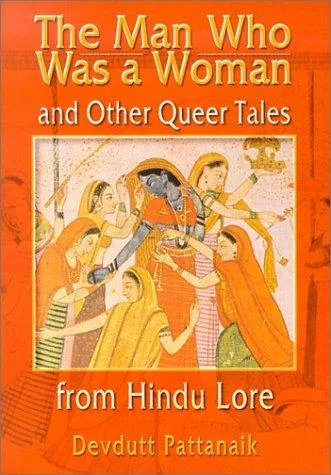
The man who was a woman and other queer tales from Hindu lore
 79
79

The man who was a woman and other queer tales from Hindu lore
Devdutt Pattanaik's 'The Man Who Was a Woman and Other Queer Tales from Hindu Lore' offers a vital corrective to the often-homogenized view of ancient Indian traditions. Pattanaik excels at excavating narratives of gender variance, presenting characters like Shikhandi, whose birth and identity challenge rigid biological determinism, with clarity and narrative flair. The strength lies in its accessibility; it doesn't shy away from complex themes but renders them through engaging storytelling, making these ancient stories relevant to contemporary discussions. However, the book occasionally leans towards a more interpretive than purely historical approach, which might leave some scholars desiring deeper textual exegesis. The exploration of the divine union of Shiva and Parvati, manifesting as Ardhanarishvara, is particularly striking, illustrating a potent symbol of unified male and female energies. This collection serves as an important, albeit sometimes broadly sketched, introduction to gender diversity within Hindu mythology.
📝 Description
79
Devdutt Pattanaik reinterprets Hindu myths to highlight gender fluidity and non-binary identities.
This volume gathers narratives from Hindu mythology and folklore that address gender fluidity and non-binary identities. Devdutt Pattanaik, a well-known mythologist, rereads ancient stories, drawing attention to characters and situations that challenge standard views of sex and gender. The book does not aim to be an academic study but rather an accessible retelling of these themes through stories. Pattanaik's goal is to introduce these often overlooked elements of Hindu tradition to a broader audience.
The stories themselves are ancient, drawn from various Hindu scriptures and oral traditions that developed over centuries. Pattanaik's compilation and reexamination, published in the early 21st century, places these tales within current discussions about gender and sexuality. Hindu scriptures have long featured figures and stories that depart from binary gender norms, yet interpretations have frequently been shaped by patriarchal or heteronormative perspectives. This book offers a different reading, using diverse regional and textual sources that have historically recognized a range of gender and sexual expression.
This collection engages with the esoteric traditions within Hinduism that acknowledge a spectrum of gender and sexual identities, often diverging from orthodox interpretations. It draws from a rich history of myth and folklore where divine beings and human figures exhibit fluid gender presentations or engage in relationships that defy heteronormative expectations. By bringing these stories to light, Pattanaik connects with a lineage of thought that recognizes multiplicity and transformation at the heart of spiritual and cosmic order, challenging later, more rigid constructions of gender roles.
💡 Why Read This Book?
• Gain insight into the concept of Ardhanarishvara, a powerful depiction of divine androgyny from Hindu iconography, to understand ancient Indian perspectives on gender unification. • Learn about characters like Shikhandi, whose narrative arc, as presented in the Mahabharata, demonstrates a complex engagement with gender identity and transformation. • Discover the existence of diverse gender roles and expressions within Hindu lore, challenging modern binary assumptions with examples predating colonial influence.
⭐ Reader Reviews
Honest opinions from readers who have explored this book.
❓ Frequently Asked Questions
What specific mythological figures does Devdutt Pattanaik discuss regarding gender fluidity?
The book features figures such as Arjuna (who disguises himself as a woman), Shikhandi (born female, raised male, and later transitioning), Mohini (Vishnu's female avatar), and the composite deity Ardhanarishvara (half-male, half-female Shiva).
When was 'The Man Who Was a Woman and Other Queer Tales from Hindu Lore' first published?
This collection by Devdutt Pattanaik was first published in 2002, bringing ancient Indian narratives about gender to a contemporary audience.
Does the book focus on modern LGBTQ+ issues or ancient Hindu stories?
The book primarily focuses on ancient Hindu stories and mythological figures that explore themes of gender fluidity and non-binary identities, using them to inform contemporary understanding.
Are the stories presented in a scholarly or narrative format?
Pattanaik presents the stories in a narrative and accessible format, reinterpreting them to highlight themes of gender diversity rather than adhering strictly to academic textual analysis.
What is the significance of the character Shikhandi in Hindu lore?
Shikhandi is a pivotal figure in the Mahabharata, born female but raised as a male, who later undergoes a transformation that allows them to fulfill a crucial role in the Kurukshetra War.
Can the book be considered an introduction to Queer Theory from an Indian perspective?
While not a formal treatise on Queer Theory, the book offers an introduction to how gender and sexual diversity were understood and represented within ancient Indian traditions, providing a unique cultural lens.
🔮 Key Themes & Symbolism
Divine Androgyny
The concept of Ardhanarishvara, a composite form of Shiva and Parvati, embodies the divine union of masculine and feminine principles. This powerful symbol from Hindu iconography represents the idea that male and female are not mutually exclusive but integral aspects of a unified whole. Pattanaik uses this and similar divine manifestations to illustrate how ancient Indian traditions conceptualized gender as potentially fluid and complementary, existing even at the highest cosmic levels, challenging later interpretations that emphasized strict binaries.
Gender Transformation Narratives
Hindu lore is replete with tales of characters who undergo significant gender transformations, defying fixed identities. Figures like Shikhandi, who transitions from female to male, or Arjuna, who spends time disguised as a woman, are examined not as anomalies but as integral parts of larger narratives. These stories explore the social, spiritual, and karmic implications of such shifts, suggesting a cultural acceptance of gender fluidity that contrasts with more rigid modern constructs. The book highlights these transformations as vehicles for exploring destiny and dharma.
Third Gender Categories
Beyond simple binary distinctions, Hindu traditions have historically acknowledged categories that exist outside male and female. The book touches upon figures and communities that embody a third gender, such as the *Hijra* (eunuchs or transgender individuals) who hold specific roles in society and mythology. Pattanaik connects these to ancient narratives, arguing for a long-standing cultural space for non-binary gender expressions within the Indian subcontinent. This perspective challenges the notion that gender diversity is a purely modern phenomenon.
Mythic Homosexuality and Bisexuality
The collection also explores instances of same-sex attraction and relationships within Hindu mythology. Stories featuring gods and heroes who exhibit affection or desire for individuals of the same sex are brought to light. Pattanaik interprets these narratives not through a modern lens of sexual orientation but as reflections of a broader acceptance of diverse affections and relationships within the ancient Indian worldview. This challenges the assumption that ancient societies were exclusively heterosexual.
💬 Memorable Quotes
Direct passages from the work, attributed to the author.
“The Mahabharata, a vast epic, contains figures like Shikhandi, who was born female but raised as a male and later became a warrior.”
— This highlights a specific narrative example from a foundational Hindu text that directly addresses gender identity and transformation, serving as a key piece of evidence for the book's thesis on ancient Indian gender diversity.
“Ardhanarishvara represents the fusion of male and female energies, suggesting that these are not opposing forces but complementary aspects of a single divinity.”
— This interpretation points to the symbolic power of Ardhanarishvara as a representation of divine androgyny, illustrating how Hindu theology historically embraced the concept of gender unity and fluidity within its pantheon.
“Many ancient Indian tales acknowledge beings who do not fit neatly into male or female categories.”
— This generalized statement serves as a thesis for the collection, asserting the presence of diverse gender expressions and identities within the broad spectrum of Hindu lore, countering modern assumptions of a strictly binary historical understanding.
“The stories challenge the idea that gender was always rigidly defined in ancient India.”
— This interpretation focuses on the book's argumentative stance, suggesting that the mythological narratives presented offer evidence against a monolithic historical view of strict gender roles, advocating for a more nuanced understanding of the past.
💡 Key Ideas
Editorial paraphrase of the work's core concepts — not direct quotes.
Vishnu, in his Mohini avatar, is a woman, but this form is used to achieve divine purposes, showing how gender can be a fluid aspect of divine will.
This paraphrase emphasizes the narrative function of Vishnu's female avatar, Mohini, suggesting that gender in Hindu mythology can be a mutable quality adopted by deities to fulfill specific objectives, underscoring the non-static nature of gender roles.
🌙 Esoteric Significance
Tradition
While not strictly adhering to a single Western esoteric lineage like Hermeticism or Kabbalah, Pattanaik's work engages with the esoteric dimensions inherent within Hindu traditions. It explores concepts of divine union, cosmic balance, and the spiritual significance of gender transformation, which are central to various yogic, tantric, and devotional paths within Hinduism. The book reveals how these traditions often viewed gender as a fluid spectrum, a concept that speaks to certain non-dualistic and alchemical philosophies found in esoteric thought.
Symbolism
Key symbols include Ardhanarishvara, representing the perfect union and balance of masculine (Shiva) and feminine (Shakti) energies, symbolizing wholeness and the transcendence of duality. The transformation of characters like Shikhandi or Arjuna into different genders highlights the symbolic shedding of ego and societal constraints, pointing towards spiritual liberation. Vishnu's Mohini avatar symbolizes divine illusion (Maya) and the strategic use of form to uphold cosmic order (Dharma), demonstrating that divine essence is not bound by physical gender.
Modern Relevance
Contemporary thinkers and practitioners exploring non-dual spirituality, gender studies within religious contexts, and LGBTQ+ affirmation in diverse cultural traditions draw upon Pattanaik's work. His reinterpretations provide a bridge between ancient Indian philosophical concepts and modern identity politics. Movements advocating for greater inclusivity within religious communities and scholars of comparative mythology increasingly cite Pattanaik's accessible narratives as evidence of historical gender diversity, influencing discussions on queer spirituality and decolonizing understandings of gender.
👥 Who Should Read This Book
• Students of comparative mythology and religious studies seeking to understand non-Western perspectives on gender and sexuality. • LGBTQ+ individuals and allies interested in historical and cultural precedents for diverse identities within ancient traditions. • Readers curious about the philosophical and spiritual implications of gender fluidity beyond contemporary Western frameworks, particularly from an Indian context.
📜 Historical Context
Devdutt Pattanaik's 'The Man Who Was a Woman and Other Queer Tales from Hindu Lore,' first published in 2002, emerged during a period of renewed academic and public interest in the intersection of gender, sexuality, and religion. The compilation draws from a vast corpus of Hindu texts, some dating back to ancient Vedic periods and evolving through the Puranic and epic eras. This work stands in contrast to more conservative interpretations of Hindu traditions that often sought to impose heteronormative frameworks onto its diverse mythology. While figures like the poet Kalidasa explored gender themes in works like 'Shakuntala,' and scholars like Wendy Doniger have extensively studied eroticism and gender in Hinduism, Pattanaik's approach is specifically geared towards highlighting queer narratives accessible to a popular audience. His work engages with the ongoing discourse on how pre-colonial Indian societies understood and represented gender and sexual variance, challenging the impact of Victorian morality introduced during British rule.
📔 Journal Prompts
The concept of Ardhanarishvara: how does this divine union challenge binary thinking?
Shikhandi's narrative: reflect on the societal and personal implications of gender transformation in ancient lore.
The fluidity of divine avatars like Mohini: consider how form serves purpose in mythology.
Compare and contrast the presentation of gender variance in Hindu lore with modern concepts of gender identity.
Consider the implications of recognizing multiple gender expressions within a spiritual or cultural tradition.
🗂️ Glossary
Ardhanarishvara
A composite and androgynous form of the Hindu deities Shiva and his consort Parvati, representing the synthesis of masculine and feminine energies.
Shikhandi
A significant character in the Mahabharata, born female but raised as a male, who undergoes a transformation and plays an important role in the epic's climax.
Mohini
The female avatar of the Hindu god Vishnu, often depicted as a enchantress, who appears in various myths to restore cosmic balance or trick demons.
Mahabharata
One of the two major Sanskrit epics of ancient India, containing philosophical and devotional material and recounting the struggle of the Kaurava and the Pandava princes.
Dharma
In Hinduism, a concept that encompasses duty, righteousness, law, virtue, and 'right way of living'. It is a fundamental principle that upholds the universe and society.
Hijra
A term used in South Asia to refer to transgender individuals or eunuchs, often with specific cultural and religious roles.
Puranas
A vast genre of Indian literature about a wide range of topics, including the creation of the universe, genealogies of gods, goddesses, and kings, and descriptions of Hindu cosmology, philosophy, and geography.
🔮 Readers Also Liked
Browse all →







More by Devdutt Pattanaik
All books →

More Free Occult Philosophy Books
View all →