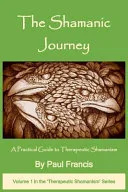
The Shamanic Journey
 75
75

The Shamanic Journey
Paul Francis's "The Shamanic Journey" attempts a commendable synthesis, linking ancient shamanic practices to modern malaise. Its strength lies in the clarity of its practical exercises, which genuinely demystify the core mechanics of journeying. Francis is particularly effective when detailing the dissociation from nature as a root of contemporary psychological and ecological distress. However, the book occasionally falters in its historical analysis, sometimes presenting a somewhat generalized critique of modernity without sufficiently engaging with specific counter-movements or nuanced historical shifts. While the ambition to reconnect the reader to primal wisdom is evident, the leap from individual practice to societal recovery, while compelling, could benefit from more granular evidence. Despite this, the work offers a valuable, accessible entry point into shamanic principles for the contemporary seeker.
📝 Description
75
Paul Francis's "The Shamanic Journey" argues shamanism offers a path to contemporary well-being.
Paul Francis's "The Shamanic Journey" presents shamanic practices as a system relevant to modern life, not just a historical subject. The book details core shamanic principles and techniques, making them accessible to newcomers. Beyond instruction, it examines shamanism's historical role in human societies, connecting it to individual psychology and ecological understanding. Francis suggests shamanism can act as an antidote to modern feelings of disconnection.
This book is for those who want to experience shamanism directly, moving past academic study. It speaks to people concerned about current mental and environmental issues, believing older spiritual traditions might offer answers. Readers interested in animism, altered states of consciousness, and the spiritual roots of environmental thought will find much to consider. It encourages those ready for practical exercises and reflection on shamanism's wider social impact.
Francis places shamanism in the context of global spiritual history, contrasting its integrated worldview with what he sees as the fragmented modern Western mind. The book implicitly questions Enlightenment rationalism and the decline of nature-based spirituality. By showing how past societies used shamanic frameworks for community and environmental health, Francis points out a significant shift in recent centuries. This historical view supports the book's main idea about lost connections.
This work engages with the broader revival and reinterpretation of shamanic practices that emerged in the late 20th century. It places shamanism within a lineage of nature-based spiritual traditions, often contrasted with Abrahamic religions or purely materialistic philosophies. The book's focus on direct experience and altered states aligns with esoteric interests in accessing other dimensions of consciousness and finding holistic approaches to life and the environment, often presented as antidotes to perceived modern spiritual or ecological crises.
💡 Why Read This Book?
• You will learn practical, step-by-step methods for entering altered states of consciousness, as detailed in the book's exercises, offering a tangible pathway to explore inner landscapes that standard meditation may not access. • You will gain an understanding of how the decline of shamanic worldviews since the Enlightenment may have contributed to modern mental health and environmental crises, providing a unique historical and philosophical lens. • You will explore the concept of the shamanic journey as a tool for personal and collective healing, moving beyond mere spiritual curiosity to consider its role in restoring balance with the natural world, a perspective often missing in secular self-help.
⭐ Reader Reviews
Honest opinions from readers who have explored this book.
❓ Frequently Asked Questions
What is the core concept of the shamanic journey presented in Paul Francis's book?
The core concept is the shamanic journey as a practical technique to access non-ordinary reality for wisdom and healing. It involves entering altered states of consciousness to connect with spirit guides and gain insights relevant to personal and collective well-being.
When was 'The Shamanic Journey' by Paul Francis first published?
Paul Francis's 'The Shamanic Journey' was first published on May 23, 2017. This date places it within contemporary discussions on spirituality and alternative healing practices.
Does the book offer practical exercises for readers to try?
Yes, the book is designed to be practical, including step-by-step exercises. These are intended to guide readers in undertaking their own shamanic journeys and experiencing the practice directly.
How does the book connect shamanism to modern problems?
It argues that modern society's turning away from shamanistic practices, which historically fostered a deep connection with nature and community, has contributed to mental health and environmental issues. The book proposes shamanism as a path to recovery.
What is the author's perspective on the role of shamanism in society?
The author views shamanism not just as an ancient tradition but as a vital system with significant relevance today. He posits it as crucial for restoring individual psychological balance and ecological harmony, offering a corrective to modern societal fragmentation.
Is 'The Shamanic Journey' suitable for beginners?
Yes, the book is presented as an introduction to the ancient practice. Its practical, step-by-step approach makes it accessible for those new to shamanism or exploring esoteric spiritual paths.
🔮 Key Themes & Symbolism
Accessing Non-Ordinary Reality
The book emphasizes the shamanic journey as a deliberate technique for entering altered states of consciousness. This is not passive dreaming but an active exploration of inner landscapes, often facilitated by rhythm or focused intention. Francis details how these journeys serve as a conduit for receiving guidance, healing energies, and profound self-knowledge, positioning this access as fundamental to shamanic practice and its efficacy.
Modern Disconnection and Recovery
Francis argues that contemporary Western societies suffer from a significant disconnect from nature and ancestral spiritual practices, leading to widespread mental health issues and ecological degradation. He presents shamanism as a potent antidote, capable of restoring balance by re-establishing vital connections. The work explores how embracing shamanic principles can foster a more integrated existence and a healthier relationship with the planet.
The Shaman as Mediator
Central to the book is the role of the shaman as a bridge between the material world and the spirit realms. This figure acts as a healer, seer, and community anchor, facilitating communication with unseen forces. Francis examines the societal impact of this role and laments its decline in modernity, suggesting that recovering aspects of this mediatory function is essential for collective well-being and ecological stewardship.
Practical Application of Shamanic Techniques
Beyond theoretical discussion, 'The Shamanic Journey' prioritizes actionable methods. It provides clear, step-by-step exercises designed to enable readers to undertake their own journeys, connect with spirit guides, and apply the insights gained. This focus on practical application underscores the author's belief in the accessibility and relevance of shamanic practices for personal transformation in the 21st century.
💬 Memorable Quotes
Direct passages from the work, attributed to the author.
“Our turning away from shamanism has led to mental health and environmental problems.”
— This statement expresses Francis's central thesis: that the erosion of ancient, nature-attuned spiritual practices is a root cause of contemporary societal ills, suggesting a need to re-engage with these traditions for healing.
“The book is a detailed examination of how our turning away from shamanism led to many of the mental health and environmental problems we now face.”
— This highlights the book's analytical approach, positing a direct causal link between the decline of shamanic worldviews and current crises, framing shamanism as a potential solution.
“An introduction to the ancient practice of shamanism, including step-by-step, practical exercises.”
— This succinctly describes the book's dual nature: an educational overview of shamanism coupled with tangible methods for readers to engage with the practice directly.
“The vital role shamanism can play in our recovery.”
— This phrase points to the redemptive and restorative potential the author sees in shamanic practices, not just for individuals but for society as a whole in addressing its current challenges.
“More than just a book about shamanism however...”
— This indicates that the book transcends a simple description of shamanism, venturing into broader socio-cultural and psychological analyses concerning its historical impact and contemporary relevance.
🌙 Esoteric Significance
Tradition
While not strictly adhering to a single established Western esoteric lineage like Hermeticism or Kabbalah, "The Shamanic Journey" draws heavily on animistic and nature-based spiritual practices that intersect with broader esoteric currents. It aligns with traditions that emphasize direct experience of the sacred and the interconnectedness of all life, often found in neo-paganism and earth-centered spirituality. The book's focus on accessing non-ordinary reality through altered states positions it within a spectrum of shamanic and visionary practices explored across various esoteric traditions.
Symbolism
The 'shamanic journey' itself functions as a central symbolic act, representing the quest for knowledge and healing across inner landscapes. Spirit animals or guides often appear within these journeys, symbolizing primal energies, archetypal wisdom, or aspects of the self needing integration. The concept of the 'veil' between worlds is also a key motif, representing the perceived separation of modern consciousness from the vital forces of nature and spirit that shamanism seeks to bridge.
Modern Relevance
Contemporary thinkers and practitioners in fields like ecopsychology, transpersonal psychology, and certain strands of neo-shamanism draw upon the principles explored in works like Francis's. The book's emphasis on the healing potential of reconnecting with nature and ancestral wisdom speaks to modern movements seeking alternatives to purely materialist or clinical approaches to well-being and environmental stewardship.
👥 Who Should Read This Book
• Individuals new to esoteric practices and interested in experiential spirituality: You will find a clear, accessible introduction to shamanic concepts and practical methods for exploring altered states. • Those concerned with modern psychological and ecological crises: You will gain a framework for understanding how a disconnection from nature-based wisdom traditions may have contributed to current issues. • Seekers interested in comparative religion and anthropology: You will encounter an argument for the enduring relevance of shamanic worldviews and practices beyond their historical context.
📜 Historical Context
Published in 2017, Paul Francis's "The Shamanic Journey" emerged during a period of resurgent interest in alternative spiritualities and indigenous knowledge systems, often framed as responses to perceived failures of Western materialism and secularism. The work implicitly engages with a lineage of thought that gained traction following Mircea Eliade's seminal "Shamanism: Archaic Techniques of Ecstasy" (1951), which popularized the academic study of shamanism globally. Francis's approach, however, pivots towards practical application and a direct critique of modern societal structures, contrasting with more purely anthropological or historical accounts. It stands apart from New Age interpretations by grounding its claims in a critique of modernity's psychological and ecological consequences. While figures like Carlos Castaneda had previously blurred lines between shamanism and fiction, Francis aims for a more direct, albeit critical, engagement with the practice's perceived societal necessity.
📔 Journal Prompts
Reflect on the concept of the 'shamanic journey' as a method for accessing wisdom.
Consider the author's argument regarding modern society's 'turning away from shamanism'.
Identify a spirit animal or guide encountered during your own imagined or actual journey.
Analyze the connection between ecological balance and the practice of shamanism.
What does 'mediator between the seen and unseen worlds' mean to you?
🗂️ Glossary
Shamanic Journey
A technique for entering an altered state of consciousness, typically using rhythm (like drumming), to access non-ordinary reality for guidance, healing, or spiritual insight.
Non-Ordinary Reality
A state of consciousness distinct from everyday waking consciousness, often characterized by vivid imagery, symbolic encounters, and direct spiritual experiences.
Spirit Guides
Entities or beings encountered in non-ordinary reality that offer wisdom, assistance, or healing to the practitioner during a shamanic journey.
Animism
The belief that natural objects, phenomena, and the universe itself possess souls or consciousness; a worldview central to many shamanic traditions.
Altered State of Consciousness (ASC)
Any mental state significantly different from a normal waking state, often induced by practices like meditation, chanting, or rhythmic drumming.
Mediator
In a shamanic context, an individual (the shaman) who facilitates communication or passage between the ordinary world and the spirit realms.
Ecological Balance
A state of equilibrium within an ecosystem where all components are functioning together in harmony, often understood in shamanic traditions as being influenced by spiritual well-being.