Horologium Achaz, Christophorus Schissler, artifex

 61
61

Horologium Achaz, Christophorus Schissler, artifex



Celeste Moreau, Divination & Symbolism Reviewer: Julius Friedrich Sachse's rendition of 'Horologium Achaz' is an indispensable resource for scholars of historical esotericism and practitioners of astrological geomancy. Sachse masterfully elucidates Schissler's intricate designs, revealing the profound symbolic language woven into each sundial. The work's strength lies in its ability to bridge the gap between practical craftsmanship and metaphysical understanding, showcasing timepieces as conduits of celestial energy. This edition is a must-have for anyone seeking to grasp the alchemical relationship between mechanical precision and cosmic divination, offering unparalleled insights into a forgotten facet of occult science.
📝 Description
61
Julius Friedrich Sachse's 1903 edition of Christophorus Schissler's 'Horologium Achaz' details celestial mechanics and astrological geomancy.
This edition of 'Horologium Achaz' presents Christophorus Schissler's work on timekeeping devices, focusing on sophisticated sundials. It goes beyond simple mechanics to discuss the astrological principles and geomantic practices that informed their design. The book details how these instruments were viewed not just as tools for measuring time, but as devices for cosmic alignment. The precise casting of shadows from these sundials was believed to reveal patterns of fate and influence. Sachse's presentation highlights the blend of practical craftsmanship and spiritual thought present in early modern occult traditions.
The text is structured around the construction and use of these complex sundials. It connects the physical act of building and observing these instruments to a deeper understanding of the universe. Readers are invited to see timekeeping as a means of perceiving the divine order. It serves as both a technical guide to astronomical instruments and a philosophical exploration of the connection between the heavens, the earth, and the human experience.
Published in 1903, this work connects to the revival of interest in Renaissance esotericism and occult sciences. Schissler's 'Horologium Achaz' reflects a period where the lines between astronomy, astrology, and practical magic were blurred. The book's focus on geomancy and the symbolic interpretation of celestial mechanics places it within traditions that sought to understand divine order through mathematical and observational means. It is a window into early modern European occult philosophy, where the construction of instruments was intertwined with spiritual inquiry and the belief in universal correspondences.
💡 Why Read This Book?
Dive into the esoteric heart of timekeeping with 'Horologium Achaz.' This book is a rare exploration of sundials as mystical instruments, revealing their connection to astrological geomancy and hidden cosmic knowledge. Ideal for seekers of ancient wisdom, scholars of occult history, and practitioners wishing to deepen their understanding of celestial influences and symbolic divination.
⭐ Reader Reviews
Honest opinions from readers who have explored this book.
❓ Frequently Asked Questions
What is the primary focus of 'Horologium Achaz'?
The primary focus is on the construction and symbolic meaning of sundials, particularly as instruments for astrological geomancy and understanding celestial influences. It delves into the esoteric principles behind their design.
Who was Christophorus Schissler?
Christophorus Schissler was a skilled craftsman and astronomer in the late 16th century, renowned for his intricate mathematical instruments, including sundials, which often incorporated astrological and symbolic elements.
What is astrological geomancy?
Astrological geomancy is an ancient divinatory art that uses figures derived from points or lines, often cast by throwing dice or drawing marks, to interpret earthly and celestial influences and predict outcomes.
Is this book suitable for beginners in esotericism?
While the subject matter is deep, Sachse's presentation aims to make Schissler's work accessible. Beginners interested in the intersection of science, art, and mysticism will find it intellectually stimulating.
What is the historical period this book relates to?
The book primarily relates to the late 16th and early 17th centuries, a period of significant overlap between scientific inquiry, artistic innovation, and esoteric philosophy in Europe.
🔮 Key Themes & Symbolism
The Sundial as a Mystical Instrument
This theme explores the transformation of the sundial from a mere time-telling device into a profound tool for spiritual and astrological insight. It examines how the precise measurement of solar movement was seen as a direct reflection of cosmic order and celestial influences. The book examines the intricate designs and symbolic engravings often found on these instruments, revealing them as complex diagrams for understanding fate, planetary alignments, and the inherent energies of the universe. The act of reading a sundial becomes a meditative practice, a communion with the sun's journey and its dominion over earthly affairs.
Astrological Geomancy and Horology
This theme highlights the intrinsic link between the construction of advanced horological devices and the practice of astrological geomancy. It posits that the meticulous craftsmanship required for accurate sundials mirrored the precision needed for divinatory arts. The text reveals how the geometric patterns and calculations used in sundial design were often extensions of geomantic principles, allowing for the interpretation of earthly phenomena through celestial patterns. This fusion demonstrates a holistic worldview where the mechanical arts were deeply interwoven with the arcane sciences, providing a tangible framework for understanding unseen forces.
Symbolism and Hidden Knowledge
The book unearths the wide range of symbolism embedded within Schissler's 'Horologium Achaz.' Each element of the sundial, from its gnomon to its inscribed lines and decorative motifs, is presented as a carrier of hidden knowledge. These symbols are not arbitrary but are deeply rooted in alchemical, astrological, and philosophical traditions, serving as keys to unlocking deeper truths about the cosmos and humanity's place within it. The act of studying these symbols is framed as a form of initiation, guiding the reader towards a more profound comprehension of the universe's intricate design and the subtle energies that govern existence.
💬 Memorable Quotes
Direct passages from the work, attributed to the author.
“The dial's face, a map of the heavens' decree.”
— This highlights the sundial's function as a visual representation of astrological influences, implying that the patterns of the stars and planets are directly observable and interpretable through its markings.
“In geometric truth, the celestial dance is revealed.”
— This emphasizes the power of mathematical and geometric principles to unlock the secrets of the cosmos, suggesting that the order of the universe is fundamentally based on precise, calculable patterns.
“Shadows lengthen, but wisdom endures.”
— This poignant observation contrasts the transient nature of earthly phenomena (shadows) with the eternal and unchanging nature of spiritual or hidden knowledge (wisdom).
“The craftsman's hand, guided by the stars' own hand.”
— This speaks to the belief that artisans and scholars were conduits for divine inspiration, their creations and discoveries not solely their own but influenced and directed by cosmic forces.
💡 Key Ideas
Editorial paraphrase of the work's core concepts — not direct quotes.
Time is but a shadow cast by the divine light.
This quote suggests that our perception of linear time is an illusion, a consequence of the sun's movement, and that true reality lies beyond temporal limitations, in a state of eternal light.
🌙 Esoteric Significance
Tradition
This work is deeply rooted in the Hermetic and Neoplatonic traditions prevalent during the Renaissance, which sought to understand the universe as a divinely ordered, interconnected whole. It draws upon astrological principles, alchemy, and the concept of microcosm-macrocosm correspondences, viewing earthly instruments like sundials as reflections of celestial mechanics and divine will. The emphasis on geometry and proportion aligns with Pythagorean mysticism.
Symbolism
Key symbols include the sun (divine source, temporal authority), the gnomon (the 'finger' of divine will or cosmic influence), the hour lines (paths of destiny and celestial cycles), and geometric patterns (representing cosmic order and hidden mathematical truths). The sundial itself symbolizes the alignment of earthly time with celestial rhythms and the potential for divination through observing these patterns.
Modern Relevance
In an age often dominated by digital time and a perceived separation from natural cycles, 'Horologium Achaz' offers a compelling re-connection to the tangible and symbolic dimensions of time. It encourages a mindful appreciation of celestial influences and the intricate beauty of ancient craftsmanship. For practitioners of divination, it provides historical context and a deeper understanding of the symbolic language used in geomancy and astrological interpretation, fostering a more holistic approach to understanding cosmic patterns.
👥 Who Should Read This Book
This text is a profound journey for the dedicated seeker of arcane wisdom. Scholars of Renaissance esotericism and the history of science will find invaluable primary source material and insightful analysis. Practitioners of astrological geomancy and those interested in historical divination techniques will discover a wide range of symbolic meaning and practical application. Beginners drawn to the mystical intersection of art, science, and spirituality will be captivated by the elegant fusion of mechanical ingenuity and profound philosophical inquiry.
📜 Historical Context
The 'Horologium Achaz' emerges from a key era, the late Renaissance and early Baroque period, a time when the rigid boundaries between science, art, and the occult were fluid and often blurred. This was an age of intense intellectual curiosity, where figures like Christophorus Schissler, a master craftsman, applied sophisticated mathematical and astronomical knowledge to create objects of both functional beauty and profound symbolic meaning. The patronage of figures like Archduke Ferdinand II of Tyrol, for whom Schissler created many instruments, underscores the era's fascination with astrology, alchemy, and the hermetic sciences. Julius Friedrich Sachse, in presenting this work, taps into this historical milieu, where the study of timekeeping was not just about accuracy but about understanding humanity's place within the grand cosmic order, a period rich with the pursuit of hidden knowledge and the belief in universal correspondences.
📔 Journal Prompts
Reflect on your personal relationship with time. How does the concept of 'divine light' influence your perception of time's passage?
Consider the geometric patterns in nature and their potential symbolic meanings. How might these relate to cosmic order?
If you were to design a sundial today, what symbols and inscriptions would you include, and why?
Explore the idea of 'hidden knowledge.' What forgotten wisdom do you believe is waiting to be rediscovered in our modern world?
How does the act of observing natural cycles (like the sun's path) foster a sense of connection to the cosmos and a deeper understanding of yourself?
🗂️ Glossary
Gnomon
The part of a sundial that casts a shadow onto the dial plate to indicate the time. In esoteric contexts, it can symbolize divine influence or a pointer towards celestial truths.
Horology
The study and measurement of time, including the art and science of designing and making clocks and watches. In this context, it extends to the symbolic and astrological applications of timekeeping instruments.
Geomancy
An ancient divinatory practice that involves casting figures based on points or lines, often interpreted to reveal earthly and celestial influences and predict future events.
Macrocosm
The universe considered as a whole, often contrasted with the microcosm (the human being or individual). The principle of 'as above, so below' suggests that the macrocosm's patterns are reflected in the microcosm.
Hermeticism
A religious, philosophical, and esoteric tradition based on writings attributed to Hermes Trismegistus, emphasizing divine wisdom, the interconnectedness of all things, and the pursuit of spiritual enlightenment through knowledge.
This book appears in 5 collections
🔮 Readers Also Liked
Browse all →

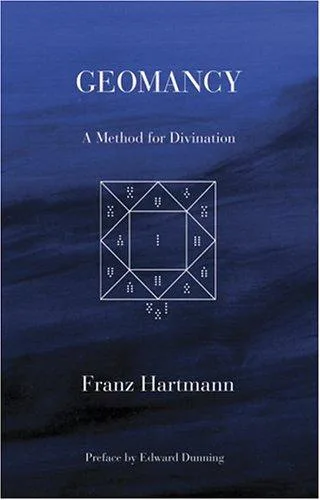







From the “Astrology” Collection
View all →







More Free Divination & Tarot Books
View all →