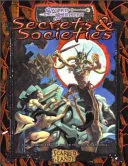
Night of the Lightbringer

 83
83

Night of the Lightbringer
Peter Berresford Ellis’s ‘Night of the Lightbringer’ offers a compelling examination of figures who challenged established paradigms. Ellis skillfully dissects the archetype of the rebel who brings unwelcome illumination, moving beyond simplistic hero-villain binaries. A particular strength lies in the exploration of how historical narratives are shaped by those in power, a point vividly illustrated when discussing the condemnation of certain early Christian sects. However, the book occasionally feels less like a cohesive narrative and more like a series of related essays, which may leave readers desiring a more integrated flow. The section on the Gnostic mythos, while informative, could have benefited from further contextualization within its immediate historical milieu. Despite this, Ellis provides a valuable lens through which to view the enduring conflict between orthodoxy and heterodoxy.
📝 Description
83
Peter Berresford Ellis's 2017 book, 'Night of the Lightbringer,' examines figures associated with rebellion and forbidden knowledge.
'Night of the Lightbringer,' published in 2017, investigates historical figures and narratives centered on rebellion and the pursuit of knowledge outside established norms. The book avoids a linear plot, instead presenting a series of connected examinations. It addresses the themes of questioning accepted doctrines and the repercussions for those who diverge from conventional thinking. Ellis, who has written extensively on Celtic history and mythology, applies a knowledgeable yet approachable style to subjects often found in less-explored historical areas.
The work is suitable for readers interested in the historical roots of esoteric thought and those who appreciate narratives that challenge societal expectations. It will appeal to individuals seeking to understand the archetypal figure of the rebel or the 'bringer of light,' a character often ostracized for their insights. Those with an interest in comparative mythology and the recurring patterns of societal resistance to new ideas will find much to consider.
The book engages with the historical underpinnings of esoteric thought, particularly focusing on individuals who defied established religious or political structures. It draws parallels from late antiquity's Gnostic movements to the intellectual rebels of the Enlightenment, highlighting a consistent pattern of societal resistance to those who introduce new or challenging ideas. The 'lightbringer' figure, as presented, embodies the complex and often dualistic nature of enlightenment, representing both progress and disruption.
💡 Why Read This Book?
• Understand the recurring archetype of the 'lightbringer' figure, exploring their societal impact from antiquity to the modern era, a concept central to the book's analysis. • Gain insight into how historical narratives surrounding rebellion and forbidden knowledge are constructed and manipulated by dominant powers, a key takeaway from Ellis's examination of figures like the Gnostics. • Appreciate the historical tension between societal order and the disruptive force of radical ideas, a theme Ellis elucidates through examples from various historical periods.
⭐ Reader Reviews
Honest opinions from readers who have explored this book.
❓ Frequently Asked Questions
What is the primary focus of Peter Berresford Ellis's 'Night of the Lightbringer'?
The book primarily focuses on the archetype of the 'lightbringer' – figures who challenge established norms and bring disruptive knowledge. It examines their historical context and the societal reactions they provoke, moving beyond simple portrayals of rebellion.
When was 'Night of the Lightbringer' first published?
Peter Berresford Ellis's 'Night of the Lightbringer' was first published in 2017. This places it within contemporary scholarship on esoteric and historical themes.
Does the book focus on a single historical figure?
No, 'Night of the Lightbringer' explores a series of interconnected narratives and archetypes. It examines multiple figures and movements that embody the 'lightbringer' role across different historical periods.
What kind of reader would appreciate 'Night of the Lightbringer'?
Readers interested in esoteric history, mythology, comparative religion, and the study of societal resistance to new ideas will find this book engaging. It appeals to those who analyze archetypal figures and historical narratives.
What is the genre of 'Night of the Lightbringer'?
The book falls into the esoteric genre, exploring themes and historical accounts often on the fringes of mainstream historical and religious studies. It delves into narratives of challenging established doctrines.
Does the book offer a positive or negative portrayal of 'lightbringers'?
Ellis presents a nuanced view, portraying 'lightbringers' as complex figures. They represent both illumination and upheaval, challenging simplistic notions of heroes or villains and exploring the consequences of their actions.
🔮 Key Themes & Symbolism
The Archetype of the Rebel
The core of 'Night of the Lightbringer' lies in its dissection of the rebel figure, often cast as a 'lightbringer.' This isn't merely about political insurrection but about the dissemination of ideas that challenge prevailing orthodoxies, be they religious, philosophical, or social. Ellis examines how these individuals, from early Gnostic thinkers to later intellectual dissenters, are perceived and recorded by history, often demonized by those who benefit from the status quo. The book explores the consequences of clear truths that disrupt established power structures.
Narrative Construction of History
Ellis critically analyzes how historical accounts are shaped, particularly concerning figures who deviate from accepted norms. The book implies that the 'victors' write history, often demonizing those who threatened their dominance. This theme is explored through examples of suppressed or marginalized belief systems and individuals. Readers are encouraged to question the official narratives and consider the perspectives of those labeled heretics or rebels, understanding that 'light' can be perceived as dangerous by entrenched powers.
Forbidden Knowledge and Illumination
The pursuit and dissemination of what is deemed 'forbidden knowledge' is a significant motif. This knowledge often represents a deeper understanding or a different perspective that contradicts established dogma. The 'lightbringer' is the conduit for this illumination, often at great personal cost. The book contemplates the inherent societal fear of such knowledge and the cyclical nature of its suppression and eventual re-emergence, particularly within esoteric and Gnostic traditions.
Societal Resistance to Change
A pervasive theme is the deep-seated human and societal resistance to radical change, even when it promises progress or enlightenment. Ellis illustrates how established institutions and belief systems actively work to maintain control, often through fear and persecution of those who offer alternative visions. The book highlights the recurring pattern of societies ostracizing or actively combating individuals and ideas that threaten to destabilize the existing order, a struggle evident throughout history.
💬 Memorable Quotes
Direct passages from the work, attributed to the author.
“The light that exposes shadows is often met with the fiercest resistance.”
— This statement captures the book's central thesis regarding figures who bring challenging truths. It suggests that true illumination, which reveals uncomfortable realities, is inherently disruptive and will naturally provoke opposition from those invested in maintaining the status quo.
“History remembers the accuser more often than the accused.”
— This highlights the book's examination of how historical narratives are constructed. It points to the tendency for dominant voices and perspectives (the accusers) to shape the historical record, often overshadowing or demonizing the accounts of those who were condemned.
“Orthodoxy fears the questions more than it fears the answers.”
— This interpretation suggests that established belief systems are more threatened by the act of questioning itself, as it implies doubt and potential deviation, rather than by specific alternative answers which can sometimes be dismissed or compartmentalized.
“The rebel's fire is often the spark of future understanding.”
— This perspective frames the 'rebel' not as a destroyer but as a catalyst for future progress. It suggests that actions perceived as destructive or heretical in their time can lay the groundwork for new paradigms and deeper societal comprehension later on.
“To be a bearer of light is to risk being branded a bringer of darkness.”
— This reflects the paradox at the heart of the 'lightbringer' archetype. The very act of bringing enlightenment or new knowledge, which should be celebrated, is often misunderstood and condemned by society, leading to the innovator being labeled as a source of chaos or evil.
🌙 Esoteric Significance
Tradition
The work engages with a broad spectrum of esoteric thought, particularly touching upon Gnostic themes of hidden knowledge and the struggle against oppressive cosmic forces. It aligns with Hermetic principles by exploring figures who sought a deeper, often concealed, understanding of reality. While not strictly adhering to a single lineage, it departs from purely academic historical accounts by focusing on the symbolic and archetypal dimensions of rebellion and enlightenment, viewing these through a lens informed by centuries of mystical and occult inquiry.
Symbolism
A primary symbol is the 'lightbringer' itself, representing not just illumination but also the potential for discord and the challenging of established order. Fire is another potent motif, symbolizing both purification and destruction, the dual nature of transformative knowledge. The concept of 'shadow' represents ignorance, dogma, and the forces that resist illumination, creating a dynamic interplay between these opposing forces throughout the narrative explorations.
Modern Relevance
Contemporary thinkers in fields like comparative mythology and depth psychology often draw on archetypes explored in this book. Modern esoteric practitioners and authors examining spiritual rebellion or alternative paths to knowledge might find resonance. The work's exploration of how societal narratives suppress challenging ideas remains relevant in discussions about information control, censorship, and the re-evaluation of historical figures previously demonized by dominant cultures.
👥 Who Should Read This Book
• Students of comparative religion and mythology: Gain a nuanced understanding of the 'lightbringer' archetype and its historical manifestations across different belief systems. • Researchers of esoteric history: Explore narratives of rebellion and forbidden knowledge that challenge conventional historical accounts, particularly concerning early heterodox movements. • Readers interested in intellectual history: Appreciate the recurring tension between societal orthodoxy and the disruptive force of new ideas, as examined through various historical figures.
📜 Historical Context
Published in 2017, Peter Berresford Ellis's 'Night of the Lightbringer' arrives in an era marked by renewed interest in historical counter-narratives and esoteric traditions. The work situates itself within a lineage of scholarship that examines figures and movements challenging religious and philosophical orthodoxy, echoing the intellectual currents of the Enlightenment and earlier Gnostic revivals. Ellis, a noted historian of Celtic cultures, brings a specific scholarly rigor to subjects often relegated to fringe studies. His exploration of those condemned by mainstream religious bodies, such as certain early Christian sects, speaks to ongoing academic debates about religious pluralism and the construction of heresy. Contemporaries like Richard Dawkins, though from a different ideological standpoint, also engaged in critiques of established religious dogma, highlighting the persistent tension between tradition and critical inquiry that Ellis’s work addresses.
📔 Journal Prompts
The rebel's fire: Consider a historical figure who brought challenging ideas and the societal reaction they faced.
The narrative construction of history: Reflect on how dominant groups might frame the actions of dissenters.
Orthodoxy's fear: Analyze a situation where questioning was met with greater resistance than direct opposition.
Forbidden knowledge: Explore the personal or societal implications of uncovering truths that disrupt established beliefs.
The dual nature of illumination: Ponder instances where bringing light also brought unforeseen complications.
🗂️ Glossary
Lightbringer
An archetype representing a figure who introduces new knowledge or ideas, often challenging existing doctrines. While associated with illumination, this role can also provoke societal disruption and condemnation.
Orthodoxy
Conformity with established doctrine, belief, or practice. In the context of the book, it refers to prevailing religious, philosophical, or social norms that often resist change.
Gnosticism
A complex set of religious movements in late antiquity characterized by belief in a hidden, salvific knowledge (gnosis). Often viewed as dualistic, Gnostics emphasized spiritual liberation from the material world.
Heresy
Belief or opinion contrary to orthodox religious (or other) doctrine. Historically, the label of 'heretic' was applied to those who challenged the established religious authorities.
Archetype
A recurring symbol, character, or motif that is part of the collective unconscious, representing universal patterns of human experience and behavior.
Heterodox
Belief or thought that differs from the established or orthodox beliefs. It encompasses a wide range of non-conformist ideas and practices.
Dogma
A principle or set of principles laid down by an authority as incontrovertibly true. Dogmas are often resistant to questioning or modification.
🔮 Readers Also Liked
Browse all →








More by Peter Berresford Ellis
All books →





More Free Occult Philosophy Books
View all →