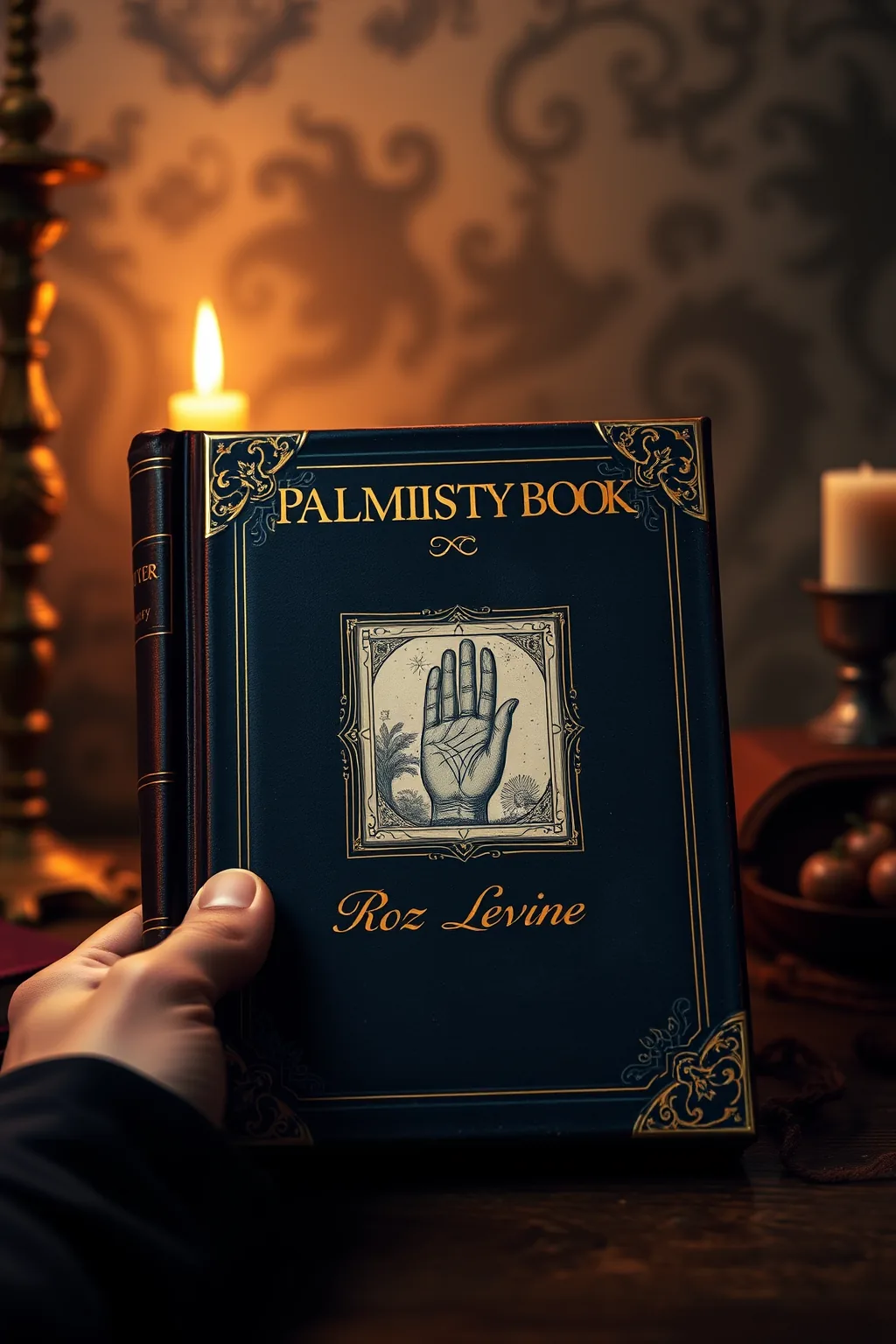
Palmistry Book
 74
74

Palmistry Book
Roz Levine’s *Palmistry Book* arrives as a straightforward entry point into chiromancy, eschewing the more esoteric trappings that often accompany such texts. Its primary strength lies in its beginner-friendly design, particularly the innovative use of colored lines to delineate different aspects of the palm. This visual cue is genuinely helpful for novice readers attempting to differentiate the Heart Line from the Head Line, a common stumbling block. I found the section detailing the Mounts to be particularly clear, offering a concise overview of their significance. However, the book's reliance on its Book-in-a-Box format, while practical for some, can make the text feel somewhat condensed. It sacrifices depth for accessibility, which is a trade-off inherent in its design. A passage discussing the minor lines, for instance, feels a bit rushed, leaving one wanting more detailed examples. Despite this limitation, Levine provides a functional toolkit for those just starting their palmistry exploration. It serves its purpose as an introductory manual, offering a clear path for initial understanding.
📝 Description
74
Roz Levine's 2013 book simplifies palmistry with a color-coded system for hand features.
Roz Levine's Palmistry Book offers a practical guide for those new to reading hands. It moves past abstract ideas to show how to interpret the palm's lines, mounts, and shapes. The system uses color-coding for different palm lines. This visual aid helps identify and connect lines with life themes like love, health, or career. The goal is to make palmistry understandable without needing prior experience.
This book is for complete beginners interested in chiromancy. It suits people who have seen palmistry in everyday life or popular culture and want to learn its basics. Those looking for a clear, step-by-step introduction will find this guide useful. It helps readers quickly learn to read their own palms or those of others.
Palmistry has ancient roots in India, Babylonia, and Greece. It saw a revival in the 19th century, linked to spiritualism. Works by Adolphe Desbarolles and William Benham shaped modern practice. Levine's 2013 book joins this long tradition, providing a modern, accessible introduction to a practice with continuous engagement since antiquity.
💡 Why Read This Book?
• Learn the fundamental purpose of the Heart Line, Head Line, and Life Line, as differentiated by Levine's color-coding system, to immediately begin personal hand analysis. • Understand the influence of the Mounts of Venus and Jupiter on personality traits, a concept explored in detail from the book's original 2013 publication. • Gain a practical, step-by-step method for interpreting hand markings, inspired by the accessible format of Levine's best-selling Book-in-a-Box kits.
⭐ Reader Reviews
Honest opinions from readers who have explored this book.
❓ Frequently Asked Questions
Is Roz Levine's Palmistry Book suitable for someone with no prior knowledge of palmistry?
Yes, the book is explicitly designed for beginners. It uses a color-coded system for palm lines and provides a straightforward approach to interpreting hand markings, making it accessible even without prior experience in chiromancy.
What is the original publication date of the Palmistry Book?
The Palmistry Book by Roz Levine was first published on October 21, 2013. This date places it within contemporary esoteric publishing trends.
Does the book cover more than just palm lines?
Yes, in addition to the primary lines like the Heart, Head, and Life lines, the book also discusses the significance of the mounts on the palm, such as the Mount of Venus and Mount of Jupiter.
What makes this book different from other palmistry guides?
Its key differentiator is the use of different colors for each major palm line, simplifying identification for beginners. It's also based on the successful format of Levine's Book-in-a-Box kits.
Can I learn to read my own palm using this book?
Absolutely. The book's system is designed for self-study and provides the tools and explanations needed to begin interpreting the lines and mounts on your own hands.
What kind of information can palmistry reveal, according to this book?
According to the book, palmistry can offer insights into potential life themes such as love, health, career choices, and personality traits, based on the markings found on the palm.
🔮 Key Themes & Symbolism
Color-Coded Palm Lines
This book introduces a unique visual aid: each major palm line (Heart, Head, Life) is represented in a distinct color. This system aims to simplify the initial learning curve for aspiring palm readers. By associating specific hues with specific lines, practitioners can more easily identify and interpret the corresponding life themes, such as emotional patterns, mental faculties, or vitality, directly from the hand's topography. This method streamlines the process of learning chiromancy for novices.
The Mounts of the Hand
Beyond the lines, Roz Levine's guide explores the mounts – the fleshy pads at the base of each finger and on the palm. These areas are presented as indicators of personality characteristics and innate potentials. The book details the significance of mounts like Jupiter (ambition, leadership), Apollo (creativity, success), and Venus (love, passion), offering a more holistic approach to palm interpretation that complements the reading of the lines.
Beginner-Friendly Chiromancy
The core philosophy of this Palmistry Book is accessibility. It breaks down the complex art of chiromancy into digestible components, making it suitable for those entirely new to the subject. The system is derived from Levine's popular Book-in-a-Box kits, suggesting a focus on practical application and ease of learning rather than deep theoretical discourse. It empowers beginners to start reading palms with confidence.
Life Path Interpretation
Palmistry, as presented here, serves as a tool for self-understanding and exploring potential life paths. The book suggests that the lines and features of the hand can offer clues about one's destiny, challenges, and strengths. It frames palm reading not as rigid prediction, but as a way to gain insight into personal tendencies and opportunities, particularly in areas like finding love, choosing a career, and maintaining health.
💬 Memorable Quotes
Direct passages from the work, attributed to the author.
“Each line on the palm is shaded a different color in the book.”
— This highlights the book's innovative approach, using color-coding as a primary tool to help beginners easily distinguish and learn the meanings of the various palm lines.
“The answers to these questions and more are at your fingertips—literally!”
— This phrase emphasizes the direct, tangible nature of palmistry as a practice, suggesting that profound personal insights can be accessed through the physical markings of one's own hand.
“Am I going to find love? Will I live a long and healthy life?”
— These questions represent the core human curiosities that palmistry, according to the book, can help address, framing the practice as a guide to fundamental life concerns.
“Based on the best-selling Book-in-a-Box kits, the Palmistry Book helps you learn palmistry with this fantastic system designed for beginners.”
— This points to the book's origin and its design philosophy, indicating a focus on practical, user-friendly methods for newcomers to the art of palm reading.
💡 Key Ideas
Editorial paraphrase of the work's core concepts — not direct quotes.
Easily identify the line connected to the theme you are interested in.
This paraphrased concept underscores the book's practical utility, assuring readers that its method allows for targeted interpretation based on specific areas of personal inquiry.
🌙 Esoteric Significance
Tradition
While not explicitly tied to a single esoteric lineage like Kabbalah or Hermeticism, this work functions within the broader Western tradition of divination and self-knowledge practices. It draws on the long history of chiromancy, which has been interpreted through various lenses, including astrological correspondences and physiognomy. Levine's approach can be seen as a modern, secularized adaptation of these ancient arts, focusing on psychological interpretation and personal empowerment rather than strict adherence to a specific magical or religious framework.
Symbolism
The primary symbols in this work are the lines and mounts of the hand. The Heart Line, for instance, symbolizes emotional capacity and romantic life, while the Head Line represents intellect and communication. The Mount of Jupiter is associated with ambition and leadership qualities. These physical markings are interpreted as symbolic representations of an individual's inner landscape and potential life trajectory, acting as a visual language for understanding personal character and destiny.
Modern Relevance
Levine's work appeals to contemporary interest in self-help, mindfulness, and personal development. Its accessible format makes palmistry a readily available tool for individuals exploring self-awareness without requiring extensive prior study. Practices such as life coaching and therapeutic psychology sometimes incorporate elements of self-discovery that can be paralleled with the insights offered by palmistry, making this book a relevant resource for those seeking accessible methods of personal insight.
👥 Who Should Read This Book
• Curious beginners seeking a simple, visual introduction to reading palms, who want to understand basic hand analysis without complex jargon. • Individuals interested in self-discovery and personal growth who are looking for accessible tools to explore personality traits and life potentials. • Hobbyists and friends looking for a straightforward guide to practice chiromancy for fun and casual insight, inspired by accessible, popular formats.
📜 Historical Context
Roz Levine's *Palmistry Book*, published in 2013, emerged in an era where esoteric practices were increasingly accessible online and through popular media. While not a direct contemporary, its lineage connects to the 19th-century occult revival, a period that saw a surge in interest in chiromancy, alongside figures like Adolphe Desbarolles whose detailed works laid groundwork for modern palmistry. During the late 1800s and early 1900s, palmistry became a popular parlor amusement and a subject of serious study for many within the Theosophical Society and other esoteric circles. Unlike the more academic or complex treatises of that era, Levine's book prioritizes a beginner-friendly, visual approach. It enters a field with long-established traditions, including the Hermetic Order of the Golden Dawn's interest in divination, offering a modern, simplified entry point that contrasts with the denser, more philosophical texts that often characterize historical occult literature.
📔 Journal Prompts
The specific color assigned to your Head Line and its interpretation.
Reflecting on the meaning of the Mount of Venus on your palm.
Mapping the intersection of your Heart Line and Head Line.
Identifying the longest line on your dominant hand and its primary theme.
Comparing the shape of your hand to the descriptions provided.
🗂️ Glossary
Chiromancy
The practice of divination or fortune-telling through the study of the palm, including its lines, mounts, and shape. It is often referred to as palmistry.
Heart Line
The palm line that typically runs horizontally across the upper palm, generally associated with emotional capacity, romantic relationships, and heart health.
Head Line
The palm line that usually runs horizontally below the Heart Line, representing intellect, learning style, communication, and the mind.
Life Line
The semi-circular palm line that starts near the thumb and curves around the base of the palm, typically interpreted as indicating vitality, physical health, and major life changes.
Mounts
The fleshy pads at the base of each finger and on the palm, named after Roman gods (e.g., Mount of Jupiter, Mount of Venus), believed to indicate personality traits and potentials.
Dominant Hand
The hand that a person uses most frequently for writing or fine motor tasks; often considered the hand that shows current life conditions and future potentials.
Book-in-a-Box
A product format, often including a book and related accessories, designed for easy learning and practical application of a skill or subject.