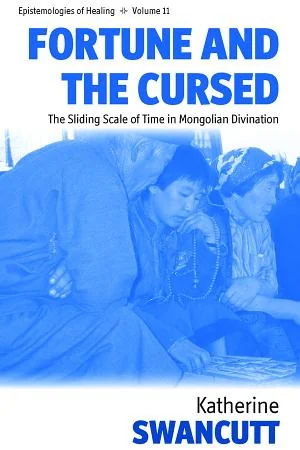
Fortune and the Cursed
 79
79

Fortune and the Cursed
Swancutt's "Fortune and the Cursed" presents a compelling, if at times academically dense, examination of Buryat Mongol shamanism. The author's ability to link the practical, ritualistic efforts of shamans to abstract concepts like chaos theory is a notable strength, offering a fresh perspective on how cultural innovation occurs under pressure. The ethnographic detail is rich, particularly in depicting the shamans' 'race against time' to devise remedies for their declining fortunes. However, the theoretical integration, while ambitious, occasionally overshadows the human element of the narrative, making certain passages demanding for readers less familiar with both anthropology and complex scientific models. A particularly striking aspect is the description of the shamans' methods for 'ontological fine-tuning' in response to perceived spiritual imbalances.
Ultimately, the book provides a valuable, specialized study of how belief systems adapt, though its reach might be limited by its theoretical sophistication.
📝 Description
79
Katherine Swancutt's 2012 book examines Buryat Mongol shamans developing remedies for ill fortune.
Published in 2012, Katherine Swancutt's "Fortune and the Cursed" is an ethnographic study of Buryat Mongol shamans. The book focuses on a group of these practitioners who confront perceived misfortune by devising new rituals. Swancutt frames this effort as a critical response to urgency. The research goes beyond simple observation, using concepts from social anthropology and chaos theory to understand how these shamans reshape their understanding of reality and their place within it. The study details their efforts to adapt and innovate in the face of perceived crisis.
The book is aimed at academics and advanced students in anthropology, religious studies, and sociology. Readers interested in shamanism, ritual change, and how cultures construct ideas of luck will find it valuable. It will also interest those with a background in comparative religion or who study the links between cultural practices and scientific ideas like chaos theory. The work offers a detailed look at a specific non-Western spiritual tradition, emphasizing the challenges its adherents face and their strategies for adaptation.
This work is situated within a long history of anthropological study concerning belief systems and their evolution. Swancutt's focus on Buryat Mongol shamans and their methods for dealing with misfortune connects to broader discussions on how traditions adapt, particularly when challenged by crisis or perceived ill luck. By incorporating chaos theory, the book also bridges ethnographic findings with contemporary scientific thought, a direction that gained academic interest in the late 20th and early 21st centuries. It examines how belief systems manage change and maintain coherence.
💡 Why Read This Book?
• Learn how Buryat Mongol shamans engage in 'ontological fine-tuning' to reshape their reality, a process Swancutt analyzes through the lens of chaos theory, offering unique insights into belief system adaptation. • Understand the concept of 'innovative remedies' within a shamanic context, exploring how practitioners actively create new spiritual solutions under temporal and social pressures, as detailed in the 2012 publication. • Gain an appreciation for the intersection of social anthropology and chaos theory, as Swancutt uses this interdisciplinary approach to illuminate the dynamic processes of cultural change and spiritual innovation.
⭐ Reader Reviews
Honest opinions from readers who have explored this book.
❓ Frequently Asked Questions
What is the primary focus of Katherine Swancutt's "Fortune and the Cursed"?
The book focuses on Buryat Mongol divination and the efforts of shamans to create innovative remedies for their declining fortunes, exploring this through ethnographic study and theoretical frameworks from social anthropology and chaos theory.
When was "Fortune and the Cursed" first published?
"Fortune and the Cursed" by Katherine Swancutt was first published in 2012.
What theoretical perspectives does the author use to analyze shamanic practices?
The author draws upon social anthropology and chaos theory to analyze the processes of ontological adjustment and the conception of the world among the Buryat Mongol shamans studied.
What is meant by 'ontological fine-tuning' in the context of the book?
'Ontological fine-tuning' refers to how individuals and groups adjust their understanding of reality and their place within it, particularly in response to perceived misfortune or changing circumstances.
Who are the main subjects of the ethnographic study?
The main subjects are a group of Buryat Mongol shamans who are described as 'cursed' and are undertaking a 'race against time' to produce remedies that will improve their fortunes.
What distinguishes the remedies sought by the shamans in the book?
The remedies are described as 'innovative' and are sought at an 'unconventional pace,' indicating a response to urgent needs and a drive to create novel solutions rather than relying solely on tradition.
🔮 Key Themes & Symbolism
Ontological Innovation
The work examines how Buryat Mongol shamans, facing perceived misfortune, actively engage in 'ontological fine-tuning.' This involves not just adapting their beliefs but fundamentally re-shaping their understanding of reality to create 'innovative remedies.' The study suggests that innovation in spiritual and cultural contexts is often a direct response to crises, prompting practitioners to develop novel solutions that alter their perceived world and their place within it.
The Race Against Time
A central theme is the urgency faced by the shamans, framed as a 'race against time.' This temporal pressure underscores the critical nature of their endeavors to improve their 'fallen fortunes.' It highlights how perceived existential threats can accelerate cultural and spiritual adaptation, forcing practitioners to operate at an 'unconventional pace' to devise effective interventions and mend perceived ruptures in their reality.
Chaos Theory and Social Anthropology
Swancutt bridges the gap between ethnographic observation and scientific theory by drawing parallels between social anthropology and chaos theory. This interdisciplinary approach offers a framework for understanding the dynamic, complex, and often unpredictable nature of shamanic practices and cultural innovation. It suggests that societal shifts and belief system adjustments can be viewed through the lens of complex systems, where small interventions can lead to significant, emergent outcomes.
Divination and Remedy Creation
The book examines the specific practices of Buryat Mongol divination, focusing on how these practices are linked to the creation of 'innovative remedies.' It explores the process by which shamans interpret signs and develop interventions designed to alter their fortunes, moving beyond established ritual forms to address contemporary challenges and perceived spiritual imbalances.
💬 Memorable Quotes
Direct passages from the work, attributed to the author.
“This ethnographic study is an entrance into the world of Buryat Mongol divination.”
— This highlights the book's primary methodology and subject matter, positioning it as a direct, observational account of the spiritual practices and beliefs of a specific cultural group.
“a group of cursed shamans undertake the 'race against time' to produce innovative remedies.”
— This succinctly captures the central narrative tension: shamans facing adversity ('cursed') are in a desperate, urgent quest ('race against time') for novel spiritual or ritualistic solutions ('innovative remedies').
“Drawing on parallels between social anthropology and chaos theory, the author gives an in-depth acc”
— This indicates the book's theoretical approach, suggesting an integration of humanistic social science with complex systems theory to analyze the dynamic processes observed in shamanic practices.
“conceive of it as they do.”
— This phrase emphasizes the subjective and culturally constructed nature of reality, suggesting that the book aims to explore how the Buryat Mongols perceive and understand their world.
💡 Key Ideas
Editorial paraphrase of the work's core concepts — not direct quotes.
Innovation-making is a classic theme in anthropology that reveals how people fine-tune their ontologies.
This quote introduces the core anthropological concept Swancutt uses: the idea that creating new solutions or practices is intrinsically linked to how people adjust their fundamental understanding of reality and their world.
🌙 Esoteric Significance
Tradition
While not explicitly tied to a single Western esoteric lineage like Hermeticism or Kabbalah, "Fortune and the Cursed" appeals to traditions that explore the manipulation of fortune and the energetic underpinnings of reality. It aligns with animistic and shamanic worldviews found across various indigenous spiritualities, which often form the bedrock for later esoteric developments. The book's exploration of 'fallen fortunes' and the creation of remedies can be seen as a practical, culturally specific manifestation of magical and spiritual technologies aimed at influencing destiny.
Symbolism
The concept of 'fallen fortunes' itself acts as a symbolic representation of imbalance or disruption within the spiritual and social cosmos. The 'race against time' symbolizes the existential urgency and the finite window for intervention before negative consequences become irreversible. 'Innovative remedies' are symbolic of agency and the power of human (or shamanic) will to actively shape reality, rather than passively accept fate, thereby re-establishing harmony or altering perceived energetic flows.
Modern Relevance
Contemporary thinkers in fields like consciousness studies and transpersonal psychology, as well as practitioners of modern shamanic or energy healing modalities, might find value in Swancutt's work. The book's exploration of how individuals actively 'fine-tune their ontologies' and create remedies under pressure offers a model for understanding psychological resilience and spiritual adaptation in the face of modern challenges, echoing themes of personal transformation and reality creation.
👥 Who Should Read This Book
• Anthropologists and Religious Studies scholars specializing in shamanism, Central Asian cultures, or ritual innovation, seeking detailed ethnography and theoretical analysis. • Students of comparative religion interested in how diverse cultures conceptualize and attempt to influence fortune and spiritual well-being. • Academics and practitioners interested in the intersection of social science and complex systems theory, particularly chaos theory, applied to cultural phenomena.
📜 Historical Context
Katherine Swancutt's "Fortune and the Cursed" (2012) emerged during a period when anthropologists increasingly explored the dynamic nature of belief systems and the processes of cultural innovation. The early 21st century saw growing interest in applying complex systems theories, including chaos theory, to social phenomena, a trend Swancutt engages with. This work builds upon earlier ethnographic studies of shamanism and Central Asian cultures, yet distinguishes itself through its theoretical interdisciplinary approach. While scholars like Piers Vitebsky had extensively documented Siberian shamanism, Swancutt's focus on 'ontological fine-tuning' and the 'race against time' offers a specific lens on adaptive ritualism. The book's publication predates widespread digital archiving of such specialized ethnographic works, positioning it within a more traditional academic dissemination model, distinct from contemporary open-access initiatives.
📔 Journal Prompts
The Buryat shamans' 'race against time' to create 'innovative remedies' for their 'fallen fortunes.'
The concept of 'ontological fine-tuning' as a response to perceived crisis.
Parallels between chaos theory and the dynamic processes within Buryat Mongol divination.
The ethical considerations of 'cursed' shamans seeking to improve their spiritual standing.
Interpreting divination as a mechanism for ontological innovation and reality construction.
🗂️ Glossary
Ontology
The philosophical study of being. In this context, it refers to an individual's or group's fundamental understanding of reality, existence, and the nature of the world.
Ontological Fine-Tuning
The process by which individuals or groups adjust their fundamental understanding of reality, often in response to new experiences or perceived imbalances, to better navigate their world.
Innovative Remedies
New or unconventional spiritual, ritualistic, or practical solutions developed by practitioners (in this case, shamans) to address perceived problems or improve their fortunes.
Race Against Time
A narrative framing used in the book to describe the urgent, pressured situation faced by the shamans as they seek to create remedies before negative consequences become irreversible.
Buryat Mongol Divination
The specific practices and techniques used by the Buryat Mongol people, particularly their shamans, to seek knowledge, guidance, or insight into the spiritual or natural world.
Chaos Theory
A branch of mathematics and physics that studies complex systems whose behavior is highly sensitive to initial conditions, often leading to unpredictable outcomes but also emergent order.
Fallen Fortunes
A state of perceived decline, misfortune, or bad luck experienced by individuals or a community, prompting efforts to reverse or improve their situation.
This book appears in 1 collection
🔮 Readers Also Liked
Browse all →








From the “Divination” Collection
View all →









More Free Occult Philosophy Books
View all →