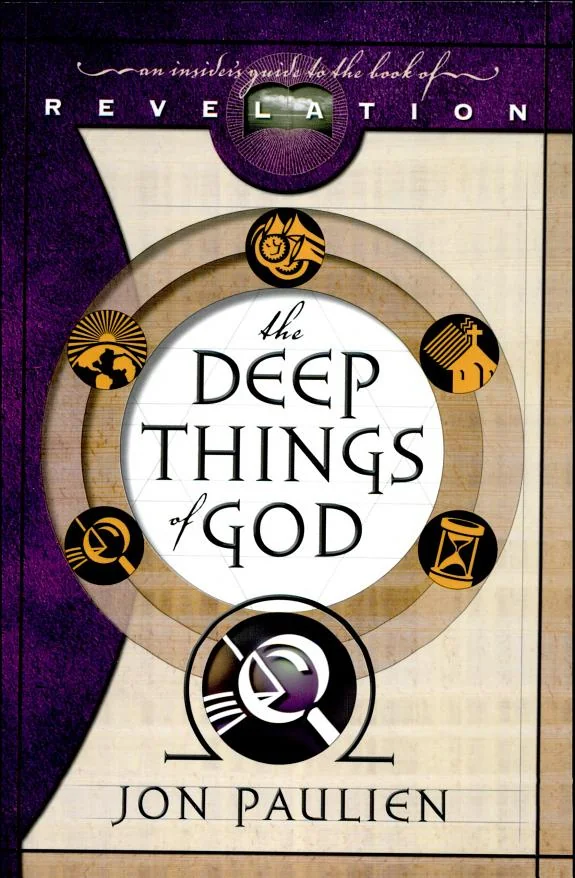
The Deep Things of God
 72
72

The Deep Things of God
Jon Paulien's *The Deep Things of God* provides a much-needed corrective to the often-muddled discourse surrounding the Book of Revelation. The author’s commitment to a systematic, interpretive methodology is its signal strength, offering readers tools rather than dogmatic pronouncements. Paulien skillfully unpacks how historical context, literary genre, and symbolic language interrelate, particularly in his discussion of the "beast" imagery. However, the text occasionally leans into a didactic tone that, while informative, can feel somewhat dry for readers seeking a more experiential or devotional engagement with Revelation's profound spiritual themes. The section on the "four living creatures" offers a compelling example of unpacking symbolism without succumbing to speculative fancy. Ultimately, Paulien delivers a valuable, if academic, guide for serious study.
📝 Description
72
Jon Paulien's 2004 book provides interpretive frameworks for the Book of Revelation.
Jon Paulien's *The Deep Things of God*, published in 2004, offers a methodical approach to the Book of Revelation. Instead of outlining a single prophetic timeline, the book functions as a teaching aid, giving readers tools for interpretation. It seeks to clarify apocalyptic literature, which has often been read in conflicting ways throughout history.
This volume is mainly for students and academics in biblical studies, theology, and comparative religion who want a solid method for approaching Revelation. It also suits lay readers interested in eschatology and early Christian writings who are tired of sensational or oversimplified readings. Those looking for a more scholarly, less speculative way to engage with prophetic texts will find this work valuable.
Paulien's study appeared when popular interpretations of Revelation frequently focused on end-times prophecy, sometimes connecting to current events or specific theological movements. This book challenges such speculative readings, basing its analysis on historical-grammatical methods and recognizing the varied literary styles within Revelation. It returns to earlier academic traditions that aimed to understand the text within its original Jewish and Roman setting.
This work engages with interpretations of the Book of Revelation that move beyond literal or purely futurist readings. It acknowledges the rich symbolic language and theological depth that have invited diverse understandings across centuries. By grounding its analysis in historical context and literary structure, Paulien's book offers a framework for discerning meaning that resonates with traditions seeking deeper, less sensationalist engagement with prophetic texts, aligning with scholarly approaches to scriptural exegesis within the broader study of Gnosticism and early Christian literature.
💡 Why Read This Book?
• You will learn to analyze the Book of Revelation using a structured, historical-grammatical method, moving beyond sensationalist prophecy by understanding Paulien's approach to John of Patmos' original context. • You will gain practical skills for interpreting apocalyptic symbolism, such as the "beast" motif, by learning to identify recurring patterns and literary devices within the text. • You will feel equipped to critically evaluate diverse eschatological viewpoints by grasping the foundational principles Paulien lays out for understanding early Christian apocalyptic literature.
⭐ Reader Reviews
Honest opinions from readers who have explored this book.
❓ Frequently Asked Questions
What is Jon Paulien's primary goal in writing 'The Deep Things of God'?
Paulien's primary goal is to provide readers with a reliable methodology for studying the Book of Revelation. He aims to demystify the text by focusing on its historical context, literary features, and symbolic language, moving away from speculative prophecy.
How does 'The Deep Things of God' approach the symbolism in Revelation?
The book approaches Revelation's symbolism by grounding it in the historical and cultural milieu of the 1st century CE. It emphasizes understanding symbols like the "beast" not as literal predictions but as expressions of theological concepts relevant to John of Patmos' audience.
Is this book suitable for beginners interested in Revelation?
Yes, while academic, the book is designed as a practical handbook. It guides beginners through complex interpretive challenges, offering a solid foundation for understanding Revelation's message beyond popular end-times theories.
What does the book say about John of Patmos?
The work assumes John of Patmos is the traditional author and explores his perspective within the context of Roman imperial power and early Christian communities. It examines how his vision communicates theological truths to those facing persecution.
Does Paulien present a specific prophetic timeline?
No, Paulien's work deliberately moves away from presenting a rigid prophetic timeline. Instead, it focuses on interpretive methods and understanding the book's message within its original historical and literary framework.
What makes Paulien's approach different from other books on Revelation?
Paulien's approach is distinct in its emphasis on a systematic interpretive methodology. It prioritizes historical context and literary analysis over speculative futurism, offering readers tools to engage with the text critically.
🔮 Key Themes & Symbolism
Apocalyptic Symbolism
The work systematically dissects the symbolic language of Revelation, moving beyond literal interpretations. Paulien examines recurring motifs such as the "beast" and "dragon," situating them within their 1st-century Jewish and Greco-Roman contexts. The emphasis is on understanding these symbols as conveying theological and political commentary relevant to John of Patmos' original audience, rather than predictive codes for future events. This approach encourages readers to see the text as a rich metaphorical expression of spiritual realities and struggles.
Historical Contextualization
A central theme is the imperative to read Revelation within its original historical setting. Paulien argues that understanding the socio-political pressures and religious field of the late 1st century CE is crucial for grasping the text's meaning. This involves considering the Roman Empire's influence, early Christian identity, and the specific challenges faced by communities addressed by John. By anchoring the text in its past, the book aims to provide a more stable interpretive foundation.
Interpretive Methodology
Paulien champions a rigorous, systematic approach to studying Revelation, contrasting it with more speculative or devotional methods. He outlines principles for engaging with apocalyptic literature, focusing on literary genre, historical-grammatical exegesis, and identifying the author's intent. This theme empowers readers with tools to analyze the text themselves, fostering critical thinking and discernment when encountering various interpretations of prophetic scripture.
Theological Message
Beneath the complex imagery, the book highlights Revelation's core theological message: the sovereignty of God and the ultimate triumph of good over evil. Paulien explores how John of Patmos uses apocalyptic rhetoric to assure his readers of God's control over history and the hope of redemption, even amidst suffering and persecution. This theme underscores Revelation as a source of spiritual encouragement and theological reflection.
💬 Memorable Quotes
Direct passages from the work, attributed to the author.
“The message of Revelation is not primarily about predicting future events.”
— This statement challenges common interpretations that focus solely on eschatological timelines. It suggests the book's primary function was to communicate theological truths and encouragement to its original audience, John of Patmos' contemporaries.
“We must understand the symbols within their first-century context.”
— This emphasizes the book's core methodological principle: historical contextualization. It asserts that symbols like the "beast" have meaning rooted in the socio-political and religious environment of the Roman Empire, not just abstract future prophecy.
“Revelation offers a theological interpretation of history.”
— This highlights the book's function as more than a narrative; it's a lens through which to understand God's active involvement and ultimate purposes within the unfolding of historical events, offering a divine perspective.
“The four living creatures represent aspects of God's presence and activity.”
— This interpretation moves away from simplistic identification of the creatures and focuses on their symbolic representation of divine attributes and cosmic sovereignty, connecting them to the worship of God in heaven.
“Literalism often misses the point of apocalyptic literature.”
— This critique suggests that taking the imagery of Revelation purely literally can obscure its intended meaning, which relies on metaphor, symbolism, and theological assertion rather than factual reporting.
🌙 Esoteric Significance
Tradition
While not strictly an esoteric text in the vein of Gnosticism or Hermeticism, Paulien's work engages with symbolic interpretation that can appeal to esoteric traditions. It shares a lineage with historical-critical methods employed in Western esotericism to unlock hidden meanings in sacred texts. The focus on symbolic language and uncovering deeper theological truths within a seemingly literal narrative reflects the allegorical methods found in Kabbalistic or Neoplatonic interpretations of scripture.
Symbolism
The book meticulously examines symbols like the "four living creatures" and the "beast." In esoteric traditions, these might be seen as archetypal representations of divine power, cosmic forces, or the challenges posed by material existence and oppressive worldly systems. Paulien's analysis, while historically grounded, provides a framework for understanding these potent images as carriers of profound spiritual and theological meaning, relevant to inner transformation.
Modern Relevance
Contemporary esoteric thinkers and practitioners interested in comparative religion or deep biblical studies can find value in Paulien's methodological rigor. His approach to symbolic interpretation, while avoiding overtly mystical claims, offers a robust way to engage with the detailed symbolism of Revelation. This can inform modern practices seeking to understand spiritual warfare, divine sovereignty, and the nature of transformation through the lens of ancient prophetic texts.
👥 Who Should Read This Book
• Students of comparative religion and biblical studies seeking to understand the historical and literary context of apocalyptic literature. • Devout readers frustrated by sensationalist interpretations of Revelation who desire a more grounded, academic approach to its study. • Scholars of early Christianity interested in the theological messages conveyed to communities facing Roman imperial pressure in the late 1st century CE.
📜 Historical Context
Published in 2004, Jon Paulien's *The Deep Things of God* entered a field of biblical scholarship where diverse approaches to Revelation coexisted. Popular eschatology often leaned heavily on dispensationalist frameworks and literal interpretations of prophetic timelines, influenced by figures like Hal Lindsey. Academic circles, however, continued to engage with historical-critical methods, exploring the text's origins in Jewish apocalyptic traditions and its reception within early Christianity. Paulien's work aligns with this latter scholarly current, emphasizing the importance of understanding the Book of Revelation within its 1st-century CE context, a perspective championed by scholars like Wilbur Norman Brinton and later developed by figures engaging with the New Testament's historical milieu. The book aimed to provide a reasoned alternative to sensationalist readings, grounding its analysis in established principles of biblical exegesis and literary criticism.
📔 Journal Prompts
John of Patmos' use of the "beast" symbol, and its historical context.
The function of symbolic language in conveying theological truths in Revelation.
How understanding Revelation's original audience shifts its perceived message.
The concept of divine sovereignty as presented through Revelation's imagery.
Personal application of Revelation's message of hope amidst adversity.
🗂️ Glossary
Apocalyptic Literature
A genre of literature characterized by symbolic visions, divine revelation, and often eschatological themes, typically concerning the end times or a divine intervention in history.
Historical-Grammatical Method
An approach to biblical interpretation that seeks to understand the meaning of a text by examining its original historical context and the grammatical structure of its language.
Eschatology
The theological study of end times, including beliefs about the final events of history, the ultimate destiny of humanity, and the nature of the afterlife.
Symbolism
The use of symbols—objects, people, or ideas—to represent abstract concepts or spiritual truths, particularly common in prophetic and apocalyptic texts.
John of Patmos
The traditional author of the Book of Revelation, believed to have received the visions described in the text while exiled on the island of Patmos.
Futurist Interpretation
An approach to Revelation that views most of its prophecies as referring to future events, particularly the end times, often focusing on literal fulfillment.
Allegorical Interpretation
An approach that views the elements of a text as representing spiritual or moral truths, often detached from the historical context or literal meaning.
This book appears in 1 collection
🔮 Readers Also Liked
Browse all →









From the “Prophecy” Collection
View all →




More Free Occult Philosophy Books
View all →