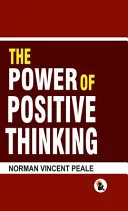
The Power of Positive Thinking - HB
 71
71

The Power of Positive Thinking - HB
Norman Vincent Peale's "The Power of Positive Thinking" operates on a deceptively simple premise: that the mind, when properly directed, can reshape one's external circumstances. The strength of this 1952 volume lies in its direct, unvarnished approach, offering actionable steps that bypass complex psychological jargon. Peale's integration of Christian faith as a practical tool for mental fortification is central, particularly evident in chapters like "How to Use Faith" which guides readers on actively applying spiritual belief to daily challenges. However, the book's primary limitation is its lack of nuance regarding the systemic factors that contribute to hardship; the focus remains almost exclusively on individual mental states. For instance, the assertion that prayer alone can solve all problems, while comforting to some, overlooks external realities. Despite this, the work’s enduring popularity suggests a persistent human need for simple, faith-based self-empowerment strategies. It is a guide for the resolute believer seeking mental leverage.
📝 Description
71
Norman Vincent Peale's 1952 book teaches practical methods for achieving peace and success through affirmative thought.
This 1952 edition of "The Power of Positive Thinking" offers a guide for personal achievement and spiritual calm by consistently applying affirmative thinking. Peale structures the book around actionable advice, combining psychological ideas with Christian faith. It targets individuals struggling with worry, low self-worth, and general discouragement.
The work appeals to those who trust in faith and mental discipline for self-improvement. Readers seeking to develop a more optimistic viewpoint and improve their lives through internal change will find its techniques directly useful. Published after World War II, the book tapped into a growing interest in psychology and self-help, distinguishing itself by its clear use of Christian theology.
Published in 1952, "The Power of Positive Thinking" emerged from a post-war cultural climate receptive to self-improvement and spiritual guidance. Peale's approach blended elements of Christian theology with practical psychology, positioning faith not just as belief but as an active force for shaping reality. This integration of spiritual principles with mental discipline aligns with traditions that emphasize the mind's power to influence one's circumstances, drawing on a long history of thought that connects inner states with outer experience.
💡 Why Read This Book?
• You will learn to reframe negative self-talk by applying the "image-of-God" concept discussed in Chapter 4, fostering a stronger sense of self-worth. • You will gain practical techniques for prayer as a mental discipline, as detailed in "How to Use Faith," enabling a more active engagement with spiritual support. • You will understand the psychological impact of visualizing success, a method Peale advocates throughout the book, to build confidence in achieving personal goals.
⭐ Reader Reviews
Honest opinions from readers who have explored this book.
❓ Frequently Asked Questions
When was "The Power of Positive Thinking" first published?
The original edition of "The Power of Positive Thinking" by Norman Vincent Peale was first published in 1952, becoming a significant self-help text in the mid-20th century.
What is the core message of Norman Vincent Peale's book?
The core message is that by cultivating positive thoughts, faith, and prayer, individuals can overcome obstacles, reduce worry, and achieve greater success and happiness in life.
Does "The Power of Positive Thinking" require a specific religious affiliation?
While the book draws heavily on Christian principles and faith in God, its core techniques for mental discipline and positive thinking can be adapted by individuals of various spiritual or secular backgrounds.
What are some common criticisms of "The Power of Positive Thinking"?
Criticisms often point to its perceived oversimplification of complex problems, potential for victim-blaming, and a lack of acknowledgment for external societal or economic factors influencing individual outcomes.
How does Peale suggest combating worry and anxiety?
Peale suggests combating worry and anxiety through prayer, faith in divine assistance, affirmations of strength, and actively replacing negative thoughts with positive mental imagery and beliefs.
What role does faith play in Peale's philosophy?
Faith, particularly faith in God, is presented as a fundamental and active power source in Peale's philosophy, enabling individuals to tap into inner strength and achieve seemingly impossible outcomes.
🔮 Key Themes & Symbolism
Faith as an Active Force
This work posits faith not as passive belief, but as a dynamic power source. Peale, drawing from his pastoral experience, illustrates how active reliance on divine principles and prayer can dismantle mental barriers. The book details methods for cultivating this active faith, suggesting it is the primary engine for overcoming personal limitations and manifesting desired outcomes. It's presented as a practical tool for engaging with life's challenges, rather than a mere theological concept.
Mind-Matter Causality
A central tenet is the direct correlation between mental states and external reality. Peale argues that one's thoughts, whether positive or negative, actively shape circumstances. The book provides a framework for controlling these thoughts, emphasizing the power of visualization and affirmation to influence outcomes. This principle is explored through numerous anecdotes, suggesting that a disciplined and optimistic mind can indeed alter one's personal world.
Spiritual Self-Help
This book is a central to spiritual self-help, merging psychological techniques with Christian doctrine. It offers practical guidance for individuals seeking to improve their lives through spiritual means. Peale's approach encourages readers to view their faith as a practical resource for building confidence, achieving peace, and finding solutions to everyday problems, thereby fostering a holistic approach to well-being.
Overcoming Mental Obstacles
Peale addresses common human struggles like worry, inferiority complexes, and discouragement. He provides specific strategies, rooted in spiritual principles, to confront and overcome these internal challenges. The book aims to equip readers with mental and spiritual tools to break free from limiting beliefs and negative patterns, promoting a sense of agency and resilience.
💬 Memorable Quotes
Direct passages from the work, attributed to the author.
“Formulate beliefs that are positive and constructive.”
— This statement expresses the book's core directive: consciously choose affirmative thoughts. It implies that beliefs are not fixed but can be intentionally cultivated to foster a more beneficial mental environment and, consequently, a more positive life experience.
“Believe in yourself and your ability to succeed.”
— This is a call to internal validation. Peale suggests that self-belief, often tied to faith in a higher power, is the foundational step required to tackle challenges and achieve one's aspirations.
“Prayer is the key to the solution of all problems.”
— This highlights the central role of prayer in Peale's methodology. It's presented not just as supplication, but as an active, problem-solving mechanism that unlocks divine assistance and inner strength.
“The practice of positive thinking can lead to a more joyful life.”
— This interpretation points to the desired outcome of adopting Peale's principles. It connects mental discipline and affirmative thought directly to an enhanced emotional state and overall life satisfaction.
“Negative thoughts drain your energy and vitality.”
— This emphasizes the detrimental impact of a pessimistic mindset. It frames negative thinking as an active impediment to personal well-being, highlighting the importance of mental hygiene.
🌙 Esoteric Significance
Tradition
While not strictly adhering to a singular esoteric lineage, Peale's work draws heavily from pragmatic spirituality and the New Thought movement. This movement, prominent in the late 19th and early 20th centuries, emphasized the mind's creative power and the accessibility of divine principles for personal betterment, often through affirmations and visualization. Peale synthesized these ideas with orthodox Christian theology, making them accessible to a broad audience, effectively secularizing some esoteric concepts for mainstream consumption.
Symbolism
The book's symbolism is less about arcane imagery and more about the potent symbolism of faith itself. The 'power' of positive thinking acts as a symbolic conduit for divine energy. The act of 'thinking' itself becomes a sacred practice, a way to align oneself with beneficial forces. Concepts like 'faith' and 'prayer' function as symbolic keys, unlocking potential that is believed to be inherent but often suppressed by negative mental states.
Modern Relevance
Peale's emphasis on mental reframing and the power of belief continues to influence contemporary self-help, positive psychology, and even certain therapeutic modalities like Cognitive Behavioral Therapy (CBT). Modern proponents of mindfulness and manifestation practices often echo his core ideas, albeit sometimes stripped of their explicit religious context. His work remains a reference point for discussions on the mind-body connection and the potential for internal states to influence external realities.
👥 Who Should Read This Book
• Individuals grappling with persistent worry, self-doubt, or feelings of inadequacy, seeking practical, faith-based strategies to rebuild confidence. • Those interested in the historical development of the self-help genre and the intersection of psychology and religion in mid-20th century America. • Pastors, counselors, and spiritual leaders looking for accessible methods to guide congregants or clients in cultivating a more optimistic outlook and spiritual resilience.
📜 Historical Context
Emerging in 1952, "The Power of Positive Thinking" captured the zeitgeist of post-war America, a period marked by economic expansion and a renewed focus on individual potential and spiritual well-being. Norman Vincent Peale, a minister at Marble Collegiate Church in New York City, tapped into a widespread desire for reassurance and practical guidance. His work gained immense popularity, selling millions of copies and influencing countless individuals. It arrived amidst a burgeoning self-help industry, with figures like Dale Carnegie already establishing a market for motivational literature. Peale's unique contribution was the explicit integration of Christian faith as a practical tool for psychological upliftment, distinguishing it from more secular approaches. While celebrated by many, it also drew criticism, notably from figures like Albert Ellis, who founded Rational Emotive Behavior Therapy (REBT) in the 1950s, offering a more cognitively focused, less faith-dependent alternative for addressing mental distress.
📔 Journal Prompts
The concept of the 'faith-as-a-power-source' and its application to a current challenge.
Visualize yourself embodying the 'image-of-God' described in Chapter 4.
Analyze the practical steps outlined in 'How to Use Faith' for a recent difficulty.
Reflect on the energy-draining effect of negative thoughts as discussed in the book.
Consider how affirmations, as advocated by Peale, could be integrated into your daily routine.
🗂️ Glossary
Affirmations
Positive statements or declarations, often repeated, designed to reinforce desired beliefs and attitudes. Peale advocates their use to reprogram the mind and cultivate a positive outlook.
Faith
In Peale's context, faith is not passive hope but an active, dynamic force. It's a belief in God's power and willingness to help, coupled with the conviction that positive thinking can unlock this divine assistance.
Mental Discipline
The practice of consciously controlling one's thoughts, emotions, and attitudes. Peale emphasizes mental discipline as crucial for replacing negative patterns with positive ones.
Visualization
The mental creation of vivid mental images of desired outcomes. Peale suggests this practice helps to impress goals upon the subconscious mind and attract success.
Image-of-God
A concept suggesting that individuals are created in the likeness of God, implying inherent worth, potential, and strength. Peale uses this to combat feelings of inferiority.
Spiritual Power
The inherent strength and capability derived from faith and connection with a higher power. Peale teaches that tapping into this power is key to overcoming life's obstacles.
Worry
A state of anxiety and uncertainty, often focused on future potential problems. Peale presents worry as a destructive habit that can be overcome through faith and positive thinking.