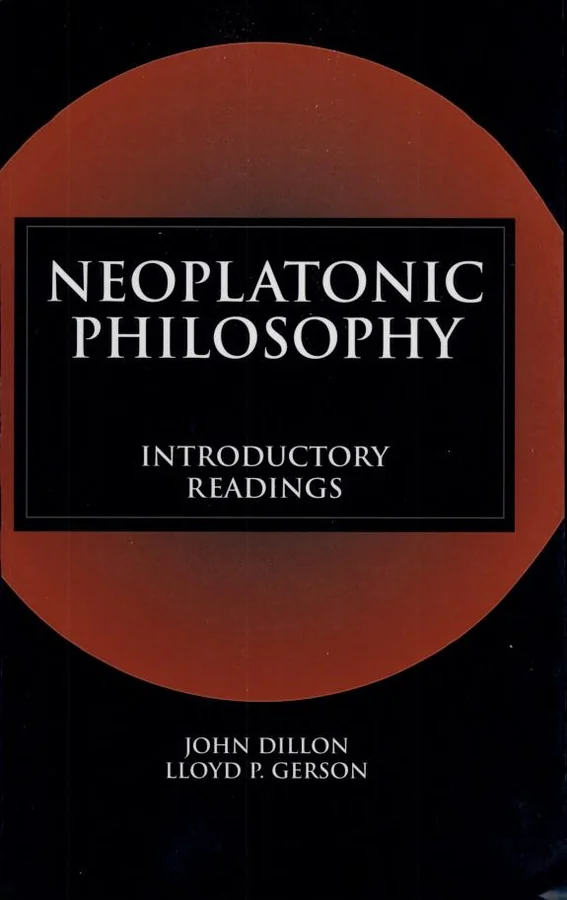
Neoplatonic Philosophy
 81
81

Neoplatonic Philosophy
Dillon and Gerson have assembled a vital resource for anyone serious about understanding the intellectual currents that flowed from Plato into the late antique world and beyond. The strength of this collection lies in its judicious selection of texts from Plotinus, Porphyry, Iamblichus, and Proclus, offering direct access to their intricate arguments. The general introduction provides a necessary, though brief, orientation to the Neoplatonic worldview, contextualizing it within the broader sweep of ancient philosophy. A notable challenge, however, remains the inherent difficulty of the source material; even with excellent translations, grasping concepts like Plotinus's 'emanation' from 'The One' requires sustained concentration. The passage discussing the hierarchy of being, moving from the ineffable One through Intellect and Soul to the physical world, is particularly illuminating for its systematic approach. This volume is an indispensable tool for serious study.
📝 Description
81
This 2003 compilation presents key Neoplatonic texts by Plotinus, Porphyry, Iamblichus, and Proclus in English.
John M. Dillon and Lloyd P. Gerson's volume gathers significant writings from the Neoplatonic tradition. It includes translated selections from Plotinus, Porphyry, Iamblichus, and Proclus, figures central to this school of thought. The editors aimed to make these complex philosophical ideas more accessible to a wider readership.
This collection is suited for scholars of ancient philosophy, students of metaphysics, and anyone interested in the historical development of Western esoteric thought. It allows for direct engagement with primary sources that significantly shaped later mystical and philosophical discourse. The texts chosen form the bedrock of a tradition that continues to fascinate.
Neoplatonism emerged in the 3rd century CE, blending Platonic ideas with other Hellenistic philosophies. Its adherents sought to describe the cosmos and the divine as emanating from a singular, transcendent source. This philosophical system left a lasting impact on Christian, Jewish, and Islamic thought, and also influenced Renaissance occultism.
Neoplatonism, originating in the 3rd century CE with Plotinus, is a philosophical system that profoundly influenced Western esotericism. It posits a hierarchical reality emanating from an ineffable, ultimate principle known as 'The One.' This philosophy describes a process of divine outflow and a potential return or ascent of the soul back to this source. Its complex metaphysical structure and mystical aspirations made it a cornerstone for later esoteric traditions, including Hermeticism, Kabbalah, and various forms of magic and alchemy, shaping how reality and the divine were understood.
💡 Why Read This Book?
• Gain direct exposure to the foundational texts of Plotinus, Porphyry, Iamblichus, and Proclus, essential for understanding the philosophical underpinnings of many esoteric traditions since the 3rd century CE. • Grasp core concepts like emanation and The One, central to Neoplatonic metaphysics and its influence on subsequent Western thought, as explored in the selections. • Understand the historical trajectory of ancient philosophy from the Neoplatonist perspective, as outlined in the general introduction, offering a unique viewpoint on figures like Plato.
⭐ Reader Reviews
Honest opinions from readers who have explored this book.
❓ Frequently Asked Questions
What are the main philosophers included in this collection of Neoplatonic writings?
This volume prominently features translations of central texts from four pivotal figures: Plotinus, Porphyry, Iamblichus, and Proclus, representing major branches of the Neoplatonic tradition.
When was the original publication of John M. Dillon and Lloyd P. Gerson's Neoplatonic Philosophy?
The initial publication date for this comprehensive collection was January 1, 2004.
What is the primary philosophical concept explored in Neoplatonism?
A central concept is 'The One,' an ultimate, ineffable principle from which all existence emanates in a hierarchical fashion, as detailed in the translated texts.
How does this book provide historical context for Neoplatonism?
The general introduction offers an overview of the Neoplatonic period and examines the history of ancient philosophy from the Neoplatonists' unique perspective.
Is this book suitable for beginners in philosophy?
While it offers translations of key texts, Neoplatonism is intellectually demanding. The book is best suited for students or readers with some background in philosophy or a strong interest in metaphysical inquiry.
What is the significance of Porphyry in Neoplatonic philosophy?
Porphyry was a student of Plotinus and a crucial figure in transmitting and systematizing Neoplatonic thought, notably through his commentaries and his own writings on logic and metaphysics.
🔮 Key Themes & Symbolism
The One and Emanation
The core of Neoplatonic metaphysics is the concept of 'The One,' an absolute, transcendent source beyond being and thought. All reality is understood to emanate from The One in a descending hierarchy, not as a creation but as a continuous outpouring of divine goodness. This process involves stages like Intellect (Nous) and Soul (Psyche), leading to the material world. The goal of the philosopher is to ascend back towards The One through intellectual and spiritual purification.
Hierarchy of Being
Neoplatonism posits a structured cosmos where existence is organized in levels of perfection, radiating from the ultimate unity of The One. This hierarchy typically includes The One, Intellect (Nous) containing the Platonic Forms, the World Soul (Psyche) that animates the universe, and finally, the physical realm. Understanding these strata is crucial for comprehending the Neoplatonic worldview and the soul's journey within it.
The Ascent of the Soul
A central theme is the soul's journey from its entanglement with the material world back to its divine origin. This ascent is achieved through philosophical contemplation, ethical living, and mystical experience. The texts explore practices and intellectual disciplines aimed at purifying the soul and enabling it to apprehend higher realities, ultimately seeking union with The One.
Neoplatonism and Platonism
This work highlights how Neoplatonism is a sophisticated development of Plato's philosophy. While drawing heavily on Plato's dialogues, Neoplatonists like Plotinus developed systematic metaphysical theories, particularly concerning the nature of the ultimate reality (The One) and the process of emanation, which go beyond Plato's original formulations.
💬 Memorable Quotes
Direct passages from the work, attributed to the author.
“The One is beyond all statement and all conception.”
— This captures the ineffable nature of the ultimate principle in Neoplatonism. It signifies that 'The One' transcends all categories of language and thought, existing in a state of absolute simplicity and transcendence.
“The soul has descended and has become the soul of the universe.”
— This refers to the World Soul's role in animating and ordering the cosmos. It suggests a divine consciousness that permeates all existence, a concept integral to understanding Neoplatonic cosmology.
“The intellect contains all beings.”
— This statement points to the Neoplatonic concept of Nous (Intellect), which is seen as the area of the Platonic Forms or Ideas. It is the intelligible world that serves as the blueprint for all reality emanating from The One.
“All things are ordered in relation to The One.”
— This emphasizes the fundamental Neoplatonic principle that the entire structure of reality, from the highest spiritual realms to the material world, is organized around and derives its existence from the ultimate source, The One.
💡 Key Ideas
Editorial paraphrase of the work's core concepts — not direct quotes.
The goal is to become like the divine.
This paraphrased concept reflects the ethical and spiritual aim of Neoplatonic practice: to achieve virtue and knowledge that align the soul with the divine Intellect and, ultimately, with The One.
🌙 Esoteric Significance
Tradition
Neoplatonism forms a central to the Western Esoteric Tradition, bridging Hellenistic philosophy with later mystical movements. It provides a metaphysical framework that underpins Hermeticism, Gnosticism, and certain forms of Kabbalah, offering a sophisticated cosmology and soteriology focused on the soul's return to divine unity.
Symbolism
Key symbols include 'The One,' representing absolute unity and transcendence; the 'emanation' process, symbolizing divine outpouring without depletion; and the 'intellectual soul' (Psyche), which mediates between the divine and material realms. The journey of ascent itself is a potent symbol of spiritual transformation and reunion.
Modern Relevance
Contemporary thinkers and practitioners in fields ranging from comparative mysticism to depth psychology and integral philosophy draw upon Neoplatonic concepts. Its ideas on consciousness, the nature of reality, and the soul's potential for transcendence continue to inform spiritual seekers and philosophical inquiry.
👥 Who Should Read This Book
• Advanced students of classical philosophy seeking direct engagement with primary Neoplatonic texts beyond secondary interpretations. • Scholars of comparative religion and intellectual history interested in the philosophical foundations of late antiquity and their influence on subsequent traditions. • Individuals exploring metaphysical systems and the history of Western mysticism who wish to understand the roots of concepts like divine unity and spiritual ascent.
📜 Historical Context
Neoplatonism emerged in the 3rd century CE, a period of intense intellectual and spiritual ferment in the Roman Empire. It represented a powerful synthesis and extension of Platonic philosophy, responding to the philosophical and religious landscape alongside Stoicism and emerging Gnostic ideas. Key figures like Plotinus, whose Enneads were compiled posthumously by his student Porphyry around 270 CE, laid the groundwork. Porphyry himself became a significant commentator and philosopher, notably engaging with Aristotelian logic. Later, Iamblichus introduced more mystical and theological elements, emphasizing theurgy, while Proclus, in the 5th century CE, provided a highly systematic and comprehensive exposition of the doctrine. Neoplatonism's influence was vast, impacting the development of Christian theology (e.g., Augustine), Jewish mysticism, and Islamic philosophy, and it was a principal intellectual force against which early Christian thinkers often debated.
📔 Journal Prompts
The nature of The One as beyond conception.
Plotinus's description of the soul's descent into the material world.
Iamblichus's views on theurgy and divine participation.
Porphyry's methods for achieving philosophical understanding.
Proclus's systematic exposition of the hierarchical cosmos.
🗂️ Glossary
The One
The ultimate, ineffable principle of reality in Neoplatonism, the source from which all existence emanates. It is beyond being, thought, and description.
Emanation
The process by which reality flows or 'pours forth' from The One in a series of descending levels (Intellect, Soul, Matter), without diminishing The One itself.
Nous
The Intellect or Divine Mind, the second hypostasis after The One. It contains the Platonic Forms or Ideas and is the area of true being.
Psyche
The Soul, the third hypostasis. It bridges the intelligible and sensible worlds, animating and ordering the cosmos and indwelling individual beings.
Theurgy
A practice, particularly emphasized by Iamblichus, involving sacred rites and rituals believed to facilitate communion with the divine and aid the soul's ascent.
Hypostasis
A fundamental reality or principle, often translated as 'subsistence' or 'person.' In Neoplatonism, these are distinct levels of reality (The One, Nous, Psyche) emanating from each other.
Ascent
The Neoplatonic goal of the soul's journey to purify itself and return to its divine source, The One, through philosophical and spiritual discipline.
This book appears in 1 collection
🔮 Readers Also Liked
Browse all →









From the “Neoplatonism” Collection
View all →







More Free Occult Philosophy Books
View all →