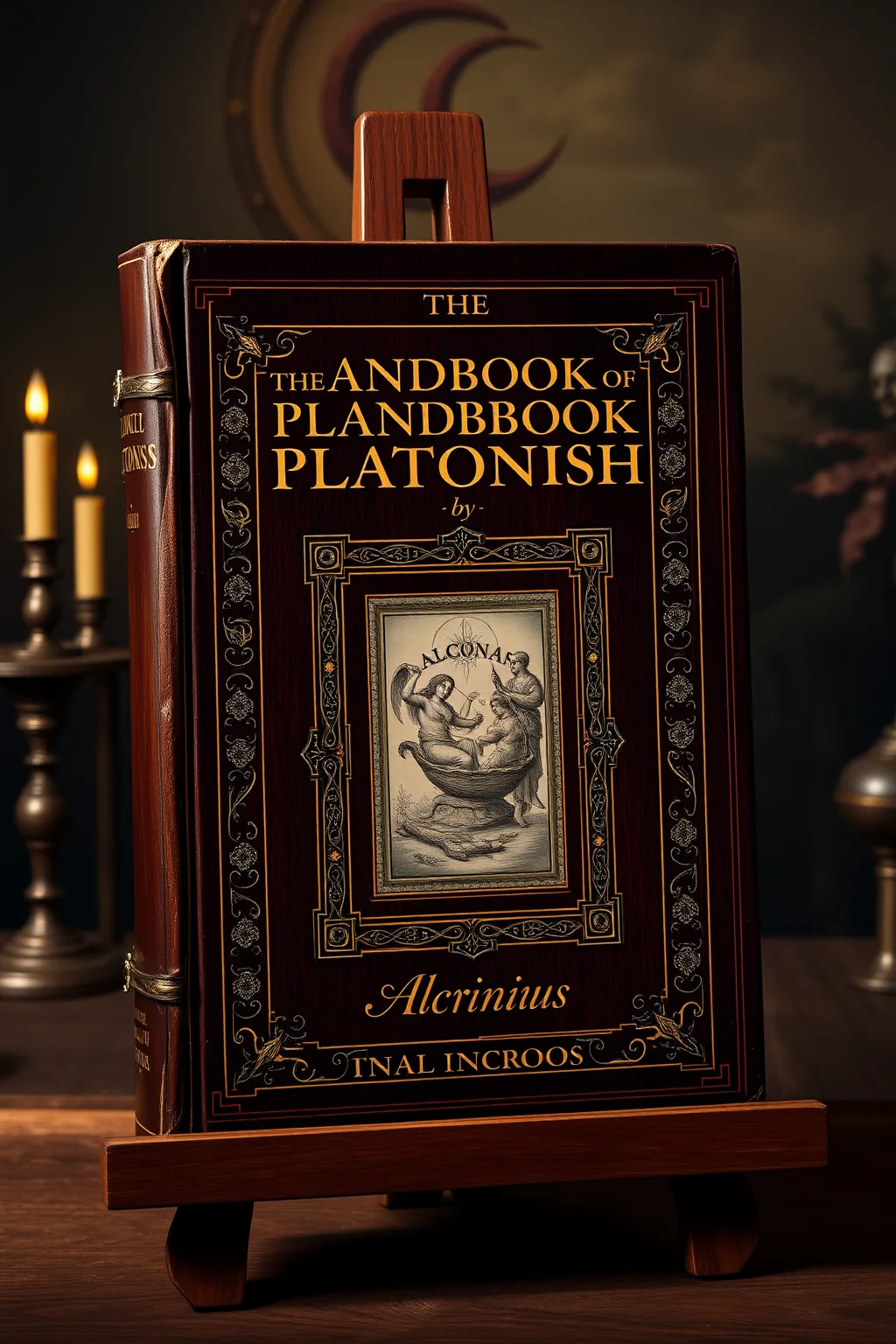
Handbook of Platonism
 61
61

Handbook of Platonism



Review by Evander Ashcroft (Alchemy & Hermeticism Editor) — The Handbook of Platonism by Alcinous is a treasure trove of esoteric wisdom, offering readers a deep dive into the mystical underpinnings of Neoplatonic philosophy. Alcinous's work is a beacon of hidden knowledge, revealing the spiritual truths that have been veiled by the passage of time. This text is particularly valuable for those interested in the esoteric dimensions of philosophy, providing a rich tapestry of symbolism and spiritual insight. The strengths of this book lie in its ability to bridge the gap between ancient wisdom and modern seekers, making it an invaluable resource for both scholars and practitioners of esoteric traditions.
📝 Description
61
Alcinous's Handbook of Platonism, written around the 2nd century CE, explains the core tenets of Platonic philosophy.
This text serves as an introduction to the philosophy of Plato, as understood by later thinkers. Alcinous structures his work around key Platonic doctrines, covering topics such as the theory of Forms, the nature of the soul, and the structure of reality. He presents Plato's ideas in a systematic way, making them accessible to students of the philosophy. The book discusses the existence of the Forms, their relationship to particular things, and the role of intellect in apprehending them. Alcinous also details Plato's views on ethics and the pursuit of the good life, emphasizing the importance of philosophical contemplation. The work aims to clarify Plato's complex system for a new generation of students. It is a valuable record of how Platonic thought was interpreted in the Roman Imperial period, bridging the gap between Plato's original dialogues and later Neoplatonic developments.
Alcinous wrote during a period when Platonic philosophy was undergoing significant development, moving towards what would become Neoplatonism. His handbook aimed to distill Plato's teachings into a coherent system. While not explicitly 'esoteric' in the modern sense, it presented complex philosophical ideas that required dedicated study and contemplation to grasp fully. The text reflects an interest in the metaphysical underpinnings of reality and the human soul's place within it, themes common in philosophical traditions seeking deeper understanding beyond the superficial.
💡 Why Read This Book?
The Handbook of Platonism is a must-read for anyone seeking to understand the deeper, mystical aspects of Neoplatonic philosophy. This book offers a wealth of esoteric insights that can transform one's understanding of the universe and the self. Ideal for seekers, scholars, and practitioners of esoteric traditions, this text provides a rich tapestry of symbolism and spiritual wisdom that can guide readers on their journey to enlightenment.
⭐ Reader Reviews
Honest opinions from readers who have explored this book.
❓ Frequently Asked Questions
What is the significance of the Handbook of Platonism in esoteric studies?
The Handbook of Platonism is a foundational text in esoteric studies, offering deep insights into Neoplatonic philosophy and its mystical dimensions. It is essential for understanding the spiritual truths that underpin the universe.
Who was Alcinous and why is his work important?
Alcinous was a Neoplatonic philosopher whose work provides a bridge between ancient wisdom and modern seekers. His handbook is important because it reveals hidden knowledge and spiritual truths that have been veiled by time.
What kind of reader will benefit most from this book?
The Handbook of Platonism is ideal for seekers, scholars, and practitioners of esoteric traditions. It offers a rich tapestry of symbolism and spiritual insight that can guide readers on their journey to enlightenment.
How does this book differ from other works on Neoplatonism?
Unlike other works, the Handbook of Platonism focuses on the mystical and esoteric dimensions of Neoplatonic philosophy, providing a deeper understanding of the spiritual truths that underpin the universe.
Are there any modern practitioners who use this text?
Yes, many modern practitioners of esoteric traditions, such as Hermeticism and Neoplatonism, use this text as a guide to spiritual enlightenment and understanding the deeper mysteries of the universe.
🔮 Key Themes & Symbolism
The Mystical Path
The Handbook of Platonism looks at the mystical path of Neoplatonic philosophy, revealing the spiritual truths that lie at the heart of the universe. This theme explores the journey of the soul towards enlightenment and the divine.
Symbolism and Hidden Knowledge
Alcinous's work is rich in symbolism and hidden knowledge, providing readers with a deep understanding of the esoteric dimensions of Neoplatonic thought. This theme uncovers the symbols and their meanings, guiding readers on their spiritual journey.
The Divine Mysteries
The book unveils the divine mysteries that are central to Neoplatonic philosophy. This theme explores the spiritual truths that underpin the universe, offering readers a clear insights into the mystical dimensions of reality.
💬 Memorable Quotes
Direct passages from the work, attributed to the author.
“Hidden knowledge reveals the truth of the universe.”
— Alcinous's work is filled with hidden knowledge that unveils the spiritual truths that underpin the cosmos.
“Symbolism is the key to understanding the divine mysteries.”
— The detailed symbolism in the Handbook of Platonism guides readers to a deeper understanding of the mystical dimensions of reality.
💡 Key Ideas
Editorial paraphrase of the work's core concepts — not direct quotes.
The soul's journey is a path to the divine.
This quote underscores the mystical path of the soul towards enlightenment and union with the divine.
The Neoplatonic path leads to the heart of the divine.
This quote emphasizes the spiritual journey towards the divine, central to Neoplatonic philosophy.
The soul's enlightenment is the ultimate goal of Neoplatonic thought.
This passage highlights the ultimate aim of Neoplatonic philosophy, which is the enlightenment of the soul.
🌙 Esoteric Significance
Tradition
The Handbook of Platonism belongs to the Hermetic and Neoplatonic traditions, which emphasize the mystical and esoteric dimensions of philosophy. These traditions seek to reveal the hidden knowledge that lies at the heart of the universe, guiding seekers on their spiritual journey.
Symbolism
Key symbols in this text include the ascent of the soul, the divine hierarchy, and the unity of all things. These symbols represent the spiritual truths that underpin the cosmos and guide readers on their mystical path to enlightenment.
Modern Relevance
This book remains relevant today for modern practitioners of esoteric traditions, such as Hermeticism and Neoplatonism. It offers a wealth of spiritual insights and symbolism that can guide seekers on their journey to enlightenment and understanding the deeper mysteries of the universe.
👥 Who Should Read This Book
The Handbook of Platonism is ideal for beginners seeking an introduction to the mystical dimensions of Neoplatonic philosophy. Scholars will find it a valuable resource for understanding the esoteric underpinnings of ancient wisdom. Spiritual seekers will be drawn to its wide range of symbolism and spiritual insight, while practitioners of esoteric traditions will appreciate its deep exploration of the divine mysteries. This text is particularly suited for those who are curious about the spiritual dimensions of philosophy and eager to explore the wide implications of Neoplatonic ideas.
📜 Historical Context
The Handbook of Platonism was written during a time when esoteric wisdom was closely guarded and passed down through select initiates. Alcinous's work emerged in the 2nd century CE, a period marked by the flourishing of Neoplatonic thought and the blending of Greek philosophy with Eastern mystical traditions. This text was important because it systematized the teachings of Plato and his successors, making them accessible to a wider audience. Its influence can be seen in the works of later Neoplatonic philosophers, such as Plotinus and Proclus, who further developed these ideas and incorporated them into their own philosophical systems.
📔 Journal Prompts
How does the mystical path of Neoplatonic philosophy resonate with your own spiritual journey?
What symbols in the Handbook of Platonism have the most significance for you?
How does the concept of the divine mysteries influence your understanding of the universe?
In what ways does the Handbook of Platonism challenge or confirm your existing beliefs?
What steps can you take to incorporate the insights from this text into your daily life?
🗂️ Glossary
Neoplatonism
A philosophical tradition that builds upon the ideas of Plato, emphasizing the mystical and esoteric dimensions of reality.
Divine Mysteries
The spiritual truths that underpin the universe, revealed through esoteric wisdom and symbolism.
Esoteric Knowledge
Hidden knowledge that is passed down through select initiates, revealing the deeper mysteries of the universe.
Symbolism
The use of symbols to represent spiritual truths and guide seekers on their mystical path to enlightenment.
Mystical Path
The journey of the soul towards enlightenment and union with the divine, central to Neoplatonic philosophy.
This book appears in 2 collections
🔮 Readers Also Liked
Browse all →






From the “Neoplatonism” Collection
View all →






More Free Alchemy & Hermeticism Books
View all →