A Little Bit of Reiki
 78
78

A Little Bit of Reiki
Valerie Oula’s "A Little Bit of Reiki" offers a refreshingly direct introduction to a practice often shrouded in mystique. The book succeeds in its aim of accessibility, breaking down complex ideas like energy channeling into digestible components. Oula’s explanation of the Usui System of Natural Healing, for instance, provides a solid historical grounding. However, the work’s brevity, while a strength for beginners, may leave those with prior energy work experience wanting more depth. The section on practical application, while clear, could benefit from more detailed case studies or varied scenarios. Nevertheless, for the uninitiated, this book serves as a competent, no-nonsense primer on Reiki's potential for promoting relaxation and aiding natural healing.
📝 Description
78
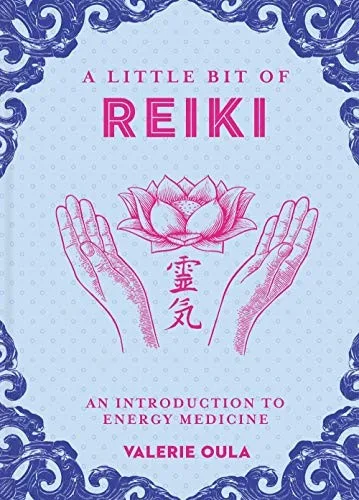
Valerie Oula's A Little Bit of Reiki, published in 2021, explains the Japanese art of energy healing.
This book offers a straightforward introduction to Reiki, the Japanese practice of energy healing. It breaks down the fundamental ideas behind Reiki and shows how to apply them through touch. The author aims to make the technique accessible to anyone interested in energy work and its capacity to improve personal well-being. It is written for people looking for simple ways to manage stress, relax, and boost their personal energy. The guide is appropriate for those new to energy healing or who have experienced Reiki and want a deeper understanding.
Reiki began in Japan in the early 20th century. This book touches on how this gentle method gained popularity as an alternative approach to healing. It details basic Reiki concepts like 'Ki,' or life force energy, the significance of focused intent, and the practitioner's role in channeling energy. The core principles established by Mikao Usui, the founder of Reiki, are also covered.
Reiki emerged in Japan in the early 20th century, a time when interest in spiritual and alternative healing methods was growing. This practice aligns with traditions that view health holistically, focusing on the flow of vital energy within the body. The book places Reiki within this broader context of energy work, suggesting it offers a non-invasive path to balance and restoration.
💡 Why Read This Book?
• Understand the core principles of the Usui System of Natural Healing, as taught by Mikao Usui, to grasp the foundational philosophy behind Reiki. • Learn practical, hands-on techniques for directing Reiki energy, enabling you to explore self-healing and assist others from the outset. • Gain clarity on how Reiki can be integrated into daily life for stress reduction and enhanced energy, moving beyond theoretical concepts to actionable practices.
⭐ Reader Reviews
Honest opinions from readers who have explored this book.
❓ Frequently Asked Questions
What is the origin of Reiki and who founded it?
Reiki originated in Japan in the early 20th century. It was founded by Mikao Usui, a Japanese Buddhist, who developed the system after a period of intense spiritual discipline and meditation.
How does Reiki work according to "A Little Bit of Reiki"?
The book explains that Reiki works by channeling universal life force energy through the practitioner's hands to the recipient. This energy is believed to promote relaxation, reduce stress, and support the body's natural healing abilities.
Can I learn to practice Reiki from this book?
Yes, "A Little Bit of Reiki" provides introductory exercises and guidance to help readers understand and begin to tune into Reiki energy, serving as a foundational step for practice.
What are the main benefits of practicing Reiki as described?
The book highlights key benefits such as stress reduction, enhanced relaxation, increased energy levels, and the promotion of overall well-being and natural healing.
Is prior experience needed to read "A Little Bit of Reiki"?
No, the book is specifically designed for beginners and those new to esoteric practices, offering a fresh and accessible introduction to the art of Reiki.
When was "A Little Bit of Reiki" first published?
"A Little Bit of Reiki" by Valerie Oula was first published on March 5, 2019.
🔮 Key Themes & Symbolism
Universal Life Force Energy
The book emphasizes Reiki as a method of channeling 'Ki,' or universal life force energy, to promote healing and balance. This concept, central to many Eastern philosophies, is presented here as a practical, accessible tool. Oula explains how this energy flows and how practitioners act as conduits, facilitating a non-invasive energetic exchange that aims to restore equilibrium within the recipient's body and mind.
Hands-On Healing Practice
A core theme is the practical, hands-on application of Reiki. The book moves beyond abstract theory to provide clear instructions on hand placements and techniques. It illustrates how this physical contact serves as a bridge for the subtle energy transfer, making the practice tangible for beginners. The focus is on gentle, intuitive touch as a means to support relaxation and well-being.
Stress Reduction and Relaxation
The immediate and accessible benefits of Reiki, particularly its capacity to reduce stress and induce deep relaxation, are central. The work positions Reiki as a potent antidote to the pressures of modern life. By focusing on calming the nervous system and promoting a state of peace, the practice is presented as a readily available method for enhancing mental and emotional equilibrium.
Foundations of the Usui System
The book grounds the reader in the historical origins and foundational principles of the Usui System of Natural Healing. It introduces Mikao Usui as the founder and outlines the core tenets that guide Reiki practice. Understanding this lineage provides context for the techniques and philosophy, assuring readers that they are engaging with a well-established and respected healing modality.
💬 Memorable Quotes
Direct passages from the work, attributed to the author.
“Reiki is a gentle, hands-on practice that channels universal life force energy.”
— This statement distills the essence of Reiki, highlighting its non-invasive nature and its connection to a fundamental energetic principle believed to support health and vitality.
“The practice can reduce stress and aid in deep relaxation.”
— This interpretation focuses on the immediate, tangible benefits for the recipient, positioning Reiki as a practical tool for managing tension and cultivating inner peace.
“Valerie Oula provides exercises to help you tune into Reiki energy.”
— This highlights the practical, experiential aspect of the book, indicating that readers will be guided through actionable steps to connect with and sense the subtle energy involved in Reiki.
“Understanding the history of Reiki offers context for its practice.”
— This emphasizes the importance of historical background, suggesting that knowledge of Reiki's origins, attributed to Mikao Usui, enriches the practitioner's understanding and application of the art.
“Reiki enhances energy and promotes healing.”
— This concise summary points to the dual benefits of the practice: boosting vital energy and supporting the body's innate capacity for recovery and well-being.
🌙 Esoteric Significance
Tradition
Reiki fits within the broader Neo-Theosophical and New Age spiritual currents that gained momentum in the 20th century, drawing inspiration from Eastern concepts of vital energy (Ki/Prana). While not strictly Hermetic or Kabbalistic, it shares with these traditions an emphasis on energetic principles and the potential for human-initiated healing. Its lineage traces back to Mikao Usui's spiritual quest in Japan, blending Buddhist principles with intuitive energy work, representing a unique synthesis that became globally influential.
Symbolism
Key symbols in Reiki, often introduced after foundational training, include the three principal symbols: Cho Ku Rei (power symbol), Sei Hei Ki (harmony symbol), and Hon Sha Ze Sho Nen (connection symbol). Cho Ku Rei is often visualized as a spiral or vortex, signifying the intensification of energy. Sei Hei Ki relates to emotional and mental balance, often depicted with wave-like or aura imagery. Hon Sha Ze Sho Nen facilitates distance healing, symbolizing the interconnectedness of all things across time and space.
Modern Relevance
Contemporary somatic practices, trauma-informed therapy, and integrative healthcare models often incorporate or acknowledge principles similar to those found in Reiki, such as the importance of gentle touch, stress reduction, and the body's innate healing capacity. Thinkers and practitioners in fields like mindfulness-based stress reduction (MBSR) and energy psychology, while not always directly referencing Reiki, explore similar pathways to well-being that this book introduces to a wider audience.
👥 Who Should Read This Book
• Beginners curious about energy healing modalities seeking a clear, practical introduction to Reiki. • Individuals interested in self-care practices for stress reduction and relaxation who want actionable techniques. • Those who have experienced a Reiki session and wish to understand its origins and fundamental principles more deeply.
📜 Historical Context
Published in 2019, "A Little Bit of Reiki" enters a contemporary spiritual landscape where interest in Eastern healing arts continues to grow. Reiki itself, originating in Japan around 1922 with Mikao Usui, experienced significant Western popularization from the mid-20th century onwards, often discussed alongside other New Age and holistic health movements. While Usui developed Reiki, its dissemination in the West was notably shaped by figures like Hawayo Takata. This book arrives at a time when practices like mindfulness and energy work are increasingly mainstream, yet it aims to retain the distinct, gentle approach of traditional Reiki, differentiating it from more assertive therapeutic modalities. Its accessibility contrasts with denser academic explorations of energy medicine or more complex philosophical texts on vitalism, positioning it as a practical entry point.
📔 Journal Prompts
Your personal experience of channeling Ki energy.
The role of intention in your daily activities.
Reflecting on Mikao Usui's journey to discover Reiki.
How the concept of hands-on healing applies to your life.
Your current stress levels and potential for relaxation.
🗂️ Glossary
Reiki
A Japanese form of alternative medicine called energy healing, developed by Mikao Usui in the early 20th century. It involves the 'laying on of hands' to channel universal energy.
Ki (or Qi)
A fundamental concept in many Eastern philosophies referring to the vital life force or energy that flows through all living things.
Usui System of Natural Healing
The original name given by Mikao Usui to the system of Reiki he founded, emphasizing natural methods for healing and well-being.
Hands-on practice
Refers to the application of Reiki by placing hands lightly on or just above the body, serving as a channel for energy transfer.
Energy channeling
The process by which a Reiki practitioner acts as a conduit, drawing universal life force energy and directing it to the recipient.
Stress reduction
The process of identifying and managing stressors to decrease psychological and physical strain, a primary benefit associated with Reiki practice.
Relaxation
A state of being free from tension and anxiety; a key outcome facilitated by Reiki sessions, promoting a sense of calm and peace.