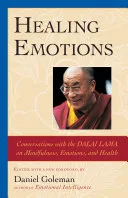
Healing Emotions
 80
80

Healing Emotions
Daniel Goleman's curation of the Mind and Life Conference III, "Healing Emotions," offers a fascinating, if sometimes uneven, glimpse into the early 21st-century scientific embrace of Buddhist psychology. The strength lies in the juxtaposition of His Holiness the Fourteenth Dalai Lama's profound, experiential wisdom with the rigorous, analytical approach of Western scientists. A particularly compelling moment involves the discussion on neuroplasticity, where contemplative practices are framed as deliberate training for the mind, akin to physical exercise for the body. However, the book occasionally suffers from the inherent challenge of translating deep contemplative insights into empirical data, sometimes leading to a degree of academic dryness that might alienate readers seeking purely spiritual exploration. Despite this, the work successfully highlights the potential for cross-disciplinary understanding in alleviating suffering. It is a valuable document for those interested in the empirical study of meditation's effects.
📝 Description
80
Healing Emotions, published in 2003, details a conference between the Dalai Lama and Western scientists.
This 2003 publication chronicles the Mind and Life Conference III, a meeting that brought together His Holiness the Fourteenth Dalai Lama with Western medical and psychological professionals. The conference's central aim was to examine the connections between Buddhist contemplative practices and scientific understanding of the mind-body relationship, particularly as it relates to emotional well-being and its influence on physical health.
The book delves into the Buddhist view of the mind's impact on health, contrasting it with Western medical approaches. It discusses concepts like the transient nature of emotions, the use of compassion as a healing method, and scientific research into meditation's effects on brain activity and the body. The central question is how mental discipline can affect physical health.
Published during a time of increasing interest in the scientific study of consciousness and contemplation, Healing Emotions reflects a growing openness in Western psychology and neuroscience to incorporate insights from traditions like Buddhism. These traditions have long studied emotional regulation and mental clarity. The conference itself was a significant step in bridging these differing ways of knowing, building on earlier discussions involving figures like the Dalai Lama.
Published in 2003, Healing Emotions emerges from a lineage of dialogue between Buddhist contemplative traditions and Western scientific inquiry. For centuries, Buddhist practices have focused on the mind's role in shaping experience and well-being. This book captures a specific moment where these ancient introspective methods met contemporary neuroscience and psychology, seeking empirical validation and common ground. It represents a bridge between the contemplative insights cultivated over millennia and the analytical frameworks of modern science, particularly concerning the nature of consciousness and emotional states.
💡 Why Read This Book?
• Gain insight into how Buddhist contemplative practices, as discussed at the 2003 Mind and Life Conference III, can be understood through Western scientific lenses, particularly in understanding emotional regulation and its physiological impact. • Explore the concept of neuroplasticity as presented in the book, learning how deliberate mental training, a core tenet of Buddhist practice, can reshape the brain and influence emotional states. • Understand the historical significance of the dialogue between His Holiness the Fourteenth Dalai Lama and Western scholars, recognizing this book as a key text in the early integration of contemplative science and modern medicine.
⭐ Reader Reviews
Honest opinions from readers who have explored this book.
❓ Frequently Asked Questions
What is the primary focus of the Mind and Life Conference III discussed in Healing Emotions?
The conference, documented in Healing Emotions, primarily focused on the dialogue between Buddhist traditions and Western science concerning the mind-body connection, emotional healing, and the impact of contemplative practices on physical health.
Who are the key figures involved in the discussions presented in Healing Emotions?
Key figures include His Holiness the Fourteenth Dalai Lama, a group of prominent physicians, psychologists, and meditation teachers who participated in the Mind and Life Conference III.
When was Healing Emotions first published?
Healing Emotions was first published in 2003, reflecting the growing interest in the scientific study of meditation and its effects at the turn of the millennium.
What is the central question explored regarding the mind and body in this book?
The central question is whether the mind can actively heal the body, a concept explored through the lens of Buddhist philosophy and contemporary scientific research on psychosomatic processes.
Does the book present empirical scientific findings or primarily philosophical discourse?
The book presents a blend of both. It records discussions where Buddhist perspectives are examined alongside Western scientific research and empirical findings on meditation and emotion.
What is the significance of the year 2003 in relation to this book?
The year 2003 marks the original publication of Healing Emotions, a period when the integration of contemplative practices with Western scientific inquiry was gaining significant momentum.
🔮 Key Themes & Symbolism
Contemplative Science Integration
This work highlights the early 21st-century convergence of traditional contemplative practices, particularly Buddhism, with empirical scientific inquiry. It documents how concepts like mindfulness and compassion, long central to Buddhist philosophy, began to be investigated for their effects on brain function and physical health. The 2003 conference aimed to bridge the experiential knowledge of monastics with the analytical methods of Western researchers, fostering a new field focused on the mind's capacity to influence well-being.
The Healing Power of Emotion
Healing Emotions explores how cultivated emotional states, such as compassion and equanimity, can contribute to physical healing. It examines the Buddhist understanding that mental afflictions often manifest physically and that mental training can alleviate suffering. The book examines the scientific plausibility of these ancient insights, referencing studies on stress reduction, immune function, and the neurological correlates of positive emotional states.
Mindfulness and Neuroplasticity
A central theme is the concept of neuroplasticity – the brain's ability to reorganize itself. The book discusses how meditation and other contemplative practices, as explored in the Mind and Life dialogues, can actively retrain the brain. This includes altering neural pathways associated with emotional reactivity, attention, and perception, thereby offering a mechanism through which mental training can lead to tangible improvements in emotional regulation and overall health.
Bridging Epistemologies
The book is a record of an attempt to reconcile different ways of knowing: the first-person, experiential knowledge derived from centuries of Buddhist contemplative practice and the third-person, objective knowledge sought by Western science. It showcases the challenges and opportunities in this dialogue, where subjective experience meets empirical validation, pushing the boundaries of both fields.
💬 Memorable Quotes
Direct passages from the work, attributed to the author.
“Can the mind heal the body?”
— This question serves as the foundational inquiry of the book, encapsulating the core exploration into the psychosomatic effects of mental states and practices, bridging ancient wisdom with modern scientific investigation.
“The Buddhist tradition says yes.”
— This statement asserts the long-held belief within Buddhist philosophy that mental discipline and emotional cultivation are intrinsically linked to physical well-being, a perspective that the book seeks to explore through scientific dialogue.
“Western scientists are beginning to agree.”
— This highlights the growing acceptance within the scientific community of the mind's influence on health, acknowledging the increasing body of research supporting the efficacy of practices like meditation.
“The record of the Mind and Life Conference III.”
— This factual description situates the book as a primary source document, detailing a specific, significant event where leading Buddhist figures and Western researchers convened to discuss mind-body science.
“Shed new light on the body-mind connect.”
— This phrase articulates the conference's goal: to advance understanding of the intricate relationship between psychological states and physiological processes through interdisciplinary collaboration.
🌙 Esoteric Significance
Tradition
While not strictly adhering to a single Western esoteric lineage, Healing Emotions bridges Buddhist philosophy, a profound contemplative tradition, with Western scientific methods. It engages with concepts that have esoteric undertones, such as the mind's capacity to influence reality and the subtle energies or states of consciousness. Its esoteric significance lies in validating these ancient insights through empirical research, making them accessible to a wider, secular audience.
Symbolism
The book implicitly engages with symbols of balance and integration. The dialogue itself acts as a symbol of bridging disparate worlds – the sacred and the secular, the inner and the outer. The concept of the mind as a tool for healing can be seen as a metaphor for inner alchemy, transforming afflictive emotions (lead) into states of well-being and wisdom (gold). The very act of meditation is a symbolic practice of turning inward to find truth.
Modern Relevance
Contemporary thinkers in positive psychology, mindfulness-based therapies (like MBSR and MBCT), and affective neuroscience draw heavily on the groundwork laid by these early dialogues. Researchers exploring the impact of compassion training, emotional intelligence, and the therapeutic applications of meditation continue to build upon the empirical and philosophical discussions initiated in works like this. The book remains relevant for those interested in the scientific study of consciousness and well-being.
👥 Who Should Read This Book
• Individuals interested in the scientific validation of meditation and contemplative practices, seeking to understand how Buddhist insights into emotional well-being are being investigated by modern psychology and neuroscience. • Clinicians, therapists, and healthcare professionals exploring the integration of mind-body approaches into their practice, looking for evidence-based discussions on the impact of mental states on physical health. • Students of comparative religion and philosophy, particularly those examining the intersection of Eastern spiritual traditions with Western scientific paradigms and the evolution of consciousness studies.
📜 Historical Context
Published in 2003, Healing Emotions emerged from a key moment in the cross-cultural dialogue between Eastern contemplative traditions and Western empirical science. The late 20th and early 21st centuries witnessed a surge of interest in meditation, spurred by figures like the Dalai Lama and supported by early neuroscientific research. This period saw the establishment of institutions like the Mind and Life Institute, which facilitated dialogues between Buddhist practitioners and scientists. The book documents the Mind and Life Conference III, a specific event that brought together prominent physicians, psychologists, and Buddhist teachers. This initiative contrasted with purely philosophical or spiritual treatises of earlier eras, seeking instead to ground these discussions in scientific observation and potential therapeutic applications. While competing schools of thought in psychology ranged from behaviorism to psychoanalysis, this work represented a significant engagement with the burgeoning field of contemplative neuroscience, a trend later amplified by authors like Richard Davidson.
📔 Journal Prompts
The impact of cultivating compassion on emotional regulation.
The scientific investigation of meditation's effects on brain plasticity.
Buddhist understanding of the mind-body connection.
The role of dialogue in bridging spiritual and scientific knowledge.
Exploring the concept of 'healing emotions' through personal practice.
🗂️ Glossary
Mind and Life Conference
A series of dialogues initiated to foster collaboration and understanding between Buddhist contemplative traditions and Western scientific research, focusing on consciousness, neuroscience, and well-being.
Psychosomatic
Relating to physical diseases or symptoms that are caused or made worse by mental factors such as stress or emotional distress.
Neuroplasticity
The brain's ability to reorganize itself by forming new neural connections throughout life, allowing it to adapt to new situations, learn new information, and recover from injury.
Contemplative Practice
Meditation, mindfulness, and other forms of mental training aimed at developing self-awareness, emotional regulation, and insight into the nature of reality.
Epistemology
The theory of knowledge, especially with regard to its methods, validity, and scope. Epistemology is the investigation of what distinguishes justified belief from opinion.
Emotional Regulation
The ability to understand and manage one's own emotions, and respond to emotional experiences in a way that is adaptive and constructive.
Body-Mind Connection
The concept that the mind and body are not separate entities but are intricately linked, influencing each other's health and functioning.