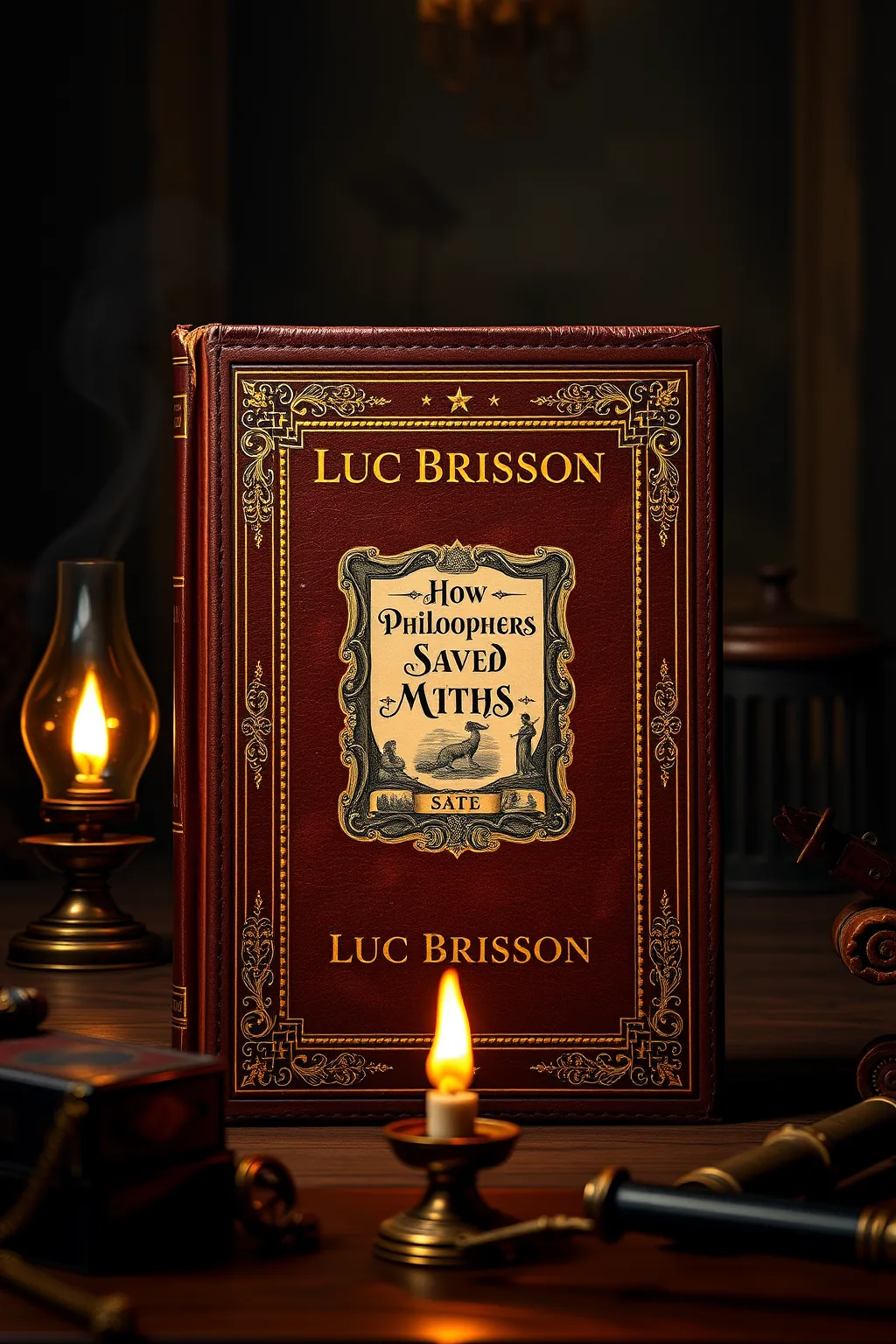
How Philosophers Saved Myths
 63
63

How Philosophers Saved Myths



Review by Isolde Whitaker (Sacred Texts Editor) — How Philosophers Saved Myths by Luc Brisson is a masterful exploration of how ancient myths were preserved through allegorical exegesis. Brisson's work is particularly significant for its esoteric insights, revealing how philosophers transformed myths into vehicles of hidden knowledge. The book's strengths lie in its detailed historical analysis and its ability to uncover the symbolic depth of classical mythology. This work is ideal for those interested in the mystical and occult dimensions of ancient philosophy and religion.
📝 Description
63
Luc Brisson's 2007 book examines how philosophers preserved ancient myths.
In "How Philosophers Saved Myths," Luc Brisson investigates the methods ancient Greek and Roman thinkers used to maintain the relevance of myths. Initially, philosophers questioned myths due to their lack of empirical evidence. However, they developed allegorical interpretations, reintroducing myths into philosophical discussions. Brisson traces this process, showing how philosophers found symbolic and hidden meanings within these narratives. These interpretations allowed myths to communicate complex philosophical and esoteric ideas.
The book details how thinkers from Plato to the Neoplatonists engaged with myth, not as literal stories, but as vehicles for deeper understanding. Brisson highlights the allegorical strategies employed to extract philosophical lessons and spiritual insights from traditional tales. This approach allowed philosophical traditions to incorporate mythological frameworks, shaping Western intellectual history. The analysis reveals the active role philosophers played in transforming and sustaining myths.
This work fits within the study of how philosophical traditions engaged with symbolic language and hidden meanings. It touches upon the Neoplatonic practice of reading myths as allegories for spiritual truths, a common thread in esoteric thought. The book demonstrates how philosophical schools sought to uncover deeper, often mystical, layers of meaning within seemingly simple stories, aligning with a broader esoteric interest in deciphering symbolic systems for spiritual or intellectual illumination.
💡 Why Read This Book?
Why read How Philosophers Saved Myths? This book is essential for seekers of hidden knowledge, scholars of ancient philosophy, and practitioners of the occult. It offers a unique perspective on the preservation of classical myths through allegorical interpretation, providing deep insights into the mystical and esoteric dimensions of ancient thought.
⭐ Reader Reviews
Honest opinions from readers who have explored this book.
❓ Frequently Asked Questions
What is the main focus of How Philosophers Saved Myths?
The book explores how ancient Greek and Roman myths were preserved through allegorical interpretation by philosophers.
Who is the intended audience for this book?
Scholars, spiritual seekers, and practitioners of the occult will find this book particularly valuable.
How does this book contribute to the study of ancient philosophy?
It reveals the role of allegorical exegesis in preserving and interpreting classical myths, highlighting their esoteric significance.
What makes this book unique in its approach to mythology?
The book focuses on the philosophical and symbolic dimensions of myths, offering a deep dive into their hidden meanings.
Can beginners in the field of ancient philosophy benefit from this book?
Yes, but those with some background in philosophy and mythology will find it particularly enriching.
🔮 Key Themes & Symbolism
Allegorical Interpretation
Brisson examines how allegory was used to reinterpret myths, revealing their hidden, esoteric meanings and preserving them for future generations.
Philosophical Significance
The book examines the role of philosophy in preserving classical myths, highlighting the mystical and symbolic depth of these narratives.
Symbolism in Mythology
Brisson's work uncovers the detailed symbolism within ancient myths, showing how they were used to convey profound spiritual and philosophical truths.
💬 Memorable Quotes
Direct passages from the work, attributed to the author.
“Allegory allowed myths to transcend their literal meanings, revealing deeper truths.”
— This highlights the transformative power of allegorical interpretation in uncovering hidden knowledge.
“The preservation of myths was essential for maintaining the spiritual heritage of ancient civilizations.”
— This emphasizes the enduring importance of myths in preserving spiritual and philosophical traditions.
“Allegory transformed myths into symbols of profound philosophical insights.”
— This shows how allegorical interpretation elevated myths to a higher level of spiritual understanding.
💡 Key Ideas
Editorial paraphrase of the work's core concepts — not direct quotes.
Myths were vehicles of esoteric wisdom, preserved through philosophical discourse.
This quote underscores the mystical significance of classical myths in ancient thought.
The symbolic depth of myths reveals their mystical and esoteric dimensions.
This quote highlights the rich, hidden meanings within classical mythology.
🌙 Esoteric Significance
Tradition
This book belongs to the Hermetic tradition, which emphasizes the mystical and esoteric dimensions of ancient philosophy and mythology.
Symbolism
Key symbols in the book include the use of allegory to reveal hidden meanings within myths, and the transformation of myths into vehicles of spiritual and philosophical wisdom.
Modern Relevance
Today, this book is relevant for modern practitioners of the occult and scholars of ancient philosophy, who seek to understand the deeper, mystical significance of classical mythology.
👥 Who Should Read This Book
Beginners in the field of ancient philosophy and mythology will find this book accessible and enlightening. Scholars will appreciate the detailed historical analysis and esoteric insights. Spiritual seekers and practitioners of the occult will be drawn to the book's exploration of the mystical and symbolic dimensions of classical myths.
📜 Historical Context
How Philosophers Saved Myths was written in a time when the study of ancient philosophy and mythology was gaining renewed interest. Brisson's work is significant because it provides a detailed analysis of how myths were preserved through allegorical interpretation, a process that was crucial for maintaining the spiritual and philosophical heritage of ancient Greece and Rome. The book's influence can be seen in modern scholarship, where the mystical and esoteric dimensions of classical mythology continue to be explored.
📔 Journal Prompts
How does allegorical interpretation reveal the hidden meanings within myths?
What role did philosophy play in preserving ancient myths?
How do the symbolic dimensions of myths contribute to their mystical significance?
What can modern practitioners learn from the preservation of myths through allegory?
How do classical myths continue to influence contemporary thought and spirituality?
🗂️ Glossary
Allegorical Exegesis
The process of interpreting myths symbolically to reveal hidden meanings and esoteric insights.
Hermetic Tradition
A mystical and esoteric tradition that emphasizes the hidden knowledge within ancient philosophy and mythology.
Symbolism
The use of symbols to convey profound spiritual and philosophical truths within myths.
Mystical Significance
The deeper, hidden meanings within classical mythology that reveal spiritual and philosophical insights.
Esoteric Insights
Hidden knowledge and mystical dimensions uncovered through the allegorical interpretation of myths.
This book appears in 7 collections
🔮 Readers Also Liked
Browse all →







More by Luc Brisson
All books →


From the “Remote Viewing” Collection
View all →




More Free Alchemy & Hermeticism Books
View all →