Nature Spirits - The Remembrance
 77
77

Nature Spirits - The Remembrance
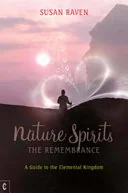
Susan Raven's Nature Spirits - The Remembrance offers a refreshingly direct approach to a subject often shrouded in vagueness. Unlike many esoteric texts that rely on ornate prose, Raven provides a clear, almost instructional, framework for engaging with elemental beings. Her assertion that these entities wish to reconnect with us, particularly at this critical juncture for the planet, grounds the work in a sense of urgent purpose. The book's strength lies in its step-by-step guidance, making abstract concepts feel approachable. However, a limitation might be its singular focus; readers seeking a broader comparative study of nature spirits across different cultures may find it too specific. The passage discussing the 'reciprocal relationship' as vital for planetary evolution is particularly potent, framing spiritual work as ecological action. It’s a practical primer for the ecologically-minded mystic.
📝 Description
77
Published in 2012, Susan Raven's Nature Spirits - The Remembrance is a guide to interacting with elemental beings.
This book presents a method for understanding and communicating with the elemental spirits of earth, water, air, and fire. Raven suggests these beings are eager to reconnect with humanity. The author's instructions are clear and sequential, aiming to make these natural forces more approachable. The text encourages readers to see themselves as active participants in a period of planetary change. It is written for those already drawn to esoteric ideas, animism, or spiritual paths centered on nature. The book is useful for individuals who sense unseen energies in the environment and want a practical way to engage with them. It offers a straightforward introduction to elemental magic and spirit communication, built on principles of ecological care. This work is for serious practitioners ready to move past theory into direct experience.
Raven's approach aligns with a tradition of seeking connection to nature's hidden aspects. It emerged in the early 21st century, a time when interest in nature spirituality and environmental awareness was growing, partly due to increasing ecological concerns. While distinct from 19th-century Theosophy or earlier Romanticism, the book's focus on mutual relationships with elementals parallels modern discussions on sustainable living and a healthier human-Earth connection. It provides a spiritual perspective on environmental stewardship, intersecting with New Age ideas and ecological activism of its time.
Nature Spirits - The Remembrance taps into a long history of animistic beliefs and nature reverence. It emerged in the early 21st century, a period marked by renewed interest in ecological consciousness and nature-based spirituality. This resurgence often blended New Age concepts with environmental activism, seeking a spiritual dimension to human interaction with the planet. Raven's work offers a structured framework for engaging with elemental forces, echoing earlier traditions that saw inherent spirit within the natural world. The book's emphasis on reciprocal relationships with nature spirits can be seen as a spiritual response to contemporary environmental concerns and calls for sustainable living.
💡 Why Read This Book?
• Learn concrete methods for communing with elementals, moving beyond theoretical belief to practical application, as detailed in the book's step-by-step approach to working with earth, water, air, and fire spirits. • Understand the concept of 'responsible co-creation' and your potential role in a positive, reciprocal relationship with nature spirits, which Raven argues is crucial for planetary evolution. • Gain insight into why nature spirits are seeking renewed connection with humanity, as explained by Raven, offering a unique perspective on interspecies communication and ecological interdependence.
⭐ Reader Reviews
Honest opinions from readers who have explored this book.
❓ Frequently Asked Questions
What are nature spirits according to Susan Raven in 'The Remembrance'?
Susan Raven describes nature spirits, or elementals, as sentient beings intrinsically linked to the classical elements: earth, water, air, and fire. The book suggests they are conscious entities within the natural world eager to re-establish a relationship with humanity.
When was 'Nature Spirits - The Remembrance' first published?
Nature Spirits - The Remembrance by Susan Raven was first published on January 1, 2012. This places its emergence in the early 21st century, a period of growing environmental awareness.
What is the main goal of working with nature spirits as presented in the book?
The book's primary goal for working with nature spirits is to foster a state of 'responsible co-creation.' This involves building positive, reciprocal relationships with elementals for the mutual evolution of humanity and the Earth.
Does the book offer practical exercises for connecting with elementals?
Yes, Susan Raven's work is presented as a lucid, step-by-step guide, implying that practical methods and exercises for interacting with nature spirits are included within its pages.
Who is Susan Raven and what is her background?
Susan Raven is the author of Nature Spirits - The Remembrance. While her specific background isn't detailed in the blurb, her work positions her as an authority on esoteric subjects related to nature spirits and elemental beings.
Is 'Nature Spirits - The Remembrance' suitable for beginners in esotericism?
Given its description as a 'lucid, step-by-step guide,' the book appears suitable for beginners interested in nature spirits and elemental work, offering an accessible entry point.
🔮 Key Themes & Symbolism
Elemental Beings
The central theme revolves around the existence and nature of 'elementals,' entities believed to inhabit the classical elements of earth, water, air, and fire. Raven posits these are conscious beings with whom humanity can and should interact. The work moves beyond mere folklore to present them as active participants in the planet's energetic and ecological systems, suggesting a need to re-establish communication channels severed by modern disconnection from the natural world.
Responsible Co-Creation
This theme highlights humanity's active role in the Earth's ongoing evolution. Raven proposes that true progress necessitates a partnership with nature spirits, becoming 'responsible co-creators.' This implies a shift from a paradigm of human dominance over nature to one of conscious, collaborative stewardship, where our actions are guided by reciprocal understanding and respect for elemental forces.
Remembrance and Reconnection
The subtitle 'The Remembrance' points to a core concept: humanity has forgotten its deep connection to the natural world and its inhabitants. The book serves as a call to 'remember' these ancient ties, suggesting that this remembrance is the key to unlocking the potential for meaningful communication and collaboration with nature spirits.
Ecological Spirituality
Raven's work intrinsically links spiritual practice with ecological well-being. The health of the planet and the future of humanity are presented as dependent on fostering positive relationships with elemental forces. This perspective frames interaction with nature spirits not just as a personal spiritual pursuit but as a vital act of ecological service and planetary healing.
💬 Memorable Quotes
Direct passages from the work, attributed to the author.
“Elemental beings wish to reconnect with us.”
— This statement expresses the book's premise: nature spirits are not merely passive forces but sentient entities actively seeking interaction with humanity, suggesting a potential for mutual benefit and understanding.
“We can become responsible co-creators.”
— Raven frames human potential not just as stewards but as active partners in planetary development. This concept implies a dynamic, collaborative relationship with the Earth and its unseen inhabitants, moving beyond passive observation.
“The future of humanity and the Earth may depend on such a positive and reciprocal relationship.”
— This highlights the critical importance Raven places on human-elemental interaction. It elevates the work from a niche spiritual practice to a potentially essential component for ecological survival and conscious evolution.
“Working with the elementals residing in the elements of earth, water, air, and fire.”
— This phrase specifies the practical domain of the book's teachings, grounding the concept of nature spirits in the tangible classical elements that form our world.
“A lucid, step-by-step guide.”
— This descriptor emphasizes the accessible and practical nature of Raven's approach, suggesting that the book provides clear instructions for engaging with the subject matter.
🌙 Esoteric Significance
Tradition
Raven's work draws from and contributes to the Western esoteric tradition, particularly its animistic and elemental branches. It echoes themes found in Paracelsian elemental theory and later Theosophical concepts of nature spirits, while updating them for a contemporary audience. Unlike strictly Kabbalistic or Gnostic texts, it prioritizes direct experiential engagement with the natural world's perceived intelligences, focusing on practical interaction rather than complex symbolic systems or theological doctrines.
Symbolism
The primary symbols are the four classical elements: Earth, Water, Air, and Fire. In this context, Earth symbolizes grounding, stability, and the physical realm; Water represents emotion, intuition, and flow; Air signifies intellect, communication, and movement; and Fire embodies spirit, transformation, and energy. These elements are not just abstract concepts but are presented as the dwelling places and fundamental constituents of sentient elemental beings.
Modern Relevance
Contemporary practices in eco-spirituality, animism, and certain forms of nature-based magic find resonance with Raven's work. Thinkers and practitioners focused on re-wilding consciousness, fostering interspecies communication, and integrating ecological activism with spiritual development often engage with concepts similar to those presented in 'The Remembrance.' It serves as a foundational text for those seeking to bridge the perceived gap between the human and natural worlds through direct, respectful engagement.
👥 Who Should Read This Book
• Aspiring practitioners of nature-based spirituality seeking structured guidance on elemental communication and interaction. • Individuals concerned with ecological issues who wish to explore the spiritual dimensions of environmental stewardship and interspecies relationships. • Students of Western esotericism interested in practical applications of elemental theory beyond historical or purely symbolic interpretations.
📜 Historical Context
Nature Spirits - The Remembrance emerged in 2012, a period marked by a growing global consciousness regarding environmental crises and a concurrent resurgence of interest in nature-based spiritualities. This era saw a confluence of eco-activism and esoteric thought, with movements like Deep Ecology gaining traction alongside established Neopagan and New Age practices. Raven's work offered a specific, structured approach to interacting with the 'unseen' forces of nature, differentiating itself from the more diffuse animistic philosophies prevalent at the time. While perhaps not directly engaging with contemporaries like influential ecofeminist Val Plumwood or the burgeoning field of eco-psychology in a published dialogue, Raven's book tapped into a similar zeitgeist demanding a re-evaluation of humanity's relationship with the natural world. Its focus on direct communication with elementals can be seen as a spiritual complement to scientific and philosophical calls for a more integrated human-Earth connection, positioning it within a broader cultural discourse seeking sustainable coexistence.
📔 Journal Prompts
Elemental communication: What signs of earth, water, air, or fire have you noticed recently?
Responsible co-creation: How can your daily actions reflect a partnership with nature spirits?
The call to remembrance: What does 'remembering' your connection to nature mean to you?
Reciprocal relationships: Describe a potential exchange you could offer to local nature spirits.
Your role as a co-creator: Reflect on a time you felt truly connected to an element.
🗂️ Glossary
Elementals
Sentient beings associated with the classical elements (earth, water, air, fire), believed by the author to inhabit and embody these natural forces.
Nature Spirits
A broader term often used interchangeably with elementals, referring to conscious entities residing within the natural world and its phenomena.
Responsible Co-creation
The concept that humanity should actively and ethically participate with nature spirits in the ongoing development and well-being of the planet.
Reciprocal Relationship
A balanced interaction between humans and nature spirits characterized by mutual respect, understanding, and exchange, rather than one-sided demands or exploitation.
Remembrance
The act of recalling and re-establishing a lost or forgotten connection between humanity and the spiritual intelligence inherent in nature.
Evolution (Human and Planetary)
The process of development and change for both human consciousness and the Earth itself, which the book suggests can be positively influenced by human interaction with elementals.
Lucid Guide
A description of the book's style, indicating clarity, directness, and ease of understanding for the reader.
This book appears in 1 collection
🔮 Readers Also Liked
Browse all →







From the “Nature Spirits” Collection
View all →


More Free Occult Philosophy Books
View all →