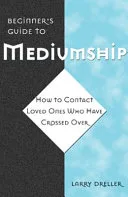
Beginner's Guide to Mediumship
 76
76

Beginner's Guide to Mediumship
Larry Dreller’s "Beginner's Guide to Mediumship" attempts to bridge the gap between the often sensationalized world of spiritualism and the rational inquirer. Dreller, drawing on his background in education and counseling, presents his material with an earnestness that is palpable. He avoids the common pitfall of presenting mediumship as an unearned gift, instead framing it as a skill requiring discipline and ethical awareness. A particular strength is his methodical breakdown of different communication channels – what he terms clairvoyance, clairaudience, and clairsentience – offering practical exercises for their discernment. However, the book occasionally falters in its directness, sometimes explaining concepts that could have been more powerfully illustrated through the case studies he alludes to. For instance, his description of a "séance study circle" feels somewhat generalized, leaving the reader wanting more concrete examples of group dynamics and evidentiary breakthroughs. Nevertheless, Dreller’s rational approach makes this a valuable starting point for those seeking to understand the mechanics of spiritual communication.
📝 Description
76
Larry Dreller's 2002 guide offers a rational framework for understanding spiritual communication.
Published in 2002, "Beginner's Guide to Mediumship" presents spiritual communication as a discipline that can be approached with a logical structure. Dreller moves past anecdotal accounts to establish mediumship as something that can be studied and practiced through a reasoned method. The book aims to clarify the process, giving readers basic knowledge and practical advice for engaging with spiritual phenomena. It is written for people who wonder if consciousness continues after death and for those who want to develop their own mediumistic skills. The book is suitable for newcomers who want a straightforward introduction, without needing prior study in esoteric subjects. Individuals who approach spiritual ideas with a need for clear explanations and a mind that is both skeptical and receptive will find this book especially useful.
Dreller's work appeared in the early 21st century, a time of ongoing interest in parapsychology and spiritual phenomena. This followed the earlier movements of 19th-century Spiritualism and later investigations into psychic research. The book entered a discourse where discussions about consciousness and the afterlife were often divided, with scientific skepticism frequently contrasting with spiritualist viewpoints. It sought to provide a more structured perspective within this varied field.
💡 Why Read This Book?
• You will learn to differentiate between intuitive impressions and genuine spirit communication, as explained through Dreller's breakdown of clairvoyance and clairaudience, concepts central to his approach. • You will gain practical methods for grounding and protection before and after spiritual communication sessions, detailed in Chapter 4, ensuring a safer and more focused practice. • You will understand the ethical responsibilities inherent in mediumship, a core tenet emphasized throughout the book's exploration of spiritualism as a path.
⭐ Reader Reviews
Honest opinions from readers who have explored this book.
❓ Frequently Asked Questions
What is the main goal of Larry Dreller's "Beginner's Guide to Mediumship"?
The book aims to provide a rational, structured introduction to spiritual communication, demystifying mediumship and offering practical guidance for beginners. It seeks to validate mediumship as a spiritual discipline through a methodical approach.
Does the book discuss the historical development of Spiritualism?
While not a historical treatise, the book acknowledges the roots of Spiritualism and positions Dreller's work within the broader context of exploring life after death and spiritual communication.
What are the key skills a beginner can expect to develop from this guide?
Readers can expect to learn about discerning intuitive impressions, understanding different communication channels like clairvoyance and clairaudience, and practicing ethical engagement with spiritual energies.
Is "Beginner's Guide to Mediumship" suitable for skeptics?
Yes, the book is designed for those approaching spiritualism with a rational and open mind. Dreller emphasizes a grounded, educational perspective, making it accessible even to those who are initially skeptical.
What kind of exercises does the book offer?
The guide includes practical exercises focused on developing discernment, grounding oneself spiritually, and understanding different forms of psychic perception, such as clairvoyance and clairsentience.
When was "Beginner's Guide to Mediumship" first published?
The book was first published on April 15, 2002, placing it within the early 21st-century discourse on spirituality and parapsychology.
🔮 Key Themes & Symbolism
Rational Approach to Mediumship
Dreller champions a methodical and educational framework for understanding mediumship, moving away from purely mystical or anecdotal accounts. He emphasizes logical progression, drawing parallels with educational disciplines. The book explores how concepts like discernment and ethical conduct are paramount, akin to any structured practice. This rational grounding aims to validate spiritual communication for those who require clear reasoning and practical application, rather than solely relying on faith or unverified experiences.
Developing Spiritual Discernment
A core focus is the cultivation of a discerning mind when engaging with spiritual phenomena. Dreller explains how to differentiate between personal imagination, psychic impressions, and genuine communication from discarnate entities. He details specific perceptual channels—clairvoyance, clairaudience, and clairsentience—and provides exercises designed to strengthen the reader's ability to distinguish subtle energies and messages accurately and responsibly.
Ethics of Spiritual Communication
The guide stresses that mediumship is not merely about receiving messages but doing so with integrity and respect. Dreller outlines ethical guidelines for mediums, covering consent, privacy, and the responsible delivery of information. He addresses the potential pitfalls of ego inflation and the importance of maintaining a service-oriented attitude, framing mediumship as a spiritual path dedicated to healing and understanding, not personal gain.
Life After Death Inquiry
At its heart, the book engages with the perennial question of survival after physical death. Dreller presents mediumship as a practical means of investigating this profound mystery. By offering a structured method for communication, he provides readers with tools to explore evidence and personal experiences that suggest consciousness can persist beyond the body's dissolution.
💬 Memorable Quotes
Direct passages from the work, attributed to the author.
“The question of survival after death has been a persistent human inquiry.”
— This statement anchors the book's premise, acknowledging the universal and enduring nature of humanity's search for meaning beyond physical existence, setting the stage for exploring mediumship as a potential answer.
“Mediumship can be approached as a discipline requiring training and ethical practice.”
— This highlights Dreller's core argument: mediumship isn't solely an innate talent but a skill that can be cultivated through structured learning and adherence to moral principles, making it accessible and respectable.
“Discernment is crucial for distinguishing between one's own thoughts and external spiritual input.”
— This emphasizes the practical challenge and necessity of developing critical judgment when interpreting psychic impressions, a key skill for any aspiring medium to avoid misinterpretation or manipulation.
“Grounding and protection are essential preparatory steps before engaging in spirit communication.”
— This points to the practical, safety-oriented aspects of mediumship, underscoring the need for energetic preparation to ensure a balanced and secure experience when connecting with other realms.
“A rational approach can bring validity to the study of spiritualism.”
— This expresses Dreller's method, suggesting that by applying logic and structured inquiry, the often-controversial subject of spiritualism can be examined and understood more objectively.
🌙 Esoteric Significance
Tradition
This work fits within the broader Western Esoteric tradition, specifically the lineage of Spiritualism and modern parapsychology. While Spiritualism itself has roots in 19th-century phenomena, Dreller's approach aligns with attempts to systematize and rationalize spiritual contact, integrating elements of psychological understanding. It departs from more overtly mystical or ritualistic traditions by focusing on practical, observable (though subjective) experiences and logical deduction.
Symbolism
The book doesn't heavily rely on complex symbolic systems but rather on the symbolism inherent in the act of communication itself. The 'spirit world' can be seen as a symbol for consciousness beyond the material, and the various channels of perception (clairvoyance, clairaudience) symbolize different ways of knowing. The concept of 'grounding' itself functions symbolically, representing an anchor to physical reality amidst ethereal exploration.
Modern Relevance
Dreller's emphasis on a rational, ethical, and educational approach to mediumship remains relevant today. It influences contemporary discussions in spiritual communities and among independent researchers exploring consciousness and psychic phenomena. His structured methodology provides a foundation for individuals seeking to develop intuitive abilities in a responsible manner, resonating with modern interests in mindfulness and energy work.
👥 Who Should Read This Book
• Aspiring mediums seeking a clear, step-by-step introduction to the principles and practices of spiritual communication, grounded in rational thought. • Individuals curious about the nature of consciousness and the possibility of life after death who prefer an educational and ethically-focused exploration. • Students of parapsychology or comparative religion looking for practical insights into the phenomena and methodology of mediumship from a 21st-century perspective.
📜 Historical Context
Larry Dreller's "Beginner's Guide to Mediumship" emerged in 2002, a period where the internet facilitated broader access to esoteric information, yet academic acceptance of parapsychology remained contested. The book followed decades of Spiritualist activity, originating in the mid-19th century, and built upon the investigative efforts of figures like Sir Arthur Conan Doyle and later researchers like J.B. Rhine. Dreller's approach, emphasizing rationality and education, contrasted with more sensationalized portrayals of mediumship prevalent in popular culture. It also stood apart from the burgeoning New Age movement's often less structured spiritual explorations. While not a direct engagement with specific academic debates, Dreller's work implicitly addressed the ongoing tension between empirical skepticism and the persistent human desire to understand consciousness beyond the physical body, offering a structured pathway for those seeking personal investigation.
📔 Journal Prompts
The concept of clairvoyance as presented by Dreller: what visual impressions do you most frequently perceive?
Reflect on the ethical guidelines for mediums discussed in the book; how do they align with your personal values?
Analyze your personal experiences with intuitive insights in relation to Dreller's definition of discernment.
Consider the 'rational approach' to mediumship; how might it be applied to your own spiritual inquiries?
Explore the idea of 'grounding' and protection; what personal rituals or practices can you develop?
🗂️ Glossary
Mediumship
The practice or ability of acting as a channel or intermediary between the world of the living and the world of spirits, facilitating communication.
Clairvoyance
The purported psychic ability to see events, objects, or persons that are not present to the physical senses; 'clear seeing'.
Clairaudience
The purported psychic ability to hear sounds or voices not perceived by the physical ear; 'clear hearing'.
Clairsentience
The purported psychic ability to perceive spiritual or psychic information through feelings or emotional impressions; 'clear feeling'.
Discernment
The ability to judge well, particularly in distinguishing between genuine spiritual communication and one's own thoughts or imagination.
Grounding
A practice used to stabilize one's energetic field, often involving connecting with the earth's energy, to maintain balance and prevent energetic overwhelm.
Séance Study Circle
A group of individuals who meet regularly to practice and study mediumship and spiritual communication in a structured, often supervised, environment.