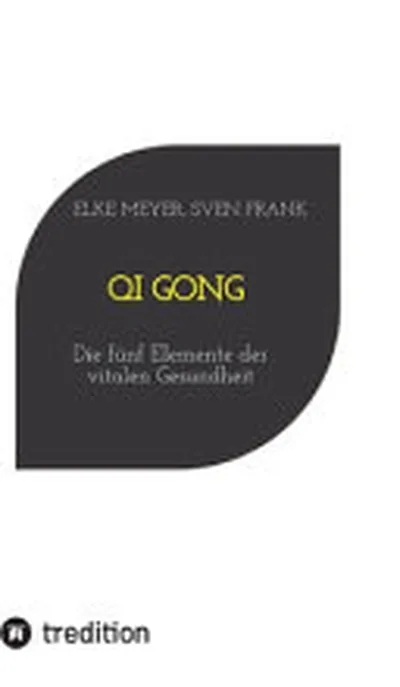
Qi Gong
 74
74

Qi Gong
Meyer and Frank's 'Qi Gong - Die fünf Elemente der vitalen Gesundheit' offers a structured approach to a practice often perceived as fluid and intuitive. The authors' clear delineation of techniques tied to the Five Elements provides a useful framework for understanding the energetic correspondences. A particular strength lies in the detailed explanations of posture and breath, making the often-subtle art of Qi Gong more accessible. However, the book occasionally feels more like a technical manual than an exploration of the deeper philosophical underpinnings that draw many to Qi Gong. While it effectively explains the 'how,' it sometimes falls short on the 'why' beyond basic health benefits. The inclusion of the Five Elements, a cornerstone of Chinese metaphysics, is handled factually but could benefit from more interpretive depth. It is a competent guide, best suited for those who appreciate a methodical introduction to this vital energy cultivation system.
📝 Description
74
Published in 2023, Elke Meyer and Sven Frank's Qi Gong introduces the ancient Chinese practice of vital energy cultivation.
This 2023 book by Elke Meyer and Sven Frank details the practice of Qi Gong, a system combining posture, movement, breathing, and meditation. The authors explain methods for developing and balancing Qi, the vital life energy central to Chinese tradition. It is written for those new to Qi Gong and for experienced practitioners seeking a deeper understanding of its principles. The text focuses on how specific movements and breathwork, often structured around the Five Elements—Wood, Fire, Earth, Metal, and Water—can affect physical health, emotional equilibrium, and mental focus. Meyer and Frank offer practical advice for applying these concepts.
The book traces Qi Gong's long history, which originates from ancient Daoist, Buddhist, martial arts, and traditional Chinese medicine practices. It acknowledges the 20th-century systematization and subsequent global spread of Qi Gong as an exercise and therapeutic discipline. Meyer and Frank present current interpretations of this ancient lineage in their work.
Qi Gong is an ancient Chinese system deeply embedded in Daoist philosophy and traditional Chinese medicine. It views the body as a network through which vital energy, Qi, flows. Practices aim to harmonize this flow, promoting physical vitality, emotional calm, and mental clarity. The Five Elements (Wood, Fire, Earth, Metal, Water) are a fundamental framework within this tradition, used to categorize energies, bodily functions, and relationships within the cosmos. Meyer and Frank's work engages with this traditional understanding, applying it to contemporary health and well-being.
💡 Why Read This Book?
• Learn specific Qi Gong movements and breathing techniques directly linked to the Five Elements (Wood, Fire, Earth, Metal, Water), as detailed in Meyer and Frank's 2023 guide, to target specific energetic imbalances. • Understand the foundational concept of Qi, the vital life force, and how its cultivation through the methods presented can contribute to enhanced physical vitality and emotional equilibrium. • Gain practical instruction on integrating gentle exercises and mindful breathing into daily life, offering a tangible method for self-care rooted in ancient Chinese health traditions.
⭐ Reader Reviews
Honest opinions from readers who have explored this book.
❓ Frequently Asked Questions
What is Qi Gong and how does it differ from Tai Chi?
Qi Gong is an ancient Chinese system of mind-body exercise involving slow movements, deep breathing, and meditation to cultivate and balance vital life energy (Qi). While related, Tai Chi is a more complex martial art derived from Qi Gong principles, often involving more intricate, flowing sequences of movement.
Can beginners practice Qi Gong using this book?
Yes, 'Qi Gong - Die fünf Elemente der vitalen Gesundheit' is designed to be accessible to beginners. It provides step-by-step guidance on fundamental movements and breathing techniques, making it suitable for those new to the practice.
What are the Five Elements in Qi Gong?
The Five Elements (Wood, Fire, Earth, Metal, Water) are a fundamental concept in traditional Chinese philosophy and medicine. In Qi Gong, they represent different energetic qualities and are used to categorize exercises, postures, and therapeutic approaches to balance the body's energy.
How does Qi Gong promote health?
Qi Gong promotes health by improving the circulation of Qi, or vital energy, throughout the body. This enhanced flow is believed to strengthen the immune system, reduce stress, improve flexibility, and foster emotional and mental well-being.
When was 'Qi Gong - Die fünf Elemente der vitalen Gesundheit' first published?
The book 'Qi Gong - Die fünf Elemente der vitalen Gesundheit' by Elke Meyer and Sven Frank was first published in 2023.
Is Qi Gong a form of meditation?
Qi Gong incorporates meditative elements through its focus on breath awareness and mindful movement. While not solely meditation, the practice cultivates a meditative state, enhancing focus and inner calm.
🔮 Key Themes & Symbolism
Qi Cultivation
The central theme is the cultivation of Qi, the universal life force. The book details how specific postures, movements, and breathwork, as outlined by Meyer and Frank, facilitate the generation, circulation, and balancing of this vital energy. This process is presented as fundamental to achieving robust health and a state of inner harmony, moving beyond mere physical exercise to a profound energetic practice.
The Five Elements Framework
Meyer and Frank structure the practice around the Five Elements (Wood, Fire, Earth, Metal, Water), a core concept in traditional Chinese metaphysics. Each element is associated with specific bodily organs, emotions, and energetic qualities. The book explores how to align Qi Gong exercises with these elemental correspondences to address particular imbalances and promote holistic well-being.
Mind-Body Integration
A key aspect explored is the profound connection between the mind and body. The practice of Qi Gong, as presented in the text, emphasizes the role of focused intention, conscious breathing, and gentle movement in harmonizing mental states with physical vitality. This integration is key to unlocking the therapeutic potential of the practice.
Health and Longevity
The book positions Qi Gong as a path to sustained health and longevity. By learning to manage and enhance one's Qi through the techniques described, readers are offered a method to prevent illness, recover from fatigue, and cultivate a resilient, energetic constitution, drawing on centuries of Chinese health wisdom.
💬 Memorable Quotes
Direct passages from the work, attributed to the author.
“Harmonize your Qi through gentle movements.”
— This concise statement captures the core purpose of Qi Gong as presented in the book: achieving balance and flow of vital energy through deliberate, soft physical actions.
“The Five Elements offer a map for energetic balance.”
— This highlights the organizing principle of the book, suggesting that the ancient Five Elements system provides a practical framework for understanding and correcting energetic disharmonies within the body.
“Breath is the bridge between body and mind.”
— This emphasizes the crucial role of conscious respiration in Qi Gong, acting as the conduit through which mental focus influences physical energy and vice versa.
“Cultivate vitality, not just treat illness.”
— This points to the proactive, health-promoting nature of Qi Gong, advocating for the continuous nurturing of life force as a means of preventing disease and fostering overall well-being.
“Observe the flow of energy within.”
— This encourages a state of mindful awareness during practice, prompting the reader to become attuned to the subtle energetic currents in their own body.
🌙 Esoteric Significance
Tradition
Qi Gong is deeply rooted in Daoist traditions, which emphasize living in harmony with the Dao (the natural order of the universe) and cultivating internal alchemy. It aligns with the Daoist pursuit of longevity and vitality through energetic cultivation. While not strictly Hermetic or Kabbalistic, it shares with these traditions a focus on unseen forces (Qi as analogous to 'spirit' or 'aether') and the body as a microcosm reflecting universal principles.
Symbolism
The Five Elements (Wood, Fire, Earth, Metal, Water) are central symbols, representing dynamic phases of energy and interconnected cosmic forces. Each element corresponds to specific seasons, emotions, colors, and anatomical systems, providing a symbolic language for diagnosing and treating energetic imbalances within the body and psyche.
Modern Relevance
Contemporary practices in holistic health, energy healing modalities, and mindfulness-based stress reduction (MBSR) often draw inspiration from Qi Gong principles. Thinkers and practitioners in fields like integrative medicine and somatic psychology find value in its emphasis on embodied awareness and the cultivation of internal energetic resources.
👥 Who Should Read This Book
• Individuals seeking a structured, methodical introduction to Qi Gong, particularly those interested in its application for physical health and stress reduction. • Practitioners of Traditional Chinese Medicine or Five Elements theory who wish to understand how these principles are applied through physical movement and breathwork. • Those exploring contemplative practices for well-being who are drawn to Eastern philosophies and seek tangible techniques for cultivating inner balance and vitality.
📜 Historical Context
Published in 2023, Elke Meyer and Sven Frank's 'Qi Gong - Die fünf Elemente der vitalen Gesundheit' enters a global landscape where interest in mind-body practices, particularly those from Eastern traditions, has been steadily growing since the late 20th century. Qi Gong itself has a history stretching back millennia in China, evolving from Daoist and Buddhist contemplative traditions, medical gymnastics, and martial arts. Its modern form gained significant traction in the latter half of the 20th century, especially following governmental support in China for its health benefits. By the 21st century, Qi Gong and related practices like Tai Chi were widely recognized globally. Meyer and Frank's work builds upon this legacy, offering a contemporary, structured approach. It engages with the established Five Elements theory, a core part of Traditional Chinese Medicine and philosophy, which was extensively studied and codified by scholars throughout Chinese history. Unlike purely spiritual or martial interpretations, this book focuses on the therapeutic and vitalizing aspects, reflecting a broader trend of secularizing and medicalizing ancient practices for Western audiences.
📔 Journal Prompts
The Five Elements: Which element do you feel most aligned with currently, and why?
Qi Circulation: Describe a sensation of Qi flow you experienced during a practice session.
Breath Awareness: How does focusing on your breath alter your perception of physical tension?
Movement and Intention: Reflect on the connection between a specific Qi Gong movement and its intended energetic effect.
Daily Vitality: How can the principles of Qi cultivation be integrated into non-practice moments?
🗂️ Glossary
Qi (Chi)
The fundamental concept of vital life force or energy that permeates all things. In Qi Gong, its cultivation and balanced flow are central to health and well-being.
Five Elements (Wu Xing)
A foundational Chinese philosophical concept representing five interconnected phases or energies: Wood, Fire, Earth, Metal, and Water. Used to categorize phenomena, including bodily functions and emotions.
Dantian
Key energetic centers in the body, often located in the lower abdomen, where Qi is believed to be stored and cultivated.
Meridians
Channels or pathways through which Qi is believed to flow throughout the body, connecting organs and tissues.
Jing
Often translated as 'essence,' Jing is considered a fundamental vital substance in TCM, related to physical constitution, growth, reproduction, and development.
Shen
Refers to the 'spirit' or 'mind' in TCM, encompassing consciousness, emotions, and mental clarity. Balanced Shen is crucial for overall health.
TCM
Abbreviation for Traditional Chinese Medicine, a comprehensive system of health and healing originating in China, encompassing theories of Qi, Yin/Yang, and the Five Elements.