In Focus Runes
 78
78

In Focus Runes
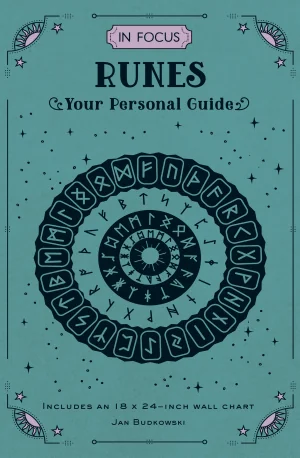
Jan Budkowski's 'In Focus Runes' offers a commendably straightforward introduction to the Elder Futhark. Unlike many texts that become lost in speculative lore or overly complex magical systems, Budkowski presents each rune with a clarity that is refreshing for newcomers. The strength of this book lies in its systematic approach, detailing the divinatory meanings and practical applications without unnecessary embellishment. However, this very directness can sometimes feel stark; a reader seeking the rich historical and mythological context that often accompanies rune study might find it somewhat lean in that regard. A particularly effective section is the breakdown of Fehu, which clearly illustrates the book's method of linking the symbol's core meaning to its divinatory significance. Ultimately, 'In Focus Runes' succeeds as a functional primer for those who want to learn rune meanings and basic interpretation techniques quickly and efficiently.
📝 Description
78
Published in 2021, Jan Budkowski's 'In Focus Runes' details the 24 runes of the Elder Futhark for divination and personal insight.
This book examines the Elder Futhark, the oldest runic alphabet, presenting its runes as tools for divination and self-reflection. Budkowski explains the individual meanings of each of the 24 runes, offering guidance for their use in readings and as subjects for contemplation. The author aims to make these ancient markings understandable, providing a clear method for grasping their specific meanings and interconnected significance.
'In Focus Runes' is written for those beginning their study of runes. It suits newcomers to divination or individuals familiar with other symbolic systems like Tarot. The book is suitable for readers who seek direct explanations of symbolic practices, prioritizing practical use and clear instruction over extensive historical detail. Those interested in Germanic, Norse, and Anglo-Saxon history will find its specific focus on the Elder Futhark beneficial.
The runes originated in Germanic Europe around the 2nd century CE, used for inscriptions and ritual. This book places the Elder Futhark within that historical line, while also acknowledging its modern revival and use in occult and Neopagan practices. Budkowski engages with contemporary runic traditions, focusing on the practical application of the runes for divination and insight.
💡 Why Read This Book?
• Gain a clear, actionable understanding of each of the 24 Elder Futhark runes, as presented in Budkowski's systematic guide, enabling you to begin practical divination work. • Learn specific methods for interpreting rune casts, moving beyond single-rune meanings to understand the interplay of symbols as outlined in the book's reading sections. • Explore the practical application of runes for personal reflection and guidance, moving from theoretical knowledge to tangible self-inquiry as encouraged by the book's focus on symbolic correspondence.
⭐ Reader Reviews
Honest opinions from readers who have explored this book.
❓ Frequently Asked Questions
What is the Elder Futhark alphabet discussed in 'In Focus Runes'?
The Elder Futhark is the oldest known runic alphabet, comprising 24 symbols used by Germanic tribes from approximately the 2nd to 8th centuries CE. 'In Focus Runes' details each of these symbols for divination and symbolic study.
When was 'In Focus Runes' first published?
'In Focus Runes' by Jan Budkowski was first published on December 14, 2021, making it a contemporary guide to ancient runic practices.
Does the book cover modern interpretations of runes?
While focusing on the historical Elder Futhark, the book presents interpretations relevant for contemporary divination and personal insight, bridging ancient symbolism with modern application.
Is this book suitable for absolute beginners in rune reading?
Yes, the book is designed as a go-to reference for beginners, offering clear explanations and a structured approach to understanding and using the runes.
What are the main subjects covered in 'In Focus Runes'?
The book covers the individual meanings of the 24 Elder Futhark runes, their historical context, and practical methods for divination and symbolic interpretation.
Who is the author of 'In Focus Runes'?
The author is Jan Budkowski. The book was first published in late 2021.
🔮 Key Themes & Symbolism
Elder Futhark Symbolism
The central theme is the detailed exploration of the 24 runes comprising the Elder Futhark alphabet. Budkowski meticulously breaks down each symbol, such as Ansuz representing divine communication or Gebo signifying partnership and exchange. The work emphasizes understanding the inherent meaning, historical associations, and divinatory significance of these ancient Germanic characters, presenting them as a cohesive system for gaining foresight and self-knowledge. It moves beyond simple memorization to encourage a deeper connection with the archetypal energies each rune embodies.
Runic Divination Practices
This theme focuses on the practical application of runes for divination. The book guides readers on how to interpret rune casts, considering both individual rune meanings and their interplay within a spread. It addresses the process of casting runes, suggesting methods for drawing and laying them out to receive guidance on specific questions. The emphasis is on using runes as a tool for introspection and understanding the flow of 'wyrd' or fate, offering a structured approach to this ancient art.
Historical and Cultural Roots
While primarily a practical guide, 'In Focus Runes' acknowledges the historical origins of the runes. It situates the Elder Futhark within the context of early Germanic cultures, noting their use in inscriptions and potentially for magical purposes. The work touches upon the lineage of these symbols, connecting them to a broader Indo-European cultural sphere. Understanding these roots is presented as integral to a more profound engagement with the runes' symbolic power and their enduring presence in esoteric traditions.
Personal Insight and Guidance
A core objective of the book is to empower readers to use runes for personal growth and guidance. Each rune's interpretation is framed not just for fortune-telling, but for self-reflection, highlighting aspects of life such as personal strength (Uruz), protection (Algiz), or transformation (Sowilo). The book encourages readers to engage with the runes' messages to better understand their own challenges, potentials, and life path, fostering a more conscious and intentional existence through symbolic dialogue.
💬 Memorable Quotes
Direct passages from the work, attributed to the author.
“Fehu represents wealth, both material and spiritual.”
— This concise statement captures the dual nature of the first rune, Fehu. It suggests that true wealth is not solely about possessions but also encompasses inner abundance, prosperity, and the successful completion of endeavors.
“Uruz embodies primal, untamed strength.”
— This highlights the raw, potent energy associated with the Uruz rune. It speaks to the fundamental life force, the wild power within nature and the individual that must be respected and understood, not necessarily controlled.
“Gebo signifies gifts, partnership, and balance.”
— This interpretation points to the rune Gebo's core meaning of reciprocity and connection. It emphasizes that true giving and receiving require balance, and that all relationships, whether personal or professional, thrive on mutual respect and exchange.
“Sowilo is the rune of the sun, victory, and wholeness.”
— This signifies the life-affirming and triumphant energy of Sowilo. It suggests clarity, success achieved through inner power, and the integration of all aspects of the self into a unified, powerful whole.
“Algiz offers divine protection and guidance.”
— This conveys the protective and spiritual aspect of the Algiz rune. It suggests a connection to higher forces or intuition that serves as a shield and a source of wisdom, warning of danger and guiding toward safety.
🌙 Esoteric Significance
Tradition
While not explicitly tied to a single lineage like Kabbalah or Hermeticism, 'In Focus Runes' engages with the Germanic esoteric tradition. This tradition, rooted in the mythology and cosmology of the Norse and Anglo-Saxon peoples, views runes as sacred symbols imbued with magical power and divine insight. The book fits within this framework by presenting the Elder Futhark as a system for divination and personal development, aligning with modern practitioners who draw upon ancient Germanic spiritual practices for guidance and self-understanding.
Symbolism
Key symbols include Fehu, representing wealth and abundance, often linked to the primordial cow in Norse myth, signifying primal sustenance. Uruz embodies raw power and the untamed life force, connected to the aurochs, a now-extinct wild ox. Sowilo, the sun rune, stands for wholeness, victory, and the life-giving energy of the sun, representing illumination and success. These symbols are not merely letters but archetypal forces used to access deeper layers of consciousness and understand cosmic principles.
Modern Relevance
Contemporary practitioners of Heathenry, Asatru, and various forms of Neopaganism frequently utilize the Elder Futhark for divination, meditation, and magical workings. Budkowski's work serves as a practical manual for these groups and for individuals exploring Western esotericism outside of the more common Tarot or astrological systems. Thinkers and writers focused on Norse mythology, Germanic folklore, and practical occultism find in such guides accessible pathways to engaging with these ancient symbols in a meaningful, modern context.
👥 Who Should Read This Book
• Beginners interested in divination systems who seek a structured, easy-to-understand introduction to rune meanings and their application. • Students of Germanic mythology and history looking to connect with the practical, symbolic uses of the Elder Futhark beyond academic study. • Existing practitioners of esoteric arts who wish to broaden their toolkit by incorporating a foundational guide to runic interpretation and divination.
📜 Historical Context
The Elder Futhark, the runic alphabet detailed in Jan Budkowski's 'In Focus Runes,' emerged in Germanic Europe around the 2nd century CE. Its origins are debated, with influences likely stemming from North Italic alphabets. For centuries, these symbols were carved onto stone, wood, and metal, serving practical, memorial, and possibly magical functions. The revival and popularization of rune divination intensified in the late 19th and early 20th centuries, a period marked by burgeoning interest in Germanic mythology and esoteric practices, notably championed by figures like Guido von List. This era saw a divergence from purely historical study towards occult applications. While Budkowski’s 2021 work engages with this ongoing tradition, it stands apart from more academically dense or highly ritualistic modern interpretations, offering a focused, accessible guide. Its publication in 2021 places it within a contemporary landscape where rune studies coexist with other divination systems, such as Tarot, and within Neopagan and Germanic Reconstructionist spiritual paths.
📔 Journal Prompts
The meaning of Ansuz as divine inspiration.
Interpreting the interplay of Fehu and Uruz in a personal reading.
Reflecting on the protective qualities of Algiz.
The symbolic representation of Sowilo in your current endeavors.
Connecting Gebo's concept of balance to a recent relationship.
🗂️ Glossary
Elder Futhark
The oldest known runic alphabet, consisting of 24 symbols historically used by Germanic peoples for inscriptions and divination.
Rune
A character from an ancient alphabet, particularly the Germanic alphabet, often believed to possess symbolic or magical significance.
Divination
The practice of seeking knowledge of the future or the unknown by supernatural means, such as interpreting runes.
Futhark
The name given to the runic alphabets, derived from the first six letters: F, U, Th, A, R, K.
Wyrd
An Old English and Old Norse concept referring to fate, destiny, or the interconnected web of events that shape one's life.
Casting
The act of throwing or laying out runes in a specific pattern to gain insight or answer a question during a divination session.
Interpretation
The process of understanding and explaining the meaning of runes within a divination spread, considering individual symbols and their relationships.
This book appears in 1 collection
🔮 Readers Also Liked
Browse all →









From the “Divination” Collection
View all →






More Free Occult Philosophy Books
View all →