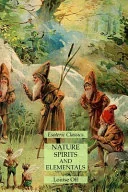
Nature Spirits and Elementals
 78
78

Nature Spirits and Elementals
Louise Off’s "Nature Spirits and Elementals" provides a clear, if somewhat dry, exposition on a fascinating corner of esoteric lore. The strength of the work lies in its systematic breakdown of elemental classes, directly referencing historical figures like Paracelsus and his foundational ideas from "Liber de Nymphis, sylphis, pygmaeis et salamandris et de caeteris generationibus."
A notable limitation is the lack of engagement with more contemporary interpretations or practical applications of elemental magic, keeping it firmly rooted in historical Theosophical perspectives. The section detailing the supposed influence of human thought on these beings, while historically accurate to the source material, feels somewhat abstract without further elaboration or practical examples.
Read more ↓
Ultimately, "Nature Spirits and Elementals" serves as a valuable, albeit academic, primer on the classification and historical conceptualization of elemental beings within occult traditions.
📝 Description
78
Louise Off's 2022 book categorizes and describes elemental beings from esoteric traditions.
Nature Spirits and Elementals, published in 2022, examines the elemental beings central to many esoteric traditions. The book moves beyond folklore, analyzing the defining characteristics and historical presence of these entities in occult literature. It systematically categorizes and describes them, drawing connections to earlier Theosophical thought. Off's work is suited for those interested in Western occultism and theosophy, particularly readers seeking to understand the roles attributed to earth, air, water, and fire spirits. It also serves those researching the history of magical thought and the influence of figures like Paracelsus.
The book discusses the four classical elements—earth, air, water, and fire—and the distinct classes of spirits associated with each: gnomes, sylphs, undines, and salamanders. Off investigates their perceived natures, hierarchies, and interactions with the human world. It considers how these beings function as vital forces in nature and how human consciousness is believed to influence them.
The exploration of elementals has deep roots in alchemy and magic, notably detailed by the 16th-century alchemist Paracelsus. Helena Blavatsky and Theosophy in the late 19th century further integrated these concepts into a broader spiritual cosmology. Off's work fits within this tradition, viewing elementals as integral to natural forces and Earth's evolutionary processes, building upon established Theosophical ideas.
💡 Why Read This Book?
• Understand the distinct characteristics and lore of gnomes, sylphs, undines, and salamanders, as outlined by Louise Off's systematic approach, offering a foundational understanding beyond generic folklore. • Explore the historical lineage of elemental studies, tracing concepts back to Paracelsus's seminal 16th-century writings and their later integration into Theosophy. • Grasp the Theosophical perspective on the role of these beings as vital forces in nature and their perceived interaction with human consciousness, providing a unique esoteric worldview.
⭐ Reader Reviews
Honest opinions from readers who have explored this book.
❓ Frequently Asked Questions
What are the four classical elemental spirits discussed by Louise Off?
Louise Off's work details the gnomes of earth, the sylphs of air, the undines of water, and the salamanders of fire, drawing from historical esoteric traditions and alchemical writings.
Where does the concept of elementals originate?
The concept of elemental beings is extensively explored in the writings of the 16th-century alchemist Paracelsus, who is a key figure referenced in Louise Off's research.
Is this book suitable for beginners in occult studies?
Yes, the book provides a structured introduction to elemental spirits, making it suitable for beginners interested in Theosophy and historical occult concepts.
What is the connection between elementals and Theosophy?
Theosophy, particularly in the late 19th century, integrated and expanded upon earlier ideas of elementals, viewing them as integral to the planet's spiritual and evolutionary processes, a perspective explored in Off's work.
Does the book offer practical exercises for working with elementals?
The book primarily focuses on the theoretical and historical aspects of nature spirits and elementals, rather than providing direct practical exercises for engagement.
When was 'Nature Spirits and Elementals' first published?
Louise Off's "Nature Spirits and Elementals" was first published on February 8, 2022.
🔮 Key Themes & Symbolism
Classification of Elementals
The work meticulously categorizes nature spirits based on the four classical elements: gnomes for earth, sylphs for air, undines for water, and salamanders for fire. Off examines the defining characteristics attributed to each class, drawing from historical texts and esoteric traditions. This systematic approach allows readers to understand the perceived hierarchy, roles, and specific natures of these beings within the occult framework.
Historical Roots of Elemental Lore
Louise Off traces the origins of elemental studies back to the alchemical era, with a particular focus on the contributions of Paracelsus. The book explores how his 16th-century concepts of elemental peoples evolved and were later incorporated into broader esoteric movements like Theosophy, which viewed these entities as fundamental aspects of planetary life and evolution.
Theosophical Perspective on Nature Spirits
Central to Off's exploration is the Theosophical interpretation of elementals. The book examines how these spirits are seen not merely as folklore but as vital forces or consciousness centers within the natural world. It discusses their perceived interaction with human thought and their role in the grander cosmic scheme as understood by Theosophical philosophy.
Human-Elemental Interaction
A significant theme is the perceived relationship between humanity and elemental beings. The text considers how human consciousness, actions, and spiritual development are believed to influence these entities and, in turn, how elementals might affect the physical and subtle realms. This explores the reciprocal connection within the esoteric worldview.
💬 Memorable Quotes
Direct passages from the work, attributed to the author.
“Gnomes of earth, sylphs of air, undines of water, and salamanders of fire.”
— This concise phrase expresses the fundamental categorization of elemental beings that Louise Off explores, serving as a primary framework for understanding their distinct natures and associations with the classical elements.
“Examining lore dating back to the alchemist Paracelsus.”
— This highlights the historical depth of the subject matter, grounding Off's modern exploration in the foundational alchemical and magical traditions of the West, particularly the influential work of Paracelsus on elemental beings.
“What role do these beings play in the world?”
— This question points to the core inquiry of the book: understanding the function and purpose attributed to nature spirits and elementals within the broader cosmic and terrestrial systems from an esoteric viewpoint.
“How are we involved?”
— This prompts reflection on the human connection to the elemental world, suggesting a reciprocal relationship and the potential impact of human consciousness and actions on these spiritual entities and the environment.
“Louise Off was a Theosophical author.”
— This contextualizes the author's perspective, indicating that the book's approach to nature spirits and elementals is likely framed within the philosophical and cosmological system of Theosophy.
🌙 Esoteric Significance
Tradition
This work is firmly situated within the Theosophical tradition, which itself draws heavily from Hermeticism, Neoplatonism, and Eastern philosophies. Off's approach aligns with Theosophy's goal of understanding the spiritual hierarchies and evolutionary processes of the cosmos. It interprets elemental beings not as mere superstitions but as distinct classes of entities integral to the Earth's life force and its ongoing spiritual development, consistent with Theosophical cosmology.
Symbolism
The primary symbolism revolves around the four classical elements: Earth (Gnomes), Air (Sylphs), Water (Undines), and Fire (Salamanders). Each element represents not only a physical substance but also a distinct energetic quality and a corresponding class of spiritual beings. These elemental symbols are potent motifs in alchemy and Western esotericism, representing fundamental forces and states of consciousness that govern both the outer world and inner spiritual work.
Modern Relevance
Contemporary practices in eco-spirituality, animism, and certain branches of Neo-Paganism and modern magical traditions often echo the concepts explored by Off. While direct citations might be scarce, the underlying idea of nature spirits as active forces in the environment and as potential allies or intelligences to be respected is a recurring theme in modern nature-based spiritualities and witchcraft practices.
👥 Who Should Read This Book
• Students of Theosophy seeking a structured overview of elemental beings within the Blavatskian framework. • Researchers of Western Esotericism interested in the historical development of elemental lore from Paracelsus to 20th-century occultism. • Individuals curious about the symbolic and spiritual roles attributed to the classical elements and their associated nature spirits in occult literature.
📜 Historical Context
Louise Off's "Nature Spirits and Elementals" emerges from a rich tradition of occult and esoteric inquiry that gained significant traction in the late 19th and early 20th centuries, particularly through the Theosophical Society. While the book was first published in 2022, its intellectual roots lie firmly in this earlier period. The exploration of elemental beings itself can be traced to figures like the 16th-century alchemist Paracelsus, whose "Liber de Nymphis, sylphis, pygmaeis et salamandris et de caeteris generationibus" is a foundational text. Theosophy, spearheaded by Helena Blavatsky, revitalized interest in these concepts, integrating them into a complex cosmology that posited elementals as vital forces in planetary evolution. This work appears within a lineage that includes other Theosophical writers and occultists who sought to explain the unseen forces of nature. While direct reception details for Off's specific 2022 publication are limited, the subject matter has long been a staple in esoteric circles, often discussed alongside Hermeticism and various forms of nature spirituality.
📔 Journal Prompts
The concept of Gnomes and their connection to the Earth.
Sylphs and the qualities of the Air element.
Undines as representations of Water's spiritual essence.
Salamanders and the transformative power of Fire.
The perceived interaction between human consciousness and elemental beings.
🗂️ Glossary
Elementals
Spiritual or semi-corporeal beings traditionally associated with one of the four classical elements: earth, air, water, and fire.
Gnomes
Elemental beings traditionally associated with the element of Earth, often depicted as small, terrestrial spirits.
Sylphs
Elemental beings traditionally associated with the element of Air, often described as ethereal or aerial spirits.
Undines
Elemental beings traditionally associated with the element of Water, often depicted as aquatic spirits.
Salamanders
Elemental beings traditionally associated with the element of Fire, often depicted as fiery or reptilian spirits.
Theosophy
A spiritual philosophy founded in the late 19th century, seeking to uncover the hidden universal truths underlying all religions and sciences, often incorporating concepts of elemental beings and cosmic evolution.
Paracelsus
A Swiss physician and alchemist of the Renaissance whose theories formed the basis of much esoteric thought, including his detailed descriptions of elemental peoples.
This book appears in 1 collection
🔮 Readers Also Liked
Browse all →








From the “Nature Spirits” Collection
View all →



More Free Occult Philosophy Books
View all →