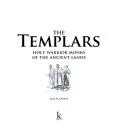
The Templars
 76
76

The Templars
Driver's The Templars approaches a well-trodden subject with a focus on the historical currents that both fueled the Order's ascent and precipitated its ruin. The author effectively details the Templars' administrative genius and their role as military shock troops during the Crusades, particularly their operations around the year 1147. The book's strength lies in its clear presentation of the documented rise and fall, avoiding the more fanciful speculations for much of its narrative. However, while acknowledging esoteric interpretations, the work could benefit from a deeper engagement with the primary esoteric sources that directly reference Templar lore, rather than relying solely on later interpretations. A passage detailing the confessions extracted under torture from Templars in Paris in 1307 starkly illustrates the brutal political realities behind the accusations. Driver’s work is a solid historical primer with an esoteric leaning, best suited for those seeking a grounded account of the Order's historical trajectory.
📝 Description
76
Jack M. Driver's 2007 book examines the Knights Templar's rise and fall.
Published in 2007, Jack M. Driver's book recounts the history of the Knights Templar. It traces their origins in the early 12th century through their abrupt end in the early 14th century. The work details the considerable financial and military influence the Templars held throughout Christendom and the Holy Land. It also covers the specific accusations that led to their suppression.
This book is suitable for those interested in medieval history, secret societies, and the complex relationship between religious orders and secular power. Readers curious about the origins of conspiracy theories concerning the Templars and their alleged ties to esoteric groups will find relevant information. It is also for students of Western esotericism wanting to understand a historical group that is frequently mythologized.
Driver places the Knights Templar within the larger context of the Crusades and the medieval Church. The book acknowledges the religious fervor of the era, the political maneuvering of European rulers, and the papal decrees that guided the order. Driver addresses the historical discussions about the Templars' supposed heresies and secret rites, subjects that have long captured the attention of academics and occult enthusiasts.
This book engages with the historical roots of Western esoteric traditions, particularly those that have mythologized the Knights Templar. It addresses the period's occult fascinations and the alleged secret knowledge or rituals attributed to the order. By examining the historical accusations and the subsequent impact on chivalric and mystical orders, Driver's work provides a factual counterpoint to later esoteric interpretations. The text acknowledges how the Templars' dissolution fueled enduring myths, which became a subject for later occult and secret society studies.
💡 Why Read This Book?
• Gain a foundational understanding of the Knights Templar's military and financial structures, including their established presence in key locations like Cyprus by the early 14th century, providing context for later myths. • Explore the specific accusations of heresy and the ritualistic practices attributed to the Templars, such as the veneration of an idol, which formed the basis for their prosecution. • Understand the political and religious climate of the early 14th century that enabled King Philip IV of France to orchestrate the Templars' downfall, leading to the Council of Vienne in 1312.
⭐ Reader Reviews
Honest opinions from readers who have explored this book.
❓ Frequently Asked Questions
When were the Knights Templar officially dissolved?
The Knights Templar were officially dissolved by papal bull in 1312 at the Council of Vienne, following their arrest and widespread accusations in 1307.
What was the primary role of the Knights Templar?
Their primary role evolved from protecting pilgrims in the Holy Land following the First Crusade to becoming a powerful military force and international financial institution.
What are some common esoteric interpretations of the Templars?
Common esoteric interpretations link the Templars to Gnosticism, Kabbalah, Freemasonry, and the Holy Grail, often suggesting they guarded secret knowledge or relics.
Who was responsible for the suppression of the Templars?
King Philip IV of France, heavily indebted to the Order, was the primary instigator, pressuring Pope Clement V to dissolve the Templars and seize their assets.
Did the Templars have a written rule?
Yes, the Templars followed a monastic rule, a Latin Rule (Regula Pauperum Commilitonum Templi Salomonici), which outlined their vows and daily life.
What is the significance of Baphomet in relation to the Templars?
Baphomet was an effigy or idol that the Templars were accused of worshipping during their trials, though its true nature and origin remain debated by historians and occultists.
🔮 Key Themes & Symbolism
Military and Financial Power
The work details the Knights Templar's evolution from a small group of knights in Jerusalem around 1119 to a formidable military order with vast holdings across Europe and the Levant. It highlights their innovative banking system, facilitating the transfer of funds for crusaders and royalty, a sophisticated operation for the 12th and 13th centuries. This economic clout, coupled with their martial prowess, generated envy and suspicion, contributing to their eventual downfall.
Accusations and Heresy
A significant portion of the book addresses the charges brought against the Templars, including blasphemy, idolatry (specifically regarding the head known as Baphomet), and homosexual practices. Driver examines how these accusations, often extracted under duress during the trials initiated in 1307, served the political agenda of King Philip IV of France. The concept of heresy was a powerful tool in medieval society, capable of dismantling even the most influential institutions.
Esoteric Legacy and Myth
Driver touches upon the enduring mystique surrounding the Templars after their dissolution. The book acknowledges how subsequent centuries have woven the Templars into various esoteric traditions, linking them to Freemasonry, the Holy Grail, and secret knowledge. It distinguishes between the historical order and the later mythological constructs that have captured the popular imagination for centuries.
Papal Authority and Political Intrigue
The narrative underscores the complex relationship between the Templars, the Papacy, and secular rulers. The order’s papal charter granted them significant autonomy, which became a point of contention. King Philip IV's ambition and the complicity of Pope Clement V, who moved the Papal court to Avignon, were crucial factors in the orchestrated suppression of the Templars in 1312.
💬 Memorable Quotes
Direct passages from the work, attributed to the author.
“The Templars were accused of spitting on the cross and denying Christ.”
— This refers to one of the most damning charges leveled against the Knights Templar during their trials, highlighting the religious accusations used to justify their persecution.
“Their network of commanderies spanned Europe, functioning as early banks.”
— This statement emphasizes the practical, administrative genius of the Templars, illustrating their significant role in medieval finance and logistics, far beyond their military function.
“King Philip IV sought to consolidate power by dismantling the Order.”
— This interpretation points to the political motivations behind the suppression of the Templars, suggesting that accusations of heresy were a pretext for Philip IV's financial and power-grabbing ambitions.
“The legend of the Templars' secret knowledge persisted long after their end.”
— This highlights the enduring fascination with the Templars as keepers of hidden wisdom, a theme that has fueled countless esoteric theories and fictional narratives throughout history.
“The Council of Vienne officially brought the Order to an end.”
— This references the specific historical event in 1312 where the Catholic Church formally dissolved the Knights Templar, marking the conclusion of their official existence.
🌙 Esoteric Significance
Tradition
The Templars are often positioned within a nebulous proto-esoteric or mystical tradition, sometimes linked to Gnosticism, Catharism, or pre-Christian mystery schools. While the historical order was officially a Catholic military monastic order, its rapid rise, unique privileges, and dramatic fall created fertile ground for later esoteric interpretations that sought hidden lineages and secret wisdom within its structure.
Symbolism
Key symbols explored include the double-headed eagle, often associated with sovereignty and ancient traditions, and the Baphomet, a figure central to the accusations of heresy, which has been reinterpreted by occultists like Eliphas Lévi. The cross, naturally, is paramount, but its meaning is often debated in relation to Templar rituals, extending beyond its standard Christian symbolism.
Modern Relevance
Contemporary esoteric practitioners and authors continue to draw inspiration from the Templar mythos. Masonic lodges, Rosicrucian orders, and various New Age spiritual groups often incorporate Templar symbolism and narratives into their teachings, viewing them as guardians of ancient mysteries or exemplars of a spiritual knighthood. The Templar narrative remains a persistent archetype in modern occultism.
👥 Who Should Read This Book
• History enthusiasts interested in the Crusades and medieval military orders, seeking a factual overview of the Templars' rise and fall. • Students of Western esotericism curious about the origins of conspiracy theories and secret society lore surrounding the Knights Templar. • Readers seeking to understand the political machinations of the early 14th century, particularly the interplay between monarchs, the Papacy, and powerful religious institutions.
📜 Historical Context
Published in 2007, Jack M. Driver's *The Templars* emerged in an era of continued public fascination with the Order, fueled by popular culture and ongoing esoteric speculation. This period saw numerous books and documentaries revisiting the Templars, often blending historical inquiry with speculative theories. The work engages with the legacy of earlier scholars like Charles Mills, whose 19th-century critiques were influential, and contemporary historical debates about the nature of heresy and papal power in the late Middle Ages. Driver's text arrived amidst a landscape where authors like Umberto Eco had already explored similar themes of historical conspiracy and secret societies in fiction. The book navigates the intellectual currents that view the Templars not just as a historical military order but as a potent symbol within Western esoteric traditions.
📔 Journal Prompts
The Templars' financial innovations prior to 1307.
Reflections on the Baphomet accusations and their symbolic weight.
The influence of King Philip IV on the Templars' suppression.
The Templars' monastic rule and its esoteric interpretations.
Investigating the Templars' presence in the Holy Land circa 1147.
🗂️ Glossary
Baphomet
An enigmatic idol or head that the Knights Templar were accused of worshipping during their trials in the early 14th century. Its true nature remains a subject of historical and occult debate.
Council of Vienne
The ecclesiastical council convened in 1311-1312 where Pope Clement V officially dissolved the Order of the Knights Templar by papal bull.
Commanderies
Estates or administrative centers owned by the Knights Templar across Europe, which served as residences, military bases, and crucial hubs for their financial operations.
Regula Pauperum Commilitonum Templi Salomonici
The Latin name for the Rule of the Poor Fellow-Soldiers of Christ and of the Temple of Solomon, the monastic code that governed the Knights Templar.
Philip IV of France
The King of France whose immense debts to the Templars and desire for their wealth and power were primary drivers behind their arrest and suppression starting in 1307.
Papal Bull
An official decree or proclamation issued by the Pope, carrying significant religious and legal authority within the Catholic Church.
Heresy
Belief or opinion contrary to orthodox religious doctrine. During the medieval period, accusations of heresy were often used as a political weapon.
This book appears in 1 collection
🔮 Readers Also Liked
Browse all →









From the “Templar Knights” Collection
View all →



More Free Occult Philosophy Books
View all →