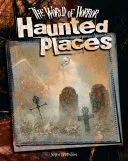
Haunted Places
 82
82

Haunted Places
Hamilton’s "Haunted Places" presents a catalog of spectral phenomena that leans heavily into folklore and legend. The strength of the work lies in its breadth, touching upon a wide array of reported hauntings from diverse regions. However, its primary limitation is a tendency towards the anecdotal, often presenting stories without rigorous critical examination. A particularly evocative section discusses the alleged haunting of the Tower of London, detailing centuries of reported spectral activity tied to royal figures and historical events. While engaging, the book could benefit from a deeper dive into the socio-historical factors that perpetuate these legends. It serves as a compendium of spectral lore, though critical analysis remains somewhat superficial.
📝 Description
82
John Hamilton's 2007 book examines spectral phenomena and folklore.
Published in 2007, John Hamilton's "Haunted Places" investigates tales of spectral phenomena and local folklore. The work compiles accounts of apparitions, unexplained events, and the presences often linked to sites marked by history or sorrow. Hamilton gathers stories that have become part of regional legends and public consciousness, drawing on diverse cultural traditions. This book will appeal to those interested in the paranormal, folklore, and the psychology behind belief in the supernatural. It is suited for readers who enjoy ghost stories, urban legends, and explorations of the unexplained. Anyone looking for a collection of documented hauntings and the cultural roots of these narratives will find it valuable.
The early 21st century saw a sustained public interest in the paranormal, often amplified by media and a growing curiosity about local histories. Hamilton's book appeared during a time when popular occult and ghost-hunting literature was common. It fits within a larger tradition of supernatural investigation, following in the vein of researchers whose work on haunted locations gained attention in the late 20th century. This created a ready audience for fresh examinations of such subjects.
Hamilton's work connects to a long-standing tradition of documenting and analyzing accounts of the supernatural. It follows in the footsteps of earlier paranormal investigators and folklorists who collected ghost stories and attempted to understand their origins. The book engages with concepts that have been part of spiritualist and occult discussions for centuries, examining how historical events and collective belief shape perceptions of hauntings. It sits within a genre that explores the boundaries of human perception and the possibility of phenomena beyond conventional scientific understanding.
💡 Why Read This Book?
• Gain an understanding of the cultural narratives surrounding specific haunted locations, such as the Tower of London, and the historical events that shaped these tales. • Learn to differentiate between folklore, legend, and purported eyewitness accounts of paranormal activity. • Explore the concept of residual hauntings and how past traumas are believed to manifest in present-day environments.
⭐ Reader Reviews
Honest opinions from readers who have explored this book.
❓ Frequently Asked Questions
What types of haunted places are covered in John Hamilton's book?
The book covers a range of haunted locations, including historical buildings like castles and prisons, as well as sites associated with significant historical events or tragedies, drawing from global folklore.
When was "Haunted Places" by John Hamilton first published?
John Hamilton's "Haunted Places" was first published on January 1, 2007.
Does the book offer scientific explanations for hauntings?
While the book explores phenomena often attributed to the supernatural, its focus is primarily on folklore, legends, and anecdotal accounts rather than providing scientific explanations.
Are the stories in "Haunted Places" based on eyewitness testimony?
Yes, the narratives often draw upon historical records, local legends, and purported eyewitness accounts passed down through generations or reported in various media.
What is the main focus of "Haunted Places"?
The book's main focus is to explore and document legendary and folkloric accounts of haunted places and the spectral entities associated with them.
Who is the author of "Haunted Places"?
The author of "Haunted Places" is John Hamilton.
🔮 Key Themes & Symbolism
Folklore and Spectral Legends
The work meticulously gathers and presents a diverse array of spectral legends from various cultures and historical periods. It highlights how specific locations become focal points for supernatural narratives, often tied to dramatic historical events or local myths. These stories, passed down through oral tradition and written accounts, form a significant part of cultural heritage, reflecting societal fears, beliefs, and the human fascination with the unknown beyond the veil of ordinary perception.
The Nature of Haunted Sites
Hamilton examines the characteristics that contribute to a location's reputation as 'haunted.' This includes analyzing the role of tragedy, violence, or unusual occurrences in imbuing a place with spectral energy. The book explores how the perception of a site's history directly influences the manifestation and interpretation of paranormal phenomena, blurring the lines between historical fact and supernatural embellishment.
Entities and Creatures of Darkness
Beyond disembodied spirits, the book touches upon the darker folklore associated with haunted places, including legends of monstrous entities and shadowy figures said to inhabit liminal spaces. These narratives often serve as cautionary tales or symbolic representations of primal fears, exploring the archetypal 'creatures that dwell in the darkness' that populate human imagination and mythology.
Belief and Perception
A subtle undercurrent in the book concerns the power of collective belief and individual perception in shaping experiences of the paranormal. Hamilton presents accounts that invite readers to consider how psychological factors, suggestion, and the desire to believe can influence interpretations of unexplained events, making the folklore of haunted places a reflection of both external phenomena and internal human psychology.
💬 Memorable Quotes
Direct passages from the work, attributed to the author.
“The creatures that dwell in the darkness.”
— This phrase points to the more primal and monstrous aspects of folklore explored in the book, suggesting entities that exist beyond typical ghost stories and tap into deeper, perhaps archetypal, fears.
“Folklore and legends of haunted places.”
— A concise summary of the book's subject matter, emphasizing its reliance on traditional stories and mythical accounts rather than purely empirical investigation.
“Exploring the spectral phenomena of historical sites.”
— This interpretation highlights the book's method of connecting paranormal accounts to specific historical contexts and geographical locations, grounding the supernatural in tangible settings.
💡 Key Ideas
Editorial paraphrase of the work's core concepts — not direct quotes.
Accounts of apparitions and unexplained occurrences tied to specific locations.
This paraphrase captures the essence of the book's content, focusing on the core elements of spectral phenomena reported at various sites, forming the basis of local legends.
The book examines the haunted places of legends.
This paraphrased concept emphasizes the focus on places whose notoriety stems from established stories and myths, rather than recently reported incidents.
🌙 Esoteric Significance
Tradition
While not explicitly tied to a single esoteric lineage, "Haunted Places" draws from the broad stream of Western folklore and occult traditions that have long explored the boundaries between the material and immaterial worlds. It touches upon themes common in spiritualism and ghost-lore studies, which have historically intersected with Hermeticism and other mystical paths seeking to understand unseen forces and entities.
Symbolism
The book frequently engages with the symbolism of darkness and shadow as representations of the unknown, the subconscious, and hidden entities. Locations themselves often become potent symbols – ancient castles representing the weight of history, abandoned asylums symbolizing societal neglect or psychological distress, and natural landscapes holding primal energies. These settings serve as archetypal backdrops for spectral encounters.
Modern Relevance
In contemporary esoteric circles, "Haunted Places" remains relevant for practitioners interested in psychogeography, the study of place-based energies, and the folkloric roots of paranormal belief. It informs modern ghost-hunting methodologies and discussions on residual energy, offering a rich source of historical narratives that inform current explorations of haunted sites and spirit communication.
👥 Who Should Read This Book
• Enthusiasts of paranormal folklore and urban legends seeking a broad overview of famous haunted locations and their associated stories. • Students of comparative mythology and cultural studies interested in how societies construct and perpetuate narratives of the supernatural. • Amateur investigators and readers of ghost stories looking for historical accounts and anecdotal evidence of spectral phenomena.
📜 Historical Context
Published in 2007, "Haunted Places" emerged during a period of heightened interest in paranormal investigation, heavily influenced by television shows and popular culture. This era saw a surge in literature dedicated to ghost stories and unexplained phenomena, building on a tradition established by earlier researchers like Charles Fort and Hans Holzer. Hamilton's work contributes to this ongoing exploration of the spectral, situating itself within a broad spectrum of occult and esoteric writing. It implicitly engages with the burgeoning field of psychogeography, which examines the mystical and emotional effects of landscapes. Unlike purely academic studies of folklore, Hamilton's approach leans towards narrative and anecdotal evidence, reflecting a popular appetite for uncanny tales that distinguish it from more critical folkloristic scholarship of the time.
📔 Journal Prompts
The spectral phenomena of the Tower of London and its historical context.
Creatures of darkness in folklore and their symbolic meanings.
Personal reflections on places that evoke a sense of unease or mystery.
The role of residual hauntings in contemporary ghost lore.
Analyzing the evolution of a single haunted place legend over time.
🗂️ Glossary
Residual Haunting
A type of haunting believed to be an energetic imprint or echo of past events, replaying like a recording without conscious intelligence or interaction.
Intelligent Haunting
A haunting characterized by discernible activity, such as moving objects, audible communication, or direct interaction with living persons, suggesting a conscious entity.
Apparition
The visual manifestation of a ghost or spirit, often described as a spectral figure or image appearing to the living.
Folklore
The traditional beliefs, customs, and stories of a community, passed through generations by word of mouth.
Legend
A traditional story, often popularly regarded as historical but unauthenticated, typically concerning a famous person or a time gone by.
Spectral Entity
A general term for any disembodied spirit, ghost, or supernatural being believed to inhabit or manifest in a particular location.
Psychogeography
The study of the specific psychological effects of the geographical environment on individuals or on society.