Taoism
 81
81

Taoism
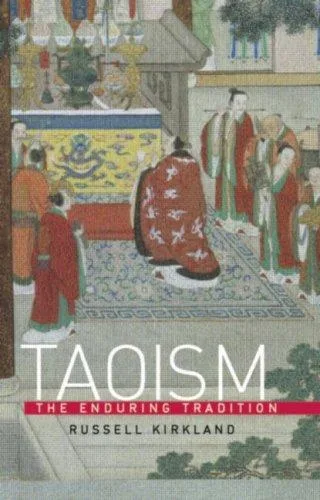
Kirkland’s "Taoism" presents a sober, academic dissection of a tradition often shrouded in mysticism. The book’s strength lies in its methodical approach, carefully distinguishing between philosophical Taoism and its later religious manifestations. A particular strength is the nuanced discussion of *wu wei*, moving beyond the common "do nothing" interpretation to its more active, responsive meaning. However, for readers seeking experiential insights or practical guidance, the rigorous academic tone can be a significant barrier. The text occasionally feels like a dense historical survey rather than an accessible gateway. The original publication in 2004 means some newer scholarship might not be integrated, but its foundational analysis remains solid. It’s an essential reference for the serious student, though less so for the casual seeker.
📝 Description
81
Russell Kirkland's 2010 "Taoism" examines the philosophical and religious traditions from ancient China.
Russell Kirkland's "Taoism" offers a scholarly analysis of the philosophical and religious traditions that began in ancient China. The book moves past simple explanations to cover the varied schools and historical developments that form Taoism. It aims to provide a thorough overview for anyone wanting to understand this significant spiritual and philosophical system more deeply.
The text is designed for students of comparative religion, philosophy, and East Asian studies. It will also interest scholars and practitioners concerned with the historical growth and main ideas of Taoist thought. Readers should have some background in academic study or a strong wish to engage with complex philosophical ideas.
Kirkland addresses the long and complex history of Taoism, tracing its beginnings to the Spring and Autumn period (771–476 BCE). The book places the development of Taoist thought within the context of other main Chinese philosophical movements, like Confucianism. It recognizes the textual and interpretive difficulties inherent in studying a tradition that spans many centuries, highlighting the changes in its practices and beliefs.
This work situates Taoism within the broader context of mystical and contemplative traditions originating in East Asia. It traces the historical development of Taoist thought, from its early philosophical roots to its later religious expressions. The book acknowledges the complexities and interpretive challenges in understanding a tradition that spans millennia, focusing on the evolution of its practices and beliefs, including concepts like *wu wei* and the pursuit of longevity.
💡 Why Read This Book?
• Gain a clear distinction between philosophical Taoism and religious Taoism, understanding their historical divergence since the Han Dynasty. • Comprehend the concept of *wu wei* beyond simple inaction, recognizing its role in responsive and effective living as discussed in the text. • Appreciate the evolution of Taoist cosmology, including its pantheon and rituals, by tracing developments from the Shang Dynasty to later periods.
⭐ Reader Reviews
Honest opinions from readers who have explored this book.
❓ Frequently Asked Questions
What is the primary philosophical concept explored in Russell Kirkland's Taoism?
The primary concept is the Tao, understood as the fundamental, ineffable principle that underlies all existence and guides the natural order of the universe. Kirkland explores its multifaceted interpretations throughout Taoist history.
When was Russell Kirkland's book on Taoism first published?
Russell Kirkland's "Taoism" was first published in 2004, offering a comprehensive academic overview of the tradition.
Does the book cover both philosophical and religious aspects of Taoism?
Yes, the book meticulously distinguishes between philosophical Taoism, focusing on texts like the Tao Te Ching, and religious Taoism, examining its later developments, deities, and practices.
What is the significance of 'wu wei' as presented in the book?
The book explains 'wu wei' not as passive idleness, but as effortless action or non-striving – acting in accordance with the natural flow of the Tao, achieving results with minimal force.
Is this book suitable for beginners interested in Taoism?
While comprehensive, the book's academic rigor makes it best suited for those with some background in philosophy or religious studies, or those committed to a deep, scholarly exploration of Taoism.
What historical periods does Kirkland's Taoism address?
Kirkland's work addresses periods from ancient China, including the Spring and Autumn period (771–476 BCE) and the Han Dynasty, through to later developments in Taoist thought and practice.
🔮 Key Themes & Symbolism
The Nature of the Tao
This work examines the central concept of the Tao, often translated as 'the Way.' Kirkland elucidates its portrayal not as a deity, but as the fundamental, indescribable principle of the universe. The book explores how various Taoist schools, from early philosophical interpretations to later religious developments, conceptualized this ultimate reality and its role in natural order and human conduct.
Wu Wei: Effortless Action
A core theme is *wu wei*, frequently misunderstood as mere inaction. Kirkland offers a scholarly interpretation, presenting it as a principle of non-striving and acting in accordance with natural spontaneity. This concept is explored through classical texts and its practical implications for governance, personal conduct, and spiritual cultivation within different Taoist traditions.
Immortality and Longevity
The pursuit of physical and spiritual immortality is a significant thread throughout Taoist history. The book addresses the diverse methods and beliefs associated with this goal, ranging from alchemical practices and dietary regimens to meditative techniques aimed at transcending the limitations of the mortal form. It contextualizes these pursuits within the broader spiritual range of China.
Cosmology and Deities
Kirkland's analysis extends to the complex cosmological frameworks and the pantheon of deities that developed within religious Taoism. The work discusses the interplay between philosophical principles and the emergence of a collection of celestial beings, spirits, and immortals, examining their roles in rituals, mythology, and the Taoist understanding of the cosmos.
💬 Memorable Quotes
Direct passages from the work, attributed to the author.
“The Tao that can be told is not the eternal Tao.”
— This foundational statement highlights the ineffable nature of the ultimate principle. It suggests that any attempt to define or articulate the Tao through language inevitably limits its boundless essence, pointing towards a reality beyond conceptual grasp.
“To know the origin is to know the end.”
— This aphorism suggests that understanding the fundamental source or beginning of things provides clarity on their ultimate destination or purpose. It implies a cyclical or unified view of existence, where knowledge of the genesis reveals the telos.
“The sage does not accumulate.”
— This interpretation of *wu wei* emphasizes detachment from material possessions and ego. The wise individual does not hoard or cling, recognizing that true fulfillment comes from alignment with the natural flow, not from accumulation.
“Govern a great nation as you would cook a small fish.”
— This pragmatic analogy illustrates the principle of *wu wei* in governance. It advises minimal interference and careful handling, suggesting that excessive meddling or force will only spoil the outcome, advocating for a light, responsive touch.
“The greatest imperfections seem like perfection.”
— This paradoxical statement suggests that true excellence or the ultimate state may appear flawed or incomplete to superficial observation. It points to a deeper, more subtle form of perfection that doesn't conform to conventional standards.
🌙 Esoteric Significance
Tradition
While Taoism itself is a distinct tradition with ancient roots in China, its philosophical and cosmological aspects have resonated within Western esoteric circles. Esoteric traditions often seek universal principles, and the Tao's concept of an underlying, ineffable force aligns with Hermetic or Neoplatonic ideas of the One or the Logos. Kirkland’s scholarly approach, by detailing concepts like *qi* (vital energy) and the pursuit of longevity, provides a bridge for those exploring comparative esoteric philosophies.
Symbolism
Key symbols explored include the Yin and Yang, representing the dynamic interplay of complementary opposites that form the basis of the manifest universe. The *bagua* (eight trigrams) are also significant, symbolizing fundamental principles of change and cosmic order used in divination and geomancy. Furthermore, the concept of the *Eight Immortals* represents the attainment of spiritual transcendence and longevity, embodying ideals within religious Taoism.
Modern Relevance
Contemporary Western esoteric practitioners and thinkers frequently draw upon Taoist principles, particularly *wu wei* and the concept of natural flow, in their personal development and spiritual practices. Modern mindfulness and somatic therapies also echo Taoist emphasis on embodied presence and alignment with natural rhythms. Philosophers and spiritual teachers exploring concepts of non-duality, interconnectedness, and spontaneous order find significant parallels and direct inspiration within Taoist thought as presented in works like Kirkland's.
👥 Who Should Read This Book
• Students of comparative religion and East Asian philosophy seeking a rigorous academic foundation in Taoist history and core doctrines. • Scholars of mysticism and esoteric traditions interested in understanding the origins and philosophical underpinnings of a major Eastern spiritual path. • Practitioners of martial arts, meditation, or alternative healing modalities looking to deepen their theoretical understanding of concepts like *qi* and *wu wei*.
📜 Historical Context
Published in 2004, Russell Kirkland's "Taoism" emerged during a period of continued academic engagement with East Asian religions and philosophies. The early 21st century saw ongoing scholarly efforts to differentiate between the historical development of philosophical Taoism, often associated with Laozi and Zhuangzi from the Warring States period (475–221 BCE), and the later, more institutionalized religious Taoism that flourished significantly during and after the Han Dynasty (206 BCE – 220 CE). Kirkland’s work contributes to this nuanced understanding, situating Taoism not as a monolithic entity but as a complex, evolving tradition. It implicitly engages with the legacy of foundational scholars like Holmes Welch, who had previously mapped much of the religious landscape. The book navigates the vast textual corpus and diverse practices, offering a structured overview for contemporary readers seeking to grasp Taoism's historical trajectory amidst other Chinese intellectual currents like Confucianism and Buddhism.
📔 Journal Prompts
The Tao's ineffability as described by Kirkland.
Reflections on the practice of *wu wei* in daily life.
The concept of natural spontaneity versus deliberate action.
Personal interpretation of the Yin and Yang symbolism.
Investigating the historical evolution of Taoist deities.
🗂️ Glossary
Tao (Dao)
The fundamental, ineffable principle of the universe; the 'Way' that underlies all existence and natural order. It is often considered the source and ultimate reality.
Wu Wei
Literally 'non-action' or 'effortless action.' It refers to acting in accordance with the natural flow of the Tao, without striving or forcing, achieving results spontaneously.
Qi (Chi)
Vital life force or energy that flows through all things. It is a fundamental concept in Taoist cosmology, health practices, and philosophy.
Yin and Yang
Two complementary, interdependent forces or principles that represent the dynamic duality of the universe. Yin is typically associated with passive, dark, and feminine qualities, while Yang is active, light, and masculine.
De (Te)
Virtue, power, or integrity. It is the manifestation of the Tao in individual beings and things, representing one's inherent nature or moral force.
Laozi (Lao Tzu)
A semi-legendary ancient Chinese philosopher credited with writing the Tao Te Ching and founding philosophical Taoism. His teachings emphasize simplicity, naturalness, and *wu wei*.
Zhuangzi (Chuang Tzu)
An influential Taoist philosopher whose work, the Zhuangzi, is known for its parables, wit, and exploration of themes like relativity, freedom, and the nature of reality.
🔮 Readers Also Liked
Browse all →





More by Russell Kirkland, Russell Kirkland
All books →
More Free Occult Philosophy Books
View all →