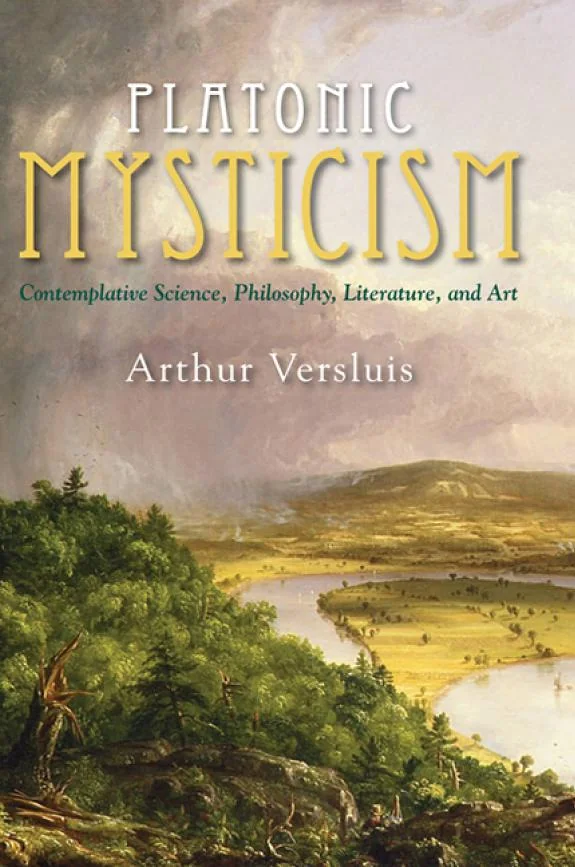
Platonic Mysticism
 82
82

Platonic Mysticism
Arthur Versluis’s *Platonic Mysticism* offers a robust counter-argument to contemporary trends that isolate mystical experience from its philosophical roots. By tracing a direct lineage from Plato through Neoplatonism and into later Western esoteric currents, Versluis compellingly argues that mysticism is, at its heart, a mode of Platonic inquiry. His meticulous scholarship is evident, particularly in his handling of early Christian and medieval mystics, demonstrating their inherent Platonic orientation. The book’s strength lies in its unwavering focus on philosophical coherence, a refreshing departure from purely phenomenological or psychological analyses. However, some readers might find the dense philosophical arguments challenging, and the consistent rejection of what Versluis terms "externalist approaches" could feel overly polemical at times. A particularly striking passage details how the Neoplatonic concept of *henosis* (union with the One) is not merely a subjective state but an intellectual apprehension rooted in the very structure of reality as conceived by Plato.
*Platonic Mysticism* provides a vital corrective for understanding Western esotericism.
📝 Description
82
Arthur Versluis's 2017 book argues that mysticism is fundamentally Platonic.
Platonic Mysticism, by Arthur Versluis, challenges common interpretations that separate mysticism from its philosophical roots. Versluis asserts that the core of mystical experience is inseparable from Platonic thought, tracing this connection through Western intellectual and religious history. He counters recent approaches that view mysticism as an external phenomenon or purely psychological event. Instead, he argues for a continuity with figures like Plato and Plotinus, positioning mysticism as an inherent mode of philosophical engagement.
The book's central argument is that "mysticism" is best understood not as a distinct category but as a vital aspect of philosophical inquiry deeply embedded within Platonism. Versluis emphasizes concepts such as the soul's ascent, the nature of the One, intellectual intuition, and the Forms. He contends that these Platonic ideas offer the necessary framework for understanding both historical and contemporary mystical phenomena, suggesting a persistent lineage from ancient Greece to modern esoteric thought.
This work places Platonic mysticism within the Western esoteric tradition, connecting ancient Greek philosophy to later mystical currents. Versluis argues against modern tendencies to psychologize or isolate mystical experiences, instead showing their deep roots in Neoplatonic and Platonic metaphysics. It engages with the long history of thought that views the soul's journey toward divine realities as a central spiritual aim, a perspective often found in Gnostic, Hermetic, and certain Christian mystical writings, though here specifically framed through Platonic concepts.
💡 Why Read This Book?
• Gain a historically grounded understanding of mysticism, directly linking its origins to Plato's philosophical framework rather than abstract spiritual experiences. • Comprehend how key Platonic concepts like the ascent of the soul and the apprehension of the One function as foundational elements in Western esoteric thought. • Grasp Versluis's critique of modern, non-philosophical interpretations of mysticism, offering a clearer lens through which to evaluate esoteric traditions since the publication of this work in 2017.
⭐ Reader Reviews
Honest opinions from readers who have explored this book.
❓ Frequently Asked Questions
What is the central argument of Arthur Versluis's Platonic Mysticism?
The book's core argument is that mysticism should not be viewed as a separate phenomenon but as an integral part of the Platonic philosophical tradition. Versluis posits that its historical and conceptual roots lie firmly within Platonism, shaping Western thought since antiquity.
How does Platonic Mysticism differ from other books on mysticism?
It distinguishes itself by rigorously rejecting "externalist" approaches that analyze mysticism without reference to its deep philosophical lineage, particularly Platonism. Versluis prioritizes philosophical coherence over purely psychological or sociological interpretations.
Which historical figures or movements does Platonic Mysticism engage with?
The work engages with figures and movements stemming from Plato and Plotinus, including early Christian thinkers, medieval mystics, and later Western esoteric traditions, demonstrating their consistent reliance on Platonic philosophical concepts.
What does Versluis mean by 'the ascent of the soul' in the context of Platonic mysticism?
In Platonic mysticism, the ascent of the soul refers to the Neoplatonic concept of the soul's journey or return towards the divine source (the One), guided by philosophical understanding and intellectual apprehension of higher realities.
Is Platonic Mysticism suitable for beginners in esoteric studies?
While accessible to those with a foundational understanding of philosophy and religious history, its rigorous academic approach and dense argumentation may present a challenge for absolute beginners in esoteric studies.
When was Platonic Mysticism first published?
Platonic Mysticism by Arthur Versluis was first published on August 16, 2017.
🔮 Key Themes & Symbolism
Mysticism as Platonic Philosophy
This theme asserts that mysticism is not an independent spiritual practice but an inherent dimension of Platonic philosophy. Versluis argues that concepts like the intellect's apprehension of the Forms and the soul's yearning for the One are the very bedrock of mystical experience. He contends that understanding figures like Plotinus is crucial, as their philosophical systems provide the intellectual architecture for what is often labeled 'mysticism', thereby refuting interpretations that seek mystical phenomena outside this philosophical lineage.
Rejection of Externalist Approaches
Versluis strongly critiques modern scholarly trends that analyze mysticism through external lenses, such as psychology, sociology, or comparative religion, without acknowledging its philosophical core. He labels these 'externalist' and argues they distort the historical understanding of mysticism. The book advocates for an internalist reading, prioritizing the philosophical coherence and intellectual content as understood by the mystics themselves, particularly within the Platonic framework established by figures like Plato and Plotinus.
Continuity of Western Esotericism
The work traces a direct line of continuity from ancient Platonic thought through medieval and Renaissance philosophy into the broader Western esoteric tradition. Versluis demonstrates how later esoteric movements and thinkers implicitly or explicitly drew upon Platonic and Neoplatonic ideas concerning the soul's journey, divine intellect, and the nature of ultimate reality. This highlights a consistent philosophical current running through centuries of Western speculative thought.
Intellectual Intuition and the One
Central to Versluis's argument is the Platonic concept of intellectual intuition – the mind's direct apprehension of truth or reality – and the Neoplatonic concept of 'the One' as the ultimate, transcendent source. He explains how the mystical impulse is fundamentally an intellectual striving to reconnect with this ultimate principle, moving beyond sensory experience and discursive reasoning towards a direct, intuitive grasp of being.
💬 Memorable Quotes
Direct passages from the work, attributed to the author.
“Mysticism must be properly understood as belonging to the great tradition of Platonism.”
— This central thesis frames the entire work, positioning mysticism not as a fringe phenomenon but as a core expression of Platonic philosophy's intellectual and spiritual trajectory throughout Western history.
“The work emphatically rejects externalist approaches to esoteric religion.”
— Versluis signals his critical stance against modern analyses that dissect mystical traditions using frameworks external to their philosophical content, such as psychology or sociology, advocating instead for an intrinsic philosophical understanding.
“Platonism provides the intellectual architecture for mysticism.”
— This concise statement captures the book's argument that the philosophical concepts and structures developed by Plato and his successors form the essential framework upon which mystical thought and practice are built.
“The ascent of the soul is a philosophical journey.”
— This interpretation emphasizes that the 'mystical ascent' is not merely an emotional or subjective experience but a rigorous intellectual and spiritual progression grounded in Platonic and Neoplatonic philosophical principles.
“Understanding Plotinus is key to understanding Western mysticism.”
— This highlights the key role of Plotinus and Neoplatonism in Versluis's argument, presenting his philosophy as the crucial bridge connecting ancient Platonic thought to later expressions of Western mysticism.
🌙 Esoteric Significance
Tradition
This work firmly anchors mysticism within the Western philosophical tradition, specifically Platonism and its Neoplatonic development. It aligns with Hermetic and Gnostic currents insofar as they often engage with Platonic ideas of ascent, hidden knowledge, and the divine intellect. Versluis departs from more recent Theosophical or purely anthroposophical interpretations by insisting on the philosophical rigor and intellectual content derived directly from Plato and his successors, rather than empirical or speculative additions.
Symbolism
The concept of 'the ascent of the soul' is a central symbolic motif, representing the Neoplatonic journey from the material world back to the transcendent One. Another key symbol is the 'intellectual intuition,' symbolizing the direct, non-discursive apprehension of higher realities or truths, bypassing sensory perception and rational deduction. These symbols are not merely decorative but represent core philosophical processes within the Platonic framework.
Modern Relevance
Versluis's work is relevant to contemporary thinkers and practitioners interested in revitalizing the philosophical foundations of esoteric traditions. It informs modern interpretations of Hermeticism, Gnosticism, and various forms of contemplative philosophy that seek to reconnect spiritual practice with intellectual discipline. Thinkers and groups focused on perennial philosophy or those seeking to understand the historical development of Western consciousness find his arguments essential for a rigorous, philosophically grounded approach to mysticism.
👥 Who Should Read This Book
• Scholars of Western Esotericism seeking a philosophically rigorous re-evaluation of mysticism's origins and development. • Students of philosophy and religious studies interested in the enduring influence of Plato and Plotinus on spiritual thought. • Practitioners of contemplative traditions who wish to understand the intellectual architecture underpinning their practices, moving beyond purely subjective experience.
📜 Historical Context
Published in 2017, Arthur Versluis's *Platonic Mysticism* entered a contemporary academic landscape where the study of esotericism was gaining traction, yet often viewed through lenses that separated spiritual experience from its philosophical underpinnings. Versluis directly confronts what he terms "externalist approaches," such as those prevalent in some fields of religious studies and psychology, which analyze mysticism without deep engagement with its philosophical lineage. His work champions an internalist perspective, emphasizing continuity with figures like Plato and Plotinus, whose ideas laid the groundwork for Western metaphysical and mystical thought. This contrasts with scholarship that might focus more on, for example, the sociological impact of religious movements or the psychological states of practitioners. By re-centering Platonism, Versluis positions his work within a long tradition of philosophical exegesis, implicitly engaging with scholars like Pierre Hadot who explored ancient philosophy as a way of life, yet specifically focusing on the *metaphysical* and *epistemological* structure of mystical experience.
📔 Journal Prompts
The Platonic tradition's view of the intellect's role in spiritual apprehension.
The concept of 'the One' as the ultimate source of reality.
How externalist approaches might obscure the philosophical core of mysticism.
The historical continuity of Platonic ideas in Western esoteric thought.
The Neoplatonic notion of the soul's ascent towards the divine.
🗂️ Glossary
Platonism
The philosophical system originating with Plato, emphasizing the existence of eternal, perfect Forms as the true reality, and the soul's capacity for intellectual apprehension of these Forms.
Neoplatonism
A school of philosophy that emerged in the 3rd century CE, heavily influenced by Plato, particularly the ideas of Plotinus, focusing on a hierarchical cosmology emanating from a transcendent 'One'.
The One
In Neoplatonism, the ultimate, transcendent, ineffable principle from which all reality emanates. It is beyond being and thought, the source of all existence.
Ascent of the Soul
The Neoplatonic concept of the soul's spiritual and intellectual journey, moving away from the material world towards union with the divine or the One.
Intellectual Intuition
A mode of direct knowing or apprehension by the intellect, bypassing discursive reasoning, allowing for immediate insight into higher truths or realities, central to Platonic thought.
Externalist Approaches
Interpretive frameworks for mysticism that rely on categories outside the tradition's own philosophical content, such as psychology, sociology, or anthropology, which Versluis argues distort historical understanding.
Henosis
A Greek term used in Neoplatonism to describe the process of mystical union with the divine or 'the One'.
This book appears in 1 collection
🔮 Readers Also Liked
Browse all →









From the “Western Esotericism” Collection
View all →








More Free Occult Philosophy Books
View all →