Handbook of Hindu Mythology
 73
73

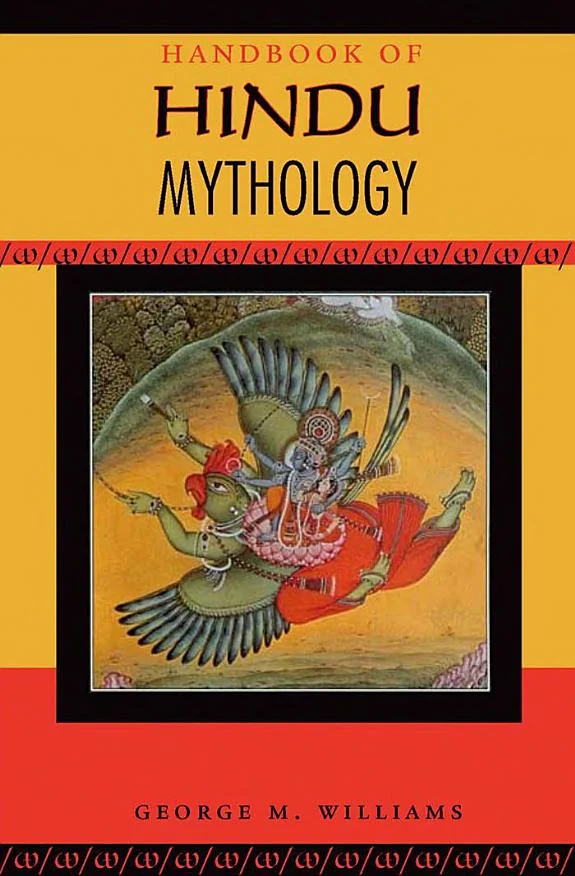
Handbook of Hindu Mythology
George M. Williams' Handbook of Hindu Mythology is a commendable effort to map a sprawling spiritual landscape. Its strength lies in its systematic approach, presenting a coherent structure to what can initially appear as an overwhelming array of gods, goddesses, and epic narratives. Williams navigates the complexities of figures like Indra and the philosophical debates surrounding the Upanishads with commendable clarity. However, the sheer volume of material means that some areas, particularly the regional variations and later syncretic developments, receive less attention than they might warrant. The section on the Vedic period, for instance, provides a solid foundation but could benefit from deeper engagement with the more speculative interpretations of early Indic rituals. Nonetheless, for an introductory text, it offers a balanced and informative perspective.
📝 Description
73
George M. Williams' Handbook of Hindu Mythology was published in 2008.
This handbook offers a thorough look at the Hindu pantheon and its stories. George M. Williams structured the book to be an easy introduction to a religion and culture that has existed for thousands of years. It covers the beginnings, changes, and various views of important gods, major poems, and core ideas in Hindu thought. The book clearly explains complex worldviews and myth cycles, making them accessible to those new to the subject. It is intended for students of religion, mythology fans, and anyone wanting to understand the spiritual and cultural roots of India and its people abroad. It is especially helpful for readers new to Hindu stories, giving them a clear way to understand terms like karma, dharma, and reincarnation. Experts and practitioners seeking a dependable resource will also find it valuable.
The study of Hindu mythology has a long academic history, with significant works appearing in the 19th century. Williams' handbook was released in the early 21st century, a time of growing global interest in Eastern religions and philosophies. This period saw many popular guides to different spiritual paths, alongside a need for academic accuracy. The book aims to provide a precise yet engaging overview, separate from purely devotional or uncritical popular accounts, while recognizing the living nature of the tradition.
While not strictly an esoteric text itself, this handbook situates Hindu mythology within a broad spiritual and philosophical tradition. It acknowledges the 'living nature of the tradition' and aims for an accurate account distinct from purely devotional works. Its focus on deities, epic sagas, and philosophical concepts like Brahman and Atman connects it to deeper streams of Indian spiritual thought, often explored in esoteric circles. The book provides a scholarly yet accessible entry to these complex ideas for a wider audience.
💡 Why Read This Book?
• Gain a structured understanding of deities like Brahma, Vishnu, and Shiva, and their roles within the cosmic order as detailed in the book's foundational chapters. • Grasp the significance of the Ramayana and Mahabharata, understanding their narrative arcs and moral frameworks, as presented through Williams' analysis of these foundational epics. • Explore the philosophical underpinnings of concepts such as karma and reincarnation, learning how these ideas have been interpreted and adapted over 3,000 years, a key focus of the handbook's historical overview.
⭐ Reader Reviews
Honest opinions from readers who have explored this book.
❓ Frequently Asked Questions
What is the primary focus of George M. Williams' Handbook of Hindu Mythology?
The book offers an informative introduction to the complex mythology of Hinduism, detailing its multifaceted deities, heroic tales, and arcane philosophies with a history of reinterpretations and adaptations over 3,000 years.
When was Handbook of Hindu Mythology first published?
Handbook of Hindu Mythology by George M. Williams was first published on March 27, 2008.
Does the book cover the Vedic period of Hinduism?
Yes, the handbook addresses the Vedic period, providing a foundational understanding of early Hindu myths and deities before delving into later developments and epic traditions.
Is this book suitable for absolute beginners to Hindu mythology?
Yes, the book is designed as an accessible introduction, systematically breaking down complex cosmologies and mythic cycles for newcomers to the subject.
What are some key deities discussed in Handbook of Hindu Mythology?
Key deities discussed include Brahma, Vishnu, Shiva, and Indra, among others, with explanations of their roles, iconography, and evolving narratives.
How does the book address the concept of reincarnation in Hinduism?
The handbook explains reincarnation (samsara) as a central philosophical concept within Hindu mythology, detailing its implications for karma and the cycle of rebirth.
🔮 Key Themes & Symbolism
The Trimurti and Divine Manifestations
The work meticulously details the Hindu concept of the Trimurti – Brahma the creator, Vishnu the preserver, and Shiva the destroyer. It explores how these supreme deities manifest in various avatars and forms, such as Rama and Krishna for Vishnu, or Durga and Kali for Shiva. The book examines the symbolic iconography and narrative functions of these divine figures, highlighting their roles in maintaining cosmic order and guiding humanity through cycles of creation and dissolution.
Epic Narratives and Moral Frameworks
Central to the handbook are the great Indian epics, the Ramayana and the Mahabharata. Williams presents these sprawling narratives not merely as ancient stories but as complex explorations of dharma (righteous duty), karma (action and consequence), and the human condition. The text dissects the heroic deeds of characters like Arjuna and Sita, and the philosophical dialogues, most notably the Bhagavad Gita within the Mahabharata, offering insights into the ethical dilemmas and spiritual quests that have shaped Hindu thought.
Cosmology and Cycles of Time
The book looks at the intricate Hindu cosmology, explaining concepts like Yugas (ages of the world) and Kalpas (cosmic cycles). It illustrates the cyclical nature of existence as understood in Hinduism, from the creation of the universe by Brahma to its eventual dissolution and recreation. Williams outlines the vast scales of time involved and the philosophical implications of living within these grand cosmic rhythms, emphasizing the interconnectedness of all beings and phenomena.
The Evolution of Deities and Beliefs
A significant aspect of the handbook is its tracing of the evolution of Hindu deities and theological concepts. It demonstrates how figures and ideas from the Vedic period, such as Indra and the concept of Brahman, were reinterpreted and integrated into later Puranic and epic traditions. The work highlights the adaptive capacity of Hinduism, showing how its myths and philosophies have been continuously reinterpreted and synthesized over 3,000 years to remain relevant.
💬 Memorable Quotes
Direct passages from the work, attributed to the author.
“Hinduism thrives in the modern world, with one billion followers.”
— This statement underscores the living, dynamic nature of Hindu traditions, contrasting it with many other ancient mythologies that are primarily studied through historical texts.
“The mythology of many-sided deities, lengthy heroic tales, and arcane philosophies.”
— This phrase captures the core elements of Hindu mythology that the book aims to elucidate: its complex divine pantheon, epic sagas, and profound philosophical underpinnings.
“A 3,000-year history of reinterpretations and adaptations.”
— This highlights the historical depth and continuous evolution of Hindu myths, emphasizing that they are not static but have been shaped by diverse cultural and philosophical influences over millennia.
“Offers a number of pathways by which to approach this dauntingly complex mythology.”
— This suggests the book provides varied entry points and analytical frameworks, making the vast subject of Hindu mythology more accessible to readers of different backgrounds and interests.
“Symbolic representations of love, karma, and reincarnation.”
— This points to the core philosophical and ethical concepts embedded within Hindu myths, indicating that the stories serve as vehicles for conveying profound spiritual and moral teachings.
🌙 Esoteric Significance
Tradition
While not strictly within a Western esoteric lineage like Hermeticism or Kabbalah, this work is foundational for understanding the philosophical and symbolic systems that inform many modern esoteric paths. Hinduism's concepts of Brahman, Atman, karma, and cyclical time offer parallels and influences to Theosophical thought and later New Age spiritualities, which often sought to synthesize Eastern and Western wisdom traditions.
Symbolism
Key symbols explored include the Om (Aum) mantra, representing the primordial sound of creation and the ultimate reality, Brahman. The lotus flower symbolizes purity, spiritual awakening, and divine beauty, often associated with deities like Lakshmi. The serpent (Naga) represents cosmic energy, eternity, and the subconscious, often depicted coiled around deities like Shiva or Vishnu, signifying their control over primal forces.
Modern Relevance
Contemporary spiritual seekers, yoga practitioners, and students of comparative mysticism frequently draw upon the foundational knowledge provided by texts like Williams' handbook. Its clear exposition of concepts like chakras (though not explicitly detailed in the blurb, it's a common element in Hindu traditions it covers) and the interconnectedness of the cosmos informs modern mindfulness practices and holistic wellness philosophies.
👥 Who Should Read This Book
• Students of comparative religion seeking a foundational text on one of the world's major mythologies. • Individuals curious about the spiritual and philosophical concepts underpinning Hindu practices like yoga and meditation. • Readers interested in the history of religious thought and the evolution of complex mythic systems over millennia.
📜 Historical Context
George M. Williams' Handbook of Hindu Mythology, published in 2008, arrived at a time of burgeoning global interest in Eastern spirituality, often fueled by the "New Age" movement and increased academic exchange. The study of Indian religions had a significant foundation laid by scholars like Sir William Jones in the late 18th century and later figures like Monier Monier-Williams in the 19th century. Williams' work engages with this scholarly lineage while addressing a contemporary audience seeking accessible yet accurate information. It emerged in contrast to both purely devotional accounts and earlier, sometimes Orientalist, academic analyses. The early 21st century saw a proliferation of comparative religion texts, and Williams' handbook aimed to provide a rigorous, structured introduction to a tradition that, unlike some Western mythologies, continues to be actively practiced by over a billion people.
📔 Journal Prompts
The concept of Brahman as the ultimate reality and its manifestations.
The moral and spiritual lessons presented in the Ramayana and Mahabharata.
The cyclical nature of time as depicted in Hindu cosmology (Yugas and Kalpas).
The symbolic meanings of key Hindu deities such as Vishnu or Shiva.
The interconnectedness of karma and reincarnation within Hindu belief systems.
🗂️ Glossary
Brahman
The ultimate, unchanging reality or absolute consciousness in Hinduism, understood as the source and sustainer of all existence. It is often described as infinite, eternal, and beyond human comprehension.
Atman
The individual soul or self, considered by many Hindu schools to be identical with Brahman. It is the eternal essence within each living being, distinct from the physical body and mind.
Karma
The principle of cause and effect, where actions (karma) in this life and past lives determine one's future circumstances, rebirths, and spiritual destiny. It is a fundamental concept governing moral responsibility.
Samsara
The cycle of birth, death, and rebirth; reincarnation. It is seen as a continuous process driven by karma and desire, from which liberation (moksha) is sought.
Moksha
Liberation or release from the cycle of samsara. It represents the ultimate spiritual goal in Hinduism, achieving union with Brahman or eternal peace.
Dharma
One's duty, righteousness, moral law, or religious obligation. It encompasses social order, individual conduct, and the inherent nature of things, guiding ethical living.
Avatar
A divine incarnation or manifestation of a deity on Earth, particularly Vishnu. Avatars appear to restore cosmic order, protect the righteous, and vanquish evil.
This book appears in 1 collection
🔮 Readers Also Liked
Browse all →









From the “Hinduism” Collection
View all →




More Free Occult Philosophy Books
View all →