Myths and Archetypes in Garo (A¿chik) Folk Narratives
 73
73

Myths and Archetypes in Garo (A¿chik) Folk Narratives
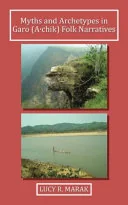
Lucy R. Marak’s study offers a valuable ethnographic account of Garo (A¿chik) folk narratives. The strength of the book lies in its direct engagement with community elders, presenting their stories with an admirable respect for their original context. The analysis, however, could benefit from a more explicit engagement with established archetypal theories, such as those proposed by Jung, to further illuminate the universal patterns within these specific myths. A passage discussing the origin of the Garo hills, for instance, highlights the community's deep connection to their landscape, but the broader theoretical implications of this connection remain somewhat underdeveloped. Ultimately, the book serves as a vital, if occasionally narrowly focused, archive of Garo oral traditions.
📝 Description
73
Lucy R. Marak's 2015 book details Garo folk narratives, examining their myths and archetypes.
This 2015 volume by Lucy R. Marak is an academic study of the oral traditions of the Garo people of Meghalaya, India. Marak meticulously documents and analyzes the core myths and archetypes that form the Garo worldview. The research draws directly from accounts shared by elders in remote Garo Hills communities. It offers insight into a rich cultural heritage passed down through generations of storytelling. The narratives examined explain natural phenomena like rivers, thunder, lightning, celestial bodies, and geological formations. These explanations carry symbolic weight, illuminating the Garo understanding of cosmic order and human existence. The archetypes presented reflect common human concerns viewed through a specific cultural perspective. The book's 2015 publication places it within a contemporary academic focus on decolonizing knowledge and preserving indigenous stories. It builds upon prior scholarship on South Asian oral traditions, aiming to create a detailed ethnography of Garo mythic structures. The work serves as a vital record, aiming to safeguard these narratives against potential loss due to modernization or cultural assimilation.
This book engages with the esoteric tradition by examining how a specific indigenous culture, the Garo (A'chik), constructs meaning through its foundational myths and archetypes. It illustrates how oral narratives act as a vehicle for transmitting a unique cosmology and spiritual understanding. The study shows how these stories inform a community's perception of the natural world and its place within it, a common concern in esoteric thought across various cultures. By documenting these narratives, the book preserves a distinct system of belief and symbolic interpretation.
💡 Why Read This Book?
• Gain an understanding of the A¿chik people's unique cosmology by examining their myths about natural phenomena, such as the explanations for thunder and lightning, as detailed in the book. • Discover specific archetypal figures and narrative structures prevalent in Garo folklore, moving beyond generalized mythological concepts to specific cultural expressions. • Appreciate the importance of oral tradition preservation through Lucy R. Marak's 2015 work, which documents stories from remote Garo Hills villages before potential loss.
⭐ Reader Reviews
Honest opinions from readers who have explored this book.
❓ Frequently Asked Questions
What are the primary subjects explored in Myths and Archetypes in Garo (A¿chik) Folk Narratives?
The book primarily explores myths and archetypes found in the oral traditions of the Garo (A¿chik) people. It focuses on narratives explaining natural phenomena like rivers, thunder, lightning, sun, stars, and hills, as told by elders in the Garo Hills.
Who is Lucy R. Marak and when was the book first published?
Lucy R. Marak is the author of Myths and Archetypes in Garo (A¿chik) Folk Narratives. The book was first published on August 6, 2015, contributing to the study of indigenous folklore.
What is the significance of the A¿chik people mentioned in the title?
A¿chik is another name for the Garo people. The title emphasizes that the book delves into the specific folk narratives and mythological structures of this particular ethnic group in Northeast India.
Where do the narratives in the book originate from?
The myths and archetypes documented in the book originate from oral traditions narrated by knowledgeable elder people from various villages located in the remote areas of the Garo Hills region.
What kind of explanations do Garo folk narratives offer?
Garo folk narratives offer imaginative and plausible explanations for the origins and workings of mysterious physical phenomena. These include explanations for rivers, clouds, thunder, lightning, the sun, stars, hills, and other natural formations.
What is the main goal of documenting these folk narratives?
The main goal is to provide insight into understanding the myths and archetypes that form the cultural bedrock of the Garo people. It serves to preserve and analyze these oral traditions for academic and cultural appreciation.
🔮 Key Themes & Symbolism
Cosmic Explanations in Nature
The book details how Garo elders have historically interpreted natural phenomena through mythic narratives. These stories provide imaginative frameworks for understanding the origins and behaviors of elements like rivers, thunder, and stars. This theme highlights the Garo worldview's deep integration with the natural environment, where physical events are imbued with symbolic and narrative meaning, reflecting a holistic approach to existence.
Archetypes of the Garo Identity
Central to the work are the recurring archetypes that shape the collective consciousness of the A¿chik people. These archetypal figures and motifs, embedded within folk tales, reflect fundamental human experiences and social structures through a distinct cultural lens. Examining these archetypes offers insight into the values, beliefs, and historical consciousness of the Garo community, particularly as passed down through oral tradition.
Oral Tradition as Cultural Repository
This theme underscores the critical role of oral storytelling in preserving Garo culture and knowledge. The book emphasizes how narratives collected from elders in remote areas serve as a vital archive. It showcases the power of spoken word to transmit complex cosmological ideas, historical memory, and ethical guidance across generations, particularly in the face of modernization.
Mythic Geography of Garo Hills
The narratives often connect directly to the specific field of the Garo Hills. This theme explores how geographical features—rivers, mountains, and natural formations—become characters or foundational elements within the myths. It reveals a symbiotic relationship between the land and the stories, where the physical environment is not just a setting but an active participant in the cultural imagination.
💬 Memorable Quotes
Direct passages from the work, attributed to the author.
“The A¿chik have woven myths and archetypes around... the rivers, the clouds, the thunder, the lightning, the sun and the stars, the hills, and other natural formations.”
— This highlights the book's focus on the specific cosmological elements central to Garo folklore, demonstrating how their worldview is intrinsically linked to their immediate physical surroundings.
“Insights into understanding myths and archetypes narrated orally by the most knowledgeable old people.”
— This points to the primary methodology and source of the book: the direct collection and analysis of traditional knowledge from elder Garo storytellers.
“The book draws from tales narrated in different villages in the far-flung areas of Garo Hills.”
— This emphasizes the ethnographic scope of the research, indicating a commitment to capturing a diverse range of narratives from geographically dispersed communities within the Garo region.
“Myths offer explanations of their origins.”
— A concise summary of the function of the myths discussed, illustrating their role in providing foundational narratives for the Garo understanding of existence and the cosmos.
💡 Key Ideas
Editorial paraphrase of the work's core concepts — not direct quotes.
Narratives woven around interesting and mysterious physical phenomena give plausible and imaginative explanations.
This paraphrased concept captures the essence of the book's subject matter: the Garo people's use of storytelling to rationalize and understand the workings of the natural world through myth.
🌙 Esoteric Significance
Tradition
While not explicitly aligning with a Western esoteric lineage like Hermeticism or Kabbalah, the work taps into universal animistic and shamanistic traditions found globally. The Garo myths, in their personification of natural forces and belief in interconnectedness between the physical and spiritual realms, echo themes present in Indigenous American, Siberian, and Australian Aboriginal cosmologies. It represents a form of 'folk esoteric' practice, where spiritual understanding is embedded within cultural narrative rather than codified doctrine.
Symbolism
Key symbols include the rivers, which often represent life force, journeys, and boundaries between worlds; the thunder and lightning, symbolizing powerful divine intervention, change, or judgment; and the hills, embodying stability, ancestral origins, and sacred spaces. These natural elements function as potent archetypal symbols, communicating complex spiritual and cosmological concepts within the Garo cultural framework.
Modern Relevance
Contemporary indigenous rights movements and ecocritical studies can draw upon Marak’s work to understand the deep spiritual connection between communities and their land, as articulated through myth. Anthropologists and comparative mythologists continue to find value in such detailed case studies for understanding recurring archetypal patterns in diverse cultural contexts. Furthermore, scholars of consciousness studies might explore how these narrative structures shape collective and individual perception.
👥 Who Should Read This Book
['• Anthropologists and ethnographers studying Southeast Asian cultures, who will find a detailed ethnographic account of Garo belief systems and narrative practices.', '• Comparative mythologists seeking to analyze universal archetypes within specific, under-documented cultural contexts, providing fresh material for cross-cultural comparison.', '• Readers interested in indigenous cosmologies and the relationship between language, myth, and the natural environment, offering unique perspectives from the Garo Hills.']
📜 Historical Context
Published in 2015, Lucy R. Marak's work enters the field of South Asian ethnography and folklore studies at a time when interest in indigenous knowledge systems was growing, albeit with a strong emphasis on post-colonial critiques. This period saw scholars like Philip Lutgendorf examining Indian popular culture and its roots, while others focused on the preservation of oral traditions threatened by globalization. Marak’s book contributes to this by documenting the specific mythic structures of the Garo people, a community in Northeast India whose traditions might otherwise be overlooked in broader studies of Indian subcontinent folklore. Its focus on a specific tribal group aligns with a trend towards micro-histories and detailed cultural ethnographies, moving away from generalized accounts. While not directly engaging with a specific contemporary controversy or a widely known rival school of thought within Garo studies at the time of its publication, its meticulous archival approach serves as a counterpoint to more theoretical or comparative works, grounding analysis in primary narrative material.
📔 Journal Prompts
The role of rivers as symbols of life force and boundaries in Garo myth.
Explanations for thunder and lightning as divine communication.
The significance of hills as ancestral and sacred spaces in A¿chik narratives.
How oral traditions from remote Garo Hills villages preserve cultural identity.
Archetypal figures appearing in the folk narratives of the Garo people.
🗂️ Glossary
A¿chik
An indigenous name for the Garo people, an ethnic group primarily residing in the Garo Hills region of Meghalaya, India.
Garo Hills
A mountainous region in Meghalaya, Northeast India, and the traditional homeland of the Garo people, rich in natural formations that feature prominently in their folklore.
Myth
A traditional story, especially one concerning the early history of a people or explaining some natural or social phenomenon, and typically involving supernatural beings or events.
Archetype
A recurrent symbol or motif in literature, art, or mythology that is universally understood, representing fundamental human experiences or patterns.
Oral Tradition
The transmission of cultural information, stories, and history from one generation to another by word of mouth, a primary method for the Garo people.
Cosmology
The understanding of the origin, structure, and development of the universe, as explained through the myths and beliefs of a particular culture or people.
Folk Narrative
Stories originating from and characteristic of a particular culture or section of a community, often passed down orally.
This book appears in 1 collection
🔮 Readers Also Liked
Browse all →








From the “Archetypes” Collection
View all →





More Free Occult Philosophy Books
View all →