The Secret Wisdom of the Qabalah
 80
80

The Secret Wisdom of the Qabalah
J. F. C. Fuller's "The Secret Wisdom of The Qabalah" offers a structured approach to a notoriously complex subject. The author’s strength lies in systematically breaking down the intricate architecture of the Sephiroth, making the abstract concepts of divine emanation more accessible than many treatments. Fuller's explanation of the correspondences between the Sephiroth, the Hebrew alphabet, and the paths on the Tree of Life is particularly lucid. However, the work occasionally feels overly academic, at times sacrificing the visceral, experiential aspect that draws many to Kabbalah. A passage discussing the numerical value (Gematria) of divine names, while informative, could benefit from more interpretive depth beyond simple calculation. For those seeking a clear, logical exposition of Kabbalistic structure, this book serves as a solid introduction; for those yearning for mystical rapture, other texts might be more fitting.
📝 Description
80
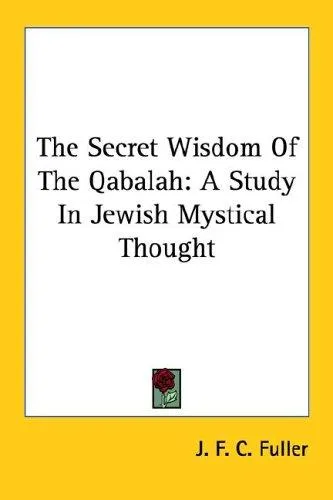
First published in 2017, J. F. C. Fuller's The Secret Wisdom of the Qabalah examines Jewish mystical thought.
This book offers a scholarly look at the esoteric aspects of Jewish mysticism, focusing on Kabbalistic traditions. Fuller examines the core principles and symbolic language that form the basis of this spiritual system. He explains the Sephiroth, the divine emanations that are central to Kabbalistic cosmology, and how they help explain the nature of God and the universe.
The text is written for those seriously studying mysticism, comparative religion, and esoteric philosophy. It is particularly useful for readers interested in Western esotericism and its connections to traditions like Hermeticism and ceremonial magic. Engaging with the complex theological and philosophical ideas presented requires concentration.
Fuller's work places Kabbalah within the broader field of Western esotericism. The book reflects a modern academic approach to these ancient mystical systems. It recognizes how Kabbalistic ideas influenced later occult movements in the late 19th and early 20th centuries, especially those connected to figures such as Eliphas Lévi.
💡 Why Read This Book?
• Gain a clear, structured understanding of the Kabbalistic Tree of Life and its ten Sephiroth, a foundational element in Western esotericism, which Fuller meticulously details. • Learn about Gematria, the esoteric system of assigning numerical values to Hebrew letters, and its application in interpreting sacred texts, as explored in the book's analysis of divine names. • Discover the historical connections between Kabbalistic thought and later occult movements, understanding how figures like Eliphas Lévi were influenced by these ancient Jewish mystical ideas, as contextualized by Fuller.
⭐ Reader Reviews
Honest opinions from readers who have explored this book.
❓ Frequently Asked Questions
What is the primary focus of J. F. C. Fuller's "The Secret Wisdom of The Qabalah"?
The book primarily focuses on the esoteric dimensions of Jewish mysticism, specifically examining the structure and symbolism of the Kabbalistic Tree of Life and its ten Sephiroth.
When was "The Secret Wisdom of The Qabalah" originally published?
The book was first published on March 25, 2017, making it a relatively recent scholarly engagement with ancient Kabbalistic texts.
Is this book suitable for absolute beginners in Kabbalah?
While it aims for clarity, the book delves into complex theological and philosophical concepts, making it more suitable for those with some prior interest or foundational knowledge in mysticism or esoteric philosophy.
Does the book discuss the practical application of Kabbalah?
The work is more focused on the theoretical and symbolic framework of Kabbalah, exploring its cosmology and philosophy rather than providing practical ritualistic instruction.
What is the significance of the Sephiroth in Kabbalah?
The Sephiroth are central divine emanations, representing attributes and aspects of God, forming the structure of the Tree of Life, through which creation is understood to manifest and spiritual ascent occurs.
How does this book relate to other esoteric traditions?
Fuller's work highlights how Kabbalistic concepts, particularly the Tree of Life, have influenced later esoteric traditions such as Hermeticism and various occult movements of the 19th and 20th centuries.
🔮 Key Themes & Symbolism
The Tree of Life
The central organizing principle of Kabbalistic cosmology, the Tree of Life, is meticulously detailed. This sacred diagram comprises ten interconnected spheres known as the Sephiroth, representing divine attributes and stages of emanation from the Infinite. Fuller explores the paths connecting these Sephiroth and their symbolic significance for understanding creation, the divine nature, and the human soul's journey towards unification with the Absolute.
The Sephirothic Emanations
Central to the work is an in-depth examination of the ten Sephiroth: Keter, Chokmah, Binah, Chesed, Geburah, Tiferet, Netzach, Hod, Yesod, and Malkuth. Fuller elucidates their individual characteristics, their interrelationships, and their role as divine vessels through which the unmanifest God (Ain Soph) manifests in the created universe. Understanding the Sephiroth is presented as key to comprehending the Kabbalistic worldview.
Hebrew Alphabet and Gematria
The profound significance of the Hebrew alphabet in Kabbalistic thought is a recurring theme. Fuller discusses how each letter is not merely a phonetic symbol but carries mystical meaning and energetic potential. The practice of Gematria, the calculation of numerical equivalences for Hebrew words and phrases, is presented as a method for uncovering hidden layers of meaning within sacred texts and divine names.
Spiritual Ascent
The book interprets the Kabbalistic system as a map for spiritual development. The ascent through the Sephiroth, from the material realm (Malkuth) back to the divine source (Keter), is portrayed as a process of purification, knowledge acquisition, and mystical union. This journey involves understanding the trials and lessons associated with each Sephirah and path.
💬 Memorable Quotes
Direct passages from the work, attributed to the author.
“The Sephiroth are the divine attributes through which God manifests.”
— This statement expresses the core concept of Kabbalistic cosmology, explaining that the Sephiroth are not separate deities but aspects or channels of the singular divine essence, enabling creation and interaction with the manifest world.
“Gematria reveals hidden connections within the sacred texts.”
— This highlights the importance of numerical interpretation in Kabbalah. By assigning numerical values to Hebrew letters and words, practitioners seek to uncover deeper, often mystical, relationships between concepts and divine pronouncements that are not apparent on a literal level.
“Ain Soph represents the infinite, unknowable divine reality.”
— This points to the Kabbalistic concept of God beyond all conception or definition. Ain Soph signifies the absolute, boundless, and transcendent aspect of the divine, from which all manifest reality ultimately emanates.
“The paths on the Tree of Life are stages of spiritual progression.”
— This interpretation suggests that reading through the connections between the Sephiroth is not merely an intellectual exercise but represents a dynamic process of spiritual growth, learning, and transformation for the seeker.
💡 Key Ideas
Editorial paraphrase of the work's core concepts — not direct quotes.
The Tree of Life serves as a blueprint for both the cosmos and the soul.
This paraphrase emphasizes the dual nature of the Kabbalistic Tree of Life: it is understood to map the structure of the universe from the highest spiritual realms down to the material world, and simultaneously, it mirrors the structure and potential evolution of the human consciousness.
🌙 Esoteric Significance
Tradition
This work is firmly situated within the Western esoteric tradition, specifically as an explication of Kabbalistic mysticism. It draws from the rich lineage of Jewish mystical thought, tracing its symbolic language and cosmological structures. While distinct from Hermeticism or Gnosticism, it shares with them an emphasis on hidden knowledge, divine emanations, and spiritual ascent, and has significantly informed these other traditions.
Symbolism
Central symbols explored include the Tree of Life, a diagram of ten Sephiroth representing divine attributes and cosmic order, and the Hebrew alphabet, seen as imbued with creative power. The concept of Ain Soph, the Infinite, unmanifest God, is also a key motif, representing the ultimate source from which all existence emanates, a concept vital for understanding the Kabbalistic conception of divinity.
Modern Relevance
Contemporary practitioners of Western esotericism, including those involved in ceremonial magic, Tarot interpretation, and modern occultism, continue to draw upon the foundational principles of Kabbalah elucidated in works like Fuller's. The book serves as a bridge for modern seekers to engage with these ancient teachings, informing current explorations of consciousness, cosmology, and spiritual development.
👥 Who Should Read This Book
• Students of comparative religion and esoteric philosophy seeking to understand the intellectual underpinnings of Jewish mysticism and its influence on Western esotericism. • Practitioners of Western Hermeticism or ceremonial magic who wish to deepen their comprehension of the Kabbalistic concepts that inform their chosen paths. • Academic researchers interested in the history of religious thought and mystical traditions, requiring a structured and accessible overview of Kabbalistic cosmology and symbolism.
📜 Historical Context
J. F. C. Fuller's "The Secret Wisdom of The Qabalah," first published in 2017, arrives in an era of renewed scholarly interest in Western esoteric traditions. Its appearance signifies a contemporary effort to systematically analyze and present the intricate framework of Jewish mysticism. The book contextualizes Kabbalah within the broader history of esoteric thought, acknowledging its profound influence on movements like Hermeticism and ceremonial magic that flourished particularly in the late 19th and early 20th centuries. Fuller engages with the intellectual currents that sought to synthesize various mystical systems, a trend exemplified by figures such as Aleister Crowley, who drew heavily on Kabbalistic principles. While not directly addressing specific reception events like censorship or bans for this 2017 publication, the work implicitly stands in dialogue with earlier, often less systematic, popularizations of Kabbalah, offering a more structured and historically informed perspective.
📔 Journal Prompts
The Tree of Life as a map of divine emanation and spiritual journey.
Contemplating the attributes of the Sephiroth and their correspondence to personal experience.
The symbolic meaning of Hebrew letters and their potential for deeper understanding.
Exploring the concept of Ain Soph and its implications for the nature of reality.
Reflecting on the path of spiritual ascent through the Kabbalistic system.
🗂️ Glossary
Kabbalah
A body of mystical teachings and esoteric traditions within Judaism, concerned with the nature of God, the creation of the universe, and the spiritual relationship between the divine and humanity.
Sephiroth
The ten divine emanations or attributes through which God is said to have created the universe and through which the divine light manifests; they form the structure of the Tree of Life.
Tree of Life
A central symbolic diagram in Kabbalah consisting of ten interconnected circles (Sephiroth) and twenty-two paths, representing the structure of the cosmos, the divine, and the human soul.
Ain Soph
Literally 'Without End' or 'Infinite'; the Kabbalistic concept of God in His absolute, unknowable, unmanifest aspect, beyond all description or comprehension.
Gematria
A method of Kabbalistic interpretation where Hebrew letters are assigned numerical values, used to find hidden meanings and connections between words, phrases, and divine names.
Malkuth
The tenth and final Sephirah on the Tree of Life, often associated with the material world, the physical kingdom, and the culmination of divine emanation.
Keter
The first Sephirah on the Tree of Life, representing the 'Crown' or the ultimate divine will, the closest aspect of God to the unmanifest Ain Soph.