Tarot As a Way of Life
 75
75

Tarot As a Way of Life
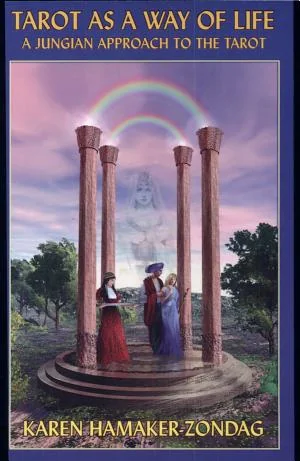
Karen Hamaker-Zondag's 'Tarot As a Way of Life' attempts to liberate the reader from the tyranny of the little white book, a commendable goal. Her integration of Jungian archetypes and numerological/chromatic analysis provides a compelling alternative to memorization. The comparison of various tarot decks is particularly insightful, offering a visual and aesthetic dimension often overlooked in purely symbolic studies. However, the book occasionally feels dense, requiring significant reader engagement to fully grasp the layered methodologies. The specific section detailing the I-Ching's influence, while interesting, could be more clearly delineated for those unfamiliar with its principles.
Ultimately, Hamaker-Zondag offers a robust framework for developing personal tarot intuition, grounded in psychological theory and symbolic interplay.
📝 Description
75
Karen Hamaker-Zondag's 1997 book reframes tarot from rote memorization to intuitive interpretation.
Published in 1997, 'Tarot As a Way of Life' moves beyond memorizing card meanings to foster intuitive interpretation. Hamaker-Zondag integrates psychological principles with the tarot's visual symbolism. The book aims to give readers tools to understand the cards based on their own experiences and circumstances, rather than relying solely on external guides. This approach emphasizes personal growth and self-discovery through tarot practice.
The work is for those who find traditional tarot study restrictive and want a more personal connection with the cards. It will appeal to readers interested in psychological tarot readings and those who see parallels with depth psychology. Readers familiar with Jungian archetypes will find a supportive framework. It is also suitable for individuals who like comparing different tarot decks and their artistic styles.
This book emerged during a period of continued interest in applying Jungian psychology to esoteric practices. Published in the late 1990s, it reflects a cultural trend toward self-help and personal development that often incorporated spiritual or mystical elements. Hamaker-Zondag’s method joins other authors seeking to make tools like the tarot accessible within modern psychological understanding, moving beyond solely predictive uses.
💡 Why Read This Book?
• Develop an intuitive interpretation method: Learn to read tarot cards by connecting with their inherent symbolism and psychological archetypes, rather than memorizing definitions, fostering a deeper personal connection. • Integrate psychological insights with divination: Discover how to apply concepts from depth psychology, such as Jungian archetypes, to understand inner changes and their external manifestations through tarot symbolism. • Appreciate diverse tarot imagery: Gain a critical eye for the visual language of different tarot decks, understanding how artistic choices influence interpretation and personal resonance.
⭐ Reader Reviews
Honest opinions from readers who have explored this book.
❓ Frequently Asked Questions
What is Karen Hamaker-Zondag's primary method for tarot interpretation in this book?
Hamaker-Zondag's primary method in 'Tarot As a Way of Life' emphasizes interpreting cards through Jungian archetypes, color symbolism, and number combinations, encouraging intuitive understanding over rote memorization of guidebook definitions.
How does 'Tarot As a Way of Life' use Jungian psychology?
The book leverages Carl Jung's concept of archetypes as universal patterns of the psyche, suggesting that tarot cards represent these fundamental structures and can be interpreted by recognizing their archetypal resonance within the individual.
What is the significance of comparing different tarot decks in the book?
Comparing decks allows readers to understand how artistic style and symbolic representation can influence interpretation, helping them choose a deck that visually and intuitively aligns with their personal approach to tarot.
Can this book help beginners understand tarot without a reference guide?
Yes, the core aim of the book is to provide readers with a framework for interpreting tarot without needing constant reference to a guidebook by developing their own intuitive understanding based on psychological and symbolic principles.
What is the historical publication date of 'Tarot As a Way of Life'?
The book 'Tarot As a Way of Life' by Karen Hamaker-Zondag was first published on June 1, 1997.
What other systems does Hamaker-Zondag integrate with tarot interpretation?
Besides Jungian psychology, Hamaker-Zondag incorporates concepts from the I-Ching, as well as an analysis of color and number combinations found within the tarot imagery.
🔮 Key Themes & Symbolism
Archetypal Tarot Interpretation
The book posits that tarot cards function as visual representations of universal human archetypes, drawing heavily from Carl Jung's psychological theories. Rather than learning fixed meanings, readers are encouraged to identify the archetypal patterns within the cards and how these relate to their own psyche and life experiences. This approach transforms tarot study from memorization into a dynamic exploration of the unconscious, revealing deeper psychological truths through symbolic imagery.
Symbolism of Color and Number
Hamaker-Zondag emphasizes the significant role that color and numerical sequences play in tarot interpretation. She explores how specific hues and digits within the cards convey distinct energies and meanings, often linking them to psychological states or developmental stages. This analytical layer adds depth, allowing for a more nuanced understanding of the cards' messages by dissecting their visual and numerical components.
Tarot as a Tool for Self-Discovery
The central thesis is that tarot can be integrated into daily life as a practical tool for introspection and personal growth. By understanding the underlying symbolic language and psychological dynamics, readers can use the cards to gain clarity on inner changes, potential manifestations, and their path forward. The book advocates for a proactive, self-reflective engagement with the tarot, positioning it as a mirror to the soul.
Comparative Deck Analysis
An important aspect of the book is its comparative examination of imagery across different tarot decks. Hamaker-Zondag illustrates how variations in artistic style and symbolic rendering can affect interpretation and personal connection. This encourages readers to consider the aesthetic and visual language of the cards, guiding them toward selecting a deck that best supports their intuitive and psychological approach to tarot reading.
💬 Memorable Quotes
Direct passages from the work, attributed to the author.
“Interpretation of the tarot without having to refer to a guidebook for definitions.”
— This highlights the book's core aim: to foster an intuitive understanding of tarot, moving beyond reliance on external interpretations to develop personal meaning-making skills.
“Use the tarot to understand your personal inner changes and their potential manifestations in daily life.”
— This points to the practical application of tarot as a psychological mirror, connecting internal shifts with observable events and personal development pathways.
“Her methods will help you use the tarot to understand your personal inner changes.”
— This suggests a therapeutic or self-help dimension to the tarot, framing it as a tool for introspection and navigating one's psychological landscape.
“She also makes an engaging comparison of the imagery in various decks.”
— This indicates the book's value for those interested in the artistic and visual aspects of tarot, acknowledging that deck design significantly impacts interpretation.
“Using Jungian archetypes, the I-Ching, and color/number combinations.”
— This outlines the theoretical underpinnings of Hamaker-Zondag's approach, integrating diverse symbolic systems to create a holistic interpretive framework.
🌙 Esoteric Significance
Tradition
This work draws significantly from the Western Esoteric Tradition, particularly its psychological currents influenced by depth psychology. It aligns with modern esoteric thought that seeks to synthesize Jungian psychology with ancient divinatory systems. While not strictly Hermetic or Kabbalistic in its primary framework, it engages with the archetypal symbolism that underpins many esoteric disciplines, reinterpreting tarot through a lens of individuation and self-awareness.
Symbolism
Key symbols explored include the archetypal figures within the Major Arcana, which are interpreted as representations of universal human experiences and psychological states. The numerical progression of the cards (e.g., from 1 to 10) is examined for its symbolic link to developmental stages, mirroring cycles of growth and transformation. Color symbolism is also central, with different hues within the cards analyzed for their psychological and energetic resonances.
Modern Relevance
Hamaker-Zondag's approach continues to influence contemporary tarot practitioners and authors who prioritize psychological depth and intuitive reading. Her emphasis on archetypal patterns and personal resonance appeals to modern schools of thought that view tarot as a tool for self-exploration and therapeutic insight, moving beyond predictive applications. Thinkers and practitioners focused on Jungian psychology and archetypal studies often cite her work as foundational for integrating these concepts with tarot.
👥 Who Should Read This Book
• Tarot students seeking a psychological framework: Individuals who feel overwhelmed by memorizing card meanings and wish to develop an intuitive, archetypally informed approach to interpretation. • Practitioners of depth psychology: Those interested in applying concepts from Jungian psychology or archetypal studies to practical tools for self-reflection and understanding the unconscious. • Comparative symbolism enthusiasts: Readers who enjoy exploring the connections between different symbolic systems, such as tarot, the I-Ching, and color theory, to deepen their understanding of universal patterns.
📜 Historical Context
Karen Hamaker-Zondag's 'Tarot As a Way of Life,' first published in June 1997, emerged during a fertile period for the integration of psychology and esoteric practices. The late 20th century saw a significant cultural embrace of Jungian psychology, with thinkers like James Hillman popularizing archetypal psychology. This era also witnessed a continued expansion of interest in Tarot beyond mere fortune-telling, with many authors seeking to connect it to personal growth, self-understanding, and spiritual development. Hamaker-Zondag's work fits within this milieu, offering a method that builds upon the psychological interpretations championed by figures like Jung and later expanded by authors like Joseph Campbell in his studies of mythology. The book's approach, focusing on intuitive interpretation through archetypes and symbolism, reflects a departure from more rigid, divinatory systems that dominated earlier eras, aligning with a broader movement towards experiential and introspective spiritual paths.
📔 Journal Prompts
Which archetypal figure from the Major Arcana do you most identify with currently, and why?
How does the color palette of a specific tarot card influence your immediate emotional response?
Reflect on a recent life event: can you see its manifestation through the symbolism of a particular tarot spread?
Consider a number card; how does its numerical value relate to its imagery and your current life cycle?
How does comparing the artwork of two different decks for the same card change your interpretation?
🗂️ Glossary
Archetype
In Jungian psychology, a universal, archaic pattern and image that derives from the collective unconscious and is the psychic counterpart of an inherited structure. Tarot cards are often seen as embodying these archetypal figures and situations.
Jungian Psychology
A school of psychology founded by Carl Jung, characterized by its emphasis on the collective unconscious, archetypes, individuation, and the symbolic interpretation of dreams and myths.
I-Ching
An ancient Chinese divination text and one of the oldest Chinese classics, used to understand the patterns of change in the universe and human life through hexagrams.
Color Symbolism
The interpretation of colors based on their psychological, cultural, or spiritual associations. In tarot, colors on cards convey specific emotional or energetic meanings.
Number Symbolism
The interpretation of numbers based on their inherent meanings and associations within various philosophical, spiritual, or mathematical systems. In tarot, numbers often indicate stages of development or specific energies.
Individuation
A psychological concept developed by Carl Jung referring to the process of integrating the conscious and unconscious aspects of the psyche to become a whole, unique individual.
Esoteric
Intended for or likely to be understood by only a small number of people with a specialized knowledge or interest; relating to the occult or mysticism.
This book appears in 1 collection
🔮 Readers Also Liked
Browse all →







From the “Tarot” Collection
View all →








More Free Occult Philosophy Books
View all →