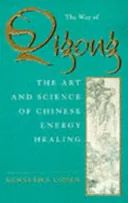
The Way of Qigong

 75
75

The Way of Qigong
Ken Cohen’s "The Way of Qigong" is a meticulously researched volume that avoids the common pitfall of presenting ancient Chinese practices as mere physical exercises. Cohen grounds Qigong in its Taoist and Buddhist philosophical underpinnings, a crucial distinction often lost in contemporary interpretations. He skillfully bridges the gap between esoteric theory and accessible practice. A particular strength lies in his detailed explanation of the 'Eight Brocades' (Ba Duan Jin), offering clear instructions that empower the reader to begin. However, the sheer breadth of information can occasionally feel overwhelming, particularly for absolute beginners attempting to synthesize the historical context with the immediate physical demands of the exercises. Cohen's careful attention to the energetic principles, such as the concept of Shen (spirit), elevates the work beyond a simple fitness manual. It provides a solid foundation for anyone seeking to understand the deeper currents of this energy cultivation art.
📝 Description
75
Ken Cohen's 1997 book, The Way of Qigong, offers a clear introduction to this ancient Chinese practice.
The Way of Qigong, written by Ken Cohen, provides a thorough look at the Chinese practice of Qigong. It functions as both a historical overview and a practical manual for learning and doing these energy cultivation exercises. The book covers Qigong's beginnings, its underlying philosophy, and its many uses. It presents Qigong as more than just physical movements; it is a complete system for health, vigor, and spiritual growth.
This book suits a wide range of readers. Those new to Qigong will find a solid introduction. Experienced practitioners can deepen their theoretical knowledge. Individuals interested in Chinese medicine, martial arts, or alternative healing will also find value. It appeals to anyone curious about developing internal energy and improving well-being through conscious movement and breath control.
This book places Qigong within the long history of Chinese spiritual and health practices. It traces the discipline's development from ancient Taoist and Buddhist roots, showing how it became part of modern medicine and martial arts. Cohen details how Qigong has survived through centuries of Chinese history, serving both folk healing traditions and specialized spiritual disciplines.
💡 Why Read This Book?
• You will learn to identify and cultivate Qi, the fundamental life force discussed in Taoist philosophy, by understanding the specific postures and breathwork detailed in Cohen's explanation of the 'Eight Brocades'. • Gain practical insights into the Five Element theory as it applies to balancing internal energy, enabling you to make informed choices about Qigong movements for specific health concerns. • Understand the historical lineage of Qigong, tracing its development from ancient Taoist practices to its modern applications, providing context often absent in superficial guides.
⭐ Reader Reviews
Honest opinions from readers who have explored this book.
❓ Frequently Asked Questions
What is the historical origin of Qigong as explored in Ken Cohen's book?
Ken Cohen's "The Way of Qigong" traces the practice's origins back thousands of years in China, linking it to ancient Taoist and Buddhist meditative and physical cultivation techniques.
How does 'The Way of Qigong' explain the concept of Qi?
The book defines Qi as the vital life force or energy that animates all living things, explaining how Qigong practices aim to gather, circulate, and balance this energy within the body.
Are there specific Qigong exercises detailed in the book?
Yes, "The Way of Qigong" provides detailed instructions for several foundational Qigong forms, including the popular 'Eight Brocades' (Ba Duan Jin).
What is the role of breath in Qigong according to Ken Cohen?
Cohen emphasizes that breath is a primary vehicle for Qi. The book details specific breathing techniques designed to enhance energy flow and deepen the meditative aspects of Qigong practice.
Does the book cover the connection between Qigong and Chinese Medicine?
Absolutely. "The Way of Qigong" explores how Qigong principles align with Traditional Chinese Medicine, discussing concepts like meridians and the Five Elements in relation to health and healing.
Is Ken Cohen considered an authority on Qigong?
Yes, Ken Cohen is widely recognized as a leading Western authority on Qigong, with decades of study and practice, and "The Way of Qigong" is considered a seminal work in the field.
🔮 Key Themes & Symbolism
Qi Cultivation and Circulation
The central theme is the cultivation and circulation of Qi, the vital life force. Cohen meticulously explains how Qigong exercises, through precise movements, breath control, and focused intention, can strengthen, harmonize, and direct this energy. The book details how Qi flows through specific energetic pathways (meridians) and how blockages or imbalances can lead to illness, presenting Qigong as a method to restore flow and vitality. This focus connects the physical practice to a deeper energetic understanding, essential for holistic well-being.
Taoist and Buddhist Foundations
Cohen firmly roots Qigong in its philosophical origins, particularly Taoism and Buddhism. He explores how concepts like Yin and Yang, the Five Elements, and the pursuit of harmony with the Tao inform Qigong practice. The book elucidates the spiritual dimensions of Qigong, presenting it not just as a health practice but as a path toward inner peace, longevity, and self-awareness, reflecting the contemplative traditions from which it emerged.
The 'Eight Brocades' (Ba Duan Jin)
A significant portion of the book is dedicated to the 'Eight Brocades', one of the most widely practiced Qigong forms. Cohen provides detailed, step-by-step instructions for each of the eight movements, explaining their specific energetic benefits and therapeutic applications. This section offers practical, actionable guidance, allowing readers to engage directly with the material and begin their personal Qigong practice with a well-established and effective sequence.
Qigong and Health
The practical application of Qigong for physical and mental health is a core theme. Cohen discusses how specific Qigong techniques can address various ailments, improve organ function, strengthen the immune system, and promote emotional balance. The book bridges the gap between ancient wisdom and modern understanding of wellness, presenting Qigong as a powerful self-healing modality that complements, rather than replaces, conventional medical approaches.
💬 Memorable Quotes
Direct passages from the work, attributed to the author.
“Qi is the fundamental force that animates all life.”
— This foundational statement underscores the esoteric principle that a universal, invisible energy permeates existence, and Qigong is the art of interacting with and directing this energy for personal benefit.
“The Eight Brocades are a complete system for cultivating health and vitality.”
— This highlights the efficacy and comprehensiveness of the Ba Duan Jin form, suggesting that mastering these eight movements can lead to significant improvements in physical well-being and overall life energy.
“Intention guides the flow of Qi.”
— This points to the mind's a central role in Qigong, illustrating that conscious focus and mental direction are as important as physical movement and breath in manipulating the body's vital energy.
“The body's energetic pathways, the meridians, are essential to health.”
— This interpretation focuses on the anatomical-energetic map of Qigong and Chinese Medicine, explaining that maintaining clear pathways for Qi is vital for preventing disease and promoting optimal function.
💡 Key Ideas
Editorial paraphrase of the work's core concepts — not direct quotes.
Harmony with nature is key to longevity.
This paraphrase emphasizes the Taoist ideal of aligning one's internal state and practices with the natural rhythms of the universe, a core tenet for achieving a long and healthy life through Qigong.
🌙 Esoteric Significance
Tradition
The work is deeply rooted in the Taoist tradition, drawing heavily on its principles of cultivating vital energy (Qi), achieving harmony with the Tao (the natural order), and principles like Yin and Yang and the Five Elements. It also incorporates Buddhist concepts of mindfulness and spiritual development. Cohen presents Qigong as a path that bridges the physical, energetic, and spiritual realms, aligning with the broader aims of many esoteric traditions seeking self-transformation and union with the divine or universal consciousness.
Symbolism
Key symbols include the concept of Qi itself, visualized as a flowing, vital current. The 'Eight Brocades' (Ba Duan Jin) are symbolic movements, each representing a specific energetic action and benefit, akin to symbolic gestures or mudras in other traditions. The meridians function as symbolic energetic channels, mapping the internal field of the body. The balance of Yin and Yang in posture and movement is a constant symbolic interplay, reflecting the universal principle of complementary opposites.
Modern Relevance
Contemporary practitioners of mind-body disciplines, including yoga instructors, Tai Chi teachers, and holistic health coaches, frequently draw upon Cohen's foundational explanations of Qi cultivation and energetic anatomy. His work provides a crucial link for those exploring Taoist philosophy and its practical applications in modern wellness movements. Thinkers in comparative spirituality and researchers into the efficacy of ancient practices for modern stress also reference his detailed accounts.
👥 Who Should Read This Book
• Aspiring Qigong practitioners seeking a reliable, in-depth introduction to the theory and practice, particularly those interested in the 'Eight Brocades' form. • Students of Taoism and Chinese philosophy looking to understand the practical, embodied application of core concepts like Qi, Yin/Yang, and the Five Elements. • Holistic health enthusiasts and alternative therapy practitioners interested in energy medicine and self-healing techniques rooted in ancient wisdom.
📜 Historical Context
Published in 1997, Ken Cohen's "The Way of Qigong" emerged during a period of increasing Western interest in Chinese traditional medicine and contemplative practices. While Qigong had been known in the West for decades, often through martial arts contexts or fragmented introductions, Cohen's work offered a more comprehensive and scholarly approach. It arrived as other authors like Stephen Chang were also popularizing Chinese esoteric arts. The late 20th century saw a burgeoning field of alternative and complementary health, with Qigong fitting neatly into this growing movement. Unlike purely medical texts, Cohen's book emphasized the philosophical and spiritual dimensions derived from Taoism and Buddhism, differentiating it from more secularized interpretations. Its reception contributed to Qigong's establishment as a distinct practice worthy of serious study beyond its martial applications.
📔 Journal Prompts
The flow of Qi through the meridians: how might internal imbalances manifest externally?
Reflecting on the Taoist principle of effortless action (Wu Wei) in your Qigong practice.
The symbolic meaning of the 'Eight Brocades' movements for personal vitality.
Connecting the Five Elements theory to your own energetic states or seasonal changes.
How can the cultivation of Shen (spirit) enhance your daily life beyond physical practice?
🗂️ Glossary
Qi (Chi)
The fundamental life force or vital energy that animates all living beings and permeates the universe. Qigong aims to cultivate, circulate, and balance Qi.
Meridians
Specific pathways or channels within the body through which Qi flows, analogous to an energetic circulatory system. Key to health and traditional Chinese medicine.
Yin and Yang
The fundamental principle of complementary opposites that underlies all existence in Taoist philosophy. Their balance is crucial for health and harmony.
Five Elements
Wood, Fire, Earth, Metal, and Water. A Taoist cosmological model used to explain phenomena, including human physiology and pathology, and guide therapeutic interventions.
Ba Duan Jin (Eight Brocades)
A foundational set of eight Qigong exercises known for their effectiveness in promoting health, strengthening the body, and balancing energy.
Shen
Often translated as 'spirit' or 'consciousness'. It represents the mind-heart aspect of being and is considered one of the 'Three Treasures' (Jing, Qi, Shen) in Taoism.
Dan Tian
Energy centers within the body, typically located in the lower abdomen, considered reservoirs for Qi cultivation and storage.
🔮 Readers Also Liked
Browse all →









More by Ken Cohen
All books →
More Free Occult Philosophy Books
View all →