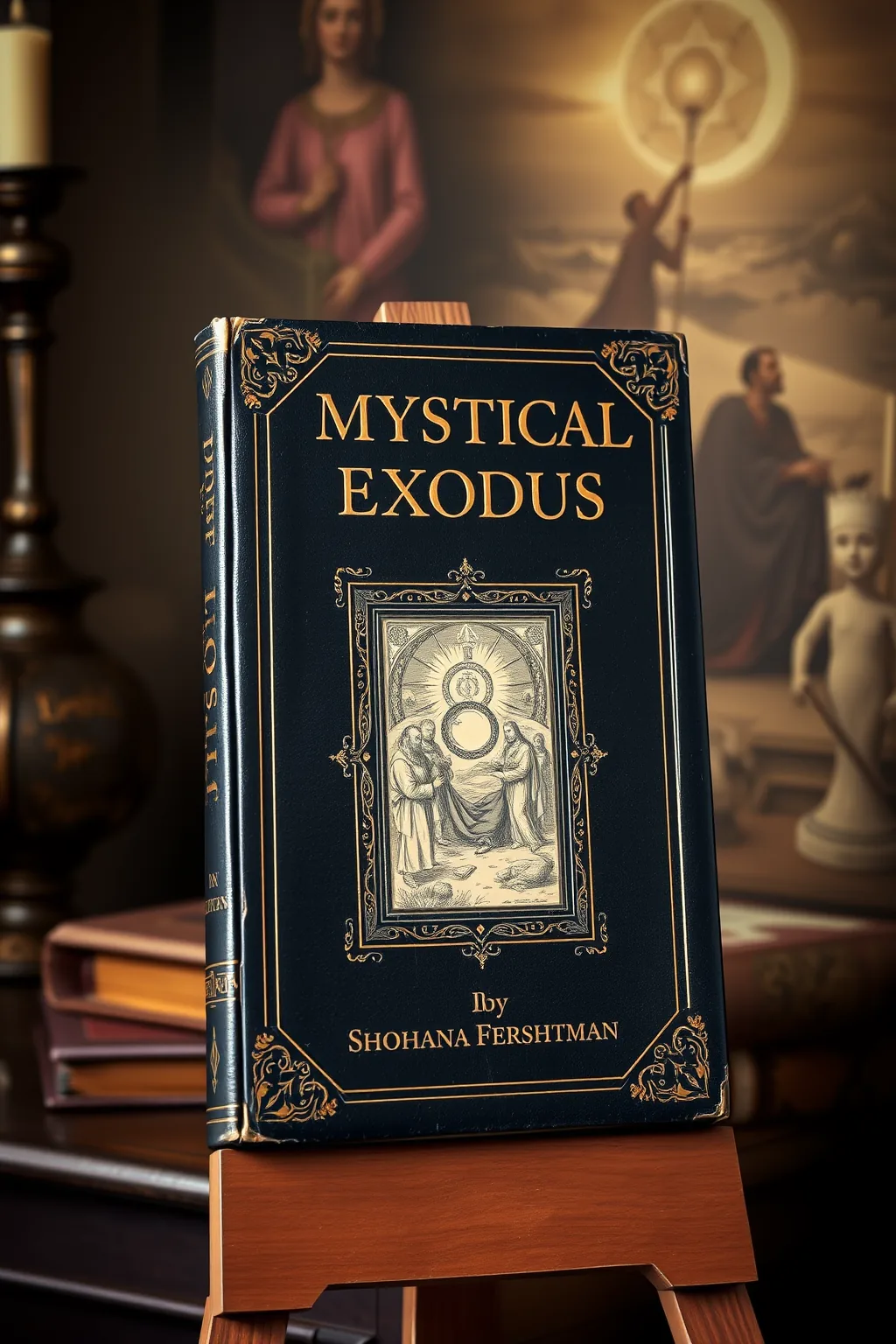
Mystical Exodus in Jungian Perspective
 62
62

Mystical Exodus in Jungian Perspective



Shoshana Fershtman's 'Mystical Exodus in Jungian Perspective' is a monumental achievement, brilliantly bridging the chasm between Kabbalah and analytical psychology. Fershtman's prose is both scholarly and deeply soulful, unearthing profound esoteric insights from the Sefirotic Tree and the Exodus narrative, viewed through the prism of Jungian archetypes. She masterfully illuminates how collective psychic wounds and the yearning for redemption are woven into the fabric of Jewish mystical tradition. This work offers an authoritative exploration for serious students of mysticism, psychology, and Jewish thought, providing a unique framework for understanding the soul's journey toward wholeness. A vital contribution for anyone seeking to integrate ancient spiritual wisdom with modern psychological understanding.
📝 Description
62
Shoshana Fershtman's 2012 book connects Kabbalah's Exodus narrative with Jungian psychology.
In Mystical Exodus in Jungian Perspective, Shoshana Fershtman examines the Kabbalistic concept of "Exodus" as a metaphor for psychological liberation. She draws a direct line between the ancient Hebrew flight from Egypt and the individual's internal struggle for psychic wholeness. Fershtman analyzes how the collective memory of this event, along with inherited psychic trauma, continues to affect individuals across generations.
The book deciphers the symbolic language found in Jewish mystical texts. It shows how these ancient narratives facilitate the reassembly of a fragmented psyche. Fershtman's work aims to provide a framework for understanding personal spiritual renewal through the lens of tradition. It is written for readers interested in the intersection of ancient Jewish mysticism and modern psychological theory.
This work is situated within the field of esoteric Judaism, specifically focusing on Kabbalistic interpretation. It engages with the tradition's symbolic language and mystical concepts, such as the "Exodus" narrative, which is re-contextualized through a psychological framework. The book bridges the gap between ancient mystical practices and their potential application to modern individual consciousness, using Jungian analytical psychology as its primary interpretive tool.
💡 Why Read This Book?
Uncover the hidden spiritual architecture of the soul through the profound synergy of Kabbalah and Jungian psychology. This book offers a unique framework for understanding personal and collective trauma, and the archetypal journey toward liberation. Ideal for seekers of profound meaning, scholars of esoteric traditions, and therapists exploring the depths of the psyche.
⭐ Reader Reviews
Honest opinions from readers who have explored this book.
❓ Frequently Asked Questions
What is the core concept of the 'Mystical Exodus' as presented in the book?
The 'Mystical Exodus' refers to the individual's inner journey from a state of psychic bondage and unconsciousness towards spiritual freedom and integration, mirrored by the ancient Israelite exodus from Egypt through the lens of Kabbalistic symbolism and Jungian archetypes.
How does Jungian psychology inform the interpretation of Kabbalistic texts?
Jungian psychology provides a framework for understanding the archetypal patterns and symbolic language within Kabbalah. It allows for an interpretation of the Sefirot, divine emanations, and mystical narratives as reflections of the human psyche's structure and its process of individuation.
What role does psychic trauma play in this mystical framework?
The book explores how psychic trauma, both individual and collective, can be understood as a form of spiritual 'exile.' The mystical journey offers a path to confronting and integrating these traumas, leading to healing and a deeper connection with the divine and the self.
Is this book suitable for those new to Kabbalah or Jungian psychology?
While it delves into complex concepts, Fershtman's approach is accessible. It guides readers through the esoteric material, making it valuable for both those with prior knowledge and eager newcomers seeking an introduction to these profound traditions.
What are the benefits of reading 'Mystical Exodus in Jungian Perspective'?
Readers can expect enhanced self-understanding, a deeper appreciation for Jewish mysticism, tools for navigating personal challenges, and a revitalized sense of spiritual connection. It offers a pathway to psychological and spiritual wholeness.
🔮 Key Themes & Symbolism
Archetypal Liberation and the Sefirotic Journey
This theme explores the profound parallels between the Kabbalistic Sefirot – the ten divine emanations – and Jungian archetypes. Fershtman posits that working through the Sefirotic Tree is an archetypal journey of the soul, mirroring the individual's path toward wholeness and spiritual liberation. The Exodus narrative becomes a potent metaphor for this internal migration, moving from a state of unconsciousness and fragmentation towards a unified consciousness and divine connection. Readers will gain insight into how these ancient mystical structures serve as maps for psychological integration and spiritual awakening.
Collective Memory and the Healing of Psychic Trauma
The book studies the powerful concept of collective memory, particularly within the context of Jewish history and its lasting impact on the psyche. Fershtman examines how the trauma experienced by a people can be imprinted across generations, influencing individual consciousness and behavior. The 'Mystical Exodus' offers a framework for understanding how engaging with sacred narratives and mystical practices can facilitate the healing of these deep-seated wounds, fostering a renewed sense of identity and spiritual resilience by reconnecting with ancestral wisdom.
The Alchemy of Self and the Divine Within
At its heart, 'Mystical Exodus' is about the transformative alchemy of the self, guided by esoteric Jewish wisdom and psychological insight. Fershtman illustrates how the pursuit of divine knowledge, as found in Kabbalah, is intrinsically linked to the exploration and integration of the deepest aspects of the human psyche. This theme highlights the idea that the divine is not solely external but is also immanent within us, accessible through conscious engagement with spiritual practices and self-reflection. It promises a path to profound personal growth and spiritual realization.
💬 Memorable Quotes
Direct passages from the work, attributed to the author.
“Archetypes are the divine blueprints of the human condition.”
— This highlights the Jungian perspective that universal patterns of human experience, the archetypes, are fundamental to our being and connect us to a deeper, perhaps even divine, order.
“Kabbalah offers a map to the labyrinth of the inner cosmos.”
— This emphasizes Kabbalah's role as a guide for working through the complexities of the human psyche and exploring the vast, often hidden, range of our inner world.
“Trauma echoes in the collective memory, shaping our present.”
— This poignant statement underscores the enduring impact of historical and communal suffering on individual and societal consciousness, revealing how the past continues to influence our lives.
“To leave Egypt is to awaken to the desert within.”
— This suggests that the process of liberation involves confronting one's inner wilderness – the unknown, the challenging, the potentially barren aspects of the self – as a necessary step towards true freedom.
💡 Key Ideas
Editorial paraphrase of the work's core concepts — not direct quotes.
The soul's exodus is not a flight from, but a journey through.
This quote suggests that true spiritual liberation is not about escaping difficulties but about actively engaging with and transforming them, finding growth and understanding within the challenges themselves.
🌙 Esoteric Significance
Tradition
This work is deeply rooted in the esoteric tradition of Kabbalah, specifically drawing from its rich symbolic language, numerological interpretations, and mystical narratives like the Exodus. It explores the Tree of Life (Etz Chaim) and its emanations (Sefirot) as a framework for understanding divine consciousness and the human soul's descent and ascent, offering a profound path for spiritual realization and gnosis within Jewish mysticism.
Symbolism
Key symbols such as the Exodus itself, the parting of the Red Sea, manna, and the Sefirot are explored not just literarily but as potent psychological and spiritual metaphors. The Red Sea signifies a boundary between the mundane and the sacred, while the Sefirot represent stages of divine manifestation and consciousness. Fershtman deciphers these symbols to reveal their relevance to the individual's journey of transformation and integration.
Modern Relevance
In an age marked by existential anxieties and psychic fragmentation, the esoteric insights offered by 'Mystical Exodus' are profoundly relevant. The book provides a timeless framework for understanding and healing individual and collective trauma, fostering a deeper connection to one's heritage, and working through the complex terrain of the modern psyche. It offers a pathway to spiritual renewal and psychological integration, bridging ancient wisdom with contemporary needs.
👥 Who Should Read This Book
This useful work is a rich source for a diverse audience. **Seekers of spiritual wisdom** will find a profound exploration of the soul's journey toward wholeness. **Scholars of Kabbalah and Jewish mysticism** will appreciate the novel Jungian interpretations and deeper textual insights. **Practitioners of psychology and therapy** will discover powerful new frameworks for understanding psychic wounds and facilitating healing. **Anyone interested in the intersection of religion, psychology, and personal growth** will find this book an indispensable guide to uncovering hidden truths and starting their own mystical exodus.
📜 Historical Context
Shoshana Fershtman's 'Mystical Exodus in Jungian Perspective' emerges from a rich intellectual milieu, blending the ancient wisdom of Kabbalah with the transformative insights of 20th-century analytical psychology. The mid-to-late 20th and early 21st centuries saw a burgeoning interest in esoteric traditions and their potential for modern psychological well-being, particularly in the wake of Carl Jung's groundbreaking work on archetypes, the collective unconscious, and the individuation process. Jewish thinkers and scholars have long sought to integrate their rich mystical heritage with contemporary philosophical and psychological currents. This book stands as a evidence of that ongoing dialogue, offering a sophisticated synthesis that speaks to the universal human yearning for meaning, healing, and transcendence.
📔 Journal Prompts
Reflect on your personal 'exodus' from a state of psychic limitation. What were the 'Egypt' and the 'Promised Land' of your journey?
How do the archetypal patterns described in the book resonate with your own life experiences and inner world?
Consider a moment of collective trauma you have witnessed or experienced. How might the Kabbalistic concept of 'Tikkun' (rectification) apply to its healing?
Explore the symbolism of a key Sefirah (e.g., Keter, Tiferet, Malkuth) in relation to your current life stage and inner development.
What 'hidden knowledge' or personal truth do you feel called to uncover through your own inner 'exodus'?
🗂️ Glossary
Kabbalah
An esoteric tradition within Judaism that explores the mystical dimensions of God, creation, and the human soul, often through symbolic interpretation of sacred texts and contemplation of divine emanations.
Sefirot
The ten divine emanations or attributes described in Kabbalah, forming the Tree of Life (Etz Chaim), which represent stages of divine manifestation and the structure of the cosmos and human psyche.
Archetype
In Jungian psychology, universal, archaic patterns and images that derive from the collective unconscious and are the psychic counterpart of instinct.
Collective Unconscious
A concept developed by Carl Jung, referring to the deepest layer of the unconscious psyche, containing inherited structures and predispositions common to all humanity.
Individuation
The psychological process of integrating the conscious and unconscious aspects of the self to achieve a unified personality and self-awareness, as theorized by Carl Jung.
This book appears in 1 collection
🔮 Readers Also Liked
Browse all →









More by Shoshana Fershtman
All books →
From the “Kabbalah” Collection
View all →









More Free Kabbalah & Jewish Mysticism Books
View all →