Evreĭskai︠a︡ mistika i khasidizm

 61
61

Evreĭskai︠a︡ mistika i khasidizm

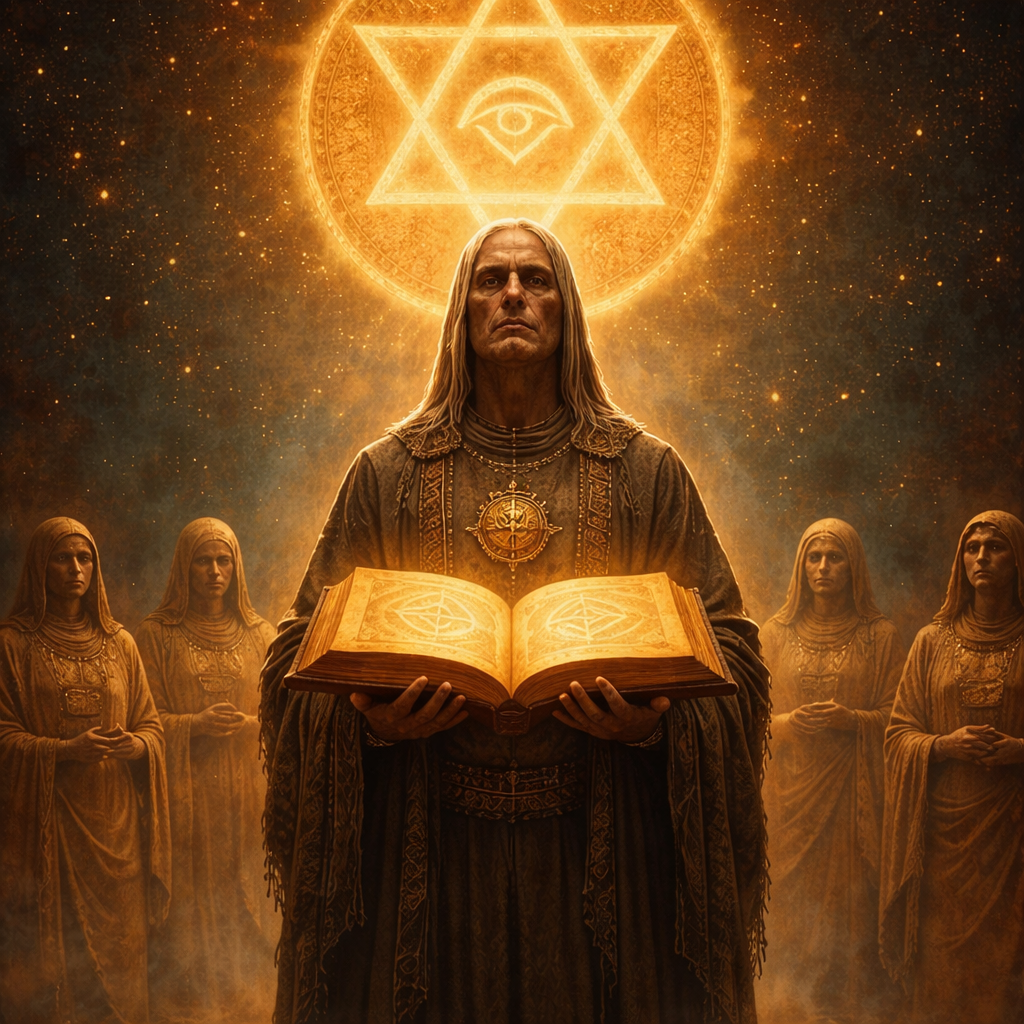

Celeste Moreau (Divination & Symbolism Reviewer) — K. I︠U︡ Burmistrov’s "Evreĭskai︠a︡ mistika i khasidizm" is a luminous exploration of Jewish esoteric traditions. Burmistrov navigates the complex currents of Kabbalah and the effervescent spirit of Hasidism with scholarly precision and palpable reverence. The work excels in its detailed exposition of mystical concepts, illuminating the symbolic language that underpins these profound traditions. It offers a rare glimpse into the experiential dimensions of Jewish spirituality, making accessible what is often considered recondite. Ideal for serious students of mysticism, Kabbalah practitioners, and scholars of religious studies, this book provides invaluable insights into a rich spiritual heritage.
📝 Description
61
K. I︠U︡ Burmistrov's 2018 book, 'Evreĭskai︠a︡ mistika i khasidizm,' examines Jewish esoteric traditions.
This study looks at the esoteric currents within Jewish spiritual thought, with a specific focus on Hasidism. It discusses how Kabbalistic ideas are expressed through ancient texts, prayers, and rituals. The author traces the path of divine contemplation as it relates to ecstatic devotion and communal experiences.
The book connects philosophical inquiry and historical context with practical applications for those interested in Jewish mysticism. It examines the relationship between the earthly and the divine, exploring the search for ultimate reality within this tradition.
Jewish mysticism, or Kabbalah, is a body of esoteric teachings that seeks to explain the relationship between the divine, the universe, and humanity. It often involves symbolic interpretations of religious texts, meditation, and mystical experiences. Hasidism, a movement that emerged in 18th-century Eastern Europe, emphasizes joyful devotion, the presence of God in all things, and the spiritual leadership of charismatic figures known as tzaddikim. This book situates itself within these rich traditions, examining their historical development and core tenets.
💡 Why Read This Book?
Unravel the profound spiritual tapestry of Jewish mysticism and the ecstatic devotion of Hasidism. This book offers a gateway to hidden wisdom, symbolic language, and the transformative power of divine connection. It's essential for seekers of esoteric knowledge, scholars of comparative religion, and anyone drawn to the mystical dimensions of faith.
⭐ Reader Reviews
Honest opinions from readers who have explored this book.
❓ Frequently Asked Questions
What is Kabbalah?
Kabbalah is the esoteric tradition of Jewish mysticism that seeks to understand the divine nature and the creation of the universe through symbolic interpretation of scripture and contemplation.
What is Hasidism?
Hasidism is a spiritual movement within Orthodox Judaism that emphasizes joy, prayer, and the mystical experience of God in everyday life, often expressed through ecstatic dance and song.
Is this book suitable for beginners?
Yes, while it delves into complex topics, Burmistrov's accessible writing style and clear explanations make it a valuable starting point for those new to Jewish mysticism.
What are the main themes explored?
The book explores core Kabbalistic concepts, the philosophy and practices of Hasidism, and the historical development of Jewish mystical thought.
Does the book include practical exercises?
While primarily an exposition, the book's insights can inspire personal contemplation and spiritual practices for the dedicated reader.
🔮 Key Themes & Symbolism
The Tree of Life: Kabbalistic Cosmology
This theme studies the central Kabbalistic diagram, the Tree of Life (Etz Chaim), as a map of creation and divine emanation. It explores the ten Sephirot, the divine attributes through which God manifests in the world, and the pathways connecting them. Readers will gain an understanding of the intricate structure of the cosmos according to Kabbalistic thought, the role of divine energy, and the journey of the soul's ascent towards unity with the Infinite.
Hasidic Ecstasy and Divine Immanence
This section focuses on the vibrant spiritual practices and profound worldview of Hasidism. It explores the concept of 'devekut' (cleaving to God) achieved through fervent prayer, joyous song, and the teachings of the Tzaddik (righteous leader). The emphasis is on experiencing God's presence in every moment and every aspect of life, transforming the mundane into the sacred through an attitude of profound love and devotion.
Symbolism and the Language of the Soul
Here, the book illuminates the rich symbolic language inherent in Jewish mysticism. It examines how Hebrew letters, numbers (Gematria), and biblical narratives are imbued with deeper, esoteric meanings. This theme explores the idea that the universe itself is a text waiting to be deciphered, and that understanding this symbolic grammar is key to unlocking spiritual truths and achieving a direct connection with the Divine.
💬 Memorable Quotes
Direct passages from the work, attributed to the author.
“To know God is to know oneself.”
— This captures the mystical principle of the microcosm reflecting the macrocosm, implying that self-discovery is intrinsically linked to divine realization.
“Joy is the purest form of prayer.”
— This speaks to the Hasidic emphasis on ecstatic devotion, positing that an attitude of unadulterated happiness is a direct and powerful means of connecting with the Divine.
“The path inward is the path outward.”
— This suggests that spiritual exploration and internal transformation have a lasting impact on one's perception and interaction with the external world.
“Every letter holds a spark of the divine.”
— This refers to the Kabbalistic belief in the sacred nature of the Hebrew alphabet, where each character is seen as a vessel of divine energy and meaning.
💡 Key Ideas
Editorial paraphrase of the work's core concepts — not direct quotes.
The deepest truths are often veiled in paradox.
This quote highlights the non-linear and often counter-intuitive nature of esoteric knowledge, suggesting that true understanding requires looking beyond surface appearances.
🌙 Esoteric Significance
Tradition
This work studies the rich esoteric traditions of Kabbalah and Hasidism, two major streams of Jewish mysticism. Kabbalah offers a complex cosmological and theological framework, while Hasidism provides a dynamic, experiential approach focused on divine immanence and ecstatic communion. Together, they represent a sophisticated system of spiritual practice aimed at achieving union with the Divine.
Symbolism
The book explores the profound symbolic language used in Jewish mysticism, including the mystical meanings of Hebrew letters, numbers (Gematria), biblical narratives, and the structure of the Kabbalistic Tree of Life. These symbols are not mere decorative elements but are seen as keys to unlocking deeper spiritual realities and understanding the divine architecture of existence.
Modern Relevance
Despite their ancient origins, the concepts and practices discussed in this book hold significant modern relevance. They offer timeless wisdom on the nature of consciousness, the search for meaning, the cultivation of inner peace, and the interconnectedness of all things. For contemporary seekers, these traditions provide powerful tools for spiritual growth, ethical living, and a deeper understanding of the human condition.
👥 Who Should Read This Book
This important work is important for a diverse range of readers. Scholars of religious studies and comparative mysticism will find rigorous analysis and historical context. Aspiring Kabbalists and practitioners of Jewish spirituality will discover essential teachings on divine mechanics and meditative practices. Seekers of profound philosophical insights and those interested in the intersection of faith and esoteric wisdom will be deeply rewarded. Even beginners curious about the soul of Jewish mysticism will find a clear and engaging entry point into this profound spiritual landscape.
📜 Historical Context
The development of Jewish mysticism, particularly Kabbalah and Hasidism, is deeply interwoven with the history of the Jewish people. Kabbalah, with its foundational texts like the Zohar, emerged and flourished during periods of both intellectual flourishing and intense persecution, particularly in medieval Spain and Safed. It offered a framework for understanding divine mysteries and finding spiritual solace amidst hardship. Hasidism, a more recent movement arising in 18th-century Eastern Europe, represented a spiritual revival, emphasizing personal experience and joyous devotion in response to the social and economic challenges faced by Jewish communities. Both traditions have profoundly influenced Jewish thought, culture, and spiritual practice, offering enduring pathways to transcendent experience.
📔 Journal Prompts
How does the concept of divine immanence resonate with your personal experiences?
What symbolic language from the book has sparked your imagination the most?
Reflect on a moment where you experienced a sense of 'devekut' (cleaving to God).
How can the pursuit of joy transform your daily spiritual practice?
In what ways do you see the 'path inward' influencing your 'path outward'?
🗂️ Glossary
Sephirot
Ten divine emanations or attributes through which God manifests and interacts with the universe in Kabbalistic cosmology.
Devekut
A Hebrew term meaning 'cleaving' or 'attachment,' referring to a state of intense spiritual communion and devotion to God.
Tzaddik
A righteous leader or spiritual guide in Hasidism, believed to serve as a conduit between God and the community.
Gematria
A system of numerological interpretation in Jewish mysticism where Hebrew letters are assigned numerical values to reveal hidden meanings in words and phrases.
Etz Chaim
The Kabbalistic Tree of Life, a diagram representing the divine emanations and the structure of the cosmos.
This book appears in 1 collection
🔮 Readers Also Liked
Browse all →









From the “Kabbalah” Collection
View all →








More Free Kabbalah & Jewish Mysticism Books
View all →