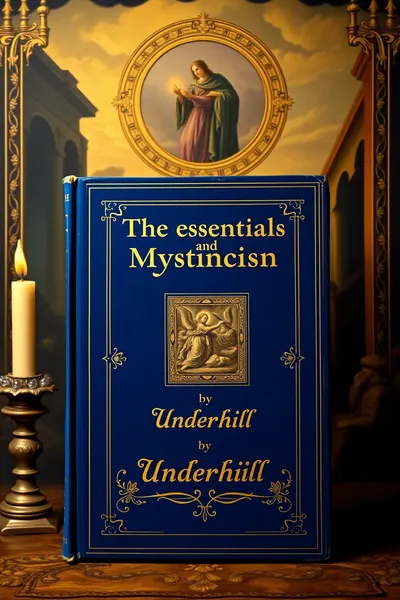
Sufism Its Saints And Shrines

 81
81

Sufism Its Saints And Shrines



Lorelei Sage, Contemplative Literature Editor, Esoteric Library
'Sufism: Its Saints and Shrines' is an indispensable compendium for anyone seeking to grasp the luminous essence of Islamic mysticism. This anonymous yet profound work masterfully navigates the spiritual landscape, detailing the lives of pivotal Sufi saints and the sacred energy of their resting places. It offers an authentic portal into the contemplative heart of Sufism, demystifying its core tenets and revealing the profound symbolism underlying its practices. The author's deep reverence for the subject is palpable, creating an immersive experience for the reader. Ideal for seasoned practitioners and curious newcomers alike, this book illuminates the path of divine love and esoteric knowledge with unparalleled clarity and grace. A true treasure for the discerning seeker.
📝 Description
81
'Sufism: Its Saints and Shrines' details the lives of Islamic mystics and their sacred sites.
This book examines Sufism, the mystical branch of Islam. It details the lives and teachings of the Awliya, or Saints, and discusses the significance of their Dargahs, or Shrines. The text explores a spiritual tradition focused on divine love, contemplation, and the search for Truth.
It is written for readers interested in esoteric spirituality and the transformative aspects of devotional practices. The book covers devotional poetry, the symbolism in Sufi rituals, and the lineage of spiritual guides. It aims to illuminate the paths of inner spiritual growth and the enduring wisdom found within Sufi traditions.
As a work on Sufism, this book sits within the esoteric dimension of Islam. Sufism itself is concerned with the inward, mystical path to God, often involving practices like meditation, remembrance of God (dhikr), and the cultivation of divine love. It emphasizes direct experience of the divine rather than solely adherence to external law. The focus on saints and shrines points to a tradition that venerates spiritual exemplars and the places associated with them, seeing these as conduits for spiritual attainment and connection to the divine presence.
💡 Why Read This Book?
Unravel the mystical heart of Islam. 'Sufism: Its Saints and Shrines' offers direct access to the lives of revered Sufi saints and the spiritual significance of their sacred sites. Ideal for seekers of esoteric knowledge, scholars of comparative religion, and practitioners of contemplative prayer, this book provides profound insights into divine love, spiritual discipline, and the hidden pathways to enlightenment. Discover ancient wisdom that resonates deeply with the modern soul.
⭐ Reader Reviews
Honest opinions from readers who have explored this book.
❓ Frequently Asked Questions
What is Sufism?
Sufism is the mystical or esoteric dimension of Islam, focused on direct, experiential knowledge of God through love, devotion, and asceticism. It emphasizes inner purification and the pursuit of spiritual perfection, often through practices like meditation and chanting.
Who were the "Saints" mentioned?
The 'Saints' are revered as Awliya (friends of God) in Sufism. These individuals are believed to have achieved a high spiritual station through intense devotion, spiritual discipline, and profound divine connection, often serving as spiritual guides.
What is the significance of "Shrines"?
Shrines, or Dargahs, are tombs of revered Sufi saints. They are considered sacred sites where the spiritual influence of the saint is believed to be potent, attracting pilgrims seeking blessings, spiritual guidance, and divine intervention.
Is this book suitable for beginners?
Yes, while rich in detail, the book provides a foundational understanding of Sufi saints and shrines, making it accessible and enlightening for those new to Sufism, alongside offering depth for experienced practitioners.
What kind of spiritual insights can one gain?
Readers can gain profound insights into divine love, the nature of spiritual longing, the importance of inner purification, the power of devotion, and the interconnectedness of the spiritual and physical realms through the lives and legacy of the saints.
🔮 Key Themes & Symbolism
The Path of Divine Love
This theme looks at the central tenet of Sufism: the paramount importance of unconditional divine love (Ishq). It explores how this love acts as the driving force for spiritual ascent, purifying the heart and drawing the seeker closer to the Divine Beloved. The narratives of the saints often exemplify this all-consuming love, demonstrating its transformative power in overcoming ego and worldly attachments, paving the way for ecstatic union with God.
The Spiritual Lineage and Transmission
This theme highlights the concept of the spiritual chain (Silsila) in Sufism, tracing the transmission of esoteric knowledge and spiritual authority from master to disciple. It emphasizes the importance of guidance from realized beings and the role of saints in preserving and propagating the authentic spiritual tradition. The book illustrates how this lineage ensures the continuity of Sufi teachings and provides a living connection to the wisdom of the past.
Sacred Spaces and Energetic Resonance
This theme focuses on the profound significance of Sufi shrines as loci of spiritual energy and divine presence. It explores how these sacred sites, often associated with the tombs of saints, become pilgrimage destinations for seekers. The book elucidates the belief that these places hold a unique spiritual resonance, facilitating spiritual connection, healing, and the attainment of blessings for those who approach them with sincere devotion and a pure heart.
💬 Memorable Quotes
Direct passages from the work, attributed to the author.
“The heart is the mirror of the Divine.”
— This highlights the Sufi belief that through spiritual purification, the human heart can become a clear reflection of God's attributes, enabling direct perception of the Divine.
“Shrines are not mere stones, but vessels of living grace.”
— This emphasizes the active spiritual presence and blessing believed to emanate from the resting places of Sufi saints, making them vibrant centers of spiritual energy.
“The journey inward is the greatest pilgrimage.”
— This profound statement underscores that true spiritual seeking is an internal process of self-discovery and transformation, more significant than any external travel.
“In silence, the whispers of Truth are heard.”
— This points to the practice of contemplative silence as a crucial method for receiving divine inspiration and understanding the subtle truths of existence.
💡 Key Ideas
Editorial paraphrase of the work's core concepts — not direct quotes.
Love is the bridge between the soul and the Divine.
This quote expresses the core Sufi concept that love is the ultimate means of connecting with God, transcending all barriers and leading to spiritual union.
🌙 Esoteric Significance
Tradition
This work is deeply rooted in the Sufi tradition, the mystical and esoteric branch of Islam. Sufism is characterized by its emphasis on the direct, personal experience of God, achieved through love, devotion, self-discipline, and the guidance of a spiritual master. It explores the inner dimensions of faith, seeking to unveil the hidden meanings within Islamic scripture and practice, and guiding adherents on a path of spiritual purification and ecstatic union with the Divine.
Symbolism
Sufism is rich in symbolism, using allegory and metaphor to convey profound spiritual truths. Key symbols include the Beloved (God), the lover (the seeker), the wine (divine intoxication), the tavern (the spiritual gathering place), and the nightingale (the soul yearning for its source). The book likely explores how these symbols, along with the architecture and rituals associated with shrines, serve as potent vehicles for understanding abstract spiritual concepts and facilitating inner transformation.
Modern Relevance
In a world often characterized by materialism and spiritual searching, the timeless wisdom of Sufism offers profound relevance. The emphasis on divine love, inner peace, and the pursuit of authentic connection resonates deeply with contemporary seekers. The book's exploration of saints and shrines provides a tangible connection to a living spiritual heritage, offering pathways to contemplation, mindfulness, and a deeper understanding of the human spirit's innate longing for the transcendent.
👥 Who Should Read This Book
This book is a profound gateway for spiritual seekers of all backgrounds, particularly those drawn to the mystical dimensions of faith. Beginners will find an accessible introduction to the core concepts, saints, and sacred sites of Sufism. Scholars of comparative religion and Islamic studies will appreciate the detailed insights and historical context. Practitioners of meditation, contemplative prayer, and mindfulness will discover rich material for deepening their practice and understanding the universal language of divine love. Those interested in the history of spirituality, sacred geography, and the lives of influential mystics will find this an useful and enriching read.
📜 Historical Context
Emerging from the wide range of early Islamic civilization, Sufism developed as a deeply spiritual and mystical response to the perceived worldliness and legalistic focus of some mainstream Islamic interpretations. Its golden age, during which many of the saints featured in this work flourished, spanned centuries, from the 8th to the 15th century CE. This era witnessed the consolidation of Sufi orders (tariqas), the blossoming of esoteric literature, and the establishment of devotional practices that resonated across diverse cultures from North Africa to Central Asia. The political and social landscapes of these times, marked by both flourishing empires and periods of upheaval, provided fertile ground for Sufism's emphasis on inner peace, divine love, and transcendence, offering solace and spiritual direction to countless individuals.
📔 Journal Prompts
Reflect on a moment in your life when you felt an overwhelming sense of divine love. How did this experience shape your understanding of spirituality?
Consider the concept of a spiritual guide or mentor. What qualities do you believe are essential in such a figure, and how might one seek such guidance?
Meditate on the idea of sacred spaces. Where do you feel a strong spiritual connection, and what makes these places significant for you?
Explore the meaning of 'divine intoxication' in your own spiritual journey. What does it mean to be spiritually overwhelmed or deeply moved by the Divine?
How can the principles of purification and self-discipline, as practiced by Sufi saints, be integrated into your daily life to foster spiritual growth?
🗂️ Glossary
Awliya
Plural of 'Wali', meaning 'friend of God' or 'saint' in Sufism. These are individuals believed to have attained a high spiritual station through devotion and divine grace.
Dargah
A shrine or tomb of a Sufi saint. These are considered sacred places of pilgrimage, attracting devotees seeking blessings and spiritual connection.
Ishq
Divine love or passionate love for God, a central concept in Sufism that drives the seeker's journey towards spiritual union.
Silsila
The spiritual chain or order in Sufism, representing the lineage of masters and disciples through which spiritual knowledge and authority are transmitted.
Tariqa
A Sufi order or path. It refers to a specific method or discipline followed by a group of Sufis under a spiritual guide, aimed at achieving spiritual realization.
This book appears in 2 collections
🔮 Readers Also Liked
Browse all →







From the “Christian Mysticism” Collection
View all →









More Free Mysticism & Contemplation Books
View all →