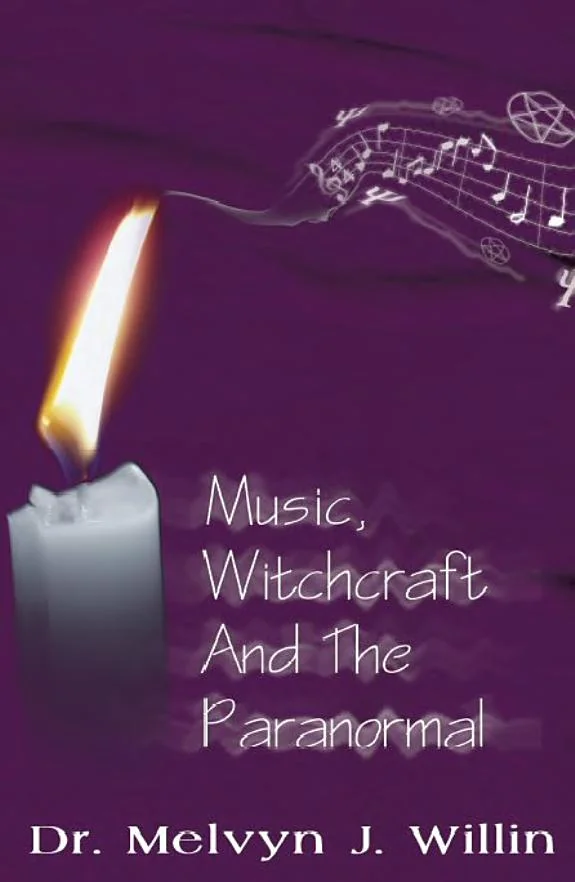
Music, Witchcraft and the Paranormal
 81
81

Music, Witchcraft and the Paranormal
Willin's "Music, Witchcraft and the Paranormal" offers a commendable, if somewhat dry, exploration of a fascinating nexus. His commitment to empirical investigation, particularly his attempts at controlled experiments regarding music and telepathic contact, is a significant strength, setting it apart from purely anecdotal accounts. The section detailing mediums who claim to channel dead composers, such as the investigation into alleged communications with Mozart, provides a concrete example of his method. However, the dense academic prose can sometimes obscure the inherent wonder of the subject matter, making it a challenging read for those not accustomed to scholarly discourse. A limitation is the occasional difficulty in fully appreciating the subjective *experience* of music's paranormal effects when presented through such a rigorously analytical lens. Despite this, the work provides a unique and valuable perspective on sonic phenomena within esoteric traditions.
📝 Description
81
Melvyn J. Willin's 2005 book examines music's role in witchcraft and psychic phenomena.
Published in 2005, Melvyn J. Willin's "Music, Witchcraft and the Paranormal" is a scholarly work that investigates the connections between sound, psychic experiences, and esoteric practices. The book is structured as a collection of essays. These essays look closely at how music functions in paganism and witchcraft. Willin considers music's potential to induce altered states of consciousness and facilitate paranormal encounters. He examines reports of communication with deceased musicians and accounts of phantom music. Where possible, Willin bases his research on controlled experiments.
This book is best suited for students of parapsychology, comparative religion, and occult studies who approach the subject analytically. Readers interested in the historical and practical uses of sound in rituals, trance, and mediumship will find it valuable. The work appeals to those who prefer empirical studies of subjective experiences over purely theoretical or devotional material. It is for individuals curious about the psychological and possibly supernatural effects of music beyond its aesthetic qualities.
This book draws upon the history of psychical research, a field prominent in the late 19th and early 20th centuries, particularly through organizations like the Society for Psychical Research. Willin's work connects to this tradition by addressing phenomena such as mediumship and telepathy, which were central to spiritualism. He specifically focuses on music as a means for these experiences, differentiating his study from more general paranormal investigations. The book's 2005 publication date coincided with renewed interest in esotericism and academic study of subjective phenomena.
💡 Why Read This Book?
• Gain an understanding of experimental approaches to studying paranormal music phenomena, as explored in Willin's controlled experiments, offering a unique perspective on auditory hallucinations. • Discover the specific historical uses of music in paganism and witchcraft, as detailed in the essays, revealing sonic rituals and their intended effects. • Examine the concept of 'ghostly music' and mediumistic claims of communicating with composers, providing concrete case studies beyond general paranormal anecdotes.
⭐ Reader Reviews
Honest opinions from readers who have explored this book.
❓ Frequently Asked Questions
What is the primary focus of Melvyn J. Willin's book on music and the paranormal?
The book focuses on the intersection of music, parapsychology, and esoteric practices, particularly examining music's role in witchcraft and paganism, and its potential use in telepathic contact and communication with spirits.
Does the book offer scientific evidence for paranormal music phenomena?
Willin attempts to apply controlled experimental methods to investigate claims of paranormal music and telepathic contact, presenting findings from these studies within the broader context of psychical research.
Are there specific composers mentioned in relation to mediumship in the book?
Yes, the book discusses mediums who claim to receive communications from deceased composers, including investigations into alleged contact with figures like Mozart.
What is 'sonic haunting' as discussed in "Music, Witchcraft and the Paranormal"?
'Sonic haunting' refers to the phenomenon of hearing 'ghostly' or unexplained music, which the book examines from both paranormal and psychological perspectives.
When was "Music, Witchcraft and the Paranormal" first published?
The book was first published in 2005.
What is the author's approach to the subject of music and witchcraft?
Melvyn J. Willin approaches the subject through a series of essays that investigate the importance and application of music within pagan and witchcraft traditions, often linking it to altered states and ritual.
🔮 Key Themes & Symbolism
Music as a Paranormal Conduit
The work meticulously investigates the hypothesis that music is not merely an aesthetic experience but can function as a potent conduit for paranormal phenomena. Willin explores how specific sonic frequencies, harmonies, or melodic structures might facilitate telepathic communication or serve as a bridge to non-physical realms. This includes examining historical accounts and experimental data related to music's ability to induce altered states conducive to mediumship and psychic perception. The book scrutinizes whether music can act as an independent agent in such encounters or if it primarily serves as a psychological trigger for latent abilities.
Witchcraft and Pagan Sonic Rituals
A significant portion of the book is dedicated to understanding the integral role of music within the practices of witchcraft and various pagan traditions. Willin explores how chants, drumming, and specific musical forms are employed to create sacred space, facilitate group cohesion, invoke deities, and achieve altered states of consciousness necessary for ritual work. The essays examine the symbolic and energetic functions of these sonic elements, moving beyond simple accompaniment to understanding music as a performative act with tangible magical or spiritual outcomes within these lineages.
Investigating 'Ghostly Music'
The phenomenon of hearing music that has no apparent physical source, termed 'ghostly music,' is a central point of inquiry. Willin examines numerous anecdotal reports and case studies of individuals experiencing auditory apparitions of music. He critically assesses potential explanations, ranging from psychological factors like hallucination or suggestion to genuine paranormal occurrences. The book also touches upon the idea of spirits or entities communicating through music, particularly in relation to mediums claiming contact with deceased composers.
Parapsychology and Controlled Experimentation
Central to Willin's methodology is the application of parapsychological research principles. The book details attempts to move beyond subjective belief by employing controlled experiments designed to test specific hypotheses about music's influence on psychic phenomena. This includes exploring the efficacy of music in facilitating telepathic links between individuals under experimental conditions. The work reflects a scientific-minded approach to esoteric subjects, aiming to provide empirical data where possible to support or refute claims about the paranormal power of music.
💬 Memorable Quotes
Direct passages from the work, attributed to the author.
“The author investigates the use of music in telepathic contact using controlled experiments.”
— This highlights Willin's commitment to empirical study, seeking to validate the potential of music to enhance or enable telepathic connections through structured, scientific observation.
“He looks at mediums who claim contact with dead composers.”
— This points to a specific area of inquiry within the book, focusing on alleged communications with musical figures from the past, exploring the nature of such claims and their implications.
“People who have heard 'ghostly' music are also examined.”
— This indicates the book's exploration of auditory paranormal phenomena, specifically unexplained musical experiences, and the author's analytical approach to these unusual sensory perceptions.
“Special reference to the importance of music in paganism and witchcraft.”
— This emphasizes a core thematic element, underscoring the book's focus on the ritualistic and spiritual significance of music within specific esoteric traditions.
“A series of essays on parapsychology and psychical research.”
— This establishes the book's academic framework, positioning it as a collection of scholarly investigations into the broader field of psychic phenomena and their relationship to music.
🌙 Esoteric Significance
Tradition
This work fits within the broader stream of modern Western Esotericism, particularly touching upon pagan revivalism and contemporary witchcraft practices. It engages with the psychical research tradition, which historically sought to bridge the material and spiritual worlds through empirical observation, albeit often facing skepticism from mainstream science. Willin's approach, while analytical, acknowledges the efficacy of sonic elements in ritualistic contexts, aligning with traditions that view sound as a potent force for manifestation and spiritual connection.
Symbolism
While not heavily symbolic in a codified sense, the book implicitly engages with the symbolism of music itself as a universal language capable of transcending the mundane. Specific instruments or melodic patterns within witchcraft rituals can symbolize aspects of nature, divine energies, or the cyclical flow of life and death. The very act of 'ghostly music' can symbolize the lingering presence of the past or the veil between the physical and spiritual worlds being thin.
Modern Relevance
Contemporary sound healers, sonic meditation practitioners, and modern pagan and witchcraft circles continue to explore the power of sound for therapeutic, spiritual, and ritualistic purposes. Willin's research provides a historical and experimental grounding for these practices, offering a critical perspective on claims of music's influence on consciousness and the paranormal, which remains relevant in fields like psychoacoustics and shamanic studies.
👥 Who Should Read This Book
• Students of parapsychology and psychical research seeking empirical investigations into auditory paranormal phenomena and the role of music. • Practitioners of witchcraft and paganism interested in the historical and functional significance of music and sound within their traditions. • Academics and researchers in comparative religion, musicology, and cultural studies examining the intersection of sound, belief systems, and altered states of consciousness.
📜 Historical Context
Melvyn J. Willin's "Music, Witchcraft and the Paranormal" emerged in 2005, a period marked by renewed academic interest in esoteric studies and a greater willingness to explore subjective experiences through empirical lenses. The book builds upon the legacy of psychical research, a field that flourished in the late 19th and early 20th centuries with prominent figures like F.W.H. Myers and the Society for Psychical Research. While early researchers often focused on phenomena like séances and telekinesis, Willin's work carves a niche by specifically examining the role of music. This distinguishes it from broader occult literature and aligns it with more specialized investigations into altered states and consciousness. Contemporary to Willin's publication, authors like Richard Rudgley were also exploring the anthropological and historical roots of altered states, sometimes touching on sonic triggers, though Willin's focus remains more on direct parapsychological experimentation and specific esoteric traditions.
📔 Journal Prompts
The use of music in telepathic contact: consider the potential mechanics.
'Ghostly music' experiences: analyze subjective perceptions versus objective phenomena.
The importance of music in paganism and witchcraft: reflect on its ritualistic functions.
Mediums contacting dead composers: evaluate the evidence and psychological interpretations.
Sonic rituals and altered states: explore personal or historical examples.
🗂️ Glossary
Parapsychology
The study of alleged psychic phenomena and other paranormal claims, including extrasensory perception (ESP) and psychokinesis, often employing scientific methodologies.
Psychical Research
An older term for the study of paranormal phenomena, often encompassing spiritualism, mediumship, and other subjective experiences, which laid the groundwork for modern parapsychology.
Telepathic Contact
Communication of thoughts or ideas by means other than the known senses; the book explores if music can facilitate this.
Mediumship
The practice of acting as a channel or intermediary between the world of the living and the world of spirits or the deceased.
Altered States of Consciousness
Any mental state significantly different from a normal waking state, often achieved through meditation, ritual, or psychoactive substances, and explored in relation to music.
Sonic Haunting
The phenomenon of experiencing unexplained or 'ghostly' music, auditory hallucinations of a musical nature.
Paganism
A broad term encompassing various pre-Christian and nature-based spiritual traditions, often featuring ritualistic practices where music plays a significant role.
This book appears in 1 collection
🔮 Readers Also Liked
Browse all →





![AD [frag.] Gela Hermann Büder Wittwe zu Rodenbach Clägerin. Contra Die Gemeindte desselbsten und sonderlich Johannes ... 1650-1651: Iss 180](/img/thumb/ad-frag-gela-hermann-b-der-wittwe-zu-rodenbach-cl-gerin-contra-die-gemeindte-desselbsten-und-sonderlich-johannes-1650-1651-iss-180-buder-gela.webp)

From the “Paganism” Collection
View all →







More Free Witchcraft & Paganism Books
View all →