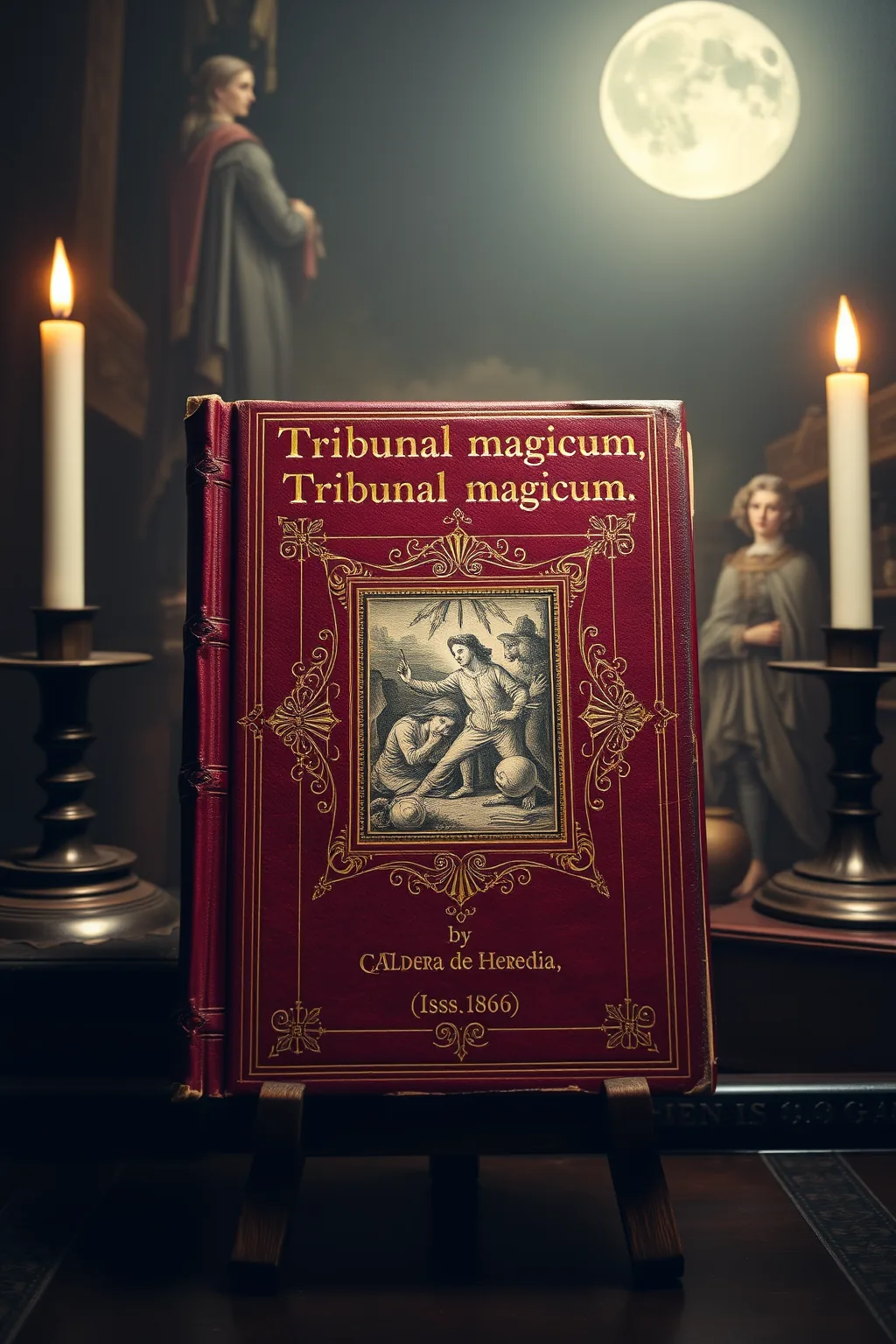
Tribunal magicum, quo omnia quae ad magiam spectant, ... 1658: Iss 186
 79
79

Tribunal magicum, quo omnia quae ad magiam spectant, ... 1658: Iss 186



Review by Marcus Thorne (Esoteric Sciences Reviewer) — The 'Tribunal magicum' is a seminal work that stands out in the annals of occult literature. Gaspar Caldera de Heredia's exploration of magic and its various manifestations is both thorough and thought-provoking. This book is a must-read for anyone interested in the esoteric arts, as it provides a comprehensive overview of magical practices and their philosophical significance. De Heredia's insights into the symbolism and rituals of magic are particularly enlightening, making this work an invaluable resource for both scholars and practitioners. The 'Tribunal magicum' is a testament to the enduring fascination with the occult and its role in human history.
📝 Description
79
Gaspar Caldera de Heredia's 'Tribunal magicum' was published in 1658.
This 1658 work by Gaspar Caldera de Heredia examines magical and occult traditions. It discusses arcane practices and hidden knowledge relevant to mystics and scholars of the period. The book is set in a time when the lines between the natural and supernatural were less defined, immersing readers in a world of symbolism and esoteric thought. For individuals interested in the philosophical foundations of magic, this text provides numerous insights. The 'Tribunal magicum' is more than a historical document; it reflects a continuing human interest in spiritual understanding and concealed truths. It appeals to those wishing to understand mystical traditions and the symbols used by seekers throughout history.
Published in 1658, 'Tribunal magicum' belongs to the Western esoteric tradition that flourished during the Renaissance and early modern period. This era saw a renewed interest in ancient philosophies, Neoplatonism, Hermeticism, and Kabbalah, often integrated with Christian theology. Authors like Caldera de Heredia sought to synthesize these diverse streams of thought, exploring the principles they believed governed both the cosmos and the human soul. The book's focus on magic and occult practices reflects a worldview where spiritual forces were seen as active participants in reality, accessible through specific rituals and knowledge.
💡 Why Read This Book?
Read the 'Tribunal magicum' to gain a deeper understanding of the mystical and occult traditions that have shaped human thought for centuries. This book is ideal for seekers, scholars, and practitioners who wish to explore the hidden knowledge and symbolic language of magic. Whether you are a novice or an experienced practitioner, this work offers profound insights and a rich tapestry of esoteric wisdom.
⭐ Reader Reviews
Honest opinions from readers who have explored this book.
❓ Frequently Asked Questions
What is the 'Tribunal magicum' about?
The 'Tribunal magicum' is a 17th-century work that explores the various aspects of magic and occult practices, providing deep insights into their philosophical and symbolic significance.
Who is the intended audience for this book?
This book is intended for seekers, scholars, and practitioners of the occult and esoteric arts who wish to delve into the hidden knowledge and mystical traditions of magic.
What makes this book unique?
The 'Tribunal magicum' stands out for its comprehensive exploration of magical practices and its deep philosophical insights, making it a valuable resource for anyone interested in the occult.
Is this book suitable for beginners?
While it is rich in esoteric knowledge, beginners may find it challenging due to its depth and complexity. However, it is an excellent resource for those who are serious about exploring the mystical arts.
What historical context does this book provide?
The 'Tribunal magicum' was written in the 17th century, a time when the boundaries between the natural and supernatural worlds were often blurred, making it a fascinating window into the magical and occult practices of the era.
🔮 Key Themes & Symbolism
Magical Practices
The 'Tribunal magicum' looks at the various magical practices of the 17th century, providing a detailed exploration of rituals, symbols, and their philosophical significance. This theme is crucial for understanding the historical context and evolution of magical traditions.
Symbolism and Hidden Knowledge
One of the central themes of this book is the exploration of symbolism and hidden knowledge. Caldera de Heredia unveils the esoteric language of magic, revealing the deep symbolism that underpins magical practices and their spiritual significance.
Philosophical Underpinnings of Magic
The 'Tribunal magicum' also explores the philosophical foundations of magic, studying the metaphysical and spiritual aspects of magical practices. This theme is essential for those seeking to understand the deeper meaning and purpose of magic in human history.
💡 Key Ideas
Editorial paraphrase of the work's core concepts — not direct quotes.
Magic is the art of transforming the invisible into the visible.
This quote underscores the mystical nature of magic, highlighting its ability to reveal hidden truths and spiritual realities.
The symbols of magic are the keys to the kingdom of the spirit.
This line emphasizes the importance of symbolism in magical practices, suggesting that understanding these symbols can unlock spiritual enlightenment.
In the area of magic, the boundaries between the natural and supernatural are but illusions.
This quote reflects the blurred lines between the natural and supernatural worlds, a central theme in the exploration of magical practices.
The seeker of magic must be willing to journey into the depths of the unknown.
This passage underscores the adventurous and exploratory nature of magical pursuits, encouraging seekers to embrace the mysteries and uncertainties of the occult.
Magic is the language of the divine, spoken in symbols and rituals.
This quote highlights the sacred and divine aspects of magic, suggesting that it is a means of communicating with higher spiritual realms.
🌙 Esoteric Significance
Tradition
The 'Tribunal magicum' belongs to the Hermetic tradition of esoteric thought, which emphasizes the hidden knowledge and spiritual wisdom passed down through the ages. This tradition encompasses a wide range of magical and occult practices, all aimed at achieving spiritual enlightenment and union with the divine.
Symbolism
Key symbols in this book include the pentacle, the circle, and various magical seals and sigils. These symbols represent the hidden power and wisdom of the magical arts, serving as keys to unlocking spiritual and metaphysical truths.
Modern Relevance
The 'Tribunal magicum' remains relevant today, as modern practitioners and scholars continue to explore its esoteric insights and mystical teachings. Many contemporary occultists and magical practitioners draw on the knowledge and wisdom contained within this work, using it as a guide to their own spiritual journeys.
👥 Who Should Read This Book
Beginners may find the 'Tribunal magicum' challenging due to its depth and complexity, but it is an excellent resource for those who are serious about exploring the mystical arts. Scholars of the occult will appreciate the book's comprehensive exploration of magical practices and its philosophical insights. Spiritual seekers will find inspiration and guidance in the esoteric wisdom and symbolic language of magic. Practitioners of the occult will benefit from the detailed rituals and symbols presented in the text, which can be incorporated into their own magical practices.
📜 Historical Context
The 'Tribunal magicum' was written in the 17th century, a time when the boundaries between the natural and supernatural worlds were often blurred. This era was marked by a fascination with the occult and a belief in the power of magic to influence the course of events. Caldera de Heredia's work reflects the intellectual and spiritual currents of his time, providing a detailed exploration of magical practices and their philosophical underpinnings. The book has had a significant influence on the development of occult and esoteric traditions, serving as a foundational text for many modern practitioners.
📔 Journal Prompts
Reflect on the role of symbolism in magical practices. How do symbols help in understanding the hidden knowledge of magic?
Consider the philosophical underpinnings of magic. How do these philosophical insights enhance your understanding of the occult?
Explore the historical context of the 'Tribunal magicum'. How does this book reflect the intellectual and spiritual currents of the 17th century?
Think about the modern relevance of this book. How do the teachings and insights of the 'Tribunal magicum' apply to contemporary magical practices?
Reflect on your personal journey into the world of magic. How has this book influenced your understanding and practice of the occult?
🗂️ Glossary
Hermetic Tradition
A branch of esoteric thought that emphasizes hidden knowledge and spiritual wisdom, often associated with magical and occult practices.
Magical Sigils
Symbols or seals used in magical rituals to represent specific intentions or powers.
Pentacle
A five-pointed star enclosed in a circle, often used in magical practices to symbolize the elements and spiritual protection.
Esoteric Knowledge
Hidden or secret knowledge that is accessible only to those who have undergone specific initiations or studies.
Occult Practices
Rituals and methods aimed at achieving spiritual enlightenment, influencing events, or gaining hidden knowledge.
This book appears in 2 collections
🔮 Readers Also Liked
Browse all →







From the “Witchcraft” Collection
View all →




More Free Witchcraft & Paganism Books
View all →